
An old golden retriever is a dog aged 8 or older, and good senior care means twice-yearly vet exams, lean weight, joint support, and home changes that ease mobility. The key skill is telling normal aging, like graying and slowing down, from red flags like sudden weakness, a new lump, or big changes in thirst, which need prompt veterinary attention.
Caring for an old golden retriever comes down to one skill most guides never teach: knowing which changes are just age and which are your dog telling you something is wrong. Get that right and you’ll catch problems early, skip needless worry over harmless graying, and give your senior the comfortable years this breed earns.
In my practice, the owners of old Goldens fall into two groups. One panics over every gray hair. The other explains away real warning signs as “just getting old” until a treatable problem becomes an untreatable one. This guide is built to keep you out of both. A Golden becomes a senior around 8, and if you want the full breakdown of when that line falls, our Golden Retriever lifespan maps every life stage. Here, we focus on the years after it.
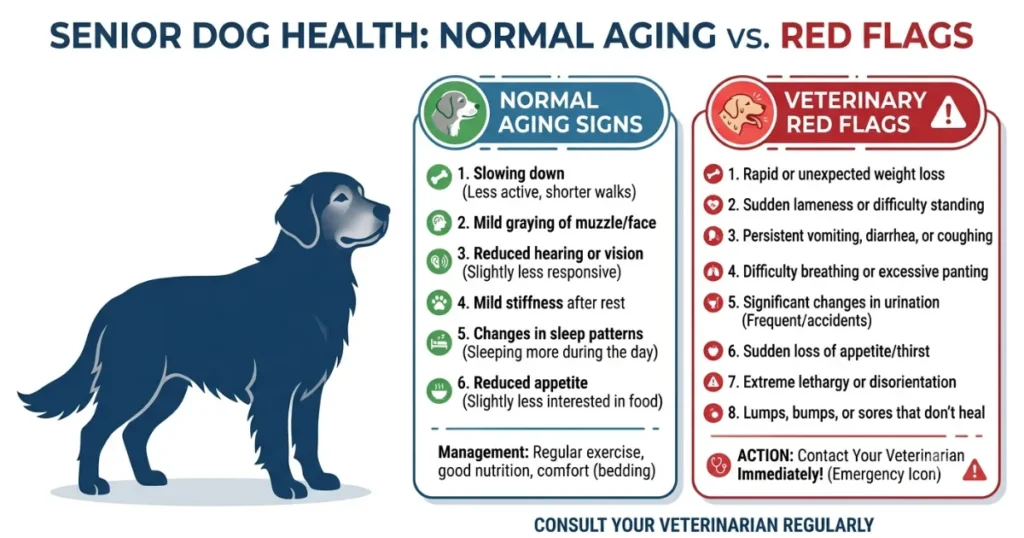
Signs of Aging in an Old Golden Retriever: Normal or Red Flag?
Here’s the distinction that every ranking article blurs and every worried owner needs. Most signs of aging are harmless. A handful look similar but signal disease, and in a breed with the Golden’s cancer profile, telling them apart is the whole game.
| Usually normal aging | Book a vet visit soon | Call the vet right away |
| Graying muzzle and face | New or growing lump anywhere | Sudden collapse or weakness |
| Sleeping more, mellower mood | Noticeable weight loss or gain | Pale or white gums |
| Slower on walks, stiff after rest | Drinking and urinating much more | Swollen tight belly with retching |
| Cloudy bluish lens (lenticular sclerosis) | Bad breath, dropping food | Labored breathing or panting at rest |
| Gradual hearing loss | Reluctance to rise, new limp | Repeated seizures |
| Slightly duller, thinner coat | New confusion or getting “stuck” | A lump that is bleeding fast |
Two rows deserve a note, because owners mix them up constantly. That bluish haze in an old dog’s eyes is usually lenticular sclerosis, a normal hardening of the lens that barely affects vision. Cataracts look similar but are denser and do impair sight. Only a vet can tell them apart, so any eye change earns an exam even though the common cause is harmless. And the confusion row matters because canine cognitive dysfunction, the dog version of dementia, is treatable and manageable when caught early and often dismissed as “he’s just old.”
The most common mistake I see with senior Goldens is filing a red-flag sign under normal aging because the dog still wags and eats. Goldens mask illness behind that happy face longer than almost any breed. For what any specific symptom might mean, our Golden Retriever health issues guide covers each condition in depth.
Senior Care Changes Every Old Golden Retriever Needs
Caring for an aging Golden isn’t about doing more. It’s about changing a few specific things, each for a reason. Here’s what actually shifts and why, which the generic “feed senior food, visit the vet” advice never explains.
Vet visits double.
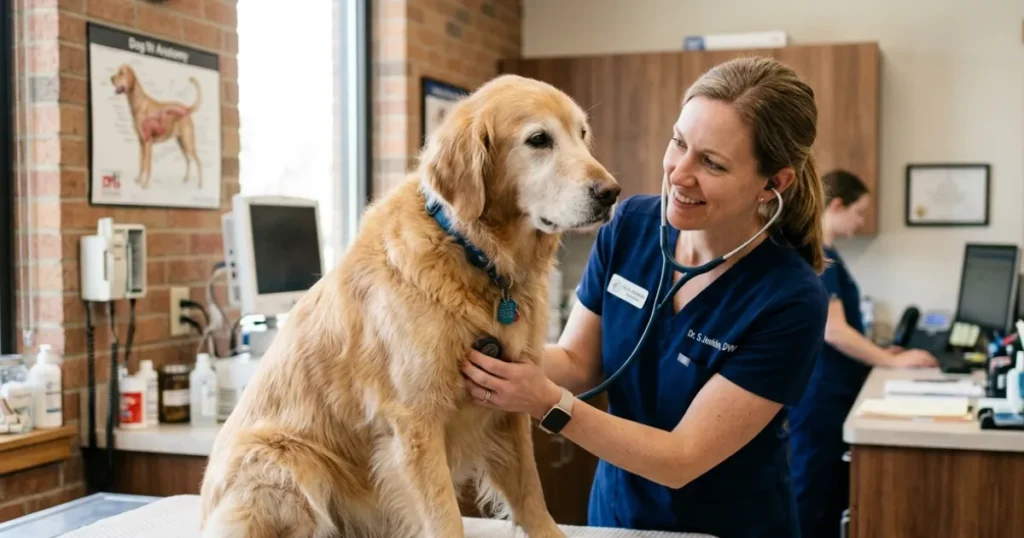
Following AAHA senior guidance, a Golden 8 and older should be examined every 6 months with bloodwork, not once a year. The reason is math. Disease moves faster relative to a dog’s remaining time, and six months in an old Golden is a long window for something like hemangiosarcoma to grow unseen. Half the life-changing catches I make happen at these visits are in dogs whose owners noticed nothing.
Food changes for a slower metabolism.
An old Golden burns fewer calories, so the same bowl that kept it lean at 4 now adds weight, and every extra pound multiplies joint strain. Feed to body condition, not habit, and if you can’t easily feel the ribs, cut portions. A vet-guided senior diet with adequate protein protects muscle, which seniors lose faster than fat.
Joints get active support.
Osteoarthritis is nearly universal in old Goldens, and the tools that help are glucosamine and chondroitin; omega-3 fatty acids dosed by body weight; vet-prescribed pain control when needed; and above all, lean weight. Swimming is the ideal senior exercise here, since it works muscles without pounding joints. This is exactly why keeping a golden lean its whole life matters so much, a theme our golden retriever age chart builds its whole longevity case around.
Dental care becomes medicine.
Periodontal disease affects most dogs by middle age, and in a senior it taxes the heart and kidneys. Keep brushing, and don’t skip cleanings on age alone. Modern anesthesia is far safer for healthy seniors than untreated mouth infection.
Comfort at Home: Easing Your Aging Golden’s Daily Life
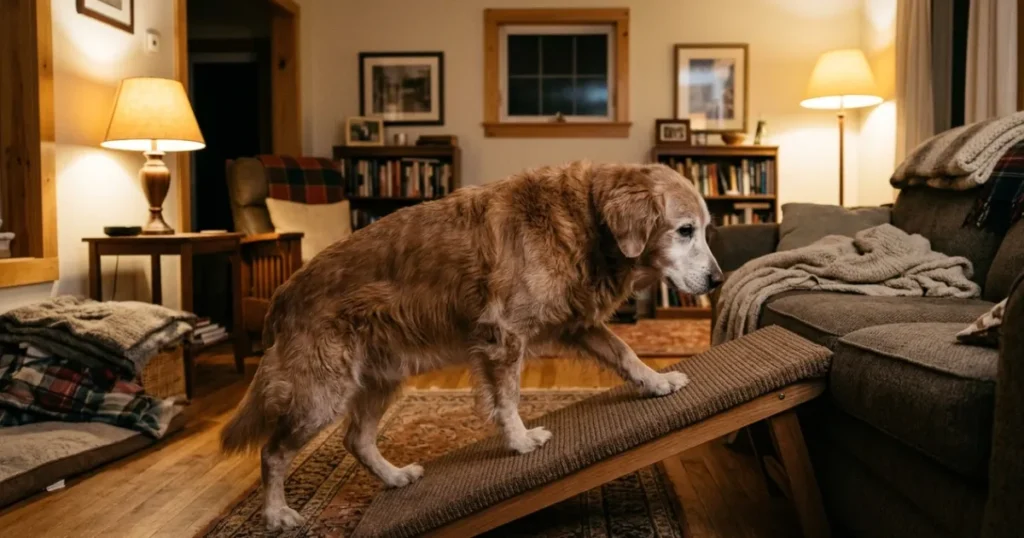
The home changes that help an old Golden aren’t about pampering. Each one solves a specific problem that aging creates, and matching the fix to the problem is what makes the difference.
Traction is the big one. Old Goldens with stiff hips slip on hardwood and tile, and that slipping both hurts and scares them, which makes them move less, which weakens muscles further. Runners and rugs along their regular paths break that cycle. For the dog that hesitates before the couch or the car, a ramp removes the jump that its joints can no longer absorb painlessly. An orthopedic bed supports arthritic joints better than a flat cushion, and warmth eases stiff mornings.
Feeding and water get small tweaks too. A raised bowl spares a stiff neck, and placing extra water stations around the house matters because some seniors won’t walk far to drink and quietly slide toward dehydration.
Then there’s the mind. An aging Golden with early cognitive change does best on a predictable routine, since familiar patterns reduce the confusion and anxiety that dementia brings. Gentle daily engagement, a short sniff-walk, an easy puzzle feeder, and a few minutes of the training it always loved keep the mind working without taxing the body.
In a representative case, a 12 year old Golden with early cognitive signs and hind-end stiffness improved markedly once its owner added floor runners, a night light, and a fixed daily schedule. Nothing medical changed. The dog was simply able to navigate its own home again. Every one of these adjustments connects back to the conditions in our health hub.
Senior or Geriatric? Why the Distinction Changes Care
Here’s a line no ranking article draws, and it genuinely changes the care plan. Senior and geriatric are not the same thing, and treating an 8 year old like a 13 year old, or a 13 year old like an 8 year old, both cause problems.
A Golden becomes a senior around 8. This is a monitoring stage. The dog is often still active, and the job is early detection through those twice-yearly exams while the dog lives a nearly normal life. An 8 year old Golden that still swims and retrieves is completely normal.
Geriatric is the deeper end, generally the last stretch of life, often 12 and up in Goldens, though it varies with the individual. Care shifts from detection toward active comfort and quality of life. Mobility support, pain management, and daily comfort take center stage, and the questions become less “how do we prevent” and more “how do we keep this dog comfortable and content.”
The mistake I see cuts both ways. Owners who treat a spry 8 year old as fragile rob it of exercise it still needs, and owners who push a geriatric dog like a middle-aged one cause pain. Read the dog in front of you, not just the birthday. For where these thresholds sit precisely, our age chart lays out the full timeline.
The Comfort, Watch, Confirm Routine for Your Old Golden
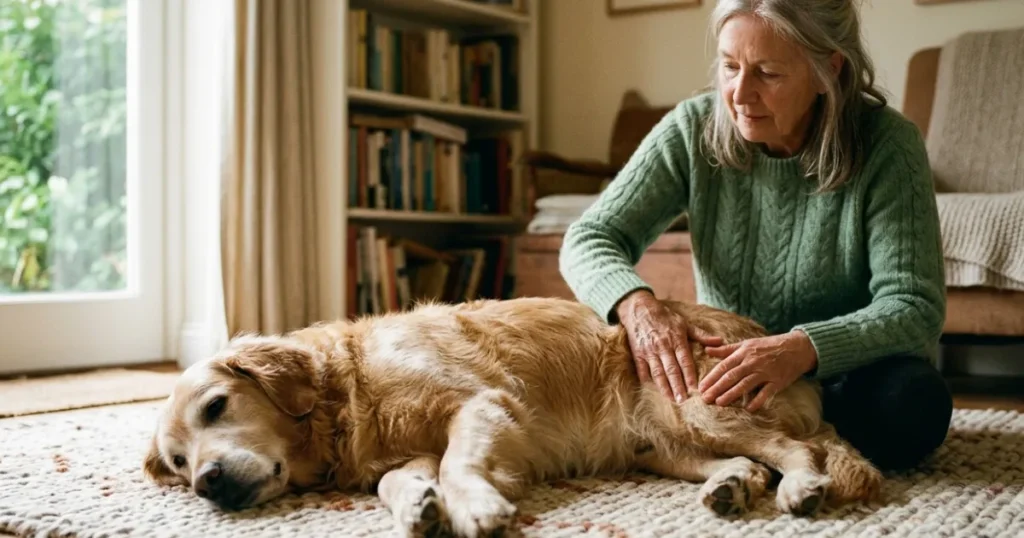
This is the framework I give every owner of an old Golden, and it turns a vague sense of “just keep him comfortable” into a plan you can actually run. Three habits, plus a simple way to judge quality of life.
| Step | What you do | If you see | Then |
| Comfort | Runners, ramp, orthopedic bed, lean weight, joint support | New reluctance to rise or use stairs | Vet visit. Pain is treatable, and untreated pain shrinks the world |
| Watch | Weekly hands-on check: feel for lumps, note weight, thirst, appetite, energy | A new lump, or a clear change in any baseline | Vet within the week. Never watch a lump in a Golden |
| Confirm | Twice-yearly vet exams with bloodwork from age 8 | Anything the exam or labs flag | Follow the plan early, while options are widest |
To judge the quality of life between visits, run a simple monthly self-check I call HEART. Is your Golden still hungry (eating with interest), enjoying things it loves, ambulating (moving without obvious pain), resting and sleeping normally, and still your dog in temperament? More yes than no is reassuring. A slide across several at once is the signal to talk with your vet honestly, not about panic, but about what comes next. This is where you and your vet decide together, and it’s the hardest, most loving part of caring for an old Golden.
Expert Insight
The kindest thing I tell owners of old Goldens is that pain in this breed hides behind a wagging tail. If your senior has stopped doing one thing it used to love, a favorite walk, the stairs, or greeting you at the door, that’s not stubbornness or laziness. That’s usually pain or decline, and it’s worth a visit.
NORMAL AGING vs SEE THE VET
Graying, sleeping more, and slowing gently are usually normal aging. Sudden weakness, a new lump, heavy panting at rest, big thirst changes, or fast weight loss are not. The full sorting table is below. When in doubt with an old golden, a same-week exam beats waiting.
At what age is a golden retriever considered old?
Around 8 years. Goldens become seniors at 8 and geriatric roughly from 12, though genetics, weight, and care shift the timeline for each individual dog.
What are the first signs of aging in an old golden retriever?
Graying around the muzzle, sleeping more, slowing on walks, and stiffness after rest are the earliest normal signs. A duller coat and gradual hearing loss often follow.
How often should a senior golden retriever see the vet?
Every 6 months from age 8, with bloodwork. This twice-yearly schedule, per AAHA guidance, catches disease like cancer while it is still most treatable.
Is it normal for an old golden retriever to sleep all day?
More sleep is normal aging. Sudden, dramatic increases in sleep paired with weakness, appetite loss, or pale gums are not normal and warrant a prompt vet visit.
What should I feed my aging golden retriever?
A vet-guided senior diet with adequate protein to protect muscle and controlled calories for a slower metabolism. Feed to body condition, and add omega-3s for joints and coat.
Why is my senior golden retriever’s belly or eyes changing?
Cloudy bluish eyes are usually harmless lenticular sclerosis, but any eye change needs a vet to rule out cataracts. A suddenly swollen tight belly is an emergency.
How can I help my old golden retriever with arthritis?
Keep the dog lean, add glucosamine, chondroitin, and omega-3s, use ramps and floor runners, and ask your vet about pain medication. Swimming builds muscle without joint impact.
Can old dogs get dementia?
Yes. Canine cognitive dysfunction causes confusion, getting stuck in corners, and disrupted sleep. It has no cure but is manageable with routine, mental stimulation, and veterinary support when caught early.
What are red flags in an aging golden retriever?
Sudden weakness, pale gums, a new or growing lump, big increases in thirst or urination, fast weight loss, labored breathing, or new confusion. Each warrants prompt veterinary attention.
Do senior golden retrievers still need exercise?
Yes, gentle daily exercise. Short walks and swimming maintain muscle, joint health, and mood. The goal is regular low-impact movement, not intensity, adjusted to the dog’s comfort.
How do I keep my old golden retriever comfortable at home?
Add floor traction, a ramp for jumps, an orthopedic bed, and a predictable routine. Place water stations nearby and keep the dog warm to ease stiff joints.
Why do golden retrievers gray so early?
Some Goldens gray around the muzzle as early as 5, well before they are truly old. Early graying is cosmetic and unrelated to health or lifespan.
Is my old golden retriever in pain?
Possibly, if it has stopped doing things it once enjoyed, hesitates on stairs, rises slowly, or seems withdrawn. Goldens hide pain well, so a vet assessment is worthwhile.
Should I still groom my aging golden retriever?
Yes, and more gently. Regular brushing stimulates skin oils and lets you feel for new lumps early. Aging skin is more fragile, so use a soft brush and light pressure.
How do I know when it is time to let my golden retriever go?
Track quality of life across appetite, enjoyment, mobility, rest, and temperament. When more of these decline persistently, discuss options honestly with your vet, who can guide this deeply personal decision.
When should I call the vet immediately about my old Golden?
Call immediately for collapse, pale gums, a swollen, tight belly with retching, labored breathing, or repeated seizures. For a new lump on a stable dog, book within one week.
The Bottom Line on Old Golden Retriever Care
An old golden retriever asks for a few specific things: twice-yearly vet visits from age 8, lean weight, real joint support, a home adapted to stiffer joints, and above all, an owner who can tell normal graying from a genuine red flag. That last skill is what separates a scary “just old age” story from a treatable problem caught in time.
Use the normal-versus-red-flag table, run the Comfort, Watch, Confirm routine, and check quality of life honestly each month. Do that, and you’ll give your senior the comfortable, dignified years this breed so deeply earns. For how these years fit the breed’s full lifespan, read our golden retriever lifespan and go deeper on any condition in our health hub.
How old is your Golden now, and what’s the one comfort change that made the biggest difference for your senior, whether that’s a ramp, a rug, or a shift in routine? If you’ve walked the later geriatric years with a golden, your experience helps the next owner facing those quiet, tender decisions.