
Focal seizures in dogs are seizures originating in one brain region, producing signs in one body area, such as a twitching limb, repetitive facial movement, or sudden altered awareness, while the dog stays conscious. They’re the seizure type most commonly missed by Golden Retriever owners because they don’t look like full convulsions.
In my practice, these episodes are often the first sign I see in Goldens eventually diagnosed with idiopathic epilepsy. They appear months before a generalized episode, and owners who recognize them early give their dog a significant diagnostic head start.
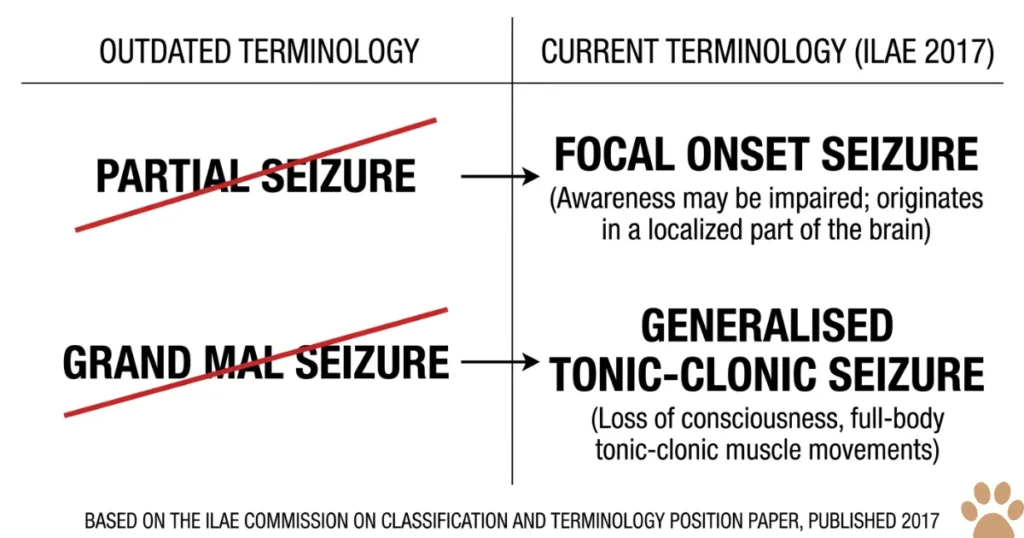
According to the International Veterinary Epilepsy Task Force (IVETF) 2015 consensus classification, canine seizures are categorized as focal onset, generalized onset, or unknown onset, replacing the older “partial” and “grand mal” terms still used on most consumer health sites. Knowing which type of Golden experience you’ve experienced directly shapes the treatment your vet considers.
Focal Seizures in Dogs: What They Look Like in Golden Retrievers
These seizures begin in a single cerebral hemisphere and produce localized signs; the dog may stay fully awake throughout. This is what makes them easy to miss and critical to understand.
The Observable Focal Seizure Signs in Your Golden
The signs I watch for in Goldens with suspected focal seizure activity follow a recognizable sequence. First comes a shift in attention; your dog stops responding normally to their name. Then the motor signs appear: repetitive lip-smacking, one-sided facial twitching starting at the muzzle, rhythmic blinking of one eye, or an involuntary head turn. The full episode typically lasts 30 seconds to 2 minutes.
What makes Goldens distinct from other breeds is that facial involvement is more pronounced and consistent. When I examine a Golden with reported “weird episodes,” I ask specifically about lip movement, ear position, and whether the dog stared at nothing while the face moved. That constellation of facial twitching, altered gaze, and brief unresponsiveness is the focal seizure signature in this breed.
Focal Seizures With and Without Altered Awareness
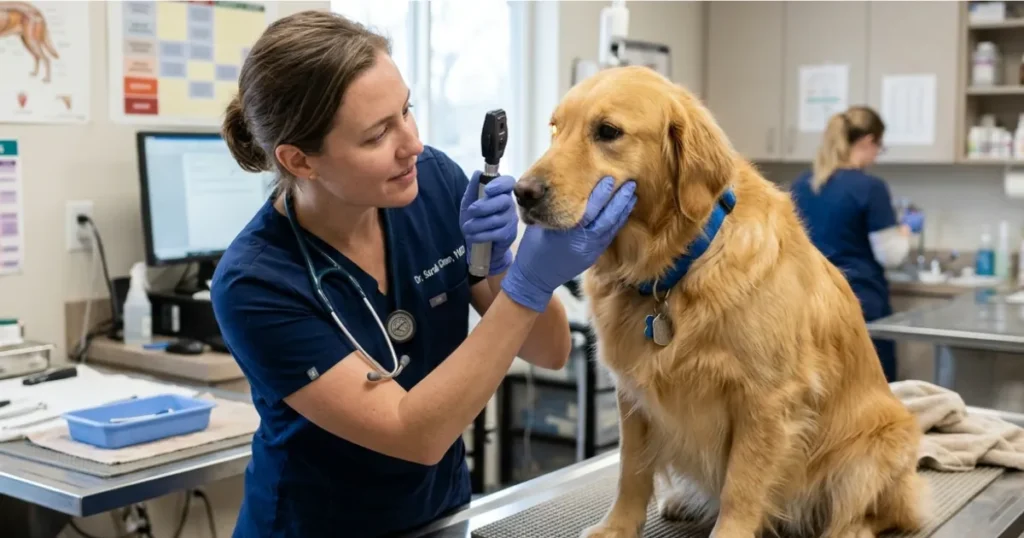
The IVETF 2015 classification divides focal seizures into two subcategories based on consciousness. A focal onset seizure with retained awareness means the dog stays conscious and responds to their name throughout. A focal onset seizure with impaired awareness means the dog appears absent or glassy-eyed despite the episode being confined to one body area.
This distinction matters practically. Impaired awareness during a focal episode suggests the seizure is spreading beyond the initial focus. In Goldens, blank-stare episodes are regularly dismissed as “zoning out” for months before a generalized seizure forces a clinic visit. I’ve seen this pattern three times in the past year alone.
When Focal Seizures Progress to Generalised Events
A focal seizure can secondarily generalize, spreading from one brain region to both hemispheres, producing a full tonic-clonic convulsion. In Goldens with idiopathic epilepsy, secondary generalization is common and may happen within seconds of the focal phase. Owners who haven’t noticed the focal onset assume the generalized episode arrived without warning. It didn’t. The focal lead-in was there; they didn’t know what to look for. Here is the best dog food for seizures list.
Cluster Seizures in Dogs: Why Golden Retrievers Are at Higher Risk
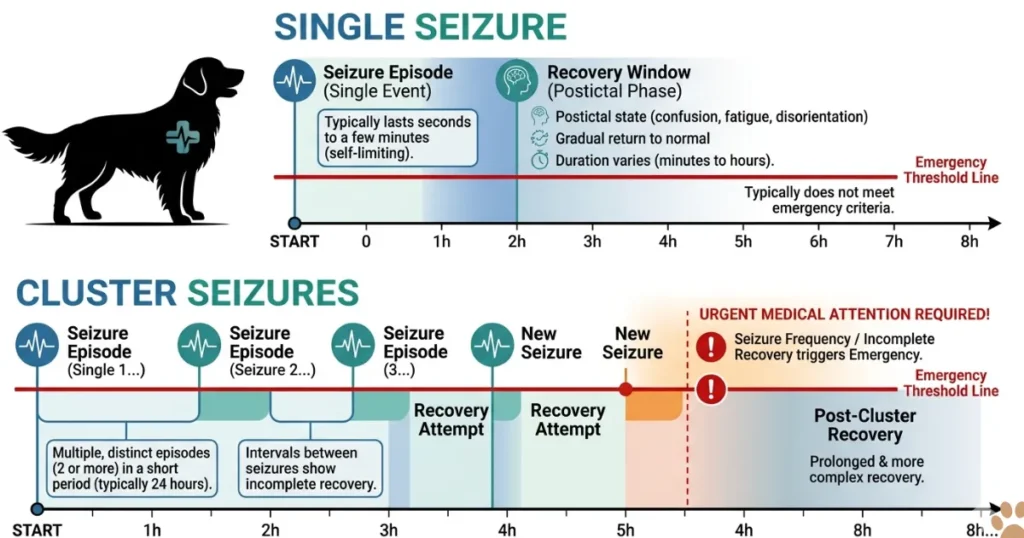
Cluster seizures in dogs are two or more seizure episodes within a 24-hour period. They’re a clinical emergency category with specific consequences, not simply “a lot of seizures.”
What Makes a Cluster Different From a Single Episode
Between cluster events, the dog regains partial consciousness. This differentiates cluster seizures from status epilepticus, where seizure activity is continuous. A Golden who seizes at 8am, recovers partially by 9am, then seizes again at 2pm is in cluster territory. That partial recovery between events is the key diagnostic marker.
The clinical danger is cumulative neurological stress. Each successive episode lowers the neuronal threshold for the next, the next seizure becomes more likely and potentially more severe. Cumulative hyperthermia across cluster events can cause permanent brain damage.
Why Golden Retrievers Present With Clusters at First Assessment
Goldens are more likely than Labradors to present with cluster seizures as their first documented seizure event. The Morris Animal Foundation’s Golden Retriever Lifetime Study tracks seizure disorder presentations in the breed, and the pattern I see clinically is consistent: Goldens with idiopathic epilepsy often don’t come in with a single clean episode; they come in mid-cluster.
The breed-specific mechanism relates to familial epilepsy genetics. Dogs with inherited epilepsy mutations tend toward higher baseline neuronal excitability; once one seizure threshold is breached, the next threshold is temporarily lower. In Goldens, this kindling effect is more pronounced than in Labradors at equivalent ages.
In March 2024, a 2.5 years old male Golden presented after three seizures in one day. The owner witnessed the first episode, assumed it was a one-time event, and waited to see the vet. The second and third episodes occurred before the appointment. He arrived in an active post-ictal state. MRI and bloodwork confirmed idiopathic epilepsy with cluster onset. He’s been stable on levetiracetam since, but the three-episode cluster caused measurable post-ictal cognitive changes that persisted for two weeks.
The Cluster Seizure Threshold Every Golden Owner Must Know
Two seizures in 24 hours: emergency clinic, same visit. Administer prescribed rectal diazepam if available before transport. One seizure followed by another within 30 minutes: treat as status epilepticus risk, emergency clinic immediately. The brain damage accumulates between episodes, not only during them.
What Most Guides Get Wrong: Canine Partial Seizures vs. Focal Epilepsy
“Canine partial seizures” is a term still widely used in dog health content. It’s outdated, and using it with your vet creates communication gaps that affect diagnosis.
The IVETF Reclassification: Most Pet Sites Missed
In 2015, the International Veterinary Epilepsy Task Force published a consensus on seizure classification for veterinary use. The term “partial seizure” was replaced with “focal onset seizure.” “Grand mal” became “generalized tonic-clonic seizure.” “Petit mal” was retired from veterinary clinical language entirely.
Why does this matter for Golden owners? “Partial” doesn’t distinguish awareness status. “Focal onset with retained awareness” does. The more precise your terminology, the faster your vet reaches a classification, and the faster they choose the right first-line treatment.
Focal Epilepsy in Dogs: The Condition behind Repeated Episodes
Focal epilepsy in dogs is a recurring seizure disorder that produces focal onset seizures from the same brain region. It’s the underlying condition, not the individual episode. A Golden with focal epilepsy has repeated events originating from the same focus, caused by a structural lesion or, in the case of idiopathic focal epilepsy, by genetic predisposition.
In Goldens, focal epilepsy is most commonly idiopathic. The GRLS tracks this as a primary neurological outcome. Structural focal epilepsy, caused by a tumor, scar, or inflammatory encephalitis, becomes the primary differential in Goldens presenting after age 6.
The most common owner error I see:
“My Golden has focal epilepsy,” said about a dog who had one focal episode. One episode describes an event. Focal epilepsy describes a confirmed recurring pattern. The distinction changes what diagnostic workup your vet recommends.
The GRI Seizure Type Log: Recording What Your Vet Actually Needs
The most useful thing to bring to a post-seizure appointment isn’t a description; it’s a log.
What to Record during and After Each Episode
During the episode:
Time of onset. Duration from first sign to full stop. Body parts involved. Awareness, did your Golden respond when you called their name? Bladder or bowel loss. Any trigger in the 30 minutes prior.
Post-ictal window (up to 4 hours after):
Time to first normal behavior. Residual signs, stumbling, apparent blindness, circling. A second episode in this window is a cluster event.
The GRI Seizure Type Log Format
| Field | What to Record |
| Date and time | Exact start |
| Duration | Minutes: seconds |
| Type | Focal / Generalized / Uncertain |
| Awareness | Retained / Impaired / Unknown |
| Body parts | Specific: left foreleg, face, all four |
| Post-ictal duration | Time to first normal response |
| Second episode in 24 hrs | Yes/No—if Yes, onset time |
| Video taken | Yes / No — filename |
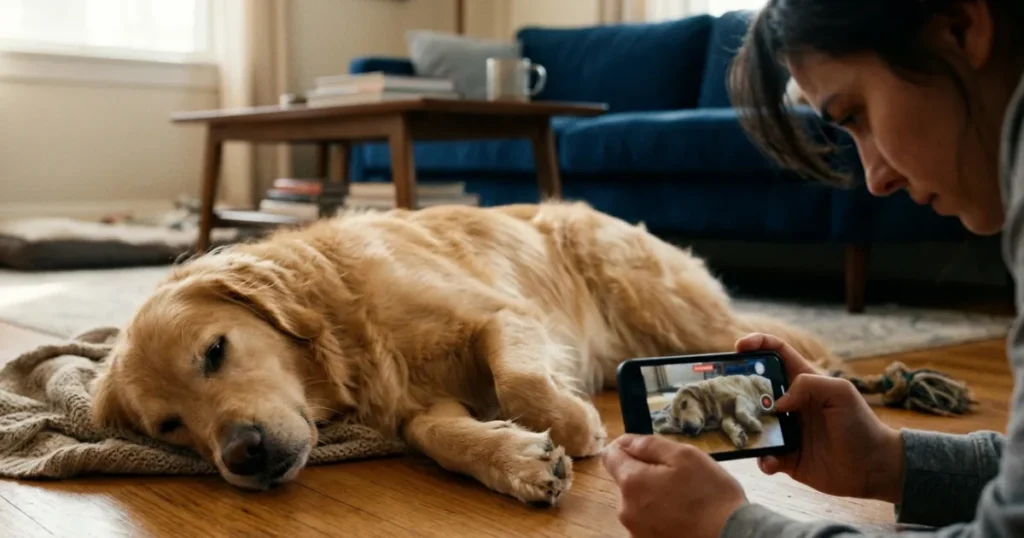
That last field matters most. I can classify a seizure type from a 30-second phone video faster than from a 10-minute verbal description. Protection first, then record if it’s safe to do so.
Why Seizure Type Affects Which Medication Your Vet Chooses.
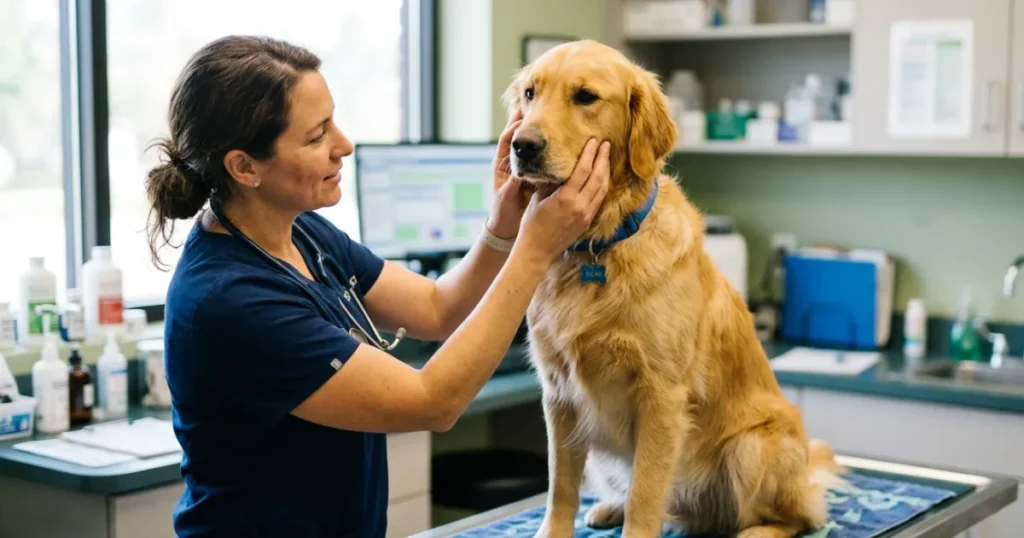
Levetiracetam (Keppra) is often preferred for focal onset presentations in Goldens because of its cleaner side-effect profile and lower liver risk compared to phenobarbital, relevant in a breed with moderate hepatic sensitivity. Phenobarbital remains primary when cluster frequency demands higher seizure threshold suppression across types.
What I tell owners: not “watch and wait,” but “watch, record, and bring the log.” In Goldens, the seizure type pattern across the first 90 days after presentation is the most reliable predictor of which medication works at which threshold.
Expert Insight
“The owners who give me the most useful consultation data aren’t necessarily those who remembered every detail; they’re the ones who used their phones. A 45-second video showing lip-smacking, left eye deviation, and retained awareness tells me more about seizure origin than any description can. In Goldens presenting before their third year, that precision often means the difference between catching focal activity early and missing three months of progressive episodes.”
What are focal seizures in dogs?
Focal seizures in dogs originate in one cerebral hemisphere and cause localized signs, facial twitching, limb jerking, or altered awareness, without necessarily affecting the whole body. The dog may remain conscious throughout.
How long do focal seizures in dogs usually last?
Focal seizures in dogs typically last 30 seconds to 2 minutes. Episodes under 5 minutes with clean recovery are a same-day vet call. Any focal seizure that progresses to full-body convulsion or exceeds 5 minutes requires emergency care.
What are the signs of cluster seizures in dogs?
The signs of cluster seizures in dogs are two or more seizure episodes within 24 hours with partial recovery between events. Between clusters, the dog may appear disoriented and slow to respond; this is not full recovery.
How dangerous are cluster seizures in dogs?
Cluster seizures in dogs are a medical emergency. Each successive episode lowers the neuronal threshold for the next. Two episodes within 24 hours require emergency care, not monitoring. Cumulative hyperthermia across events can cause permanent brain damage.
What are canine partial seizures?
Canine partial seizures are the outdated term for what the IVETF 2015 classification now calls focal onset seizures. The terminology changed to better reflect origin and awareness status. Both terms describe seizures localized to one brain region.
How do canine partial seizures differ from full seizures?
Canine partial (focal) seizures involve one brain region and may leave the dog conscious. Full generalized seizures involve both hemispheres and cause complete loss of consciousness and whole-body muscle rigidity simultaneously.
What is a dog partial seizure?
A dog partial seizure, now called a focal onset seizure, is a brief episode where one body part twitches or the dog shows altered behavior without collapsing. It typically lasts under 2 minutes with the dog remaining standing.
Can a dog partial seizure become a full convulsion?
Yes. A focal onset seizure can secondarily generalize, spreading from one brain region to involve both hemispheres. In Golden Retrievers with idiopathic epilepsy, this progression is common and may happen within seconds of the focal phase.
What is focal epilepsy in dogs?
Focal epilepsy in dogs is a recurring seizure disorder producing focal onset seizures from the same brain region repeatedly. It can be idiopathic (genetic) or structural (caused by a tumor, scar, or inflammation).
How is focal epilepsy in dogs diagnosed?
Focal epilepsy in dogs is diagnosed through neurological exam, bloodwork ruling out metabolic causes, and MRI ruling out structural lesions. In dogs under 6 with clean imaging, idiopathic focal epilepsy is the working diagnosis.
Do Golden Retrievers have focal seizures more than other breeds?
Yes. Golden Retrievers carry a genetic predisposition to idiopathic epilepsy that frequently presents with focal onset seizures before generalized events appear. The Morris Animal Foundation GRLS tracks this neurological pattern specifically.
What does a focal seizure look like in a Golden Retriever specifically?
In Golden Retrievers, focal seizures most commonly show lip-smacking, one-sided facial twitching from the muzzle, brief eye deviation, and a glassy stare with partial unresponsiveness lasting 30-90 seconds. The dog usually stays standing.
Are Golden Retrievers prone to cluster seizures?
Yes. Goldens with idiopathic epilepsy present with cluster seizures at first assessment more often than Labradors. The breed’s familial epilepsy genetics create lower seizure thresholds that contribute to cluster onset patterns at first presentation.
What does the IVETF say about seizure classification in dogs?
The IVETF 2015 consensus replaced “partial seizure” with “focal onset seizure” and “grand mal” with “generalized tonic-clonic seizure.” This classification is now standard in veterinary neurology and guides treatment selection decisions.
My dog stared blankly for 20 seconds and then acted normally. Was that a focal seizure?
Possibly yes. A 20-second blank stare with unresponsiveness followed by immediate recovery fits a focal onset seizure with impaired awareness. Call your vet and describe the episode. Film any future episodes for accurate vet classification.
Conclusion | What Seizure Type Tells You and What to Do Next.
Knowing the difference between focal seizures, cluster episodes, and generalized convulsions determines how urgently you act, how accurately you describe what happened, and which treatment pathway your vet considers first.
For Golden Retrievers, recognizing focal onset signs early—the lip movement, the glassy stare, and the brief non-responsiveness—often means catching idiopathic epilepsy before a generalized episode confirms it. Start the GRI Seizure Type Log after any uncertain episode. Bring it.
For urgency thresholds and emergency triage, the overview of seizures in dogs covers when to call the emergency clinic. For medication questions, the dog seizure medication guide covers phenobarbital, levetiracetam, and prescribing thresholds by breed.
Did your Golden have a seizure that didn’t look like a full convulsion? Share what you saw, the body part involved, whether they responded to their name, and how long it lasted. Your description may help another owner recognize a focal episode before the full convulsion arrives.

Dr. Nabeel A.
Dr. Nabeel Akram is a Doctor of Veterinary Medicine with more than five years of hands-on experience in animal health, canine nutrition, and preventive care. He is a registered veterinarian with the Pakistan Veterinary Medical Council (PVMC), the statutory body regulating veterinary practice in Pakistan. As the founder of Golden Retriever Insight, Dr. Akram writes and medically reviews every health, nutrition, and grooming guide published on the site. His clinical interests include canine oncology, epilepsy management, and breed-specific nutrition for large breeds — the core topics this site covers. Every article is checked against current veterinary literature and sources such as the Merck Veterinary Manual, AVMA guidance, and peer-reviewed research.