
Blueberries show up on every “superfoods for humans” list, and the moment Golden Retriever owners read that, the question follows immediately: Can dogs eat blueberries, or is the superfood label strictly for us?
The answer is one of the cleaner ones in canine nutrition: yes, blueberries are safe for dogs, and for Golden Retrievers specifically, they offer genuine benefits that go beyond empty treat calories. Blueberries are low in sugar, high in antioxidants, and sized perfectly for training rewards – a meaningful combination for a breed that is genetically prone to weight gain and cancer at rates higher than most other dogs.
That said, “safe” and “feed freely” are not the same thing. Portion size, preparation, and what form the blueberry comes in all determine whether your Golden gets a functional health snack or an unnecessary sugar load. I’ve seen owners assume frozen blueberries in yogurt count – they don’t. Getting this right is simple once the framework is clear.
Can Dogs Eat Blueberries? The Direct Answer
Can dogs eat blueberries? Yes – blueberries are non-toxic to dogs, require no special preparation, and provide measurable nutritional value. The AKC confirms blueberries as a dog-safe fruit and specifically notes their antioxidant content as beneficial. For Golden Retrievers, the relevance goes deeper than general safety. This breed has one of the highest cancer incidence rates among purebred dogs, and dietary antioxidants are one evidence-based lever that owners can actually pull.
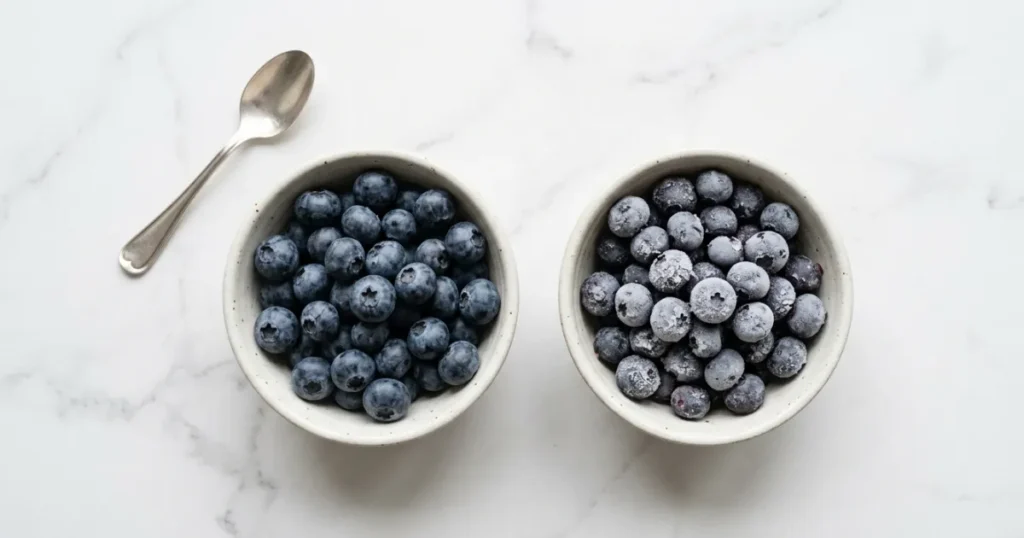
No seeds to remove, no toxic compounds in the flesh or skin – whole fresh or frozen blueberries are among the most preparation-simple fruits you can offer a Golden.
Why Blueberries Are Especially Valuable for Golden Retrievers
Blueberries aren’t equally relevant to all breeds, and this is the distinction most generic content ignores entirely.
Golden Retrievers develop cancer at a rate approaching 60% over their lifetimes, according to data compiled by the Morris Animal Foundation’s Golden Retriever Lifetime Study – the largest longitudinal study of a single dog breed ever conducted. Oxidative stress is one contributing factor in cancer cell development, and anthocyanins (the pigment compounds that make blueberries blue) are among the most potent dietary antioxidants available in whole dog food form.
Nutritional Profile That Matters for Goldens
Blueberries provide vitamin C, vitamin K, manganese, and dietary fiber alongside their anthocyanin content. Vitamin C functions as a free radical scavenger. Vitamin K supports bone metabolism – relevant for a breed with high rates of joint degeneration and hip dysplasia. Manganese plays a role in cartilage formation and mitochondrial function. None of these are present in the training treats most owners reach for by default.
Caloric Density – Why This Matters for a Weight-Prone Breed
A single blueberry contains approximately 1 calorie. For a 65-pound Golden Retriever whose daily caloric requirement sits around 1,300 kcal, ten blueberries contribute less than 1% of daily intake. This caloric profile makes blueberries one of the few treats that can be used generously in training sessions without meaningfully displacing the nutritional balance of a complete commercial diet.

Are Blueberries Safe for Dogs at Every Life Stage?
Blueberries safe for dogs across all life stages – puppies, adults, and seniors – but the appropriate serving size differs at each stage, and the reasons are breed-specific.
Blueberry Safety for Golden Retriever Puppies
Golden Retriever puppies can eat blueberries from around 8 weeks, but the serving context matters. Puppies are on nutrient-dense growth formulas calibrated for rapid development – blueberries add antioxidants but should never displace meal calories. Keep puppy portions to 2 – 3 blueberries per session, offered as occasional enrichment rather than training currency. Watch for soft stools after introduction; puppy digestive systems respond more strongly to new foods than adults.

Adult Goldens (1 – 7 Years) – Optimal Window for Blueberry Benefits
This is the life stage where blueberries provide the most functional value. Adult Goldens have established digestive microbiomes, stable caloric needs, and are entering the age window where cancer risk begins to climb. The antioxidant load from consistent, portioned blueberry consumption is a meaningful dietary addition during these years. Up to 10 blueberries per session, 3 – 4 times per week, fits comfortably within treat allocation guidelines for a typical 60 – 70 lb adult Golden.
Senior Goldens (8+ Years) – Modified Approach
Senior Golden Retrievers benefit from blueberries’ antioxidant and anti-inflammatory properties, but digestive motility slows with age. Excessive fiber from any source can cause loose stools in seniors. Keep portions to 5 – 7 blueberries per session. If your senior Golden is on a prescription diet for kidney, liver, or cardiac disease, confirm with your vet before adding any new food – vitamin K in blueberries interacts with certain anticoagulant medications.

Can You Give Dogs Blueberries in Every Form? What’s Safe and What Isn’t?
Can you give dogs blueberries in any form they come in – fresh, frozen, dried, in baked goods or yogurt? No. The berry itself is safe; what surrounds it in processed forms frequently isn’t.
| Form | Safe for Goldens? | Notes |
| Fresh whole blueberries | ✅ Yes | Ideal form — no prep required |
| Frozen blueberries (plain) | ✅ Yes | Good summer treat; may cause loose stools if too many |
| Dried blueberries | ⚠️ Caution | Concentrated sugar; 1–2 max; avoid as regular treat |
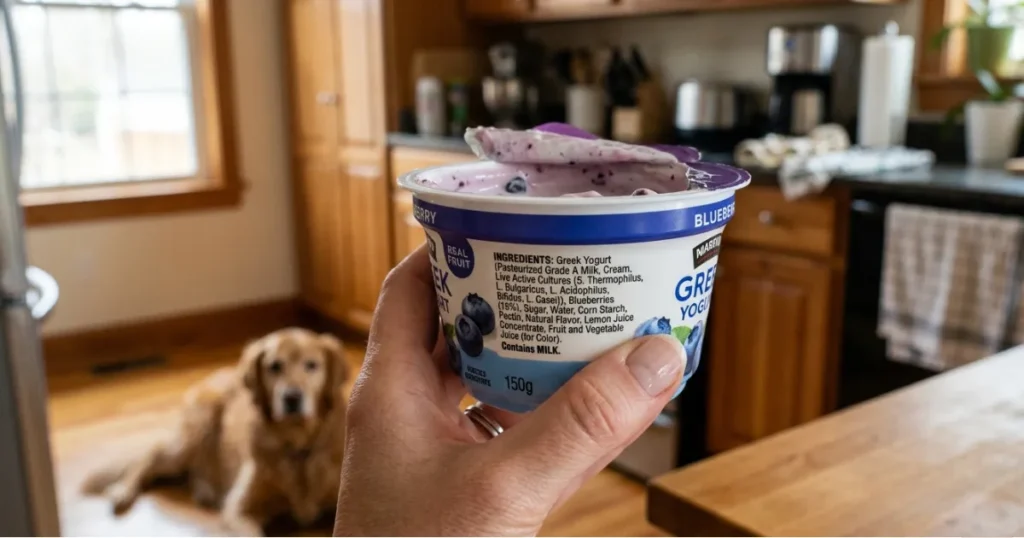
| Blueberry yogurt | ❌ No | Added sugar, artificial flavors, and potentially xylitol |
| Blueberry muffins/baked goods | ❌ No | Sugar, butter, and xylitol risk in “sugar-free” versions |
| Blueberry juice | ❌ No | Concentrated fructose, no fiber benefit |
| Blueberry supplements for dogs | ✅ Context-dependent | Vet guidance recommended; don’t double-dose with fresh fruit |
Note: Always check ingredient labels on any processed blueberry product. Xylitol in “no sugar added” or “diet” versions is acutely toxic to dogs.
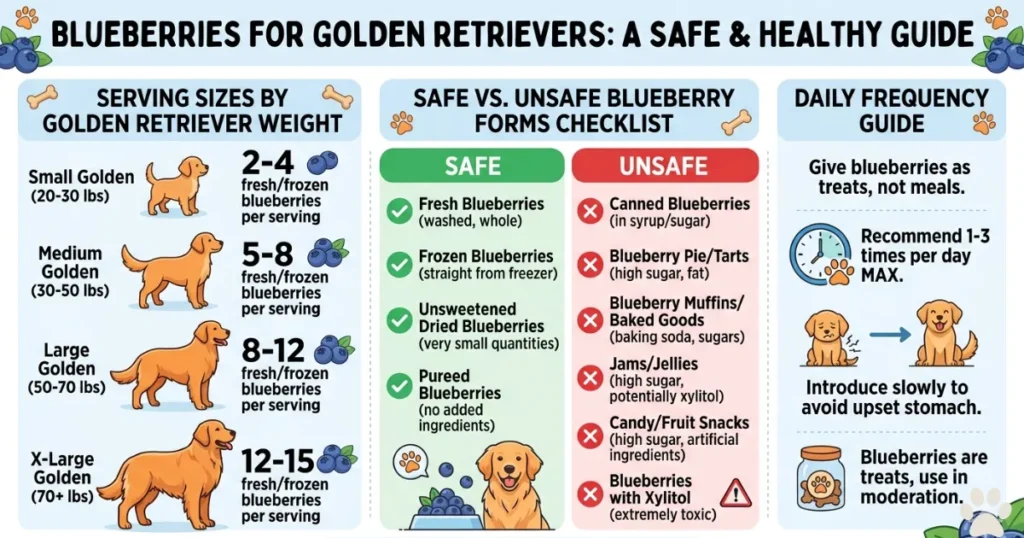
Blueberries for Dogs: Safe Serving Sizes by Golden Retriever Weight.
Blueberries for dogs should follow the same 10% treat rule that applies to all snacks – treats, including fruit, should not exceed 10% of daily caloric intake, per AKC nutritional guidelines. For blueberries specifically, the caloric density is low enough that this guideline is permissive, but it still sets a ceiling.
| Golden Retriever Weight | Daily Caloric Need (approx.) | 10% Treat Ceiling | Blueberry Count at ~1 kcal each |
| 45–55 lbs (lean female) | 900–1,100 kcal | 90–110 kcal | Up to 90–110 berries (practical: cap at 10–15) |
| 60–70 lbs (average male) | 1,200–1,400 kcal | 120–140 kcal | Up to 120–140 berries (practical: cap at 10–15) |
| 75–85 lbs (large male) | 1,400–1,700 kcal | 140–170 kcal | Up to 140–170 berries (practical: cap at 15–20) |
Practical cap exists because fiber content – not calories – is the actual limiting factor. More than 15- 20 blueberries in a single session can cause loose stools in most adult Goldens, regardless of caloric intake.
What Competitors Miss: The Antioxidant Mechanism and Why It’s Breed-Relevant.
The top-ranking articles on this topic confirm blueberries are safe and mention antioxidants – then stop. What they miss is the mechanism and the breed-specific relevance that makes this more than a generic safety answer.
Anthocyanins in blueberries inhibit oxidative stress by neutralizing reactive oxygen species (ROS) – unstable molecules that damage DNA, proteins, and cell membranes. In Golden Retrievers, where cancer incidence is documented at rates significantly above the canine average, reducing cumulative oxidative load is a practical and evidence-adjacent dietary strategy. The Morris Animal Foundation’s Golden Retriever Lifetime Study has been tracking dietary, environmental, and genetic factors in over 3,000 Goldens since 2012, specifically because this breed’s cancer burden is so disproportionate.
Does This Mean Blueberries Prevent Cancer in Goldens?
No direct causal claim exists in peer-reviewed canine literature that blueberry consumption prevents cancer in Golden Retrievers. What the evidence supports is that anthocyanins reduce oxidative stress at a cellular level, and oxidative stress is a documented contributing factor in cancer development. Blueberries are one low-risk, high-frequency intervention owners can make without disrupting a balanced diet. That’s a different – and more defensible – claim than “blueberries fight cancer.”
Cognitive Benefit in Aging Golden Retrievers.
Antioxidant compounds in blueberries cross the blood-brain barrier and have been associated with reduced cognitive decline in aging canine subjects in preliminary research. For Golden Retrievers entering senior years (8+), where cognitive dysfunction syndrome becomes a documented risk, consistent dietary antioxidant intake is a rational supportive measure alongside veterinary care.
Decision Framework: Should Your Golden Retriever Eat Blueberries?
- If your Golden is a healthy adult (1 – 7 years), normal weight, no diagnosed conditions → Yes. 10 – 15 fresh or frozen blueberries per session, 3 – 4x per week. Excellent training reward.
- If your Golden is a puppy (8 weeks – 12 months) → Yes, cautiously. 2 – 3 blueberries as occasional enrichment. Don’t substitute for puppy formula calories.
- If your Golden is a senior (8+) on no medications → Yes. 5 – 7 blueberries per session. Monitor for soft stools.
- If your Golden is a senior on anticoagulant medication → Confirm with your vet. Vitamin K in blueberries can interact with certain blood-thinning drugs.
- If your Golden is overweight on caloric restriction → Yes – blueberries are one of the best treats for weight management. Count them against the daily treat allocation.
- If your Golden has current diarrhea or GI upset → No. Adding fiber during active digestive disruption extends recovery time. Resume after 48 hours of normal stools.
- If you’re considering dried blueberries or blueberry-flavored products → Check every ingredient. Added sugar, xylitol, and artificial flavors disqualify the product regardless of blueberry content.
Warning: Blueberry-Related Risks Golden Owners Need to Know.
Problematic (Monitor 24 – 48 Hours).
Overconsumption of fresh blueberries.
The fiber in blueberries is soluble and ferments in the gut – beneficial in controlled amounts, disruptive in excess. More than 20 blueberries in a single sitting can cause gas, bloating, or loose stools in most adult Goldens. This is a volume issue, not a toxicity issue.
Frozen blueberries are fed too quickly.
Frozen blueberries are safe, but cold and slightly harder than fresh. Golden Retrievers who eat quickly, common in the breed – can swallow multiple frozen berries without chewing, causing minor GI discomfort from the cold temperature and undigested skins passing through. Thaw slightly or offer one at a time.
Toxic (Vet Now).
Blueberry products containing xylitol.
This is the only genuine toxicity risk in the blueberry category, and it comes from the container, not the berry. Xylitol – found in “no sugar added” yogurts, sugar-free jams, and some commercial dog treats – triggers a rapid, life-threatening insulin release in dogs. According to PetMD’s xylitol toxicity guidance, the onset of hypoglycemia can occur within 30 minutes of ingestion. Read every label before feeding your Golden any blueberry-containing product that isn’t a whole fresh berry.
Unsuitable (Avoid, Not Dangerous).
Blueberry juice, dried blueberries as a regular treat, and human blueberry baked goods. None are toxic in small amounts, but none provide the fiber and antioxidant benefit of whole fresh berries, and all carry concentrated sugar that adds up over time in a weight-prone breed.
When to Call the Vet After Your Golden Eats Blueberries.
URGENT – Call Immediately.
| Symptom | Likely Cause |
| Vomiting combined with tremors or weakness | Possible xylitol ingestion from blueberry product |
| Collapse or sudden disorientation | Hypoglycemia from xylitol toxicity |
| Seizure activity | Acute xylitol poisoning — emergency |
| Severe abdominal bloating + distress | Rule out GDV (bloat) if large volume consumed rapidly |
MONITOR AT HOME (24- 48 Hours).
| Symptom | Action |
| Soft stools or increased gas | Withhold blueberries; resume bland diet; normal within 24h |
| Single vomiting episode | Offer water; monitor; no more blueberries that day |
| Reduced appetite for one meal | Expected minor GI adjustment; monitor for worsening |
| Blue-tinged stools | Normal — anthocyanin pigment stool; not a health concern |
Expert Insight:
Golden Retrievers are one of the few breeds where dietary antioxidant choices genuinely connect to documented health vulnerabilities. Blueberries deliver anthocyanins and vitamin C in a caloric package so light that owners can use them daily in training without disrupting macronutrient balance. The practical ceiling isn’t caloric – it’s fiber. Ten to fifteen berries hit the antioxidant target for a typical adult Golden without pushing digestive tolerance. What I don’t recommend is assuming frozen blueberries mixed into commercial yogurt or baked into treats carry the same value – the processing context changes everything.
Myth-Busting: What Golden Owners Get Wrong About Blueberries?
Myth 1: Blueberries are too small for a Golden – they’re not satisfying.
Size doesn’t determine treat value for Golden Retrievers – novelty and palatability do. Goldens respond strongly to soft, slightly sweet treats. Frozen blueberries during summer training sessions are highly motivating and far lower-calorie than biscuits or jerky.
Myth 2: Wild blueberries are better than store-bought for dogs.
Wild blueberries have slightly higher anthocyanin concentration per gram, but the difference at serving sizes appropriate for dogs is negligible. Store-bought fresh blueberries are equally appropriate and carry a lower contamination risk from pesticides or wildlife exposure.
Myth 3: Blueberries will stain my Golden’s coat.
Anthocyanins can temporarily discolor saliva and the fur around the mouth in light-coated dogs, including cream-colored Goldens. It washes out. This is purely cosmetic and not a reason to avoid the fruit.
Myth 4: If blueberries are healthy for me, my Golden can eat as many as they want.
Human-appropriate serving sizes don’t scale directly to canine physiology. A human eating a cup of blueberries is consuming roughly 84 calories across their 2,000 daily – about 4%. A Golden eating the same cup is consuming around 84 calories against a 1,300-calorie day – 6.5%, which approaches or exceeds the treat ceiling and delivers excessive fiber load.
Myth 5: Blueberry supplements replace whole berries.
Concentrated blueberry extracts in supplement form aren’t interchangeable with whole fruit. Fiber, water content, and the matrix of phytonutrients in whole berries interact differently from isolated anthocyanin extracts. Supplements have a role in specific clinical contexts – under vet guidance – but don’t substitute the enrichment and palatability value of whole berries.
Can dogs eat blueberries every day?
Yes – with appropriate portion control. For a healthy adult Golden Retriever, 10 – 15 fresh blueberries daily is within the 10% treat guideline, given their low caloric density. Daily feeding is acceptable if it doesn’t displace meal calories and your Golden shows no digestive sensitivity.
Can dogs eat blueberries that are frozen?
Yes. Frozen blueberries are safe and often preferred by Goldens during warm weather – the texture and temperature make them a high-value treat. Offer one at a time for fast eaters to prevent swallowing whole frozen berries that can cause mild GI discomfort from cold and undigested skins.
Can dogs have blueberries if they are overweight?
Blueberries are one of the best treat options for overweight Golden Retrievers. At approximately 1 calorie per berry, they support the 10% treat rule without meaningfully impacting daily caloric intake. They replace higher-calorie commercial treats without reducing palatability or reward value in training sessions.
Are blueberries safe for dogs with a sensitive stomach?
In small amounts, yes. Start with 3- 5 blueberries and monitor for 24 hours. The soluble fiber (pectin) in blueberries is generally gut-friendly, but Golden Retrievers with established GI sensitivity can react to any new fiber source. Introduce gradually and reduce portion size if you observe loose stools.
Can you give dogs blueberries from a muffin or baked goods?
No. Baked goods containing blueberries also contain sugar, butter, and potentially xylitol in “sugar-free” versions. The blueberry content doesn’t offset these ingredients. Feed only whole fresh or plain frozen berries – the blueberry in a muffin provides none of the benefits and all of the unnecessary caloric and chemical risk.
How many blueberries can a Golden Retriever puppy eat?
Puppies can have 2 – 3 blueberries occasionally from around 8 weeks. Puppies don’t need fruit supplementation – their growth formulas are complete. Blueberries at this stage are enrichment, not nutrition. Avoid daily puppy blueberry feeding; reserve for occasional treat use and monitor for soft stools after each introduction.
What happens if my dog eats a large quantity of blueberries at once?
A Golden that eats 30 – 50 blueberries in one sitting will likely experience gas, bloating, and loose stools within 6 – 12 hours. This is a fiber overload response, not toxicity. Withhold food for 4 – 6 hours, offer fresh water, and return to normal feeding. If vomiting is severe or symptoms worsen after 24 hours, call your vet.
Is it safe to give dogs blueberries mixed with other fruits?
Yes, with preparation. Blueberries combine safely with other Golden Retriever-appropriate fruits – apple flesh (seeds removed), watermelon (rind and seeds removed), and banana in small amounts. Avoid mixing with grapes, raisins, or cherries – all toxic to dogs. Don’t feed fruit mixes that include any dried fruit or juice.
Are blueberries good for dogs with joint problems?
The anti-inflammatory properties of anthocyanins in blueberries provide a modest supportive benefit for dogs with joint inflammation. For Golden Retrievers with diagnosed hip dysplasia or osteoarthritis, blueberries are a useful dietary complement – not a replacement – to veterinary-prescribed joint management. Combine with omega-3 supplementation and maintain a healthy body weight for meaningful joint support.
Can dogs have blueberries if they are on medication?
Most medications have no interaction with blueberries in treat-sized portions. The exception is anticoagulant drugs – vitamin K in blueberries can affect blood clotting dynamics. If your Golden is on warfarin, heparin, or similar medications, confirm with your vet before introducing blueberries regularly.
What are blueberries for dogs ok to feed before training?
Yes – blueberries are an excellent pre-training and mid-training treat for Golden Retrievers. Their palatability, size, and texture make them easy to carry, quickly to deliver, and unlikely to cause mid-session digestive disruption at normal treat quantities. Frozen berries can be thawed partially for an easy-grip training reward.
Do blueberries improve cognitive function in senior Golden Retrievers?
Preliminary research in aging dogs suggests that dietary anthocyanins support cognitive function by reducing oxidative damage in neural tissue. Golden Retrievers are susceptible to canine cognitive dysfunction syndrome from age 8 onward. While blueberries aren’t a clinical treatment, consistent inclusion in a senior Golden’s diet represents a low-risk, evidence-adjacent supportive measure.
Is it safe to give my Golden blueberry yogurt as a treat?
No. Commercial blueberry yogurt contains added sugar, artificial flavors, and, in “low sugar” or “no sugar added” versions, potentially xylitol. Xylitol causes life-threatening hypoglycemia in dogs within 30 minutes of ingestion. Plain unsweetened yogurt in small amounts is separately safe – but not blueberry-flavored commercial varieties.
How should I introduce blueberries to my Golden Retriever for the first time?
Offer 3 – 5 fresh blueberries as a standalone treat away from mealtimes. Observe for 24 hours for loose stools, vomiting, or behavioral changes. If no reaction occurs, you can work up to 10 – 15 per session over the following week. There is no required preparation – whole fresh blueberries are served as-is.
Can dogs eat blueberries picked from the garden or wild-growing plants?
Garden-grown blueberries are safe if no pesticides, herbicides, or fungicides have been applied to the plant. Rinse thoroughly before serving. Wild blueberries from hiking trails or forests carry risks from wildlife contact, fungal contamination, and proximity to toxic look-alike plants. When in doubt, buy from the grocery store.
Conclusion.
Can dogs eat blueberries? Yes – and for Golden Retrievers specifically, few fruits make a stronger case for regular inclusion in the diet. The combination of meaningful antioxidant density, near-zero caloric load, and zero preparation requirement makes blueberries one of the most practical functional treats available for this breed.
The one rule that overrides everything: whole, fresh, or plain frozen berries only. Any processed blueberry product requires a label check for xylitol before it gets anywhere near your Golden’s bowl.
Ten blueberries, three times a week, is a simple habit that adds up – especially in a breed where oxidative load and cancer risk are documented realities. Start there.
Golden Retriever owners – I want to hear from you:
- Blueberries for dogs ok?
- Does your Golden go for blueberries as a training reward, or are they suspicious of anything that small?
- Have you noticed a preference for frozen over fresh, or found a specific way to use blueberries in enrichment activities like lick mats or puzzle feeders?
If your Golden is a senior, I’d especially love to know whether you’ve incorporated blueberries into their routine and whether you’ve seen any changes in energy, coat, or digestion – drop your experience in the comments below.