Understanding what meat can dogs not eat prevents the misconception that “all protein is safe for carnivores” – a dangerous assumption I encounter weekly when treating Golden Retrievers suffering from pancreatitis after fatty bacon, intestinal perforation from cooked chicken bones, or toxicity from processed meats containing onion/garlic powder. The complexity lies in the fact that while dogs are carnivorous, meat safety depends on type, preparation method, fat content, seasoning, and processing – not just the base protein source. What appears nutritious becomes lethal through cooking (bones), processing (additives), or excessive fat content (pancreatitis triggers).
Golden Retrievers face elevated meat-related risks due to breed characteristics affecting both consumption and tolerance. Their enthusiastic eating means bones are swallowed whole without adequate chewing, their genetic predisposition to pancreatitis makes fatty meats more dangerous for this breed than many others, their large size allows them to consume entire packages of processed meats reaching toxic additive levels, and their indiscriminate eating habits mean they’ll consume raw, spoiled, or improperly stored meat other breeds might reject. Additionally, working Golden Retrievers fed high-protein raw diets face different risks than pet Golden Retrievers on commercial kibble.
This protein-focused guide identifies what meat can dogs not eat organized by why the meat is dangerous (preparation, processing, fat content, additives) rather than simple yes/no lists, explains how cooking methods transform safe proteins into dangerous ones through bone brittleness and nutrient destruction, provides Golden Retriever-specific fat tolerance thresholds since this breed’s pancreatitis predisposition makes fat content critical, and addresses the raw versus cooked meat debate with evidence-based guidelines specific to Golden Retrievers’ digestive capabilities and disease risks.
What Meat Can Dogs Not Eat: Dangerous Proteins by Type
What can dogs eat and not eat? Certain meats are inherently problematic regardless of preparation:
Pork (Special Considerations)
NOT Universally Dangerous: Plain, cooked, lean pork is safe. Problems arise from:
Raw Pork Risks:
- Trichinella spiralis parasites (trichinosis)
- Toxoplasma gondii
- Bacterial contamination (Salmonella, E. coli)
Processed Pork Dangers:
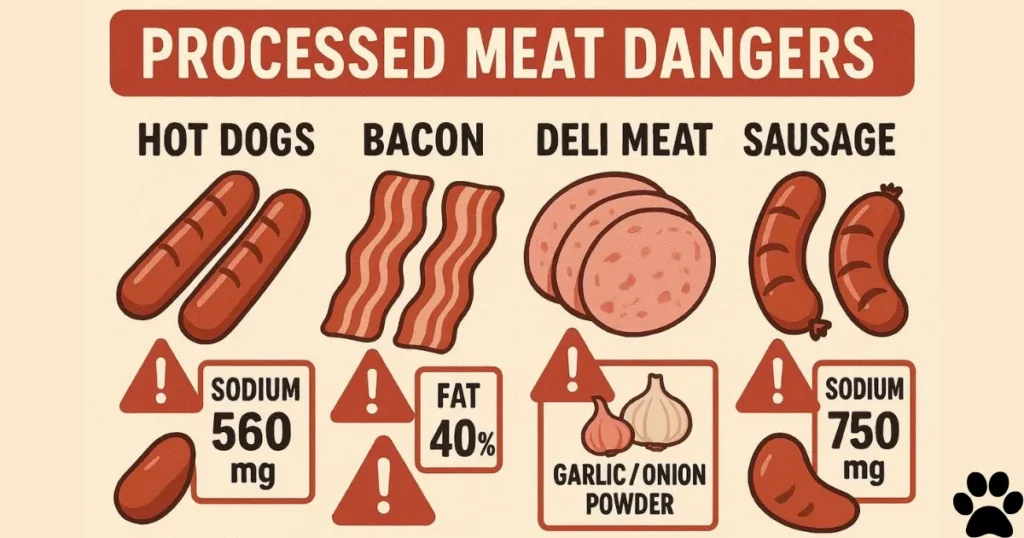
- Bacon: 50%+ fat content triggers pancreatitis in Golden Retrievers
- Ham: Extremely high sodium (3000-5000mg per pound)
- Sausage: Garlic/onion powder, high fat, high salt
- Deli meats: Nitrates, sodium, onion powder
Golden Retriever Specific:
Breed predisposition to pancreatitis makes even moderate bacon fat (2-3 slices) potentially fatal. I’ve treated multiple Golden Retrievers requiring hospitalization after “just a little bacon grease.”
Safe Pork:
Lean pork loin or tenderloin, fully cooked, unseasoned, fat trimmed. Small amounts only.
Wild Game (Contamination Risks)
Dangerous Meats:
- Wild boar: Trichinella, bacterial contamination
- Raw venison: Chronic wasting disease (CWD) concerns, parasites
- Raw rabbit: Tularemia bacteria
- Scavenged carrion: Botulism, bacterial toxins
Why What Meat Can Dogs Not Eat Includes Wild Game:
Wild game lacks commercial processing standards. Parasites, bacteria, and environmental contaminants (lead shot) create risks domestic meats don’t carry.
Golden Retriever Hunters:
Working dogs fed wild game must have meat frozen (-4°F for 3+ weeks to kill parasites), fully cooked, and inspected for lead shot fragments.
Processed Meats with Hidden Dangers
Toxic Additive Concerns:
- Hot dogs: Onion/garlic powder (cumulative toxicity)
- Deli turkey/ham: High sodium (kidney disease risk)
- Pepperoni: Garlic, high fat
- Salami: Garlic, wine, high fat, high salt
- Beef jerky (human): Often contains onion/garlic powder
Vet’s Tip: Even “natural” or “organic” processed meats contain sodium levels dangerous for dogs. A single slice of deli ham contains 200-400mg sodium – adult Golden Retriever’s entire daily sodium allowance is just 100-200mg for 70-lb dog. Two slices exceed daily limits by 200-400%.
Fish (Specific Species Dangers)
Safe Fish:
- Salmon (cooked)
- White fish (cod, haddock)
- Sardines (plain, water-packed)
Dangerous Fish – What Meat Can Dogs Not Eat:
- Raw salmon: Neorickettsia helminthoeca (salmon poisoning disease) – potentially fatal
- Tuna (excessive): Mercury accumulation
- Fish with bones: Perforation risk (especially cooked bones)
Salmon Poisoning Disease:
Affects dogs in Pacific Northwest. Symptoms appear 5-7 days post-consumption: vomiting, diarrhea, fever, swollen lymph nodes. 90% fatal if untreated. ALWAYS cook salmon thoroughly.
Dangerous Meat Preparation Methods
How dog food meat is prepared determines safety more than meat type:
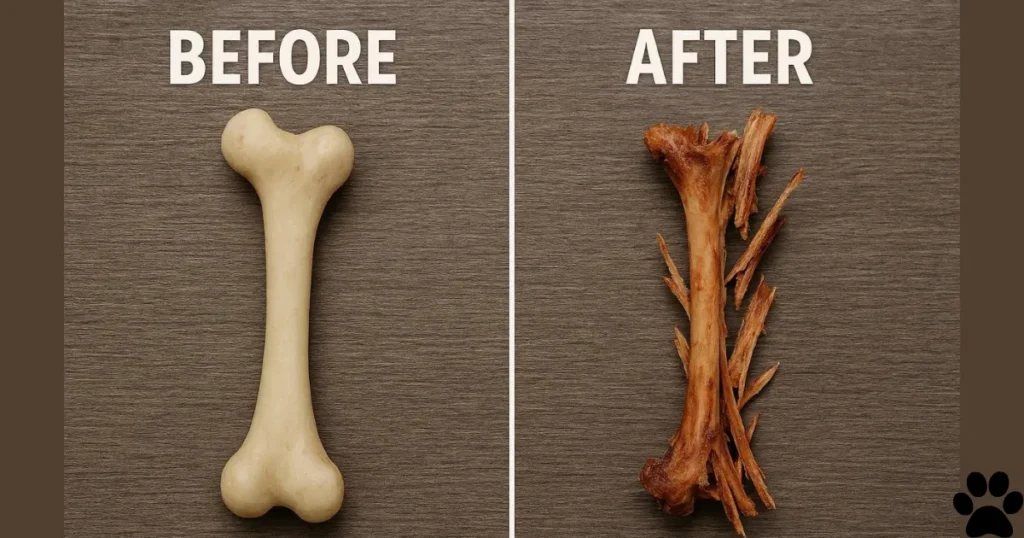
Cooked Bones – Critical Danger
Why Cooked Bones Are What Meat Can Dogs Not Eat:
Cooking removes moisture making bones brittle. They splinter into sharp fragments causing:
- Oral lacerations and broken teeth
- Esophageal perforation (requires emergency surgery)
- Gastric perforation
- Intestinal obstruction
- Intestinal perforation (often fatal)
Most Dangerous Cooked Bones:
- Chicken bones (extremely brittle)
- Turkey bones
- Pork chop bones
- Rib bones
- Fish bones
Golden Retriever Risk:
Enthusiastic eaters swallow without chewing. Entire cooked chicken wings swallowed whole cause obstructions requiring surgical removal.
Safe Bones:
Large raw beef knuckles or marrow bones under supervision. NOT cooked. Remove after 15-20 minutes to prevent tooth fractures.
High-Fat Preparations
Pancreatitis Triggers – What Meat Golden Retrievers Cannot Eat:
- Bacon grease
- Fatty meat drippings
- Poultry skin (turkey, chicken, duck)
- Prime rib fat
- Brisket fat
- Pork belly
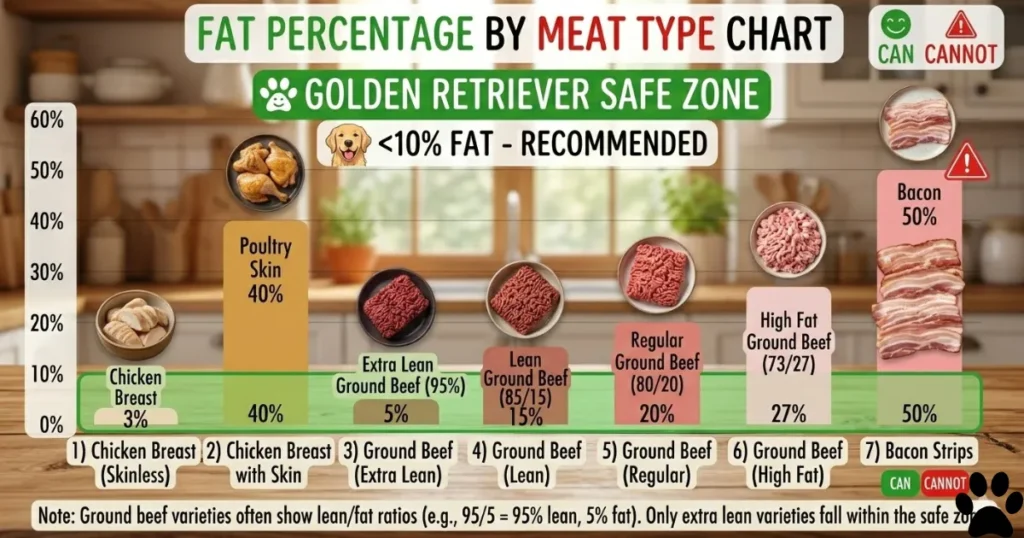
Fat Content Thresholds:
- Safe: <10% fat content
- Moderate risk: 10-20% fat
- High risk: 20-30% fat
- Pancreatitis trigger: 30%+ fat
Golden Retriever Pancreatitis:
This breed has genetic predisposition. While other breeds tolerate occasional fatty treats, Golden Retrievers develop acute pancreatitis from single high-fat meals requiring 3-7 day hospitalization costing $2000-5000.
Seasoned and Marinated Meats
Toxic Seasonings – What Meat Can Dogs Not Eat:
- Garlic-marinated meats
- Onion-rubbed roasts
- Teriyaki (garlic, onion, high sodium)
- BBQ sauce (garlic, onion, sometimes xylitol)
- Cajun/spicy seasonings (gastrointestinal irritation)
Hidden Danger:
Seasonings penetrate meat during cooking. Washing doesn’t remove them. Garlic-marinated chicken breast contains sufficient garlic to contribute to cumulative hemolytic anemia.
Raw Meat Feeding Considerations
Bacterial Contamination Risks:
- Salmonella: 20-30% of raw chicken
- E. coli: Ground meats especially
- Campylobacter: Poultry
- Listeria: Processed raw meats
When Raw Meat Becomes What Meat Dogs Cannot Eat:
- Improperly stored (>2 hours at room temp)
- Cross-contaminated during preparation
- Spoiled or past expiration
- Ground meat (higher bacterial load)
Safe Raw Feeding (If Chosen):
- Human-grade meat from trusted sources
- Frozen first (-4°F for 3 weeks kills parasites)
- Handle like preparing for immunocompromised humans
- Separate utensils and surfaces
- Feed immediately, don’t leave out
Definitive Statements on What Meat Can Dogs Not Eat
In veterinary nutrition, cooked bones represent the single most dangerous meat-related item for Golden Retrievers. Cooking removes moisture, causing brittleness and splintering – raw bones don’t fracture this way. Esophageal and intestinal perforations from cooked chicken bones require emergency surgery with 30-50% mortality rates even with immediate intervention.
Golden Retrievers’ genetic predisposition to pancreatitis makes fatty meat more dangerous for this breed than it is for many others. Fat content above 20-30% triggers acute pancreatitis – bacon (50% fat), poultry skin (40-50% fat), and meat drippings cause pancreatitis episodes requiring hospitalization in Golden Retrievers who would tolerate these in other breeds.
Understanding what meat can dogs not eat requires recognizing that processing and preparation matter more than the base protein type. Plain cooked chicken is safe – chicken with garlic marinade, cooked chicken bones, or fried chicken skin can become dangerous during preparation, despite being made from the same base protein.
The raw versus cooked meat debate oversimplifies safety. Raw meat isn’t inherently dangerous when handled properly (human-grade, frozen, properly stored), but it isn’t inherently superior either. Cooked meat isn’t dangerous unless bones remain, excessive fat is included, or toxic food seasonings are present. Safety depends on specific practices, not categorical raw-versus-cooked decisions.
7 Meat Safety Rules for Golden Retrievers
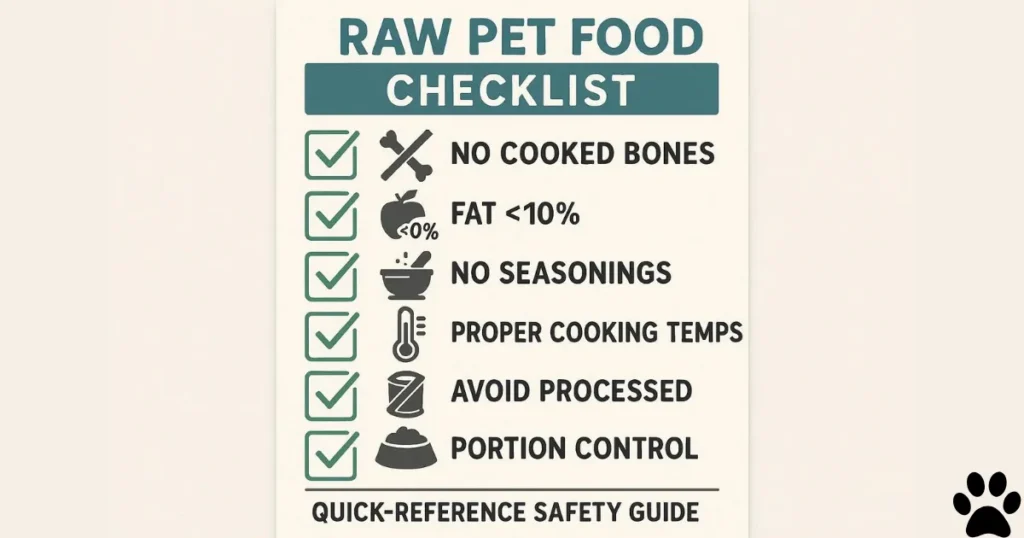
Rule 1: No Cooked Bones Ever
Absolutely No:
- Cooked chicken bones (any part)
- Cooked turkey bones
- Cooked pork bones
- Cooked beef bones (brittle after cooking)
- Cooked fish bones
Exceptions: Large raw recreational bones under supervision.
Rule 2: Fat Content Under 10% for Pancreatitis-Prone Breed
Golden Retriever Safe Proteins:
- Chicken breast (skinless): 3-4% fat
- Turkey breast (skinless): 2-3% fat
- Lean ground beef (90/10 or leaner): 10% fat
- Pork tenderloin (lean): 3-4% fat
- White fish: 1-5% fat
Avoid:
- Chicken thighs (15-20% fat)
- Ground beef (80/20): 20% fat
- Duck (30%+ fat)
Rule 3: No Seasoned or Marinated Meats
Remove ALL seasoning. Even trace garlic/onion powder contributes to cumulative toxicity. Don’t assume “small amount” is safe.
Rule 4: Proper Cooking Temperatures
Bacteria Elimination:
- Poultry: 165°F internal temp
- Ground meat: 160°F
- Whole cuts: 145°F
Protects Against: Salmonella, E. coli, Campylobacter
Rule 5: No Processed Meats with Additives
Read labels. Avoid meats containing:
- Onion/garlic powder
- Excessive sodium (>100mg per serving)
- Nitrates/nitrites (debated but avoid)
- Xylitol (increasingly in seasonings)
Rule 6: Portion Control – Meat as Supplement Not Main
Appropriate Amounts:
- Treats: <10% daily calories
- Meal topper: 10-20% of meal
- Home-cooked diet: Balanced recipe from vet nutritionist
Not Appropriate:
- Feeding only meat (nutritionally incomplete)
- Half the meal as meat treats
- Free access to meat
Rule 7: Storage and Handling
Raw Meat:
- Refrigerate <40°F, use within 1-2 days
- Freeze long-term storage
- Thaw in refrigerator, not counter
Cooked Meat:
- Cool rapidly
- Refrigerate within 2 hours
- Use within 3-4 days
What meat can dogs not eat from the grocery store?
Dogs cannot eat processed meats (hot dogs, bacon, sausage, deli meats) that contain onion/garlic powder or excessive sodium. Avoid pre-seasoned meats, marinated proteins, and fatty cuts (such as pork belly and beef brisket fat). Ground meat 80/20 or fattier risks pancreatitis in Golden Retrievers.
Can Golden Retrievers eat raw meat safely?
Golden Retrievers can eat raw meat if it’s human-grade quality, frozen for 3 weeks first (to kill parasites), handled with strict food safety, and fed immediately. Risk: bacterial contamination (Salmonella 20-30% raw chicken). Cooked meat is safer unless bones are included. Raw isn’t superior nutritionally.
What meat bones can dogs not eat?
Dogs cannot eat any cooked bones – cooking makes them brittle and prone to splintering. Cooked chicken, turkey, pork, and beef bones are all dangerous. Large raw beef knuckles are safe under supervision (15-20 minutes, then remove). Never leave bones unsupervised or give small/brittle bones.
Why can’t dogs eat fatty meat?
Fatty meat triggers acute pancreatitis in dogs, especially Golden Retrievers with a genetic predisposition. Fat content > 20-30% (bacon 50%, poultry skin 40-50%, meat drippings) causes pancreatic inflammation requiring hospitalization. Golden Retrievers are more susceptible than many breeds.
What processed meat can dogs not eat?
Dogs cannot eat hot dogs, bacon, sausage, deli meats, pepperoni, or salami. These contain: onion/garlic powder (cumulative toxicity), excessive sodium (kidney stress), nitrates, and 20-50% fat (pancreatitis risk). “Natural” versions still contain dangerous levels of sodium.
Can dogs eat pork, or is it dangerous?
Plain cooked lean pork is safe. Dangerous pork includes: raw pork (parasites), bacon (50% fat), ham (extreme sodium), and sausage (garlic/fat), pork chop bones (if cooked). Lean pork tenderloin, fully cooked, unseasoned, and fat-trimmed, is acceptable in moderation.
What meat can dogs not eat raw?
Dogs cannot eat raw salmon (salmon poisoning disease – potentially fatal), raw pork (trichinosis parasites), raw wild game (parasites, bacteria), or any spoiled/improperly stored raw meat. Raw chicken poses a Salmonella risk, but many dogs tolerate it when handled properly.
Do cooked bones really hurt dogs?
Yes, cooked bones cause: oral lacerations, esophageal perforation (emergency surgery), gastric obstruction, and intestinal perforation (often fatal). Cooking removes moisture, making bones brittle – they splinter into sharp fragments. Veterinary emergency rooms see cooked bone cases weekly. This isn’t a myth.
What meat is too fatty for Golden Retrievers?
Meat > 20-30% fat risks pancreatitis in Golden Retrievers: bacon (50%), poultry skin (40-50%), prime rib fat (40%+), pork belly (30%+), ground beef 70/30 (30%). Stick to <10% fat: chicken/turkey breast (3-4%), lean ground beef 90/10 (10%).
Can dogs eat lunch meat or deli meat?
Dogs should not eat deli meat. A single slice contains 200-400mg of sodium – a 70-lb Golden Retriever’s entire daily sodium limit is 100-200mg. Two slices exceed the daily limit by 200-400%. Plus, onion/garlic powder in a wide variety contributes to cumulative anemia.
What meat can hunting dogs not eat?
Hunting dogs cannot eat: raw wild game without freezing first (parasites), meat contaminated with lead shot (toxicity), scavenged carrion (botulism), or raw salmon (salmon poisoning). Freeze wild game at -4 °F for 3 weeks before feeding; cook thoroughly; check for lead fragments.
Why is garlic-seasoned meat dangerous for dogs?
Garlic contains n-propyl disulfide, causing cumulative red blood cell damage (hemolytic anemia). Small daily amounts are MORE dangerous than a single large dose – ongoing oxidation prevents bone marrow compensation. Symptoms appear 3-7 days: weakness, pale gums, brown urine. Marinated meats retain garlic compounds even after cooking.
What meat preparation makes it unsafe for dogs?
Unsafe preparations: cooking bones (brittleness), frying (excessive fat), seasoning with garlic/onion (toxicity), marinating in teriyaki/BBQ sauce (garlic/xylitol), and smoking with toxic woods. Safe: plain boiled, grilled without seasoning, baked without added fat, bones removed before serving.
Can dogs eat meat that’s spoiled or past its date?
No, spoiled meat contains bacterial toxins (botulism and staphylococcal enterotoxin), which can cause severe illness or death. Past-date meat has elevated bacterial loads. Dogs have stronger stomach acid than humans, but aren’t immune to food poisoning. Feed only fresh, properly stored meat.
What’s the safest meat for Golden Retrievers?
Safest meats: boneless skinless chicken breast (3-4% fat), boneless skinless turkey breast (2-3% fat), lean ground beef 90/10 or leaner, fully cooked white fish, plain cooked salmon. All unseasoned, properly cooked, fat-trimmed, portion-controlled (< 10% daily calories).
Conclusion
Understanding what meat can dogs not eat requires recognizing that safety depends on preparation, processing, and fat content more than on the base protein type. The most dangerous meat-related items are cooked bones (cooking creates brittleness, causing perforation), processed meats containing onion/garlic powder and excessive sodium (deli meat single slice exceeds daily sodium limits), and high-fat preparations that trigger pancreatitis (bacon at 50% fat, poultry skin at 40-50% fat).
Golden Retrievers face elevated meat-related risks due to breed-specific factors. Their genetic predisposition to pancreatitis makes fatty meat more dangerous – fat content above 20-30% triggers acute episodes requiring hospitalization, where other breeds might tolerate occasional high-fat treats. Their enthusiastic eating means bones are swallowed whole, without chewing, increasing the risk of perforation from cooked bone fragments.
Critical meat safety rules include: never feed cooked bones regardless of type or size, keep fat content under 10% for pancreatitis-prone Golden Retrievers, avoid all seasoned or marinated meats containing garlic/onion compounds, eliminate processed meats with dangerous additives and sodium levels, and practice proper storage/handling whether feeding raw or cooked.
Safe proteins for Golden Retrievers include boneless skinless chicken breast (3-4% fat), turkey breast (2-3% fat), lean ground beef 90/10 or leaner (10% fat), fully cooked white fish, and plain cooked salmon. All must be unseasoned, properly cooked to safe temperatures, fat-trimmed, and portion-controlled as supplements rather than primary diet components.
Has Your Golden Retriever Had Meat-Related Health Issues?
Share experiences with cooked bone injuries, pancreatitis from fatty meat, or processed meat reactions. Your stories help other owners understand the real-world consequences of unsafe meat feeding practices.
- What happened?
- What meat caused the issue?
- What treatment was needed?
Share in comments or tag #GoldenRetrieverMeatSafety and #ProteinDangers.