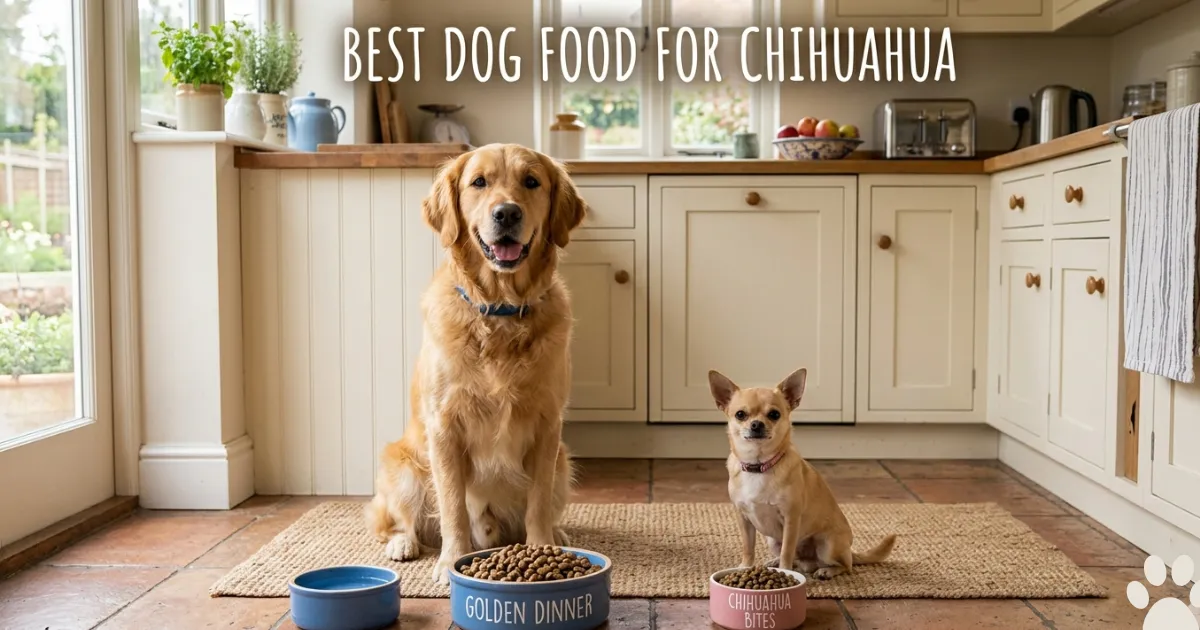
When Golden Retriever owners express concern about the cost of quality dog food in my clinic, I understand completely – feeding a large breed dog well doesn’t have to drain your bank account. After years of experience helping families navigate nutrition on various budgets, I’ve discovered that the best inexpensive dog food options provide excellent nutrition without the premium price tag. The key lies in understanding ingredient quality, recognizing marketing gimmicks, and knowing which budget-friendly options deliver genuine nutritional value versus empty calories.
Whether you’re exploring affordable commercial foods or considering inexpensive homemade dog food to stretch your budget further, numerous strategies ensure your Golden Retriever receives complete, balanced nutrition without financial stress. This comprehensive guide will reveal proven approaches to feeding your Golden Retriever exceptionally well while respecting your budget, from identifying truly valuable, inexpensive dog food brands to creating cost-effective, homemade meals that rival expensive alternatives in nutritional quality.
Understanding Dog Food Costs: What you’re Really Paying For
Before identifying the best inexpensive dog food options, understanding how manufacturers price products helps distinguish genuine value from inflated marketing costs.
Price Breakdown of Commercial Dog Food
Ingredient costs:
40-50% of retail price goes toward actual ingredients – meat, grains, vegetables, supplements.
Processing and manufacturing:
15-20% covers production facilities, equipment, quality control, and packaging.
Marketing and advertising:
15-25% funds commercials, endorsements, veterinary promotions, and brand building.
Distribution and retail markup:
15-20% represents transportation, warehousing, and store profit margins.
Research and development:
5-10% supports formulation testing and nutritional trials.
In my clinic, I’ve treated many Golden Retrievers thriving on modestly priced foods that invest heavily in ingredients rather than celebrity endorsements or fancy packaging. The best inexpensive dog food brands prioritize nutrition over marketing.
What Makes Dog Food Expensive vs. Inexpensive
Premium-priced foods often feature:
- Exotic proteins (bison, venison, duck).
- Grain-free formulations (despite most dogs tolerating grains well).
- Small-batch production.
- Extensive marketing campaigns.
- Boutique or specialty retail distribution.
- Novel ingredients with minimal proven benefit.
Quality inexpensive dog food provides:
- Common but nutritious proteins (chicken, turkey, beef).
- Wholesome grains (rice, oats) offering affordable energy.
- Efficient large-scale production, reducing per-unit costs.
- Direct-to-consumer or big-box retail distribution.
- Minimal marketing spending.
- Proven formulations meeting AAFCO standards.
Vet’s Tip: The most expensive dog food isn’t automatically the best. Focus on AAFCO certification, ingredient quality, and your Golden’s individual response rather than price alone.
Top Commercial Options: Best Inexpensive Dog Food Brands.
These veterinary-recommended brands offer excellent nutrition at budget-friendly prices, all meeting AAFCO standards for complete and balanced nutrition.
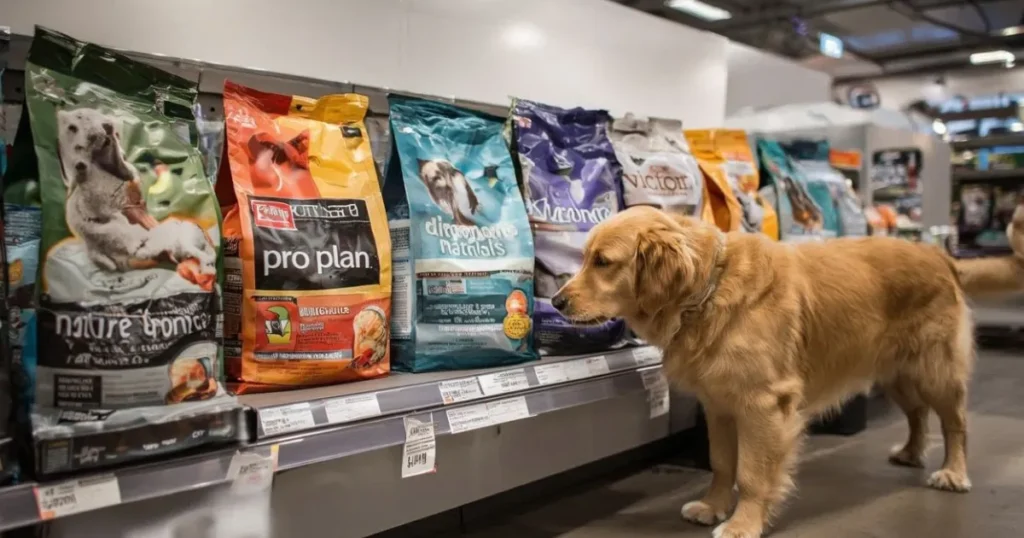
Costco Kirkland Signature Nature’s Domain.
Price range:
$30-35 for a 35-pound bag (approximately $0.95-1.00 per pound).
Key features:
- Grain-free and grain-inclusive options available.
- Salmon, chicken, or turkey as primary proteins.
- Manufactured by Diamond Pet Foods (reputable producer).
- Excellent protein and fat ratios for Golden Retrievers.
- Probiotics for digestive health.
Nutritional analysis (Chicken & Pea formula):
- Protein: 25%.
- Fat: 15%.
- Fiber: 4%.
Vet’s assessment:
Outstanding value for quality ingredients; many of my Golden Retriever patients maintain ideal body condition and healthy coats on Kirkland formulas.
Purina Pro Plan Savor.
Price range:
$45-55 for a 35-pound bag (approximately $1.30-1.60 per pound).
Key features:
- Extensive feeding trials supporting formulation.
- Real chicken or beef as the first ingredient.
- Fortified with live probiotics.
- DHA from omega-rich fish oil for brain and vision.
- Manufactured by a major company with quality control infrastructure.
Nutritional analysis (Chicken & Rice formula):
- Protein: 26%.
- Fat: 16%.
- Fiber: 3%.
Vet’s assessment:
Purina conducts more feeding trials than most competitors; proven track record supporting large breed health.
Diamond Naturals Large Breed.
Price range:
$40-50 for a 40-pound bag (approximately $1.00-1.25 per pound).
Key features:
- Specifically formulated for large breed requirements.
- Real meat protein as the first ingredient.
- Probiotics, vitamins, minerals, antioxidants.
- Omega fatty acids for skin and coat.
- No corn, wheat, or artificial additives.
Nutritional analysis (Chicken & Rice formula):
- Protein: 23%.
- Fat: 13%.
- Fiber: 3.5%.
Vet’s assessment:
Well-balanced for Golden Retrievers; appropriate protein and controlled fat prevent excessive growth rates in puppies.
Victor Hi-Pro Plus.
Price range:
$45-50 for a 40-pound bag (approximately $1.13-1.25 per pound).
Key features:
- High digestibility (82%) means less waste, more nutrition absorbed.
- Fortified with vitamins, minerals, and amino acids.
- Multiple meat proteins.
- Made in the USA with quality ingredients.
- Excellent for active Golden Retrievers.
Nutritional analysis:
- Protein: 30%.
- Fat: 20%.
- Fiber: 3%.
Vet’s assessment:
Higher protein/fat suitable for very active dogs; may need adjustment for less active or senior Golden Retrievers.
Taste of the Wild High Prairie.
Price range:
$50-60 for a 28-pound bag (approximately $1.80-2.15 per pound).
Key features:
- Grain-free formula with roasted bison and venison.
- Novel proteins reduce allergy potential.
- Probiotics and antioxidants.
- Omega fatty acids.
Vet’s assessment:
While pricier than other options listed, still considerably less expensive than many boutique brands while offering quality nutrition. Best for dogs with grain sensitivities.
Comparison Table: Best Inexpensive Dog Food Options.
| Brand | Price/Pound | Protein | Fat | Best For | Value Rating |
| Kirkland Nature’s Domain | $0.95-1.00 | 25% | 15% | All life stages | ⭐⭐⭐⭐⭐ |
| Purina Pro Plan | $1.30-1.60 | 26% | 16% | Research-backed nutrition | ⭐⭐⭐⭐⭐ |
| Diamond Naturals | $1.00-1.25 | 23% | 13% | Large breed specific | ⭐⭐⭐⭐⭐ |
| Victor Hi-Pro Plus | $1.13-1.25 | 30% | 20% | Active dogs | ⭐⭐⭐⭐ |
| Taste of the Wild | $1.80-2.15 | 28% | 15% | Grain sensitivities | ⭐⭐⭐⭐ |
Inexpensive Homemade Dog Food: Maximum Value Solutions.
Creating inexpensive homemade dog food offers unbeatable value when done correctly, potentially costing 30-50% less than premium commercial foods.
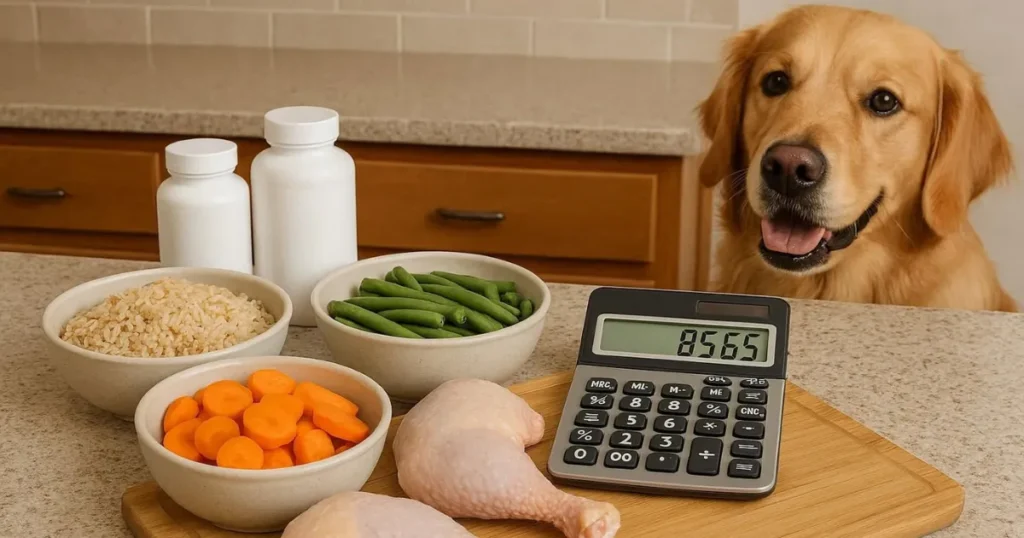
Cost Analysis: Homemade vs. Commercial.
Monthly feeding costs for a 70-pound Golden Retriever:
- Premium commercial food: $80-150/ month.
- Mid-range commercial food: $50-80/ month.
- Inexpensive homemade dog food: $40-70/ month.
- Best inexpensive dog food (budget commercial): $35-55/ month.
Budget-Friendly Chicken and Rice Recipe.
Ingredients (one week supply):
- 5 pounds chicken leg quarters: $5-7.
- 4 cups brown rice (dry): $2-3.
- 2 pounds carrots: $2-3.
- 1 pound green beans: $2-3.
- Fish oil supplement (1 month supply): $8-12.
- Calcium supplement: $5-8/ month.
- Multivitamin: $10-15/ month.
Total weekly cost:
- $24-38 ($ 96-152 per month).
Preparation:
- Bake chicken leg quarters at 375 °F for 45 minutes until cooked through.
- Remove bones completely (critical safety step).
- Shred or dice chicken into bite-sized pieces.
- Cook brown rice according to package directions.
- Steam vegetables until tender.
- Combine all ingredients, add supplements.
- Portion into meal-sized containers.
- Refrigerate up to 4 days or freeze up to 3 months.
Yield:
- Approximately 20 cups (5 days for 70-pound Golden).
Nutritional benefits:
Complete protein, digestible carbohydrates, essential vegetables, proper supplementation ensures balanced nutrition rivaling expensive commercial diets.
Ground Beef and Sweet Potato Budget Recipe.
Ingredients (one week supply):
- 4 pounds ground beef (73% lean, most affordable): $12-16.
- 3 pounds sweet potatoes: $3-5.
- 3 cups oatmeal (dry): $2-3.
- 1.5 pounds mixed vegetables: $3-4.
- Supplements (fish oil, calcium, multivitamin): $23/month divided weekly = $5-6.
Total weekly cost:
- $25-38 ($ 100-152 per month).
Preparation similar to a chicken recipe:
Cook ground beef thoroughly, bake sweet potatoes until soft, prepare oatmeal, steam vegetables, and combine with supplements.
Nutritional profile:
Higher in iron than chicken-based recipes; excellent for active Golden Retrievers or those needing muscle maintenance.
Turkey and Vegetable Economy Formula.
Ingredients (one week supply):
- 5 pounds ground turkey (85% lean): $15-20.
- 4 cups brown rice (dry): $2-3.
- 2 pounds pumpkin (canned or fresh): $3-5.
- 1.5 pounds green beans and carrots: $3-4.
- Supplements: $5-6/ week.
Total weekly cost:
$28-38 ($ 112-152 per month).
Benefits:
Leaner protein option suitable for weight management; pumpkin supports digestive health; turkey provides variety, preventing food boredom.
Smart Shopping Strategies for Inexpensive Dog Food.
Maximizing value requires strategic purchasing beyond simply choosing affordable brands.

Buy in Bulk and Save.
Warehouse clubs (Costco, Sam’s Club):
- Kirkland Signature offers exceptional value.
- Larger bag sizes reduce per-pound costs.
- Membership fees ($ 60/year) pay for themselves with dog food savings alone.
Online bulk purchasing:
- Chewy.com autoship discounts (5-10% off).
- Amazon Subscribe & Save (5-15% off).
- Free shipping thresholds reduce total costs.
Local feed stores:
- Often stock bulk brands at lower prices than pet specialty stores.
- Diamond, Victor, and other quality brands are widely available.
- Fewer marketing overhead costs are passed to consumers.
Coupon and Rebate Opportunities.
- Manufacturer websites: Register for coupons, promotions, and loyalty programs.
- Retailer apps: Target, Petco, and PetSmart offer regular digital coupons.
- Rebate apps: Ibotta, Checkout 51 frequently feature pet food offers.
- Email subscriptions: Brands send exclusive discounts to subscribers.
In my experience advising budget-conscious Golden Retriever families, combining bulk purchasing with strategic coupon use can reduce food costs by 20-30%.
Timing Purchases Strategically.
Seasonal sales:
- Black Friday/Cyber Monday: 20-40% discounts are common.
- Pet Appreciation Week (first week of May): significant promotions.
- National Pet Month (various retailers participate).
Stock-up approach:
When finding exceptional sales on the best inexpensive dog food your Golden tolerates well, purchase 2-3 bags if storage allows.
Expiration date awareness:
Dog food typically remains fresh 12-18 months; buying slightly older stock (still months from expiration) sometimes yields clearance prices.
Homemade Food Cost-Saving Strategies.
Making inexpensive homemade dog food even more affordable requires smart sourcing and efficient preparation.
Protein Sourcing Tips.
Buy whole chickens instead of breasts:
Whole chickens cost $1-2 per pound vs. $3-5 for boneless breasts; remove bones after cooking.
Purchase family packs on sale:
Stock freezer when ground beef, turkey, or chicken reaches lowest prices ($ 2-3 per pound).
Use less expensive cuts:
Chicken leg quarters, turkey thighs, and chuck roast provide excellent nutrition at 30-50% savings vs. premium cuts.
Ethnic grocery stores:
Often offer better meat prices than mainstream supermarkets.
Buy in bulk from butchers:
Some butchers sell 10-20 pound meat packages at wholesale pricing.
Carbohydrate and Vegetable Savings.
Buy generic or store-brand rice, oats, pasta:
Nutritionally identical to name brands at 30-40% lower cost.
Purchase frozen vegetables:
Often cheaper than fresh, equally nutritious, and with no spoilage concerns.
Shop produce in season:
Seasonal vegetables cost significantly less; adjust recipes based on availability.
Farmers markets (end of day):
Vendors sometimes discount remaining produce; perfect for dog food use.
Grow your own:
Container gardens of sweet potatoes, carrots, and green beans supplement dog food economically.
Batch Preparation Efficiency.
Monthly meal prep sessions:
Dedicating 3-4 hours monthly to batch cooking reduces time investment and allows bulk ingredient purchasing.
Invest in a large stockpot or slow cooker:
Enables cooking large quantities simultaneously.
Freeze in portioned containers:
Prevents waste and makes daily feeding convenient.
Combine preparation with family meals:
If preparing chicken or rice for human consumption, make extra for your Golden Retriever.
Nutritional Adequacy: Ensuring Quality in Inexpensive Options.
The best inexpensive dog food must provide complete nutrition – low cost means nothing if your Golden Retriever develops deficiencies.
Essential Nutrients to Verify.
All dog foods, regardless of price, must provide:
- Adequate protein: Minimum 18% for adults (22% for puppies).
- Essential amino acids: From animal-source proteins primarily.
- Appropriate fat levels: 10-15% for most adult Golden Retrievers.
- Balanced calcium and phosphorus: 1:1 to 2:1 ratio for skeletal health.
- Essential fatty acids: Omega-3 and omega-6 for skin, coat, and organ function.
- Complete vitamin and mineral profile: Per AAFCO guidelines.
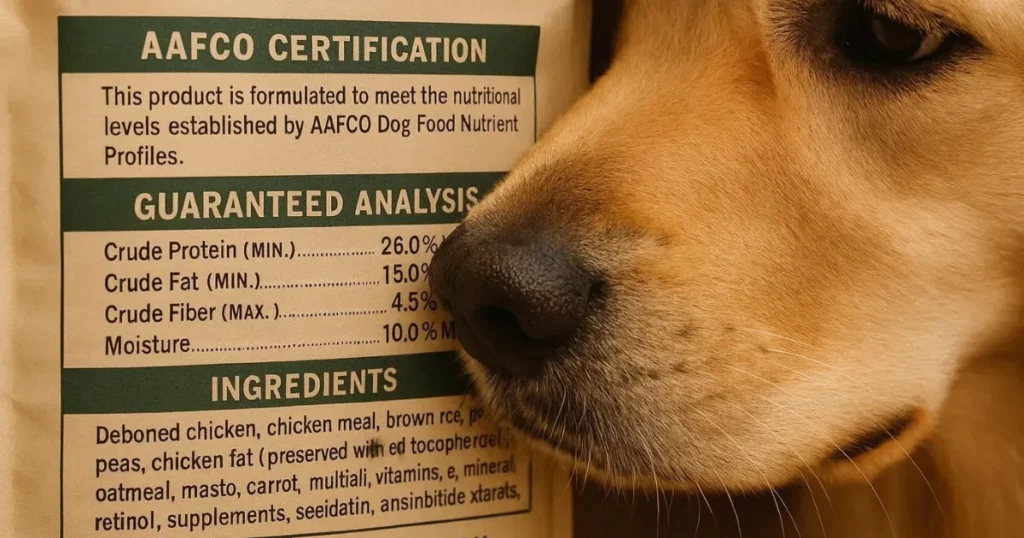
AAFCO Certification Importance.
All dog foods should state:
“Formulated to meet AAFCO Dog Food Nutrient Profiles” or “Animal feeding tests using AAFCO procedures substantiate …”
This certification ensures that the inexpensive dog food provides complete nutrition rather than just cheap calories. Never compromise on AAFCO certification regardless of price.
Supplement Requirements for Homemade Diets.
When preparing inexpensive homemade dog food, supplementation remains non-negotiable:
- Calcium supplement: $5-8 monthly (calcium carbonate powder).
- Multivitamin: $10-15 monthly (veterinary-formulated).
- Fish oil: $8-15 monthly (omega-3 source).
- Total supplement cost: $23-38 monthly.
These supplements ensure homemade diets meet nutritional completeness despite using economical base ingredients.
What to Avoid: False Economy in Dog Food.
Some cost-cutting measures compromise health, ultimately costing more through veterinary bills.
Dangerous Budget Mistakes.
Feeding only rice and vegetables:
Protein deficiency causes muscle wasting, poor coat quality, and weakened immune function.
Using expired or recalled foods:
Health risks far outweigh savings.
Eliminating supplements from homemade diets:
Nutritional deficiencies develop slowly but cause serious health problems.
Choosing foods with byproducts as primary protein:
While some byproducts are nutritious (liver, heart), unclear “byproduct” labeling may indicate poor-quality ingredients.
Feeding table scraps exclusively:
Unbalanced nutrition, obesity risk, potential toxic food exposure.
Red Flags in Inexpensive Dog Food.
Ingredient warnings:
- Corn or wheat as the first ingredient (protein should be first).
- Artificial colors (unnecessary in dog food).
- BHA, BHT, ethoxyquin preservatives (questionable safety profiles).
- Excessive fillers reducing nutritional density.
- Vague protein sources (“meat meal” vs. “chicken meal”).
Marketing red flags:
- “Natural” without AAFCO certification.
- Claims too good to be true (“cures allergies,” “reverses aging”).
- Absence of contact information or manufacturing details.
In my clinic, I’ve treated many Golden Retrievers with health issues traced to extremely cheap food, poorly formulated foods lacking basic nutritional adequacy.
Life Stage Considerations for Budget Feeding.
The best inexpensive dog food varies by your Golden Retriever’s age and activity level.
Puppy Nutrition on a Budget.
Requirements:
- Higher protein (22-28%).
- Controlled calcium (large breed puppy formulas).
- More calories per pound of body weight.
- Smaller, more frequent meals.
Budget-friendly puppy options:
- Diamond Naturals Large Breed Puppy.
- Purina Pro Plan Large Breed Puppy.
- Kirkland Signature Puppy Formula.
Homemade puppy food considerations:
Requires veterinary nutritionist consultation, ensuring proper growth nutrient ratios; mistakes during growth cause irreversible skeletal problems in Golden Retrievers.
Adult Maintenance Feeding.
Requirements:
- Moderate protein (18-25%).
- Controlled calories, preventing obesity.
- Joint support nutrients (glucosamine, omega-3s).
Best budget adult options:
All commercial and homemade options detailed earlier work excellently for adult Golden Retrievers.
Senior Dog Budget Nutrition.
Requirements:
- Maintained protein preserving muscle mass.
- Reduced calories for decreased activity.
- Enhanced joint support.
- Highly digestible ingredients.
Budget senior modifications:
- Continue quality, inexpensive dog food, but reduce portions 10-20%.
- Add glucosamine/chondroitin supplement ($ 15-20 monthly).
- Consider softer food textures if dental issues are present.
Monitoring Your Golden Retriever’s Health on Budget Food.
Regular assessment ensures inexpensive dog food meets your Golden’s individual needs.

Health Indicators to Monitor.
Optimal body condition:
- Ribs easily palpable with slight fat covering.
- Visible waist when viewed from above.
- Tucked abdomen when viewed from the side.
Coat quality:
- Shiny, full coat without excessive shedding.
- No dry, flaky skin.
- Rich golden color.
Energy levels:
- Appropriate activity for age.
- Enthusiasm for walks and play.
- Alert, engaged demeanor.
Digestive health:
- Well-formed, firm stools.
- Regular bowel movements (1-2 daily).
- No excessive gas or bloating.
Dental health:
- Clean teeth with minimal tartar.
- Pink, healthy gums.
- Fresh breath.
If any indicators decline after switching to budget options, reassess food choice or consult your veterinarian.
When to Invest More in Dog Food.
Certain situations justify higher food costs:
Food allergies or sensitivities:
Limited ingredient or prescription diets may become necessary.
Specific health conditions:
Kidney disease, heart disease, or other conditions requiring therapeutic diets.
Poor tolerance of budget options:
Some individual dogs genuinely need different formulations.
Life stage transitions:
Puppies and seniors sometimes benefit from specialized formulas.
The best inexpensive dog food should maintain your Golden Retriever’s health; if budget options don’t meet individual needs, prioritize health over savings.
What is the best inexpensive dog food for Golden Retrievers?
Kirkland Signature Nature’s Domain, Purina Pro Plan, and Diamond Naturals offer exceptional value at $0.95-1.60 per pound. These brands provide complete nutrition meeting AAFCO standards, quality protein sources, and proven formulations. All have supported healthy Golden Retrievers in my clinic for years without premium pricing.
Can inexpensive dog food be nutritious and safe for my Golden Retriever?
Yes, absolutely. The best inexpensive dog food provides complete nutrition at lower costs by minimizing marketing expenses and using efficient production. Verify AAFCO certification, check ingredient lists for quality proteins, and monitor your Golden’s health. Price doesn’t determine nutritional quality – formulation and ingredients do.
How much does inexpensive homemade dog food cost monthly?
Inexpensive homemade dog food costs approximately $40-70 monthly for a 70-pound Golden Retriever, including supplements. Using economical proteins (chicken leg quarters, ground beef), bulk grains (rice, oatmeal), and seasonal vegetables keeps costs 30-50% below premium commercial foods while maintaining complete nutrition.
What’s the difference between cheap dog food and the best inexpensive dog food?
Best inexpensive dog food meets AAFCO standards, uses identifiable protein sources, and provides complete nutrition at reasonable prices. Cheap dog food cuts corners with poor-quality ingredients, excessive fillers, inadequate protein, and missing nutrients. Always verify AAFCO certification and ingredient quality regardless of price.
Can I save money by making homemade dog food for my Golden Retriever?
Yes, inexpensive homemade dog food typically costs less than premium commercial foods when using economical proteins, bulk grains, and seasonal vegetables. However, required supplements ($ 23-38 monthly) and time investment must be considered. Batch preparation and bulk purchasing maximize savings while ensuring nutritional completeness.
What should I look for when choosing inexpensive dog food?
Verify AAFCO certification stating “complete and balanced,” check that quality protein appears as the first ingredient, ensure appropriate protein (18-25%) and fat (10-15%) levels, avoid artificial colors and questionable preservatives, and confirm clear manufacturer contact information. Best inexpensive dog food prioritizes ingredients over marketing.
Is Kirkland dog food good quality despite being inexpensive?
Yes, Kirkland Signature dog food offers an outstanding quality-to-price ratio. Manufactured by Diamond Pet Foods (reputable producer), Kirkland formulas meet AAFCO standards, use quality proteins, include probiotics and omega fatty acids, and cost approximately $0.95-1.00 per pound. Many Golden Retrievers in my practice thrive on Kirkland.
How can I reduce dog food costs without compromising my Golden’s health?
Buy in bulk from warehouse clubs, use manufacturer coupons and retailer apps, purchase during seasonal sales, consider quality budget brands over premium options, prepare inexpensive homemade dog food using economical proteins, and batch-cook monthly. Strategic shopping reduces costs 20-40% without sacrificing nutritional quality.
Conclusion.
After years of experience helping Golden Retriever families navigate nutrition across various budget levels, I can confidently affirm that feeding your dog exceptionally well doesn’t require premium prices. The best inexpensive dog food options – whether quality commercial brands like Kirkland Signature and Purina Pro Plan or properly formulated inexpensive homemade dog food – provide complete, balanced nutrition supporting your Golden Retriever’s health, energy, and longevity without straining your finances.
Successfully feeding Golden Retrievers on a budget requires understanding what truly matters: AAFCO-certified complete nutrition, quality protein sources, appropriate macronutrient ratios, and your individual dog’s response. The most expensive dog food isn’t automatically superior, and with strategic shopping, bulk purchasing, and smart preparation, inexpensive dog food delivers exceptional value while maintaining nutritional excellence.
Whether you choose budget-friendly commercial options like Diamond Naturals or commit to preparing inexpensive homemade dog food using economical proteins and seasonal vegetables, consistency and completeness remain paramount. Regular monitoring of your Golden’s body condition, coat quality, energy levels, and overall health ensures chosen budget options meet their unique needs effectively.
Remember that the goal isn’t merely finding cheap dog food – it’s identifying genuinely valuable options providing maximum nutrition per dollar spent. By implementing the strategies outlined in this guide, combining smart shopping with quality ingredient selection, and maintaining awareness of nutritional requirements, you’re proving that responsible Golden Retriever ownership and budget consciousness coexist beautifully. Your Golden Retriever’s health and happiness depend on consistent, complete nutrition, and achieving that goal within your budget demonstrates thoughtful, committed care.
Share Your Budget-Friendly Feeding Success! Are you successfully feeding your Golden Retriever quality nutrition on a budget? We’d love to hear about your experience! What inexpensive dog food brand works best for your Golden? Have you tried making inexpensive homemade dog food? What cost-saving strategies have you discovered?