
When Golden Retriever owners ask me, “Can dogs eat ground turkey?” during clinic visits, I’m always pleased to share that turkey represents one of the most beneficial proteins available for canine nutrition. After years of experience formulating diets and treating Golden Retrievers with various dietary needs, I’ve witnessed remarkable health improvements when families incorporate turkey for a dog into their feeding routines.
Turkey dog food offers exceptional nutritional value – lean protein supporting muscle maintenance, essential amino acids promoting overall health, and lower fat content compared to many other proteins, making it ideal for weight management.
Whether you’re considering commercial turkey dog food formulas, preparing homemade turkey-based meals, or simply wondering if ground turkey makes a safe occasional treat, this comprehensive guide addresses every aspect of feeding turkey to Golden Retrievers From nutritional benefits and safety considerations to proven recipes and portion guidelines, you’ll discover exactly how turkey can enhance your Golden Retriever’s diet while supporting their unique breed-specific health requirements.
Contents
- 1 Nutritional Profile: Why Turkey Dog Food Benefits Golden Retrievers.
- 2 Can Dogs Eat Ground Turkey? Safety Guidelines and Considerations.
- 3 Commercial Turkey Dog Food: Top Veterinary-Recommended Options.
- 3.1 Merrick Grain-Free Real Texas Beef + Sweet Potato Recipe (with Turkey).
- 3.2 Wellness CORE Grain-Free Turkey & Duck Formula.
- 3.3 Blue Buffalo Life Protection Formula Turkey & Brown Rice.
- 3.4 Taste of the Wild High Prairie Canine Recipe (with Roasted Venison and Turkey).
- 3.5 Purina Pro Plan Savor Adult Turkey & Barley Entrée.
- 4 Homemade Turkey Dog Food Recipes for Golden Retrievers.
- 5 Portion Guidelines: How Much Turkey for a Dog.
- 6 Special Dietary Applications: Turkey for Specific Golden Retriever Needs.
- 7 Turkey Alternatives and Protein Rotation Strategies.
- 8 Food Safety and Storage Guidelines.
- 9 Common Mistakes When Feeding Turkey to Golden Retrievers.
- 9.1 Critical Errors to Avoid.
- 9.2 Can dogs eat ground turkey safely and regularly?
- 9.3 Is turkey dog food better than chicken dog food for Golden Retrievers?
- 9.4 How much turkey for a dog should I feed daily?
- 9.5 Can I feed my Golden Retriever raw ground turkey?
- 9.6 What’s the best commercial turkey dog food for Golden Retrievers?
- 9.7 Does turkey dog food cause allergies in Golden Retrievers?
- 9.8 Can puppies eat turkey dog food or ground turkey?
- 9.9 Is turkey better than beef for Golden Retrievers with pancreatitis?
- 10 Conclusion.
Nutritional Profile: Why Turkey Dog Food Benefits Golden Retrievers.
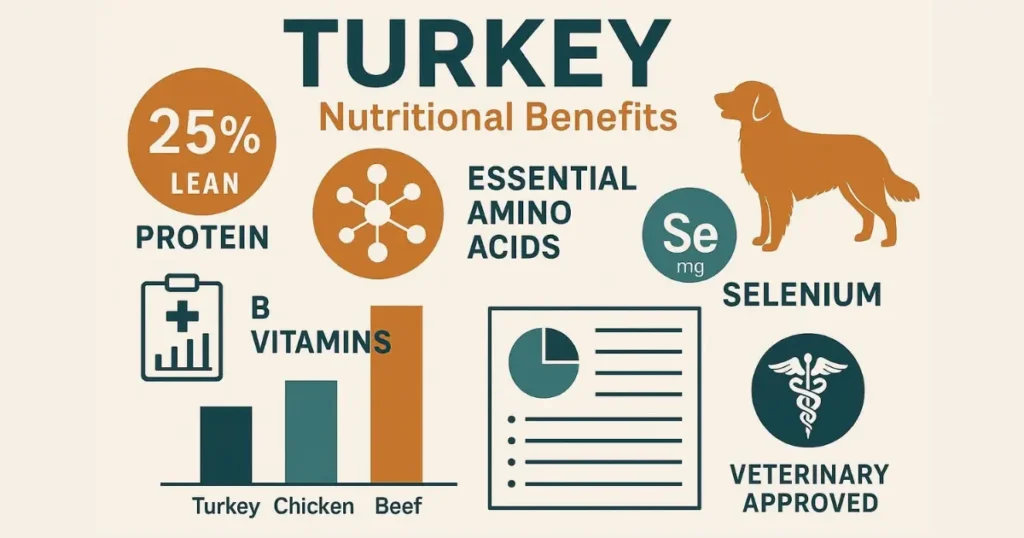
Turkey provides exceptional nutritional advantages specifically suited to Golden Retriever health needs and common breed concerns.
Complete Protein Source
Turkey delivers all essential amino acids required for canine health:
Protein content:
Approximately 20-25 grams per 3-ounce serving of cooked turkey
Essential amino acids:
- Tryptophan: Supports serotonin production and calm behavior
- Leucine, isoleucine, valine: Branch-chain amino acids for muscle maintenance
- Lysine: Crucial for calcium absorption and bone health
- Methionine: Supports liver function and coat quality
Biological value:
Turkey protein demonstrates high bioavailability, meaning Golden Retrievers efficiently digest and utilize the amino acids for tissue repair, immune function, and energy production.
In my clinic, I’ve treated many Golden Retrievers who maintained ideal muscle mass and body condition when their owners incorporated turkey dog food into regular feeding routines, particularly senior dogs requiring high-quality protein with moderate fat.
Lean Protein for Weight Management
Golden Retrievers are prone to obesity, making turkey’s lean profile particularly valuable:
Fat comparison (per 100g cooked):
- Ground turkey (93% lean): 8g fat.
- Ground beef (90% lean): 10g fat.
- Chicken thighs (with skin): 15g fat.
- Lamb: 16-20g fat.
Caloric density:
- Ground turkey (93% lean): approximately 170 calories per 100g.
- Lower calorie-to-protein ratio supports satiety without excessive calories.
Turkey for a dog struggling with weight provides sufficient protein while naturally limiting fat intake, supporting gradual, healthy weight loss.
Essential Vitamins and Minerals.
Turkey dog food delivers micronutrients supporting Golden Retriever health:
B-complex vitamins:
- B3 (Niacin): 7-8mg per serving, supports skin health and energy metabolism.
- B6 (Pyridoxine): Immune function and cognitive health.
- B12 (Cobalamin): Red blood cell formation and neurological function.
Minerals:
- Selenium: Powerful antioxidant supporting thyroid function.
- Phosphorus: Bone and teeth development.
- Zinc: Immune function, skin health, wound healing.
- Iron: Oxygen transport and energy levels.
Vet’s Tip: Turkey for a dog contains significantly more selenium than chicken or beef – this trace mineral acts as an antioxidant, potentially reducing cancer risk, particularly important for Golden Retrievers predisposed to certain cancers.
Comparison: Turkey vs. Other Common Proteins.
| Protein Source | Protein (per 100g) | Fat (per 100g) | Calories | Best For |
| Ground Turkey (93% lean) | 21g | 8g | 170 | Weight management, lean muscle |
| Chicken Breast | 31g | 3.6g | 165 | Maximum protein, minimal fat |
| Ground Beef (90% lean) | 26g | 10g | 200 | Higher fat needs, palatability |
| Salmon | 25g | 12g | 206 | Omega-3s, joint health |
| Lamb | 25g | 17g | 258 | Novel protein, high energy needs |
Can Dogs Eat Ground Turkey? Safety Guidelines and Considerations.
Understanding proper preparation and safety measures ensures the turkey remains beneficial rather than problematic.
Yes, Dogs Can Safely Eat Ground Turkey with Proper Preparation.
Ground turkey is completely safe and highly nutritious for Golden Retrievers when prepared correctly. However, several important guidelines ensure safety:
Cooking requirements:
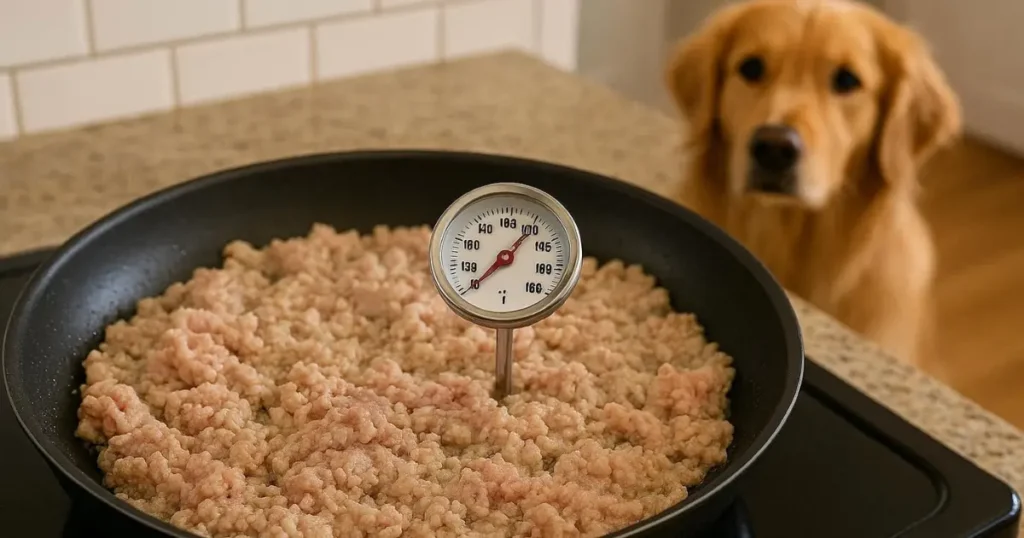
- Always cook turkey thoroughly to 165 °F internal temperature.
- Never feed raw turkey due to bacterial contamination risks (Salmonella, Campylobacter).
- Ground turkey is particularly susceptible to bacteria due to its increased surface area.
Seasoning restrictions:
- Plain, unseasoned turkey only.
- No salt, pepper, garlic, onions, or spices.
- Avoid butter, oils, or gravies during cooking.
Bone safety:
- Remove all bones before feeding (cooked turkey bones splinter dangerously).
- Ground turkey is naturally boneless, making it safer than whole turkey cuts.
- Never give turkey neck, wings, or drumsticks with bones.
Potential Risks and How to Avoid Them.
Pancreatitis concerns:
Turkey skin and dark meat contain higher fat content, potentially triggering pancreatitis in susceptible Golden Retrievers. To minimize risk:
- Use 93% lean ground turkey (avoid 85% or fattier versions).
- Remove all skin from turkey cuts.
- Choose turkey breast over thighs for the lowest fat content.
- Introduce gradually, monitoring for digestive upset.
Sodium content:
Pre-seasoned or processed turkey products (deli turkey, turkey hot dogs, turkey bacon) contain excessive sodium harmful to dogs:
- Stick to fresh, plain ground turkey or turkey breast.
- Avoid packaged processed turkey products.
- Never feed turkey meant for human holiday meals (typically heavily seasoned).
Allergic reactions:
While less common than chicken or beef allergies, some Golden Retrievers develop turkey sensitivities:
- Introduce turkey gradually over 5-7 days.
- Monitor for itching, skin redness, ear infections, or digestive issues.
- If allergic symptoms appear, discontinue immediately and consult a veterinarian.
Portion control:
Even lean proteins require appropriate portioning:
- Turkey should not exceed 25-30% of daily caloric intake unless part of a balanced homemade diet.
- Excessive protein burdens the kidneys, particularly in senior Golden Retrievers.
- Calculate portions based on the dog’s weight, activity level, and overall diet composition.
Commercial Turkey Dog Food: Top Veterinary-Recommended Options.
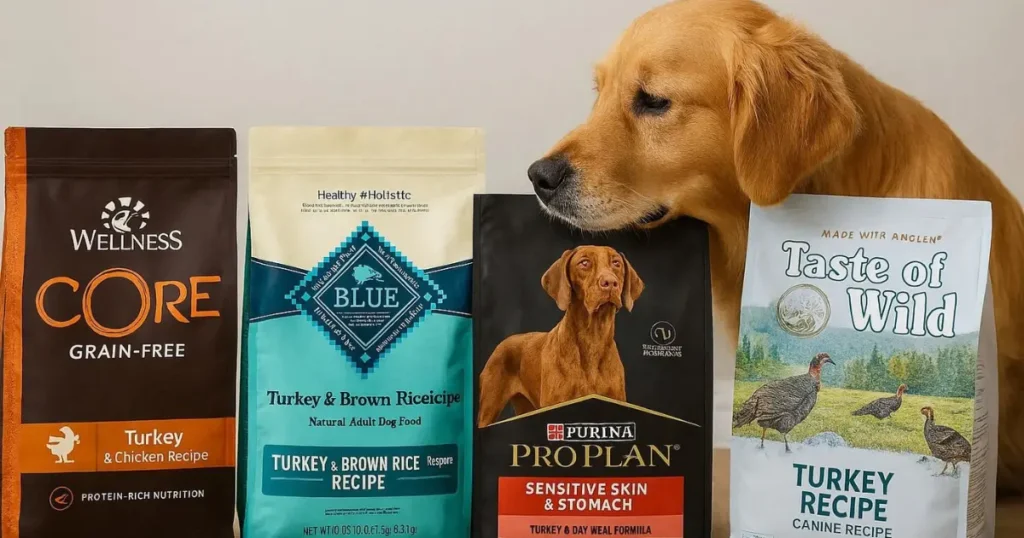
Quality commercial turkey dog food formulas provide convenient, balanced nutrition for Golden Retrievers.
Merrick Grain-Free Real Texas Beef + Sweet Potato Recipe (with Turkey).
Price range:
- $50-65 for a 25-pound bag.
Key features:
- Deboned turkey as a secondary protein.
- Grain-free formula with sweet potatoes.
- Glucosamine and chondroitin for joint health.
- Omega-3 and omega-6 fatty acids.
- Made in USA facilities.
Nutritional analysis:
- Protein: 38%.
- Fat: 15%.
- Fiber: 3.5%.
Vet’s assessment:
Higher protein suitable for active Golden Retrievers; the combination of beef and turkey provides amino acid variety.
Wellness CORE Grain-Free Turkey & Duck Formula.
Price range:
- $55-70 for a 26-pound bag.
Key features:
- Turkey and turkey meal as primary proteins.
- Grain-free with potatoes and peas.
- Probiotics for digestive health.
- Antioxidants from fruits and vegetables.
- No meat byproducts, corn, wheat, or soy.
Nutritional analysis:
- Protein: 34%.
- Fat: 16%.
- Fiber: 5%.
Vet’s assessment:
Excellent for Golden Retrievers without grain sensitivities; duck provides novel protein variety alongside turkey.
Blue Buffalo Life Protection Formula Turkey & Brown Rice.
Price range:
- $45-60 for a 30-pound bag.
Key features:
- Deboned turkey as the first ingredient.
- Whole grains, including brown rice and barley.
- LifeSource Bits with antioxidants.
- Glucosamine for joint support.
- No chicken byproduct meals.
Nutritional analysis:
- Protein: 24%.
- Fat: 14%.
- Fiber: 5%.
Vet’s assessment:
Moderate protein and fat levels appropriate for less active or senior Golden Retrievers; includes beneficial whole grains.
Taste of the Wild High Prairie Canine Recipe (with Roasted Venison and Turkey).
Price range:
- $50-60 for a 28-pound bag.
Key features:
- Turkey meal provides concentrated protein.
- Novel proteins (bison, venison) alongside turkey.
- Grain-free with sweet potatoes.
- Proprietary probiotics.
- Rich in antioxidants.
Nutritional analysis:
- Protein: 32%.
- Fat: 18%.
- Fiber: 4%.
Vet’s assessment:
Higher fat content suits very active Golden Retrievers or those needing weight gain; grain-free formulation.
Purina Pro Plan Savor Adult Turkey & Barley Entrée.
Price range:
- $45-55 for a 35-pound bag.
Key features:
- Real turkey as # 1 ingredient.
- Includes wholesome grains.
- 25% protein for muscle maintenance.
- Fortified with live probiotics.
- Backed by extensive feeding trials.
Nutritional analysis:
- Protein: 25%.
- Fat: 15%.
- Fiber: 3%.
Vet’s assessment:
Evidence-based nutrition from a company conducting significant research; appropriate macronutrient ratios for adult Golden Retrievers.
Homemade Turkey Dog Food Recipes for Golden Retrievers.
Creating balanced turkey for a dog meals at home ensures ingredient quality and customization for individual needs.
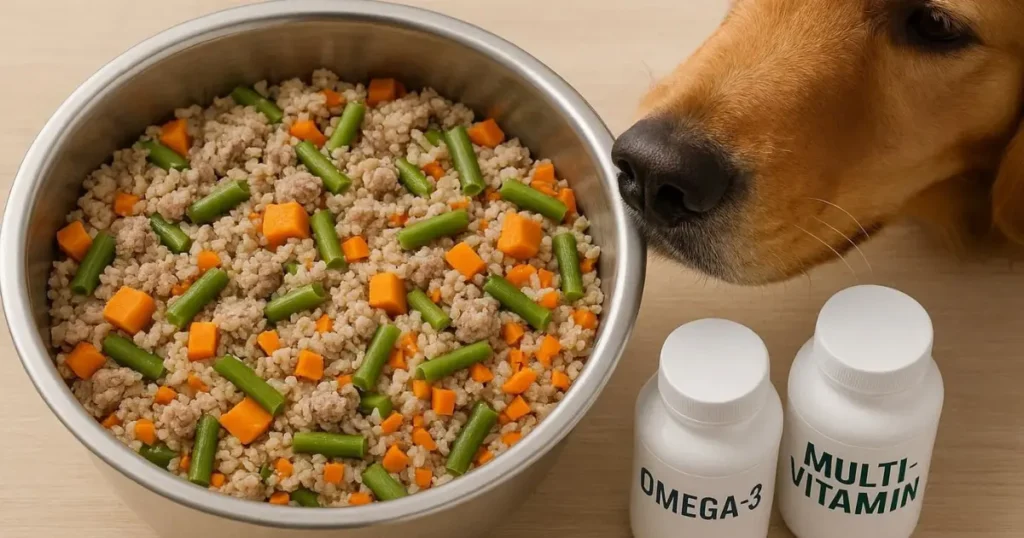
Basic Ground Turkey and Brown Rice Recipe.
Ingredients:
- 2 pounds ground turkey (93% lean).
- 2.5 cups cooked brown rice.
- 1.5 cups cooked sweet potato, diced.
- 1 cup steamed green beans.
- 1 cup steamed carrots, diced.
- 2 tablespoons fish oil.
- 1 teaspoon calcium carbonate powder.
- Veterinary-formulated multivitamin.
Preparation:
Cook ground turkey in a large skillet over medium heat until thoroughly cooked (165 °F).
- Drain excess fat.
- Cook brown rice according to package directions.
- Steam vegetables until tender.
- Bake or boil the sweet potato until soft.
- Combine all ingredients in a large bowl.
- Add fish oil, calcium supplement, and multivitamin.
- Mix thoroughly and cool completely.
- Portion into meal-sized containers.
Yield:
Approximately 9-10 cups (3-4 days for a 70-pound Golden Retriever).
Nutritional benefits:
Complete protein from turkey, digestible carbohydrates from rice and sweet potato, fiber and vitamins from vegetables, omega-3 from fish oil, and calcium for bone health.
Turkey and Oatmeal Formula.
Ingredients:
- 2 pounds ground turkey breast.
- 3 cups cooked oatmeal.
- 1.5 cups cooked pumpkin puree.
- 1 cup steamed broccoli, finely chopped.
- 0.5 cup blueberries.
- 2 tablespoons coconut oil.
- 1 teaspoon bone meal powder.
- Multivitamin supplement.
Preparation similar to basic recipe:
Cook turkey thoroughly, combine with cooked oatmeal, and mix in vegetables and supplements.
Special benefits:
Oatmeal provides soluble fiber supporting digestive health; pumpkin adds extra fiber; blueberries deliver antioxidants; ideal for Golden Retrievers with sensitive stomachs.
Turkey and Quinoa Power Bowl.
Ingredients:
- 1.5 pounds ground turkey.
- 2 cups cooked quinoa.
- 1.5 cups cooked butternut squash.
- 1 cup spinach, steamed and chopped.
- 0.75 cup diced apples (seeds removed).
- 1 tablespoon flaxseed oil.
- 1 tablespoon fish oil.
- 1 teaspoon calcium supplement.
- Veterinary multivitamin.
Nutritional advantages:
Quinoa provides complete protein, complementing turkey; butternut squash is rich in beta-carotene; spinach delivers iron and folate; lower calorie density, suitable for weight management.
Turkey Meatball Treats.
Ingredients:
- 1 pound ground turkey.
- 1 egg.
- 0.5 cup cooked brown rice.
- 0.25 cup finely grated carrots.
- 1 tablespoon parsley (optional).
Preparation:
- Preheat oven to 375 °F.
- Mix all ingredients thoroughly.
- Roll into 1-inch meatballs.
- Place on parchment-lined baking sheet.
- Bake 20-25 minutes until cooked through.
- Cool completely before serving.
- Store in refrigerator up to 5 days or freeze up to 3 months.
Usage:
Excellent training treats or meal toppers; portion-controlled protein snacks.
Portion Guidelines: How Much Turkey for a Dog.
Appropriate turkey portions depend on whether turkey serves as a complete diet base or supplemental protein.
Turkey as Primary Protein in Homemade Diets.
For homemade turkey dog food comprising complete daily nutrition:
Calculation method:
- Determine daily caloric needs (typically 25-30 calories per pound body weight for moderately active adults).
- Turkey should provide approximately 50-60% of total calories.
- Remaining calories from carbohydrates, vegetables, and healthy fats.
Practical portions for Golden Retrievers:
| Dog Weight | Daily Calories | Turkey Portion | Total Food Volume |
| 55-65 lbs | 1,375-1,625 | 1.75-2 lbs cooked | 6-7 cups total |
| 65-75 lbs | 1,625-1,875 | 2-2.25 lbs cooked | 7-8 cups total |
| 75-85 lbs | 1,875-2,125 | 2.25-2.5 lbs cooked | 8-9 cups total |
Divide daily portions into two meals for adult Golden Retrievers.
Turkey as a Supplement to Commercial Food.
When adding turkey to commercial kibble:
Conservative approach:
- Replace no more than 10-25% of daily kibble with cooked turkey.
- Reduce kibble proportionally to maintain appropriate calorie intake.
- Monitor weight weekly, adjusting portions as needed.
Example for a 70-pound Golden eating 4 cups of kibble daily:
- Reduce to 3 cups kibble.
- Add 4-6 ounces cooked ground turkey.
- Maintains total calorie balance while providing fresh protein variety.
Turkey Treats and Training Rewards.
When using turkey as occasional treats:
Guidelines:
- Treats should not exceed 10% of daily calories.
- For 70-pound Golden: maximum 170-200 calories from treats.
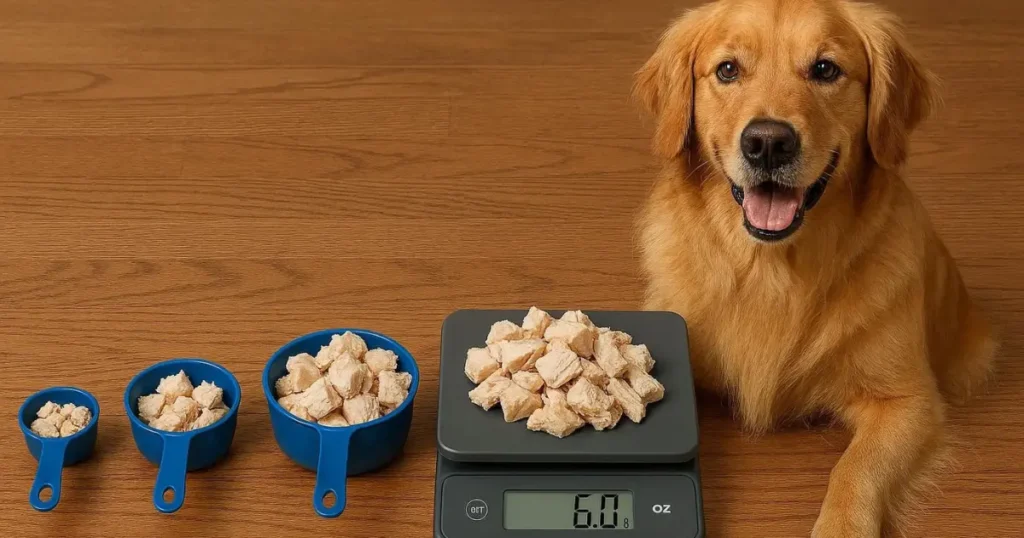
- 2-3 ounces cooked turkey = approximately 100 calories.
- Use small pieces for training (thumbnail-sized).
Special Dietary Applications: Turkey for Specific Golden Retriever Needs.
Turkey dog food addresses various health concerns and life stage requirements.
Weight Management and Obesity.
Turkey’s lean profile makes it ideal for overweight Golden Retrievers:
Strategy:
- Use 93% lean or turkey breast exclusively.
- Higher protein promotes satiety with fewer calories.
- Pair with low-calorie vegetables (green beans, zucchini, and pumpkin).
- Target 1-2% body weight loss weekly (safe rate).
Sample weight loss recipe adjustment:
- Increase turkey to 60-65% of the diet.
- Reduce carbohydrate portion by 30%.
- Increase the vegetable portion by 50%.
- Maintains satiety while reducing overall calories.
Food Allergies and Sensitivities.
If Golden Retrievers react to chicken or beef, turkey may provide an alternative protein:
Elimination diet approach:
- Use turkey as the sole protein source for 8-12 weeks.
- Pair with a single carbohydrate (sweet potato or white rice).
- Monitor for symptom improvement (reduced itching, better skin, fewer ear infections).
- If successful, turkey becomes the primary long-term protein.
Important consideration:
Some dogs with chicken allergies cross-react to turkey (both poultry); in these cases, novel proteins like venison, duck, or fish work better.
Senior Golden Retriever Nutrition.
Older Golden Retrievers benefit from turkey’s nutrient profile:
Advantages for seniors:
- High-quality protein preserves lean muscle mass.
- Lower fat reduces pancreatitis risk.
- Highly digestible, easing the burden on aging digestive systems.
- B-vitamins support cognitive function.
- Selenium provides antioxidant protection.
Senior feeding modifications:
- Reduce overall portions by 10-20% for decreased activity.
- Maintain protein levels supporting muscle preservation.
- Add glucosamine/chondroitin supplements for joints.
- Consider slightly softer food textures by adding warm water.
Puppies and Growing Golden Retrievers.
Turkey can be incorporated into puppy diets with modifications:
Requirements:
- Higher protein needs (22-28% vs. 18-25% for adults).
- Controlled calcium for large breed skeletal development.
- More frequent meals (3-4 daily until 6 months).
- Calorie-dense for growth energy demands.
Caution:
Homemade puppy diets require a veterinary nutritionist consultation, ensuring proper calcium-phosphorus ratios, and preventing orthopedic developmental diseases common in Golden Retrievers.
Turkey Alternatives and Protein Rotation Strategies.
While turkey dog food offers excellent nutrition, dietary variety provides broader nutrient profiles and prevents food boredom.
Benefits of Protein Rotation.
Nutritional diversity:
Different proteins offer unique amino acid profiles and micronutrient compositions.
Reduced sensitivity risk:
Constant exposure to a single protein increases allergy development potential.
Palatability:
Variety maintains meal interest, particularly for picky eaters.
Flexibility:
If supply chain issues affect one protein, alternatives remain available.
Rotation Schedule Example.
- Week 1-2: Turkey-based meals.
- Week 3-4: Chicken or fish-based meals.
- Week 5-6: Beef or lamb-based meals.
- Week 7-8: Return to Turkey.
This rotation provides 2-week exposure periods, allowing digestive adjustment while maintaining variety.
Complementary Proteins to Turkey.
Fish (salmon, whitefish):
- High omega-3 content for joint and heart health.
- Different amino acid profile than poultry.
- Excellent for coat quality.
Beef:
- Higher iron content supporting red blood cells.
- Different B-vitamin profile.
- More palatable for some Golden Retrievers.
Duck:
- Novel protein for allergic dogs.
- Higher fat (use sparingly for weight management).
- Less common allergen than chicken or turkey.
Venison or rabbit:
- True novel proteins for elimination diets.
- Lean, high-quality protein.
- More expensive but valuable for allergic Golden Retrievers.
Food Safety and Storage Guidelines.
Proper handling ensures the turkey for a dog remains safe and nutritious.
Safe Preparation Practices.
Thawing frozen turkey:
- Refrigerator thawing: 24 hours per 5 pounds.
- Cold water thawing: 30 minutes per pound (change water every 30 minutes).
- Never thaw at room temperature (bacterial growth risk).
Cooking safety:
- Cook to 165 °F minimum internal temperature.
- Use a meat thermometer for verification.
- Avoid cross-contamination with raw turkey surfaces.
- Wash hands, utensils, and surfaces thoroughly.
Cooling and serving:
- Cool cooked turkey quickly (within 2 hours).
- Serve at room temperature or slightly warm, never hot.
- Discard uneaten portions after 30-60 minutes.
Storage Guidelines.
Refrigeration:
- Store cooked turkey in airtight containers.
- Keep at 40 °F or below.
- Use within 3-4 days.
- Label containers with preparation date.
Freezing:
- Portion into meal-sized containers before freezing.
- Use freezer-safe containers or bags.
- Label with contents and date.
- Use within 2-3 months for best quality.
- Thaw in refrigerator 24 hours before serving.
Batch preparation tips:
- Cook large quantities for efficiency.
- Portion immediately after cooling.
- Freeze most portions, keeping only 3-4 days’ worth refrigerated.
- Rotate stock using the oldest portions first.
Common Mistakes When Feeding Turkey to Golden Retrievers.
Avoiding these errors ensures that turkey for a dog remains beneficial rather than problematic.
Critical Errors to Avoid.
Feeding holiday turkey:
- Turkey prepared for human consumption contains dangerous seasonings (garlic, onions, excessive salt).
- Skin contains too much fat, risking pancreatitis.
- Bones from cooked turkey splinter, causing intestinal perforations.
- Stick to plain, specially prepared turkey for dogs.
Using processed turkey products:
- Deli turkey: excessive sodium, preservatives, seasonings.
- Turkey hot dogs: additives, fillers, inappropriate for dogs.
- Turkey bacon: extremely high fat and sodium.
- Turkey sausage: heavily seasoned and fatty.
Improper supplementation in homemade diets:
- Turkey alone lacks calcium, causing skeletal problems.
- Missing multivitamins creates micronutrient deficiencies.
- Insufficient omega-3 despite turkey’s lean profile.
- Always add appropriate supplements to homemade turkey dog food.
Sudden dietary changes:
- Abruptly switching to turkey causes digestive upset.
- Transition gradually over 7-10 days.
- Mix increasing amounts of turkey with the current food.
- Monitor stool quality throughout transition.
Overfeeding lean protein:
- Excessive protein burdens the kidneys, especially in seniors.
- Balance protein with appropriate carbohydrates and fats.
- Follow recommended portion guidelines.
- Maintain variety rather than exclusive turkey feeding.
Can dogs eat ground turkey safely and regularly?
Yes, dogs can safely eat ground turkey when cooked thoroughly to 165 °F and served plain without seasonings. Use 93% lean ground turkey, avoid pre-seasoned varieties, and introduce gradually over 5-7 days. Ground turkey provides excellent lean protein ideal for Golden Retrievers, particularly those managing weight or requiring lower-fat diets.
Is turkey dog food better than chicken dog food for Golden Retrievers?
Both turkey and chicken offer excellent nutrition for Golden Retrievers. Turkey provides slightly lower fat (beneficial for weight management), higher selenium content (antioxidant protection), and serves as an alternative for chicken-allergic dogs. Chicken offers a higher protein-to-calorie ratio and a lower cost. Both work excellently; consider rotating proteins for nutritional diversity.
How much turkey for a dog should I feed daily?
For a 70-pound Golden Retriever eating homemade turkey dog food, feed approximately 2-2.25 pounds cooked turkey daily as part of a complete balanced diet including carbohydrates, vegetables, and supplements. If adding turkey to commercial kibble, replace 10-25% of regular food with 4-8 ounces cooked turkey, adjusting to maintain appropriate total calories.
Can I feed my Golden Retriever raw ground turkey?
No, never feed raw ground turkey. Raw turkey carries bacterial contamination risks, including Salmonella and Campylobacter dangerous to both dogs and humans. Always cook ground turkey to a minimum 165 °F internal temperature. Cooking eliminates pathogens while maintaining nutritional value, ensuring safe consumption for your Golden Retriever.
What’s the best commercial turkey dog food for Golden Retrievers?
Wellness CORE Turkey & Duck, Blue Buffalo Turkey & Brown Rice, and Purina Pro Plan Turkey & Barley all provide excellent nutrition for Golden Retrievers. Choose based on your dog’s needs: grain-free for sensitivities, moderate protein for seniors, or higher protein for active dogs. Verify AAFCO certification for complete nutrition.
Does turkey dog food cause allergies in Golden Retrievers?
Turkey allergies occur less frequently than chicken or beef allergies in dogs. However, some Golden Retrievers with chicken sensitivities cross-react to turkey (both poultry). Introduce turkey gradually, monitoring for itching, skin redness, ear infections, or digestive issues. If allergic symptoms appear, discontinue turkey and consider novel proteins like fish or venison.
Can puppies eat turkey dog food or ground turkey?
Yes, puppies can eat turkey when properly formulated. Use commercial large breed puppy formulas containing turkey, or consult a veterinary nutritionist for homemade puppy turkey recipes. Puppies require higher protein (22-28%), controlled calcium for skeletal development, and appropriate calorie density. Never feed inadequately supplemented homemade turkey diets to growing puppies.
Is turkey better than beef for Golden Retrievers with pancreatitis?
Yes, lean turkey (93% lean or turkey breast) contains significantly less fat than most beef cuts, making it superior for pancreatitis-prone Golden Retrievers. Turkey provides high-quality protein without excessive fat, triggering pancreatic inflammation. Always remove turkey skin and choose the leanest options. Combine with low-fat carbohydrates and vegetables for a complete low-fat diet.
Conclusion.
After years of experience guiding Golden Retriever families toward optimal nutrition strategies, I can confidently affirm that turkey dog food represents one of the most valuable protein sources available for this breed. The question “can dogs eat ground turkey?” receives an enthusiastic yes – when prepared properly, turkey for a dog delivers exceptional lean protein, essential amino acids, valuable micronutrients, and lower fat content, particularly beneficial for Golden Retrievers prone to weight gain and obesity-related health issues.
Successfully incorporating turkey into your Golden Retriever’s diet requires understanding proper preparation (always cooked, never seasoned), appropriate portioning (based on weight and activity level), and either selecting quality commercial turkey dog food formulas or creating properly supplemented homemade meals, ensuring complete nutrition. Whether using turkey as the primary protein source, rotating it with other quality proteins, or adding it as a supplement to commercial kibble, this versatile ingredient enhances dietary variety while supporting muscle maintenance, weight management, and overall health.
Remember that turkey alone doesn’t constitute complete nutrition – homemade turkey dog food requires proper supplementation with calcium, multivitamins, and omega-3 fatty acids to prevent deficiencies. Regular monitoring of your Golden’s body condition, coat quality, energy levels, and digestive health ensures chosen turkey-based feeding strategies meet their individual needs effectively.
Your Golden Retriever’s health, vitality, and longevity benefit significantly from high-quality protein sources like turkey. By following the preparation guidelines, recipes, and safety considerations outlined in this comprehensive guide, you’re providing nutritious, wholesome meals that support your beloved companion’s wellbeing. The commitment you demonstrate through careful protein selection and proper preparation reflects the depth of care that defines exceptional Golden Retriever ownership.
Share Your Turkey Dog Food Success Story! Do you feed turkey dog food to your Golden Retriever? We’d love to hear about your experience! Have you tried commercial turkey formulas, or do you prepare homemade turkey meals? What improvements have you noticed in your Golden’s health, weight, coat quality, or energy levels since incorporating turkey for a dog into their diet?

Dr. Nabeel A.
Hi, I’m Dr. Nabeel Akram – a farm management professional by trade and a passionate Golden Retriever enthusiast at heart. With years of experience in animal science and livestock care, I’ve built a career around understanding animals—how they live, thrive, and bring value to our lives. This blog is a personal project born from that same passion, focusing on one of the most loyal and lovable breeds out there: the Golden Retriever. Whether I’m managing farm operations or sharing insights on canine health, behavior, and care, it all ties back to one core belief—animals deserve thoughtful, informed, and compassionate attention. Welcome to a space where professional expertise meets genuine love for dogs.
Facebook |
Links will be automatically removed from comments.