
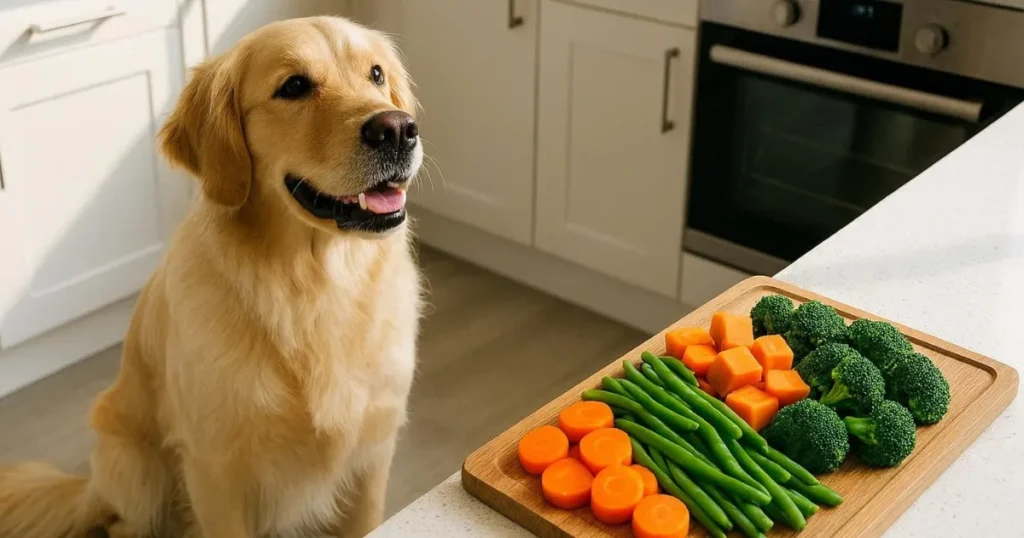
When Golden Retriever owners ask me about how to prepare vegetables for dogs, I understand their motivation – they want to provide fresh, nutritious additions to their dog’s diet beyond standard kibble. After years of experience formulating homemade diets and advising families on optimal nutrition, I’ve learned that vegetables offer tremendous health benefits for Golden Retrievers when prepared correctly.
However, improper preparation can render vegetables indigestible, reduce nutrient availability, or even pose choking hazards. Raw vegetables pass through your Golden’s digestive system largely unprocessed, while certain cooking methods destroy beneficial nutrients.
This comprehensive guide will teach you exactly how to prepare vegetables for dogs safely and effectively, maximizing nutritional value while ensuring digestibility. From selecting the best vegetables to mastering preparation techniques that preserve vitamins and minerals, you’ll discover everything needed to confidently incorporate fresh produce into your Golden Retriever’s diet.
Contents
- 1 Why Vegetables Matter for Golden Retriever Nutrition
- 2 Best Vegetables for Golden Retrievers
- 3 Essential Preparation Methods: How to Prepare Vegetables for Dogs.
- 4 Optimal Portion Sizes and Feeding Guidelines.
- 5 Vegetable-Specific Preparation Guidelines.
- 6 Food Safety and Storage Best Practices.
- 7 Common Mistakes When Preparing Vegetables for Dogs.
- 8 Vegetables for Specific Health Concerns.
- 8.1 For Weight Management.
- 8.2 For Digestive Health.
- 8.3 For Joint Support.
- 8.4 For Immune Support.
- 8.5 How to prepare vegetables for dogs safely and effectively?
- 8.6 Can Golden Retrievers eat raw vegetables, or must they be cooked?
- 8.7 What vegetables are toxic and should never be fed to Golden Retrievers?
- 8.8 How many vegetables should I feed my Golden Retriever daily?
- 8.9 What’s the best cooking method when preparing vegetables for dogs?
- 8.10 Can I feed my Golden Retriever frozen vegetables?
- 8.11 Which vegetables help Golden Retrievers with weight management?
- 8.12 How do I know if my Golden Retriever is tolerating vegetables well?
- 9 Conclusion.
Why Vegetables Matter for Golden Retriever Nutrition
Golden Retrievers benefit significantly from vegetables as part of a balanced dog food diet. These nutritious additions provide essential vitamins, minerals, antioxidants, and fiber that support overall health and address breed-specific concerns.
Nutritional Benefits of Vegetables
Vitamins and minerals:
Vegetables supply vitamins A, C, K, and B-complex, plus minerals like potassium, magnesium, and manganese
Antioxidants:
Beta-carotene, lycopene, and other compounds combat oxidative stress and may reduce cancer risk – particularly important for Golden Retrievers predisposed to certain cancers.
Dietary fiber:
Supports digestive health, promotes satiety, and helps maintain a healthy weight
Phytonutrients:
Plant compounds offering anti-inflammatory properties are beneficial for joint health
Low-calorie bulk:
Adds volume to meals without excessive calories, supporting weight management.
In my clinic, I’ve treated many Golden Retrievers who maintained ideal body weight and experienced improved digestion after their owners learned how to prepare vegetables for dogs properly and incorporated them into daily meals.
The Digestibility Challenge
Dogs possess shorter digestive tracts than humans and lack sufficient cellulase enzymes to break down plant cell walls effectively. This anatomical difference means:
- Raw vegetables pass through largely undigested
- Nutrients remain locked inside intact cell walls
- Minimal nutritional benefit occurs without proper preparation
- Potential choking hazards exist with large, hard pieces
Understanding how to prepare vegetables for dogs addresses these challenges, transforming raw produce into highly digestible, nutritionally available additions to your Golden’s diet.
Vet’s Tip: Always introduce new vegetables gradually – start with one tablespoon for several days to monitor for digestive upset or allergic reactions before increasing portions.
Best Vegetables for Golden Retrievers
Not all vegetables suit canine digestion equally. Some provide excellent nutrition as dog food, while others offer minimal benefits or pose potential risks.
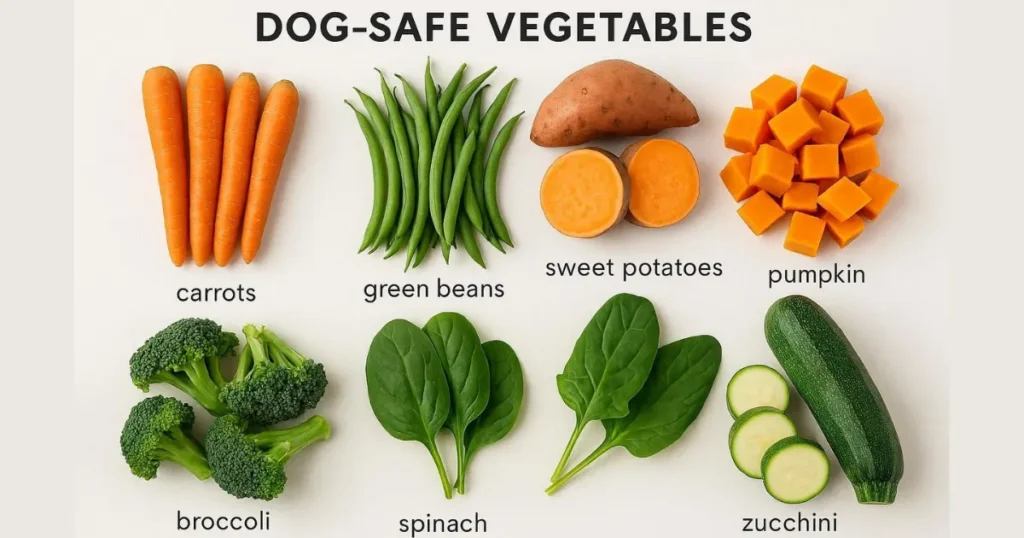
Highly Recommended Vegetables
Carrots:
Rich in beta-carotene, supporting vision and immune function; naturally sweet, making them highly palatable
Green beans:
Low-calorie, high-fiber option perfect for weight management; provides vitamins K and C.
Sweet potatoes:
Excellent source of complex carbohydrates, fiber, and beta-carotene; easily digestible when cooked.
Pumpkin:
Famous for digestive support; high in fiber and vitamin A; helps firm loose stools.
Broccoli:
Contains vitamins C and K, fiber, and cancer-fighting compounds (feed in moderation – under 10% of diet).
Spinach:
Provides iron, vitamins A and K, antioxidants (moderate amounts due to oxalates).
Zucchini:
Low-calorie, mild-flavored vegetable providing vitamins C and B6.
Peas:
Good protein source for vegetables; contain vitamins A, K, and B-complex.
Butternut squash:
Rich in fiber, potassium, and vitamin A; supports digestive health.
Vegetables to Use Cautiously.
- Asparagus: Safe but offers minimal nutritional benefit; tough texture even when cooked.
- Cauliflower: Can cause gas; introduce slowly in small amounts.
- Brussels sprouts: May produce excessive gas; feed sparingly.
- Cabbage: Safe in moderation, but can cause thyroid issues if fed excessively.
Vegetables to Avoid Completely.
- Onions and garlic: Toxic to dogs; damage red blood cells, causing anemia.
- Grapes and raisins: Although technically fruits, extremely toxic; cause kidney failure.
- Tomatoes (unripe): Green portions contain solanine; ripe tomatoes are acceptable in moderation.
- Mushrooms: Wild varieties are potentially fatal; avoid all mushrooms.
- Corn on the cob: Cob causes intestinal blockages; corn kernels are acceptable.
Essential Preparation Methods: How to Prepare Vegetables for Dogs.
Proper preparation maximizes nutrient availability and digestibility while ensuring safety for your Golden Retriever.
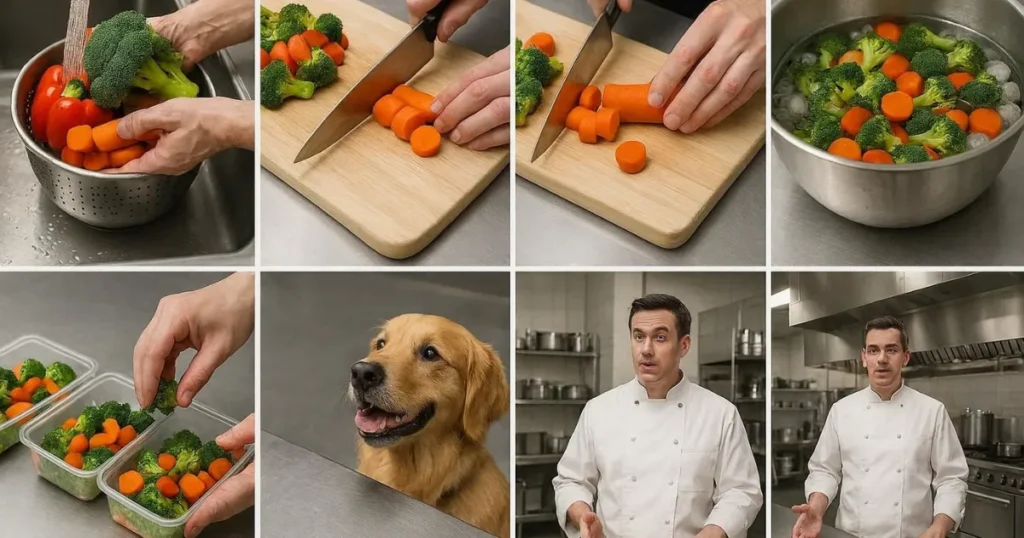
Steaming: The Gold Standard Method.
Steaming preserves the most nutrients while softening cell walls for improved digestibility.
How to steam vegetables for dogs:
- Wash vegetables thoroughly to remove pesticides and dirt.
- Cut into bite-sized pieces appropriate for your Golden’s size.
- Place vegetables in the steamer basket over boiling water.
- Steam until fork-tender but not mushy (typically 5-10 minutes).
- Allow to cool completely before serving.
- Store unused portions in the refrigerator up to 3-4 days.
Best vegetables for steaming:
Broccoli, green beans, carrots, zucchini, asparagus, and cauliflower.
Nutrient retention:
Steaming preserves 80-90% of vitamins compared to boiling.
Boiling: Quick But Less Optimal.
Boiling softens vegetables effectively but leaches water-soluble vitamins into cooking water.
Improved boiling technique:
- Use minimal water – just enough to cover vegetables.
- Bring to a boil, then reduce to a simmer.
- Cook until tender (8-12 minutes depending on the vegetable).
- Save cooking water to pour over food (retains leached nutrients).
- Cool completely before serving.
Best vegetables for boiling:
Sweet potatoes, pumpkin, butternut squash, and white potatoes.
Nutrient retention:
Approximately 60-75% vitamin preservation.
Baking and Roasting.
Roasting caramelizes natural sugars, improving palatability while maintaining good nutrient levels.
How to bake vegetables for dogs:
- Preheat oven to 375-400°F. 2. Cut vegetables into uniform pieces.
- Lightly coat with a small amount of olive or coconut oil (optional).
- Spread on a baking sheet in a single layer.
- Bake 20-30 minutes until tender, stirring halfway.
- Cool completely before serving.
Best vegetables for baking:
Sweet potatoes, carrots, butternut squash, pumpkin, and zucchini.
Important:
Never add salt, butter, garlic, onions, or seasoning when preparing vegetables for dogs.
Pureeing and Mashing.
Creating vegetable purees maximizes digestibility by completely breaking down cell walls.
Preparation steps:
- Cook vegetables using the steaming or boiling method.
- Place cooked vegetables in a food processor or blender.
- Pulse until smooth consistency (add a small amount of cooking water if needed).
- Mix puree into regular meals or freeze in ice cube trays for easy portioning.
Best vegetables for pureeing:
Pumpkin, sweet potato, carrots, green beans, zucchini.
Benefits:
Ideal for senior Golden Retrievers with dental issues or dogs with sensitive digestion.
Raw Preparation (Limited Vegetables).
Very few vegetables can be fed raw successfully, but some work when properly prepared.
Safe raw vegetables (when finely chopped or grated):
- Carrots (shredded).
- Cucumber (finely diced, peeled).
- Celery (finely chopped).
Preparation requirements:
- Wash thoroughly.
- Remove peels when appropriate.
- Grate, mince, or finely chop into microscopic pieces.
- Mix thoroughly with regular food.
Most vegetables benefit from cooking, making this method less preferable for optimal nutrition.
Optimal Portion Sizes and Feeding Guidelines.
Understanding appropriate vegetable portions prevents digestive upset and maintains nutritional balance.
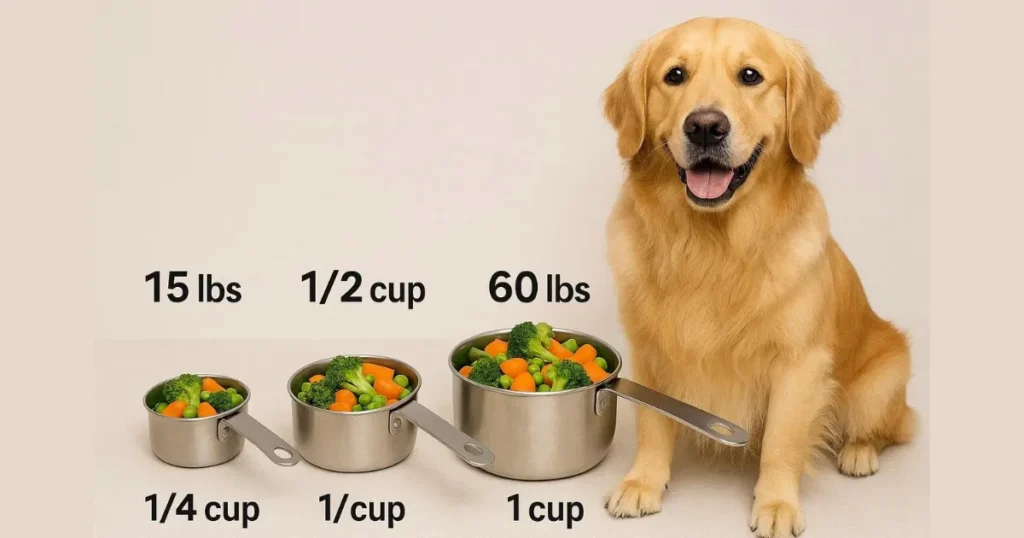
General Portioning Rules.
Vegetables should comprise approximately 10-25% of your Golden Retriever’s total diet, depending on feeding approach.
- For kibble-fed dogs: Add vegetables as toppers or treats (10-15% of diet).
- For homemade diets: Incorporate as an integral component (15-25% of recipe).
- For weight management: Increase to 20-25% to add bulk without excessive calories.
Portion Size Chart by Weight.
| Golden Retriever Weight | Daily Vegetable Portion | Per Meal Portion |
| 50-60 lbs | 1-1.5 cups | 0.5-0.75 cups |
| 60-70 lbs | 1.5-2 cups | 0.75-1 cup |
| 70-80 lbs | 2-2.5 cups | 1-1.25 cups |
| 80-90 lbs | 2.5-3 cups | 1.25-1.5 cups |
Note: These portions represent total daily vegetables, divided between two meals for adult Golden Retrievers.
Introduction Protocol.
When learning how to prepare vegetables for dogs and adding them to your Golden’s diet:
- Week 1: Start with 1-2 tablespoons daily of a single vegetable.
- Week 2: Increase to 1/4 cup if no digestive issues observed.
- Week 3: Gradually increase to the target portion size.
- Week 4+: Introduce additional vegetable varieties one at a time.
Monitor stool quality throughout the introduction. Well-formed stools indicate appropriate vegetable digestion and tolerance.
Vegetable-Specific Preparation Guidelines.
Different vegetables require unique preparation approaches for optimal results.
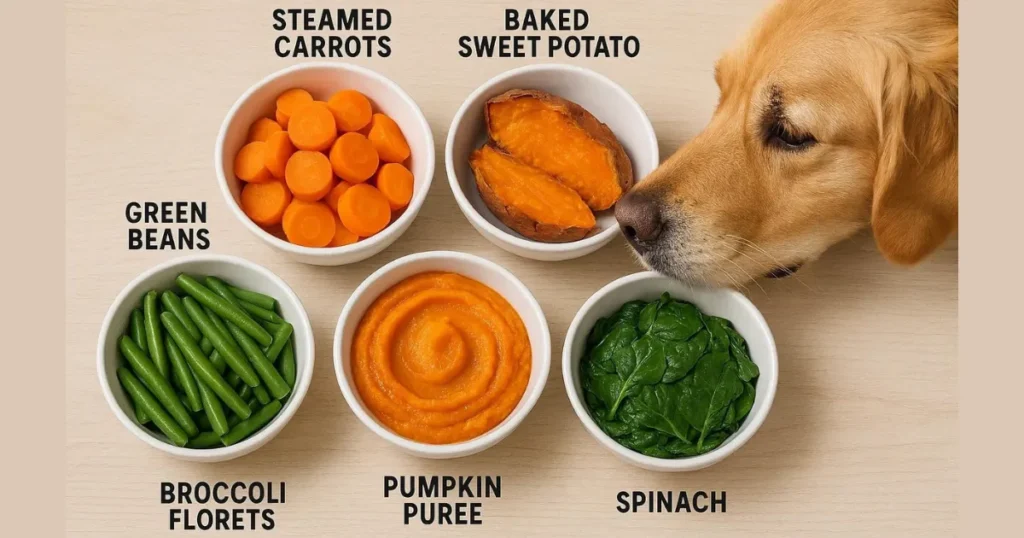
Carrots.
- Preparation: Steam 8-10 minutes or bake 25-30 minutes; can be shredded raw for dental benefits.
- Serving suggestions: Whole steamed carrots as treats; diced in meals; shredded as a food topper.
- Storage: Refrigerate cooked carrots up to 5 days; freeze up to 3 months.
Sweet Potatoes.
- Preparation: Bake at 400°F for 45-60 minutes until soft; or dice and boil 15-20 minutes.
- Serving suggestions: Mashed into regular food; baked and diced; pureed for sensitive stomachs.
- Important: Always remove skin; never feed raw sweet potatoes.
- Storage: Refrigerate cooked sweet potatoes 5-7 days; freeze up to 6 months.
Green Beans.
- Preparation: Steam 5-7 minutes; trim ends before cooking.
- Serving suggestions: Whole as low-calorie treats; chopped in meals; pureed for variety.
- Weight management: Excellent for replacing a portion of regular food to reduce calories.
- Storage: Refrigerate 3-4 days; freeze well for convenient preparation.
Pumpkin.
- Preparation: Use canned pure pumpkin (not pie filling) or roast fresh pumpkin at 350 °F for 45 minutes.
- Serving suggestions: Mix 1-4 tablespoons into meals for digestive support.
- Benefits: Helps firm loose stools or add moisture for constipation.
- Storage: Refrigerate opened canned pumpkin up to 5-7 days; freeze in ice cube trays.
Broccoli.
- Preparation: Steam florets 5-7 minutes until bright green and tender.
- Serving guidelines: Limit to less than 10% of diet (contains isothiocyanates in large amounts).
- Serving suggestions: Chop finely and mix into meals; never feed raw stalks (choking hazard).
- Storage: Refrigerate cooked broccoli 3-4 days; it loses nutrients quickly when frozen.
Spinach.
- Preparation: Steam 2-3 minutes; chop finely after cooking.
- Serving guidelines: Feed in moderation due to oxalate content (can affect calcium absorption).
- Serving suggestions: Mix small amounts into meals 2-3 times weekly.
- Storage: Use fresh spinach quickly; cooked spinach refrigerates 2-3 days.
Food Safety and Storage Best Practices.
Proper handling prevents contamination and maintains nutritional quality.
Preparation Safety.
Washing protocols:
- Rinse all vegetables under running water for 30 seconds minimum.
- Use a vegetable brush for firm produce (carrots, potatoes).
- Remove outer leaves from leafy vegetables.
- Consider organic produce to minimize pesticide exposure.
Cooking safety:
- Use clean utensils and cutting boards.
- Avoid cross-contamination with raw meat.
- Cook vegetables to the appropriate tenderness.
- Cool completely before serving to prevent mouth burns.
Storage Guidelines.
Refrigeration:
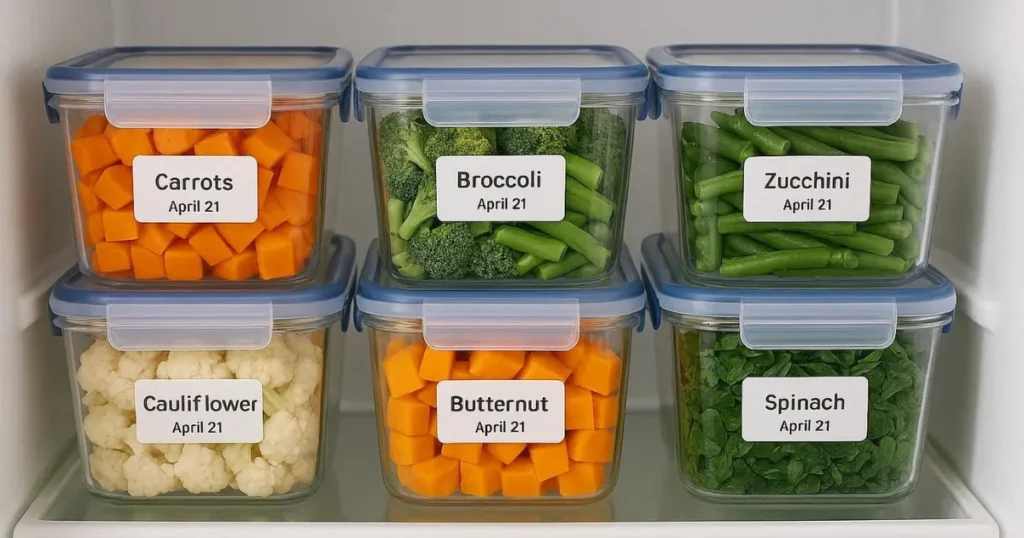
- Store cooked vegetables in airtight containers.
- Label containers with preparation date.
- Use within 3-5 days, depending on the vegetable type.
- Keep refrigerator at 40 °F or below.
Freezing for convenience:
- Portion cooked vegetables into meal-sized containers.
- Use freezer-safe bags or containers.
- Label with vegetable type and date.
- Use frozen vegetables within 3-6 months.
- Thaw in refrigerator overnight before serving.
Batch preparation tips:
- Prepare weekly vegetable portions during meal prep.
- Steam multiple vegetable types simultaneously using a divided steamer.
- Freeze individual portions for easy daily feeding.
- Rotate vegetable varieties weekly for nutritional diversity.
Common Mistakes When Preparing Vegetables for Dogs.
Through years of reviewing homemade diets, I’ve identified recurring errors that reduce effectiveness.
Critical Errors to Avoid.
Serving vegetables too large:
Large chunks pose choking hazards; always cut to appropriate bite sizes for your Golden’s mouth.
Feeding exclusively raw vegetables:
Digestive systems cannot break down raw plant cell walls efficiently; minimal nutrients are absorbed.
Over-seasoning:
Never add salt, butter, garlic, onions, or spices when preparing vegetables for dogs.
Introducing too many varieties simultaneously:
Makes identifying food sensitivities impossible; add one new vegetable weekly.
Exceeding recommended portions:
Too many vegetables cause digestive upset, loose stools, and nutritional imbalances.
Feeding toxic varieties:
Double-check the safety of any new vegetable before introducing it.
Inconsistent preparation:
Varying cooking times and methods creates inconsistent digestibility.
Vegetables for Specific Health Concerns.
Certain vegetables offer targeted benefits for common health issues in Golden Retrievers.
For Weight Management.
Best choices:
Green beans, zucchini, cucumber, and pumpkin.
Strategy:
Replace up to 25% of regular food with low-calorie steamed vegetables to increase satiety while reducing calories.
For Digestive Health.
Best choices:
Pumpkin, sweet potato, green beans.
Benefits:
High fiber content supports regular bowel movements and healthy gut bacteria.
For Joint Support.
Best choices:
Broccoli, spinach, sweet potato.
Benefits:
Antioxidants and anti-inflammatory compounds support joint health in aging Golden Retrievers.
For Immune Support.
Best choices:
Carrots, broccoli, spinach, butternut squash.
Benefits:
High vitamin A and C content strengthens immune function.
How to prepare vegetables for dogs safely and effectively?
Wash vegetables thoroughly, then steam 5-10 minutes until fork-tender but not mushy. Cut into bite-sized pieces appropriate for your Golden’s size. Cool completely before serving. Steaming preserves 80-90% of nutrients while breaking down cell walls for optimal digestibility and nutrient absorption.
Can Golden Retrievers eat raw vegetables, or must they be cooked?
Most vegetables should be cooked for Golden Retrievers. Dogs lack enzymes to break down raw plant cell walls effectively, meaning nutrients remain unavailable. Steaming or boiling makes vegetables digestible. Only finely shredded carrots, minced cucumber, or grated vegetables work raw in very small amounts.
What vegetables are toxic and should never be fed to Golden Retrievers?
Never feed onions, garlic, grapes, raisins, unripe tomatoes, wild mushrooms, or corn cobs to Golden Retrievers. These vegetables and fruits cause serious health problems, including anemia, kidney failure, and intestinal blockages. Always verify vegetable safety before introducing new varieties to your dog’s diet.
How many vegetables should I feed my Golden Retriever daily?
Vegetables should comprise 10-25% of your Golden’s total diet. For a 70-pound Golden Retriever, feed approximately 1.5-2 cups of prepared vegetables daily, divided between two meals. Start with 1-2 tablespoons when introducing new vegetables, gradually increasing to the target portions over 2-3 weeks.
What’s the best cooking method when preparing vegetables for dogs?
Steaming is optimal for preparing vegetables for dogs, preserving 80-90% of nutrients while softening cell walls for digestibility. Steam vegetables 5-10 minutes until fork-tender. Baking and boiling work well for root vegetables like sweet potatoes. Avoid adding salt, butter, or seasonings during preparation.
Can I feed my Golden Retriever frozen vegetables?
Yes, frozen vegetables work well and retain nutrients. Choose plain frozen vegetables without added salt, butter, or sauces. Cook frozen vegetables according to package directions, cool completely, and serve. Alternatively, pre-cook fresh vegetables, portion them, and freeze for convenient meal preparation lasting 3-6 months.
Which vegetables help Golden Retrievers with weight management?
Green beans, zucchini, cucumber, and pumpkin are excellent low-calorie vegetables for weight management. Replace up to 25% of regular food with steamed green beans to increase meal volume and satiety while reducing calories. These vegetables provide fiber, promoting fullness without excessive caloric intake.
How do I know if my Golden Retriever is tolerating vegetables well?
Monitor stool quality – well-formed, brown stools indicate proper vegetable digestion. Signs of intolerance include loose stools, gas, vomiting, or decreased appetite. Introduce one new vegetable weekly, starting with 1-2 tablespoons. Gradually increase portions while monitoring for digestive upset or allergic reactions before adding additional varieties.
Conclusion.
After years of experience guiding Golden Retriever families through optimal nutrition strategies, I can confidently say that learning how to prepare vegetables for dogs represents one of the simplest yet most impactful improvements you can make to your dog’s diet. While the process requires attention to preparation methods, appropriate portioning, and safety considerations, the benefits – enhanced nutrition, improved digestion, weight management support, and increased dietary variety – make the effort entirely worthwhile.
Successfully preparing vegetables for your Golden Retriever depends on several key principles: selecting dog-safe vegetables with proven nutritional benefits, using cooking methods that maximize digestibility while preserving nutrients (particularly steaming), cutting vegetables to appropriate sizes preventing choking hazards, and introducing new varieties gradually to monitor tolerance. Whether you choose carrots, sweet potatoes, green beans, or pumpkin as your foundation, proper preparation transforms these vegetables from minimally digestible raw produce into highly nutritious meal components.
Remember that vegetables complement but don’t replace complete and balanced dog food – they should comprise 10-25% of your Golden’s total diet, depending on individual needs and feeding approach. Regular monitoring of your dog’s response, maintaining consistent preparation methods, and focusing on variety ensure your Golden Retriever receives maximum benefit from these nutritious additions.
Your Golden Retriever’s health, vitality, and longevity benefit significantly from the fresh, whole-food nutrition that properly prepared vegetables provide. By committing to these safe preparation techniques and maintaining awareness of portion guidelines, you’re investing in your beloved companion’s wellbeing and demonstrating the depth of care that defines responsible Golden Retriever ownership.
Share Your Vegetable Preparation Success! Do you prepare vegetables for your Golden Retriever? We’d love to hear about your experience! What vegetables does your Golden enjoy most? Have you discovered any creative preparation methods or combinations that your dog loves? What improvements have you noticed in your Golden’s health, coat quality, or weight management since adding vegetables?

Dr. Nabeel A.
Hi, I’m Dr. Nabeel Akram – a farm management professional by trade and a passionate Golden Retriever enthusiast at heart. With years of experience in animal science and livestock care, I’ve built a career around understanding animals—how they live, thrive, and bring value to our lives. This blog is a personal project born from that same passion, focusing on one of the most loyal and lovable breeds out there: the Golden Retriever. Whether I’m managing farm operations or sharing insights on canine health, behavior, and care, it all ties back to one core belief—animals deserve thoughtful, informed, and compassionate attention. Welcome to a space where professional expertise meets genuine love for dogs.
Facebook |
Links will be automatically removed from comments.