

I often see owners arrive convinced their Golden Retriever needs the highest-protein food they can find – usually after reading something online comparing dog food to ancestral wolf diets. The intent is good. The conclusion isn’t always right.
High protein dog food is genuinely beneficial for Golden Retrievers in specific situations: working dogs, highly active dogs, post-surgical recovery, senior dogs losing muscle mass, and dogs on a weight management protocol. For the average companion Golden living a moderately active life, more protein isn’t automatically better – and in some cases, it introduces unnecessary metabolic load on the kidneys and liver over time.
What matters isn’t hitting the highest protein percentage on the label. It’s getting the right protein level from the right sources, at the right life stage.
This guide breaks down exactly what Golden Retrievers need from dietary protein, when retriever high protein dog food is genuinely warranted, how to evaluate protein quality rather than just quantity, and which foods deliver real nutritional value versus marketing-driven protein percentages. Every recommendation here is grounded in years of working with this breed specifically.
Contents
- 1 What “High Protein” Actually Means on a Dog Food Label
- 2 How Much Protein Does a Golden Retriever Actually Need?
- 3 The Protein Quality Problem: Why 34% Can Perform Worse Than 26%.
- 4 Best High Protein Dog Foods for Golden Retrievers: Vet-Reviewed Comparison Table.
- 5 6 Signs Your Golden Retriever May Benefit From Higher Dietary Protein.
- 5.1 1. Visible muscle loss along the topline or hindquarters
- 5.2 2. Slow recovery after exercise or play
- 5.3 3. Dull, thin, or brittle coat despite omega-3 supplementation
- 5.4 4. Weight management without muscle retention
- 5.5 5. Working, hunting, or high-activity lifestyle
- 5.6 6. Post-surgical or illness recovery
- 6 5 Risks of Too Much Protein in Golden Retrievers.
- 7 8 Mistakes Golden Retriever Owners Make With High Protein Dog Food.
- 7.1 1. Choosing protein percentage over protein source
- 7.2 2. Feeding active-dog portions to sedentary dogs
- 7.3 3. Not adjusting protein as the dog ages
- 7.4 4. Rotating proteins without a transition period
- 7.5 5. Assuming grain-free equals high protein
- 7.6 6. Using high protein food to compensate for low feeding volume
- 7.7 7. Skipping bloodwork before switching senior dogs
- 7.8 8. Ignoring moisture content when comparing labels
- 8 9 Vet-Backed Tips for Feeding High Protein Food to Golden Retrievers.
- 8.1 Is high protein dog food good for Golden Retrievers?
- 8.2 What protein percentage should retriever high protein dog food have?
- 8.3 Can too much protein harm a Golden Retriever?
- 8.4 What is the best protein source in high protein dog food for Golden Retrievers?
- 8.5 Should senior Golden Retrievers eat high protein dog food?
- 8.6 Is grain-free automatically high protein for Golden Retrievers?
- 8.7 How do I transition my Golden Retriever to high protein dog food?
- 8.8 Can high protein dog food cause kidney problems in Golden Retrievers?
- 8.9 What is the difference between crude protein and digestible protein?
- 8.10 How much protein does an active Golden Retriever need daily?
- 8.11 Is raw food the best high protein option for Golden Retrievers?
- 8.12 Does high protein food cause aggression or hyperactivity in Golden Retrievers?
- 8.13 What high protein food helps Golden Retrievers build muscle?
- 8.14 Can I add high protein toppers to my Golden’s existing food?
- 8.15 How long before I see results after switching to high protein dog food?
- 9 Conclusion.
What “High Protein” Actually Means on a Dog Food Label
In commercial dog food, “high protein” typically means crude protein content of 30% or above on a dry matter basis. However, crude protein percentage alone tells you nothing about protein quality, digestibility, or source.
This distinction matters enormously when evaluating retriever high-protein dog food. A food can hit 38% crude protein by including feather meal, corn gluten meal, or other low-biological-value protein sources – ingredients that inflate the number without delivering usable amino acids your dog can actually absorb and utilize.
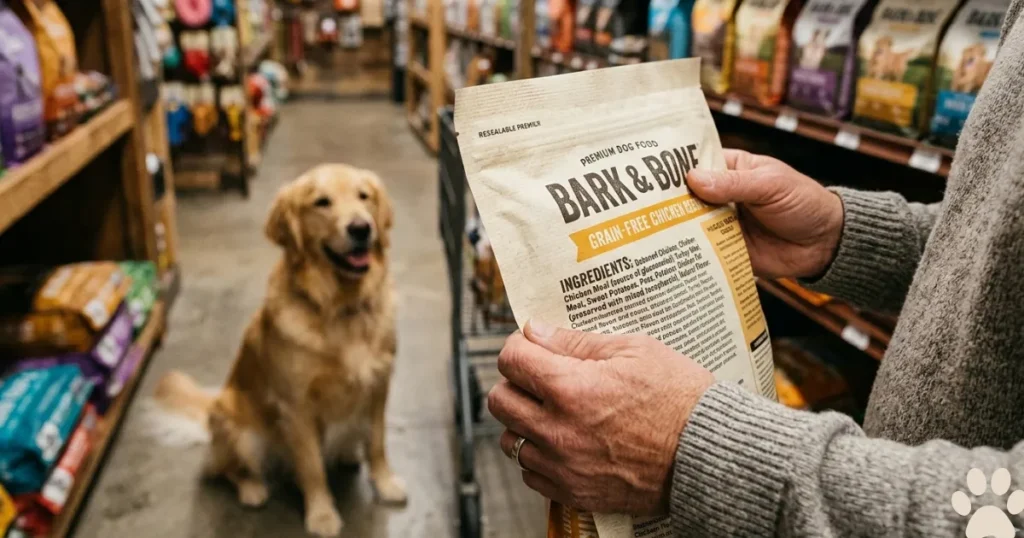
What to look for instead:
Named animal proteins in the first two ingredients:
Deboned chicken, salmon, turkey, beef, or their meal equivalents
Biological value indicators:
Egg and fish rank highest in biological value among common dog food proteins; plant proteins rank lowest
Digestibility:
Chicken meal and salmon meal are more digestible than whole chicken or salmon because moisture removal concentrates the protein
Amino acid completeness:
Complete protein sources deliver all essential amino acids; plant-based proteins typically require combining to achieve completeness
In canine nutrition, crude protein percentage is a starting metric, not a quality indicator – source and digestibility determine whether dietary protein translates into muscle maintenance, immune function, and coat health in Golden Retrievers.
How Much Protein Does a Golden Retriever Actually Need?
AAFCO’s minimum protein requirement for adult dogs is 18% on a dry matter basis. Most quality commercial foods sit well above this. The practical question for Golden Retriever owners isn’t whether to meet minimums – it’s what range is genuinely optimal.
Based on years of working with this breed across life stages, here’s what the evidence supports:
| Life Stage | Recommended Crude Protein (Dry Matter) | Notes |
| Puppy (8 weeks–15 months) | 22–28% | Large-breed formula essential; excess protein without controlled calcium causes skeletal issues |
| Active Adult (1–7 years) | 25–30% | Higher end for working or field dogs; mid-range for companion dogs |
| Sedentary Adult | 22–26% | Excess protein converts to fat or is excreted; not inherently beneficial |
| Senior (7+ years) | 28–32% | Elevated protein preserves muscle mass; kidney function should be monitored annually |
| Post-surgical / Recovery | 30–35% | Tissue repair demands higher amino acid availability; short-term increase appropriate |
| Weight Management | 28–32% high protein, reduced fat | High protein supports satiety and lean mass retention during caloric restriction |
Senior Golden Retrievers benefit from retriever high protein dog food more than any other life stage – muscle wasting in aging dogs accelerates without adequate dietary protein, and the older advice to restrict protein in healthy seniors is not supported by current veterinary nutrition evidence.
The Protein Quality Problem: Why 34% Can Perform Worse Than 26%.
This is the insight I find most owners haven’t encountered before, and it changes how you shop for high protein dog food entirely.
Protein percentage is measured by nitrogen content in the food. Nitrogen comes from amino acids in genuine meat – but it also comes from non-meat sources like feathers, hooves, beaks, and certain plant proteins. A manufacturer can legally list a high crude protein percentage on a bag that delivers poor amino acid bioavailability.
The practical test:
Look at ingredients 1 through 8. If animal proteins dominate that range – deboned meats, named meal ingredients, whole fish – the protein percentage reflects genuine nutritional value. If you see multiple plant proteins, unnamed by-products, or filler grains in that range, the high protein number is partly manufactured.
Two indicators of genuine protein quality in retriever high protein dog food:
1. Meat meal placement:
“Chicken meal” listed second or third, after a whole meat first ingredient, indicates a food where animal protein genuinely dominates by dry weight. Whole meats listed first can drop in ranking after moisture loss during processing; a meal listed second confirms animal protein is the real base.
2. PDCAAS or digestibility data:
Some premium brands publish digestibility coefficients. A food with 78% protein digestibility at 30% crude protein delivers more usable protein than a food with 55% digestibility at 36% crude protein. Ask the manufacturer for this data if it isn’t on the packaging.
Best High Protein Dog Foods for Golden Retrievers: Vet-Reviewed Comparison Table.
These are well-documented, commercially available options I evaluate based on protein source quality, omega-3 content, life-stage appropriateness, and track record in Golden Retrievers specifically.
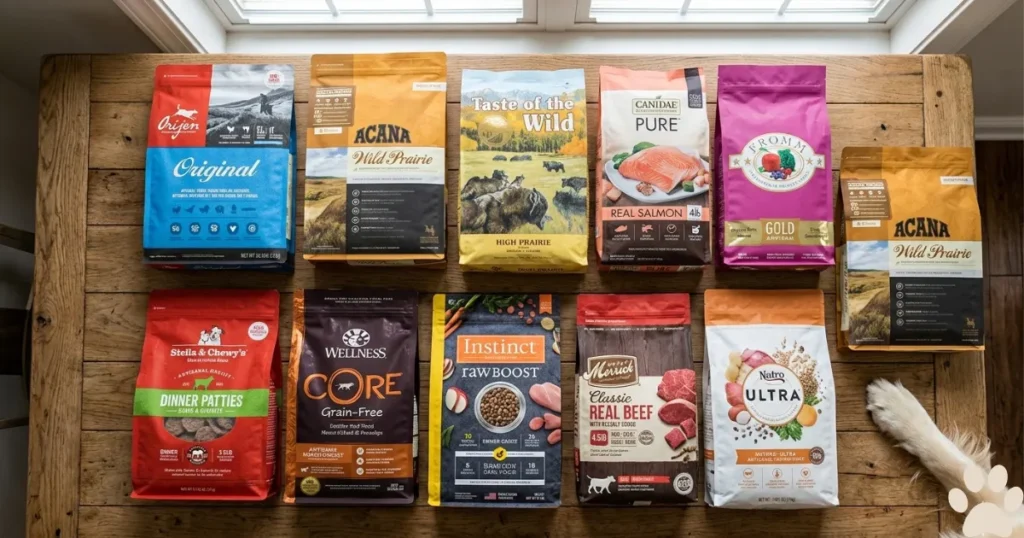
| Food Name | Protein Source | Crude Protein (DM%) | Life Stage | Key Benefit for Golden Retrievers |
| Orijen Original | Chicken, turkey, fish (whole prey) | ~38% | Adult | Highest biological value protein; whole-animal ingredients; ideal for active or working Goldens |
| Purina Pro Plan Sport 30/20 | Chicken | ~30% | Active Adult | Feeding-trial backed; glucosamine added; optimal for high-activity companion dogs |
| Acana Grasslands | Lamb, duck, fish | ~31% | Adult | Novel protein option; excellent for Goldens with chicken sensitivity; strong omega-3 profile |
| Orijen Senior | Chicken, turkey, whole fish | ~38% | Senior 7+ | Elevated protein for muscle preservation; joint-supportive; low glycemic index |
| Purina Pro Plan Sensitive Skin Salmon | Salmon | ~26% | Adult (sensitive) | Lower but high-quality protein; EPA/DHA for skin and coat; for Goldens with recurring inflammation |
| Hill’s Science Diet Active Longevity | Chicken | ~18.5% | Senior (less active) | Lower protein for sedentary seniors; antioxidant-rich; not for muscle-wasting dogs |
| Merrick Grain-Free Real Chicken | Chicken, turkey meal | ~32% | Adult | High meat content; no legume base; suits Goldens where grain-free is medically indicated |
| Royal Canin Golden Retriever Adult | Chicken meal, pork meal | ~25% | Adult (breed-specific) | Breed-engineered formula; cardiac and coat support; controlled calorie density |
| Taste of the Wild High Prairie | Bison, venison | ~32% | Adult | Novel proteins for rotation; good for Goldens cycled off chicken/beef periodically |
| Ziwi Peak Air-Dried Beef | Beef, organs, bone | ~45% | Adult (topper/full feed) | Ultra-high protein from whole-animal sourcing; best used as a topper; expensive at full portion |
For active adult Golden Retrievers:
Purina Pro Plan Sport 30/20. The combination of AAFCO feeding trial certification, added glucosamine, and a genuine 30% protein from chicken gives it an unusually strong evidence base for this breed specifically, and the outcomes in coat condition and muscle maintenance are consistent.
For seniors losing muscle mass:
Orijen Senior. The whole-prey protein profile at 38% dry matter delivers the amino acid density aging dogs need to slow muscle wasting. This is the food I most commonly recommend when a Golden Retriever over 8 comes in visibly losing topline muscle.
For Goldens with skin inflammation:
Acana Grasslands or Purina Pro Plan Salmon. Rotating away from chicken to a novel protein source at a meaningful protein level resolves a significant proportion of recurring skin cases where the protein source – not the protein level – was the problem.
6 Signs Your Golden Retriever May Benefit From Higher Dietary Protein.
Not every Golden needs retriever high protein dog food. These are the specific situations where increasing protein is clinically warranted.

1. Visible muscle loss along the topline or hindquarters
Muscle wasting, particularly over the spine and rear legs, is a common early sign in senior Goldens that current protein intake is insufficient. This is one of the clearest indicators to move to a senior high protein formula.
2. Slow recovery after exercise or play
Dogs on adequate protein bounce back within hours of vigorous activity. Persistent stiffness or fatigue that extends beyond 24 hours – absent injury – often reflects inadequate amino acid availability for muscle repair.
3. Dull, thin, or brittle coat despite omega-3 supplementation
Coat quality requires both fatty acids and protein – specifically the amino acid cysteine, which is abundant in animal-based proteins. When omega-3 supplementation alone doesn’t resolve coat dullness, inadequate dietary protein is the next variable to investigate.
4. Weight management without muscle retention
Reducing calories to help an overweight Golden often depletes lean mass alongside fat. A high-protein, lower-fat formula maintains muscle during caloric restriction in a way that a standard reduced-calorie food cannot.
5. Working, hunting, or high-activity lifestyle
Field dogs, therapy dogs in active daily work, and Goldens in regular agility or dock diving need protein at the higher end of the range. Their daily amino acid demand exceeds that of a companion dog significantly.
6. Post-surgical or illness recovery
Tissue repair is protein-dependent. After surgery, injury, or illness, a temporary increase in dietary protein – under veterinary guidance – supports faster, more complete recovery.
5 Risks of Too Much Protein in Golden Retrievers.
High protein dog food is not risk-free when applied indiscriminately. These are the concerns that matter for this breed.
1. Excess caloric intake
Protein delivers 4 calories per gram. A high-protein food fed at the same volume as a standard food increases total caloric intake – often quietly driving weight gain in sedentary indoor dogs.
2. Nitrogen load on the kidneys
Healthy kidneys handle dietary protein efficiently. Dogs with early-stage kidney disease or reduced renal function can be adversely affected by persistently high protein intake. Annual bloodwork in Goldens over 7 should include kidney function markers before switching to a high-protein senior formula.
3. Digestive sensitivity during transition
Jumping from a 22% protein food to a 38% protein food without a proper 7 – 10 day transition almost always produces soft stools or loose stool. The digestive microbiome adapts gradually.
4. Unbalanced calcium-phosphorus ratio in puppies
High-protein puppy foods that are not specifically formulated for large breeds can carry elevated phosphorus levels that distort the calcium-to-phosphorus ratio – accelerating bone growth unevenly and increasing orthopedic risk in a breed already predisposed to hip and elbow dysplasia.
5. Cost-to-benefit mismatch in low-activity dogs
For a companion Golden that walks 30 minutes daily and spends most of the day resting, premium retriever high protein dog food delivers marginal benefit over a quality standard formula. The protein simply gets excreted or converted. Invest in quality protein sources at appropriate levels rather than chasing maximum percentages.
Over the years, I’ve noticed that Golden Retrievers switched to retriever high protein dog food after age seven – particularly whole-animal formulas with 30% or more crude protein – hold their muscle condition significantly better through their senior years than those kept on maintenance formulas. The difference becomes visible around age nine to ten, when the dogs that had adequate protein for years retain hindquarter strength and topline muscle that their cohort has already lost.
8 Mistakes Golden Retriever Owners Make With High Protein Dog Food.
1. Choosing protein percentage over protein source
A 36% protein food built on plant proteins and by-products will underperform a 28% food built on salmon meal and whole chicken. Source first, percentage second.
2. Feeding active-dog portions to sedentary dogs
High protein performance foods are calorie-dense. Feeding the full recommended amount to a low-activity Golden consistently produces weight gain within months.
3. Not adjusting protein as the dog ages
Many owners keep their Golden on the same adult formula from age two through age eleven. Protein needs change significantly at seven-plus – staying on a low-to-moderate protein adult food through the senior years accelerates muscle loss.
4. Rotating proteins without a transition period
Switching from a chicken-based food to a fish-based high protein formula cold turkey causes digestive upset, even if both foods are high quality. Always transition over 7 – 10 days.
5. Assuming grain-free equals high protein
Grain-free foods often substitute legumes and potatoes for grains. These are carbohydrate sources, not protein sources. A grain-free food can be lower in protein than a grain-inclusive food. The two variables are independent.
6. Using high protein food to compensate for low feeding volume
Underfeeding a high-protein food to save money creates an amino acid deficit despite the high-protein label. Protein requirements are measured in grams per kilogram of body weight, not percentages alone.
7. Skipping bloodwork before switching senior dogs
Jumping a senior Golden with undiagnosed early renal insufficiency onto a 38% protein diet accelerates kidney stress. Run a chemistry panel before significant dietary changes in dogs over seven.
8. Ignoring moisture content when comparing labels
A wet food with 12% crude protein on an as-fed basis can deliver the same dry matter protein as a kibble at 30%. Always convert to dry matter basis before comparing protein levels across food types.

9 Vet-Backed Tips for Feeding High Protein Food to Golden Retrievers.
- Confirm kidney function with annual bloodwork before committing a senior dog to a high-protein formula long-term.
- Target 1.0 – 1.5 g of protein per pound of lean body weight daily for active adults – calculate based on lean mass, not total weight, to avoid overfeeding overweight dogs.
- Choose foods where the top three ingredients are all named animal proteins or meals for the highest biological value return.
- Add a fish oil supplement regardless of the food’s omega-3 content – most foods don’t deliver therapeutic EPA/DHA levels even at high protein percentages.
- For Goldens on weight management, high protein with reduced fat (not reduced protein) is the appropriate formula type – fat restriction preserves lean mass while creating a caloric deficit.
- Rotate protein sources every 3 – 6 months to reduce sensitization risk – consistent single-protein feeding over years increases the likelihood of developing a reaction to that protein.
- Use a kitchen scale for the first month on any new high protein food – these foods are often calorie-denser than standard formulas, and eye-measuring portions creates chronic overfeeding.
- For puppies, never assume a high-protein food is automatically large-breed appropriate – check that calcium is specifically controlled for large-breed puppy requirements.
- Evaluate the dog’s response to high protein food by body condition score, stool consistency, coat quality, and energy level over 8 weeks – not just the first two weeks, when transition effects dominate.
For Golden Retrievers over seven years old, the most evidence-supported dietary change is increasing – not decreasing – protein intake from high-quality animal sources to counteract age-related muscle loss.
Retriever hi protein dog food formulated with whole-animal or named meal proteins consistently outperforms plant-protein-padded high-protein foods on muscle maintenance and coat outcomes in Golden Retrievers, regardless of the crude protein percentage on the label.
Is high protein dog food good for Golden Retrievers?
Yes, when appropriate for the dog’s life stage and activity level. Active dogs, seniors losing muscle, and recovering dogs benefit most. Sedentary adult Goldens don’t require maximum protein levels to thrive.
What protein percentage should retriever high protein dog food have?
Active adults benefit from 28 – 32% dry matter protein. Seniors benefit from 30 – 38%. Puppies should stay at 22 – 28% with large-breed-specific calcium control.
Can too much protein harm a Golden Retriever?
In healthy dogs with normal kidney function, excess protein is excreted rather than stored. The risks are caloric – high protein foods are dense – and relevant for dogs with pre-existing renal issues.
What is the best protein source in high protein dog food for Golden Retrievers?
Whole fish, deboned salmon, chicken meal, and turkey meal rank highest for biological value and digestibility. These sources deliver complete amino acid profiles with high absorption rates.
Should senior Golden Retrievers eat high protein dog food?
Yes. Current veterinary nutrition evidence supports higher protein for healthy senior dogs to counteract muscle wasting. Protein restriction is appropriate only when kidney disease is diagnosed, not as a preventive measure.
Is grain-free automatically high protein for Golden Retrievers?
No. Grain-free foods replace grains with legumes or potatoes – both carbohydrate sources. A grain-free food can have lower protein than a grain-inclusive food. Evaluate protein independently of grain content.
How do I transition my Golden Retriever to high protein dog food?
Transition over 7 – 10 days: 25% new food days 1 – 3, 50% days 4 – 6, 75% days 7 – 9, 100% day 10. If loose stools appear, slow the transition further.
Can high protein dog food cause kidney problems in Golden Retrievers?
In dogs with healthy kidneys, no. In dogs with early or diagnosed renal disease, high protein increases kidney workload. Run annual bloodwork in seniors before transitioning to high-protein formulas.
What is the difference between crude protein and digestible protein?
Crude protein measures total nitrogen content, including from low-quality sources. Digestible protein measures what the dog can actually absorb and use. High crude protein from poor sources can mean low digestible protein in practice.
How much protein does an active Golden Retriever need daily?
Approximately 1.0 – 1.5 grams of protein per pound of lean body weight. A 65-pound active adult Golden needs roughly 65 – 100 grams of digestible protein daily depending on activity intensity.
Is raw food the best high protein option for Golden Retrievers?
Raw food can deliver excellent protein bioavailability but carries bacterial contamination risk and frequently lacks complete nutritional balance without professional formulation. Quality commercial high protein kibble or wet food is safer for most households.
Does high protein food cause aggression or hyperactivity in Golden Retrievers?
No scientific evidence supports this claim. It is a persistent myth. Diet does not drive aggression or hyperactivity in dogs through protein content.
What high protein food helps Golden Retrievers build muscle?
Foods delivering complete animal proteins – Orijen, Purina Pro Plan Sport, Acana – alongside regular physical exercise support lean muscle development. Protein alone without physical activity does not build muscle.
Can I add high protein toppers to my Golden’s existing food?
Yes. Cooked eggs, canned sardines in water, or commercially produced air-dried meat toppers add high-quality protein without dramatically disrupting the food’s nutritional balance. Adjust the total portion to account for added calories.
How long before I see results after switching to high protein dog food?
Coat improvement becomes visible in 6 – 8 weeks. Muscle condition improvement in seniors takes 8 – 12 weeks of consistent feeding alongside maintained activity. Digestive adaptation completes within 2 – 3 weeks.
Conclusion.
High protein dog food for Golden Retrievers is a tool, not a universal upgrade. Used correctly – matched to the right life stage, built on genuine animal-protein sources, and fed at appropriate portions – it is one of the most impactful nutritional decisions you can make for this breed.
The dogs I’ve seen thrive long-term are not necessarily on the highest-protein food available. They’re on food where the protein is high-quality, well-sourced, and appropriate for what that individual dog actually needs. A working field Golden and a companion apartment Golden have different protein requirements – and both can be well-nourished without defaulting to the same formula.
Evaluate based on protein source, dry matter percentage, digestibility, and your dog’s specific life stage and activity level. Run annual bloodwork once your Golden reaches seven. Adjust as life circumstances change. That approach – methodical rather than trend-driven – produces the best outcomes in this breed over a lifetime.
Every Golden Retriever has different protein needs depending on age, activity, and health history.
- Have you switched to a high protein dog food and noticed a real difference in muscle condition, coat quality, or energy?
- Or has your experience been more mixed?
Share what worked for your retriever in the comments – your observations help other owners make smarter feeding decisions.

Dr. Nabeel A.
Hi, I’m Dr. Nabeel Akram – a farm management professional by trade and a passionate Golden Retriever enthusiast at heart. With years of experience in animal science and livestock care, I’ve built a career around understanding animals—how they live, thrive, and bring value to our lives. This blog is a personal project born from that same passion, focusing on one of the most loyal and lovable breeds out there: the Golden Retriever. Whether I’m managing farm operations or sharing insights on canine health, behavior, and care, it all ties back to one core belief—animals deserve thoughtful, informed, and compassionate attention. Welcome to a space where professional expertise meets genuine love for dogs.
Facebook |
Links will be automatically removed from comments.