

Food intolerance in dogs is one of the most misunderstood conditions I encounter with Golden Retriever owners. I often see dogs treated for infections, parasites, or anxiety before anyone considers that the food bowl is the source of the problem. Loose stools, gas, intermittent vomiting, and low energy get attributed to stress or bad luck – when the real answer is an ingredient the dog’s digestive system simply cannot process.
Golden Retrievers are particularly prone to digestive sensitivities. Their genetics, combined with long-term exposure to commercial food, make them among the breeds I see most frequently with this condition. Unlike food allergies – which trigger an immune response – food intolerance involves the digestive system failing to break down or process certain ingredients correctly.
Understanding the difference matters because management approaches differ significantly. Symptoms of food intolerance in dogs are primarily gastrointestinal rather than dermatological, though there is overlap. Owners researching food intolerance dogs often find advice blended with allergy guidance – this guide keeps the two clearly separate, covering causes, recognition, confirmation, and management specific to Golden Retrievers.
Contents
- 1 Food Intolerance vs. Food Allergy: A Critical Distinction
- 2 8 Common Symptoms of Food Intolerance in Dogs
- 3 What Causes Food Intolerance in Dogs
- 4 The Most Common Food Triggers in Golden Retrievers
- 5 7 Mistakes Golden Retriever Owners Make That Worsen Food Intolerance
- 6 Definitive Statements on Food Intolerance in Dogs
- 7 How to Diagnose Food Intolerance in Golden Retrievers
- 8 Managing Food Intolerance Long-Term
- 8.1 For Dairy Intolerance:
- 8.2 For Fat Intolerance:
- 8.3 For Grain Intolerance:
- 8.4 Supporting Gut Health:
- 8.5 Monitoring for Escalation:
- 8.6 What is food intolerance in dogs?
- 8.7 What are the main symptoms of food intolerance in dogs?
- 8.8 How is food intolerance different from a food allergy in dogs?
- 8.9 What foods most commonly cause intolerance in Golden Retrievers?
- 8.10 Can food intolerance in dogs be cured?
- 8.11 How long does it take to see improvement after removing a food trigger?
- 8.12 Should I do an elimination diet for food intolerance?
- 8.13 Can probiotics help with food intolerance in dogs?
- 8.14 Do Golden Retrievers get food intolerance more than other breeds?
- 8.15 Is blood in my dog’s stool always an emergency?
- 9 Conclusion
Food Intolerance vs. Food Allergy: A Critical Distinction
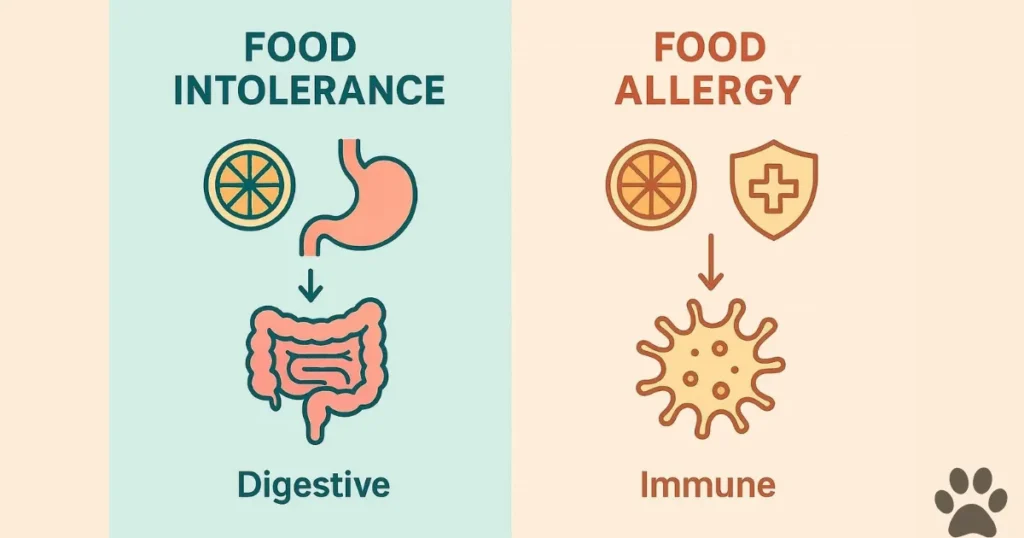
The terms are used interchangeably in dog owner communities, but in veterinary medicine, they describe different processes with different management pathways.
Food Intolerance
It involves a non-immune reaction. The digestive system lacks the enzymes, gut bacteria, or physiological capacity to process a specific ingredient. No immune activation occurs. The reaction is dose-dependent – small amounts may cause mild symptoms while larger amounts cause significant distress. Dogs can sometimes tolerate limited quantities of the problematic ingredient.
Food Allergy
It involves immune system activation. The body identifies a protein as a threat and mounts a defensive inflammatory response. Even trace amounts trigger reactions. Skin symptoms like itching, ear infections, and hot spots predominate, though gastrointestinal signs can appear alongside them.
In practice, Golden Retrievers can have both at the same time. A dog may be intolerant to lactose and allergic to chicken at the same time. Treating only one condition leaves the other unaddressed.
The practical test:
If symptoms are primarily gastrointestinal – loose stools, gas, vomiting, gurgling abdomen – food intolerance is the more likely explanation. If itching, ear infections, and skin inflammation are prominent, a food allergy is more likely.
8 Common Symptoms of Food Intolerance in Dogs
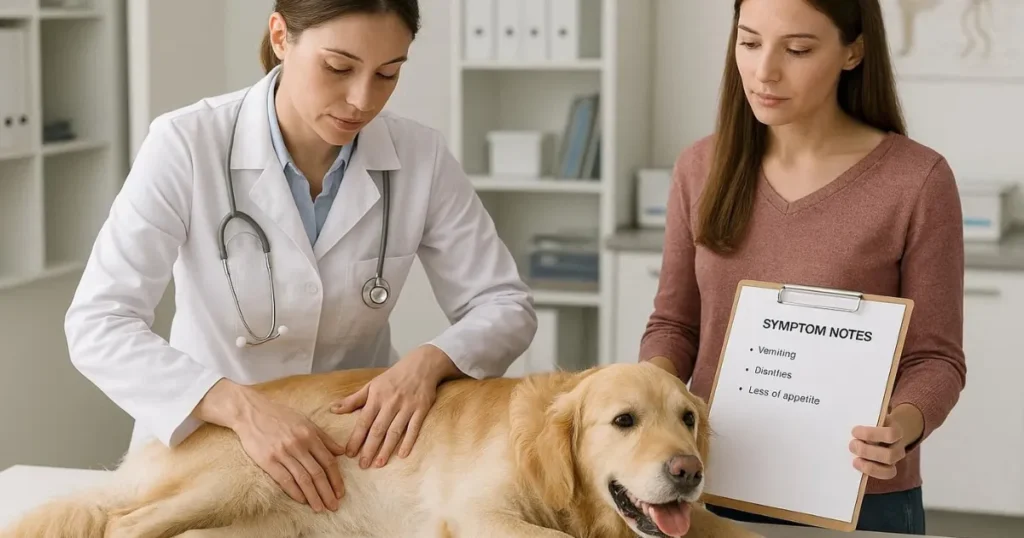
Recognizing symptoms of food intolerance in dogs requires distinguishing them from infections, parasites, and other GI conditions. These eight signs – particularly when consistent and recurrent – point strongly toward food intolerance:
1. Loose or Soft Stools
The hallmark symptom. A Golden Retriever with food intolerance rarely forms consistent stools. The stool may be soft, poorly shaped, or outright liquid. Crucially, this pattern persists over weeks and months rather than resolving within a few days as infectious causes would.
2. Excessive Flatulence
Undigested ingredients ferment in the large intestine, producing gas. Golden Retrievers with food intolerance often have noticeably more gas than average – sometimes severely so. The gas typically occurs 2-6 hours after eating, corresponding to when poorly digested ingredients reach the fermenting bacteria in the large intestine.
3. Frequent Vomiting
Intermittent vomiting after meals, particularly when undigested food is present, suggests the ingredient is not being processed before leaving the stomach. Occasional bile vomiting in the morning can also reflect gastrointestinal irritation from food intolerance. Vomiting that occurs consistently within 30-60 minutes of eating points directly to the food itself.
4. Abdominal Gurgling and Bloating
A gurgling, audible abdomen – known as borborygmi – indicates excessive gas and fluid movement through the intestines. Owners often describe their Golden Retriever’s stomach as “talking.” Mild bloating may accompany this without reaching the serious levels associated with gastric dilatation-volvulus (GDV), but any bloating warrants monitoring.
5. Increased Defecation Frequency
Food intolerance accelerates intestinal transit. Golden Retrievers who normally defecate twice daily may need to go four or five times when eating an ingredient they don’t tolerate. The urgency can be significant – dogs that begin having accidents indoors despite being house-trained often have an underlying dietary intolerance driving the issue.
6. Mucus in Stool
The intestinal lining secretes excess mucus in response to irritating ingredients. A stool coated with clear or white mucus indicates colonic irritation. Occasional mucus is normal, but a consistent presence points to ongoing intestinal irritation from symptoms of food intolerance in dogs.
7. Blood in Stool
Fresh red blood in stool (hematochezia) can result from colonic inflammation caused by food intolerance. This symptom always warrants veterinary evaluation to rule out other causes, but food intolerance is a legitimate contributor. Chronic low-grade bleeding from persistent intolerance can cause mild anemia over time if unaddressed.
8. Weight Loss Despite Normal Appetite
When key nutrients pass through undigested, dogs fail to absorb adequate calories and nutrients despite eating normally. This malabsorptive pattern causes gradual weight loss, muscle wasting, and a dull, dry coat. Golden Retrievers showing unexplained weight loss should have food intolerance evaluated alongside other diagnostic possibilities.
What Causes Food Intolerance in Dogs
In veterinary gastroenterology, food intolerance stems from four primary mechanisms:
Enzyme Deficiency
Dogs lack specific digestive enzymes needed to break down certain ingredients. Lactase deficiency – the inability to digest lactose in dairy – is the most common example. Without sufficient lactase, lactose passes undigested into the large intestine, where bacteria ferment it, producing gas and diarrhea.
Gut Microbiome Imbalance
The gut microbiome plays a central role in digesting complex carbohydrates and maintaining intestinal barrier integrity. When beneficial bacteria populations are disrupted – through antibiotics, stress, or abrupt dietary changes – certain ingredients become problematic. Golden Retrievers who develop GI symptoms following antibiotic treatment often have microbiome disruption as the underlying cause.
Pharmacologically Active Food Components
Certain ingredients contain compounds that directly stimulate physiological responses regardless of immune status. Histamine in fermented foods, tyramine in aged cheeses, and theobromine in chocolate cause reactions through direct biochemical activity. These appear less often in standard dog foods but are found in table scraps and some treats.
Poor Ingredient Digestibility
Low-quality ingredients with poor digestibility overwhelm the dog’s digestive capacity. Excessive fiber or highly processed proteins reach the large intestine incompletely digested. Golden Retrievers switched to cheaper food brands often develop symptoms that resolve when diet quality improves.
Over the years, I’ve noticed that Golden Retrievers that switch abruptly between food brands show a disproportionate rate of GI symptoms. Abrupt changes disrupt gut microbiome composition before the digestive system has a chance to adapt.
The Most Common Food Triggers in Golden Retrievers
These ingredients most frequently cause digestive reactions in Golden Retrievers:
Dairy Products:
Lactose intolerance affects a majority of adult dogs. Milk, cheese, yogurt, and ice cream given as treats cause predictable gas and loose stools. Many owners don’t connect the symptoms to dairy because they give it infrequently.
High-Fat Foods:
Fat requires bile acids and lipase for digestion. When fat intake exceeds digestive capacity – from fatty table scraps or sudden diet changes – maldigestion results. Golden Retrievers are predisposed to pancreatitis from high-fat dietary events, making fat management critical for this breed.
Certain Grains:
Some dogs have poor tolerance for wheat bran or corn due to fiber content and fermentation characteristics. This isn’t an immune-mediated allergy – the dog can’t process the ingredient efficiently.
Additives and Preservatives:
Artificial colors, flavor enhancers, and chemical preservatives can cause GI reactions in sensitive dogs by directly irritating the intestinal lining.
Fermentable Fibers:
Prebiotics and certain dietary fibers cause gas and loose stools when fed in excess. Some dogs are particularly sensitive even at standard inclusion rates. Symptoms of food intolerance in dogs from fiber sources often improve simply by selecting lower-fiber formulas.
7 Mistakes Golden Retriever Owners Make That Worsen Food Intolerance
1. Giving Dairy as a Regular Treat:
Cheese cubes, yogurt, or milk given daily accumulate lactose beyond digestive capacity. Even lactase-sufficient dogs have limits. Removing dairy entirely resolves symptoms in a significant portion of cases without any other dietary changes needed.
2. Abrupt Food Transitions:
Switching foods overnight disrupts gut bacteria before the microbiome adapts. Every transition should take at least 10-14 days, moving gradually from 25% new food to 100%. Golden Retrievers with known food intolerance may need 21 days for safe transitions.
3. Feeding Fatty Table Scraps:
Chicken skin, meat drippings, and fatty leftovers provide far more fat per gram than any properly formulated dog food. Even small amounts can trigger digestive upset in fat-intolerant dogs – and in the worst cases, pancreatitis.
4. Ignoring Treat Ingredients:
A dog’s main food may be well-tolerated, while training treats cause ongoing symptoms. Treats often contain multiple novel ingredients, artificial flavors, and preservatives that owners never scrutinize. Reading every ingredient label – including treats – is non-negotiable when investigating food intolerance in dogs.
5. Treating Symptoms Without Addressing Cause:
Probiotics, pumpkin, and rice can firm stools temporarily, but if the problematic ingredient remains in the diet, symptoms cycle indefinitely. Symptom management has a role, but identifying and removing the trigger is the only path to genuine resolution.
6. Confusing Stress Diarrhea With Intolerance
Stress causes acute GI symptoms in Golden Retrievers. Single episodes of soft stools following a vet visit, travel, or a thunderstorm are normal. Food intolerance produces consistent, recurrent symptoms regardless of stress levels – if GI symptoms are happening weekly without obvious stressors, diet deserves investigation.
7. Over-Supplementing With Fiber
Owners who add pumpkin, psyllium, or other fiber supplements to improve stool quality sometimes worsen symptoms when the dog is intolerant to fermentable fibers. Fiber helps some dogs and harms others —knowing which type your dog has requires carefully tracking responses.
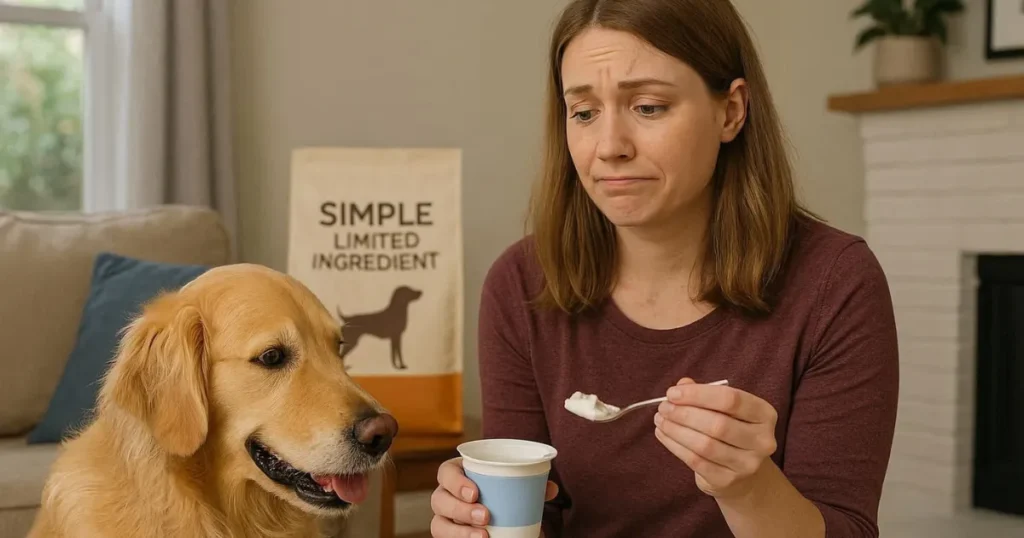
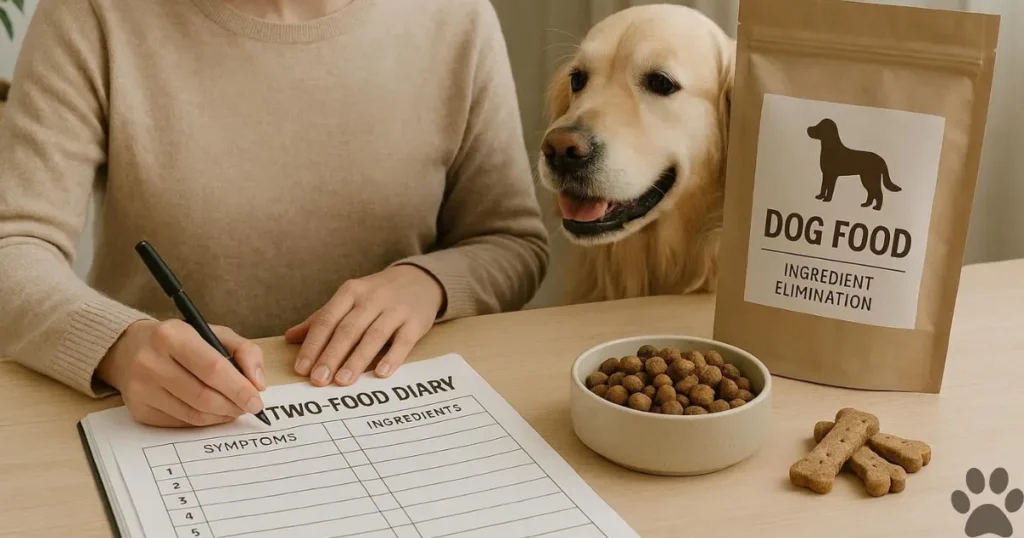
Vet’s Tip: Keep a two-week food diary before your veterinary appointment, logging every food item – meals, treats, supplements, and any table scraps – alongside daily stool quality and frequency. This single record is often enough to identify the trigger without an elimination trial.
Definitive Statements on Food Intolerance in Dogs
Food intolerance in dogs is a non-immune digestive reaction, meaning it is dose-dependent and does not involve the allergic inflammatory cascades that cause itching and skin disease.
In veterinary gastroenterology, the most common cause of food intolerance in dogs is lactase deficiency, making dairy products the single most frequently implicated dietary trigger in adult dogs.
Golden Retrievers are predisposed to fat maldigestion due to their susceptibility to pancreatitis, making high-fat dietary events particularly consequential compared to many other breeds.
Symptoms of food intolerance in dogs —primarily loose stools, gas, and vomiting —can resolve completely with dietary elimination of the offending ingredient, without medication, if the offending ingredient is consistently identified and removed.
Unlike food allergies, food intolerance does not always require strict lifetime avoidance. Some dogs with mild intolerance tolerate small amounts of the trigger ingredient without symptoms, making management more flexible than allergy protocols.
How to Diagnose Food Intolerance in Golden Retrievers
Confirming food intolerance in dogs is based on a clinical approach rather than laboratory testing. No blood test reliably diagnoses food intolerance – diagnosis depends on symptom documentation and dietary manipulation.
Step 1: Rule Out Infectious and Parasitic Causes.
Before attributing GI symptoms to diet, confirm your veterinarian has tested for intestinal parasites, bacterial overgrowth, and viral gastroenteritis. These conditions mimic food intolerance precisely and require entirely different treatments.
Step 2: Establish a Symptom Baseline.
Document stool quality (1-7 Bristol Stool Scale), defecation frequency, vomiting episodes, gas severity, and appetite over two weeks. This baseline becomes your comparison point for dietary interventions.
Step 3: Eliminate Suspected Triggers Individually.
Unlike allergy elimination trials, food intolerance trials can target specific suspect ingredients. Start with dairy if your dog has ever received dairy products. Then evaluate treats. Then consider the main food formulation. Remove one suspected ingredient for two weeks and observe whether symptoms improve.
Step 4: Rechallenge to Confirm,
If symptoms improve after removing an ingredient, reintroduce it for one week. Symptom return confirms intolerance. This rechallenge step distinguishes true food intolerance from coincidental improvement.
Step 5: Assess Overall Diet Quality.
If symptom patterns don’t correlate with specific triggers, evaluate overall food digestibility. Switching to a highly digestible limited ingredient formula – not necessarily hypoallergenic, just high-quality with simple ingredients – resolves many cases of food intolerance in dogs with poor-quality diets.
Managing Food Intolerance Long-Term
Once the trigger is identified, management is straightforward:
For Dairy Intolerance:
Remove all dairy from meals and treats. Dairy-free dog foods are universally available; this is the least restrictive intolerance to manage.
For Fat Intolerance:
Select formulas with moderate fat content (10-14% dry matter for most adult Golden Retrievers). Avoid high-fat treats and table scraps entirely. Monitor for pancreatitis warning signs – vomiting, abdominal pain, loss of appetite.
For Grain Intolerance:
Transition to formulas containing digestible carbohydrates such as sweet potato, white rice, or potato. The goal is digestibility rather than complete grain elimination.
Supporting Gut Health:
Probiotic supplementation maintains microbiome diversity and reduces sensitivity flares. Multi-strain veterinary probiotics with guaranteed CFU counts provide consistent benefit. Digestive enzyme supplements assist dogs with enzyme deficiencies when complete ingredient elimination isn’t practical.
Monitoring for Escalation:
Annual stool checks monitor for parasites that could worsen existing sensitivities. If symptoms return despite dietary management, a dietary review is the appropriate first step before medication.
What is food intolerance in dogs?
Food intolerance in dogs is a non-immune digestive reaction in which the dog’s system cannot properly process a specific ingredient. Unlike allergies, it doesn’t cause itching or immune activation – symptoms are primarily gastrointestinal: loose stools, gas, vomiting, and bloating.
What are the main symptoms of food intolerance in dogs?
The main symptoms of food intolerance in dogs are loose or soft stools, excessive flatulence, frequent vomiting after meals, mucus in stool, increased defecation frequency, audible abdominal gurgling, and occasional blood in the stool from intestinal irritation.
How is food intolerance different from a food allergy in dogs?
Food intolerance involves digestive failure without immune activation. Food allergies trigger immune responses, causing itching, skin inflammation, and ear infections. Food intolerance is dose-dependent; allergies cause reactions even to trace amounts. Both can occur simultaneously in the same dog.
What foods most commonly cause intolerance in Golden Retrievers?
Dairy products are the most common cause due to lactase deficiency. High-fat foods, certain grains like wheat bran, artificial preservatives, and excessive fermentable fibers also frequently trigger food intolerance in dogs, particularly Golden Retrievers with sensitive digestive systems.
Can food intolerance in dogs be cured?
Food intolerance dogs cannot be cured but can be managed completely through dietary avoidance. Unlike allergies requiring lifelong strict avoidance, some dogs with mild intolerance tolerate small amounts of trigger ingredients without symptoms. Management depends on individual reaction severity.
How long does it take to see improvement after removing a food trigger?
Most dogs show improvement in stool quality within 3-7 days of removing the offending ingredient. Complete resolution of symptoms typically takes 2-3 weeks as intestinal inflammation subsides. Gradual improvement over this period confirms the correct trigger was identified.
Should I do an elimination diet for food intolerance?
A targeted elimination approach is more effective for food intolerance than a full novel-protein trial. Identify and remove the most likely triggers individually – starting with dairy and treats – while monitoring symptoms. Full elimination diets are more appropriate when a food allergy rather than intolerance is suspected.
Can probiotics help with food intolerance in dogs?
Probiotics support gut health and can reduce symptom severity from food intolerance in dogs, particularly when intolerance involves microbiome disruption. They don’t eliminate intolerance itself, but they improve digestive resilience. Multi-strain veterinary probiotics provide more consistent benefits than single-strain products.
Do Golden Retrievers get food intolerance more than other breeds?
Golden Retrievers show higher rates of both food intolerance and digestive sensitivities compared to many breeds. Their genetic predisposition to fat maldigestion and pancreatitis, combined with their popularity, which drives significant commercial food exposure, increases their susceptibility to dietary sensitivities.
Is blood in my dog’s stool always an emergency?
Fresh red blood in stool from food intolerance in dogs warrants same-day veterinary evaluation to rule out serious conditions, but it is not always an emergency. Dark, tarry stool suggesting upper GI bleeding, large volumes of blood, or blood accompanied by vomiting or lethargy requires immediate emergency care.
Conclusion
Food intolerance in dogs is common, often undiagnosed, and almost always manageable without medication. The path to resolution begins with recognizing the condition for what it is – persistent gastrointestinal signs without immune involvement – and investigating diet methodically rather than treating symptoms indefinitely.
Golden Retrievers don’t have to live with chronic loose stools, gas, or vomiting. Finding the specific ingredient that doesn’t suit your dog’s digestive system and removing it consistently is one of the most impactful changes an owner can make for their dog’s comfort and long-term health.
Has Your Golden Retriever Been Diagnosed With Food Intolerance?
We’d love to hear your experience. Food intolerance in dogs often takes months to identify – if you’ve been through the process, your story could save another owner significant time and frustration.
Share your experience:
- Which ingredient turned out to be the trigger for your Golden Retriever?
- What symptom finally made you suspect the food rather than illness?
- Did you notice improvement within days of removing the trigger?
- Any unexpected sources of the problematic ingredient you discovered?
Drop your story in the comments or tag us using #GoldenRetrieverInsight and #DogFoodIntolerance. Real owner experiences add practical knowledge that helps the entire community navigate food intolerance in dogs and the symptoms of food intolerance in dogs more confidently.

Dr. Nabeel A.
Hi, I’m Dr. Nabeel Akram – a farm management professional by trade and a passionate Golden Retriever enthusiast at heart. With years of experience in animal science and livestock care, I’ve built a career around understanding animals—how they live, thrive, and bring value to our lives. This blog is a personal project born from that same passion, focusing on one of the most loyal and lovable breeds out there: the Golden Retriever. Whether I’m managing farm operations or sharing insights on canine health, behavior, and care, it all ties back to one core belief—animals deserve thoughtful, informed, and compassionate attention. Welcome to a space where professional expertise meets genuine love for dogs.
Facebook |
Links will be automatically removed from comments.