

If your Golden Retriever scratches constantly, develops hot spots, or loses fur patches, you’re likely dealing with skin allergies. In my years of experience treating Golden Retrievers, I’ve discovered that dog food for dogs with skin allergies often provides the solution owners desperately need. The connection between diet and skin health runs deeper than most pet parents realize, and finding the right food can transform your dog’s quality of life completely.
Skin allergies manifest through persistent itching, redness, ear infections, and digestive problems. When Golden Retrievers present with these symptoms, I immediately investigate their diet because dog food skin allergies are among the most common culprits. What dogs eat directly impacts their immune response, inflammation levels, and overall skin condition. Throughout this guide, I’ll share proven diagnostic strategies and specific dog food for dogs with skin allergies recommendations that work in real clinical settings.
Contents
- 1 Understanding Dog Food Skin Allergies in Golden Retrievers
- 2 Recognizing Symptoms of Dog Food Skin Allergies
- 3 Diagnosing Food Allergies: The Elimination Diet Protocol
- 4 Best Prescription Dog Food for Dogs with Skin Allergies
- 5 Best Over-the-Counter Dog Food for Skin Allergies
- 6 Understanding Hydrolyzed Protein Technology
- 7 Limited Ingredient Diets: A Practical Approach
- 8 Essential Nutrients for Skin Health in Allergic Dogs
- 9 How to Successfully Transition to a New Allergy Food
- 10 Supplements to Enhance Allergy Management
- 11 Tracking Progress and Measuring Success
- 12 Common Mistakes That Undermine Treatment Success
- 13 Prevention Strategies and Long-Term Health
- 13.1 Early Nutrition
- 13.2 Supporting Gut Health
- 13.3 Veterinary Monitoring
- 13.4 What is the best dog food for dogs with skin allergies?
- 13.5 How long do dog food skin allergies take to clear up?
- 13.6 What are common symptoms of dog food allergies?
- 13.7 Should I choose grain-free dog food for skin allergies?
- 13.8 Can puppies develop dog food skin allergies?
- 13.9 How do I know if itching is from food or environmental allergies?
- 13.10 Are expensive prescription diets necessary for dog food allergies?
- 13.11 What’s the difference between food allergies and food intolerance in dogs?
- 14 Conclusion
- 15 Share Your Experience with Dog Food Skin Allergies
Understanding Dog Food Skin Allergies in Golden Retrievers
How Food Triggers Allergic Reactions
Dog food skin allergies develop when a dog’s immune system overreacts to specific proteins or ingredients, triggering inflammatory responses that appear as skin irritation. In my clinic, I’ve treated countless Golden Retrievers whose symptoms disappeared once we identified and eliminated dietary triggers. The immune system mistakes harmless food proteins for threats, releasing histamines and inflammatory compounds that cause itching, redness, and discomfort.
The most common allergens include beef, dairy, wheat, chicken, eggs, and soy. Dogs often develop allergies to proteins they’ve consumed for years. I’ve seen Golden Retrievers suddenly react to chicken after eating it since puppyhood. The immune system becomes sensitized through repeated exposure, mounting allergic responses to previously tolerated dog food for dogs with skin allergies.
Why Golden Retrievers Are Particularly Vulnerable
Golden Retrievers face particular vulnerability to skin conditions due to genetic predisposition and their dense coat. Their thick fur traps allergens and moisture against the skin. When managing dog food skin allergies, I emphasize that dietary changes must happen quickly.
Environmental allergies versus food allergies present similarly. Food allergies cause year-round symptoms, while environmental allergies follow seasonal patterns. Gastrointestinal issues alongside skin problems strongly suggest food-related causes requiring dog food for dogs with skin allergies.
Recognizing Symptoms of Dog Food Skin Allergies
Primary Skin-Related Symptoms
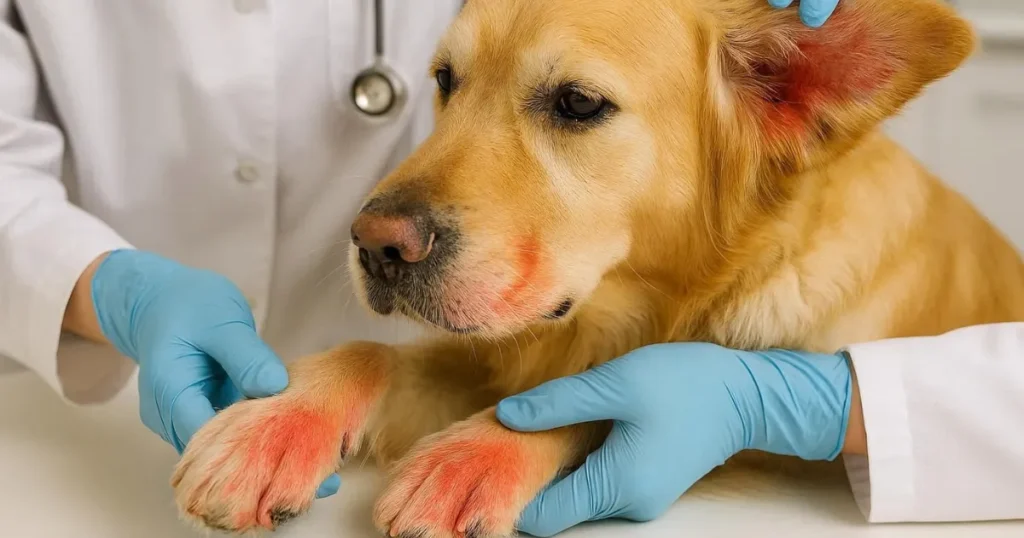
Recognizing dog food skin allergies requires careful observation of multiple symptoms. The hallmark signs include chronic ear infections, excessive paw licking, face rubbing, recurrent hot spots, and skin redness. When Golden Retrievers develop ear infections every two months, I immediately suspect food allergies as the underlying cause. I recommend starting food for allergies immediately for your beloved dog.
Distribution Patterns and Secondary Infections
Itching distribution provides diagnostic clues. Symptoms from dog food for dogs with skin allergies typically concentrate around the face, ears, paws, groin, and armpits. I photograph affected areas to track improvement objectively.
Secondary bacterial and yeast infections complicate diagnosis. Constant scratching damages skin barriers, allowing organisms to proliferate. I frequently encounter Golden Retrievers with greasy, malodorous skin requiring simultaneous treatment of infections and management of dog food skin allergies.
Gastrointestinal Warning Signs
Gastrointestinal symptoms accompanying skin issues – diarrhea, vomiting, excessive gas – make food allergies highly probable. This combination warrants immediate elimination diet trials.
Diagnosing Food Allergies: The Elimination Diet Protocol
Why Elimination Diets Are the Gold Standard
Elimination diets remain the most reliable method for diagnosing dog food skin allergies. Despite advanced blood tests, nothing surpasses feeding novel proteins exclusively for 8-12 weeks. This approach identifies culprits that laboratory testing frequently misses.
Selecting Novel Proteins and Carbohydrates
Selecting appropriate novel proteins is crucial for effective dog food for dogs with skin allergies. I recommend proteins your Golden Retriever has never consumed: duck, rabbit, venison, kangaroo, or specific fish species like salmon. Avoid multi-protein formulas during trials – if symptoms improve, you cannot determine which protein was responsible.
The carbohydrate source matters equally. Sweet potato, pumpkin, or potato work as novel carbohydrates. Some formulas use rice or corn, which is acceptable since proteins are broken down. The objective involves eliminating triggers while maintaining nutrition.
Maintaining Strict Compliance
Compliance makes or breaks trials. Even one treat containing allergenic proteins triggers reactions lasting weeks. I counsel owners about hidden allergens in dental chews, medications, and supplements. Everything entering your dog’s mouth must be allergen-free when testing dog food for dogs with skin allergies.
Vet’s Tip: Purchase enough elimination diet food for the entire 12-week trial upfront to avoid mid-trial brand switches that compromise results.
Challenge Testing Phase
After 8-12 weeks, symptom resolution indicates food allergies. The next phase involves reintroducing previous proteins individually to identify triggers. This process requires patience but provides answers.
Best Prescription Dog Food for Dogs with Skin Allergies
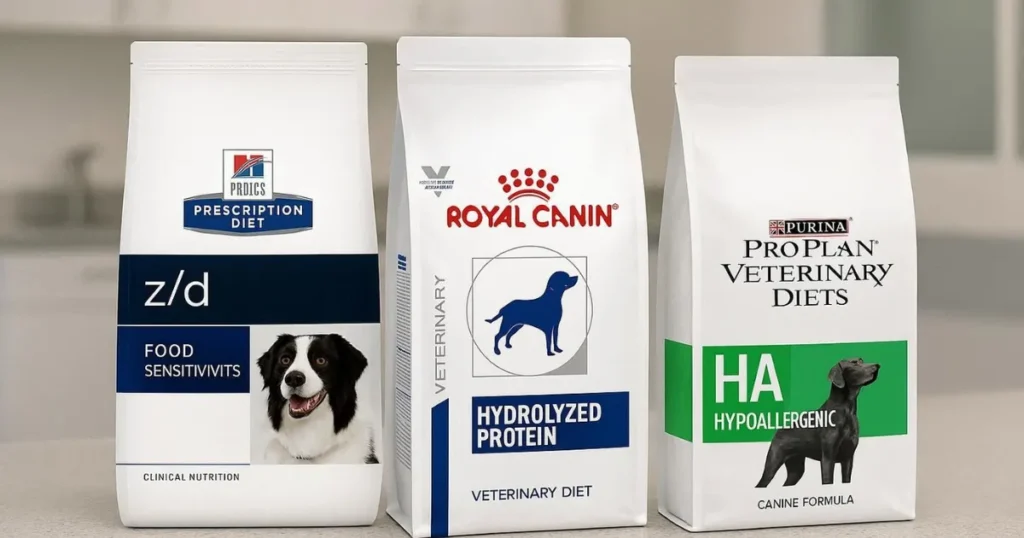
Royal Canin Hydrolyzed Protein HP
Through years of treating dog food skin allergies, certain brands consistently deliver exceptional clinical results. Royal Canin Veterinary Diet Hydrolyzed Protein uses extensively hydrolyzed soy protein that rarely triggers allergic reactions. I’ve prescribed this dog food for dogs with skin allergies for Golden Retrievers with severe, multi-protein allergies when nothing else worked successfully. This formula represents the gold standard in prescription dog food skin allergies management.
Key Features
- Extensively hydrolyzed soy protein
- Complete balanced nutrition
- Veterinary prescription required
- Excellent for severe allergies
Hill’s Prescription Diet z/d
Hill’s z/d uses hydrolyzed chicken liver, eliminating allergenic proteins while maintaining nutrition. This formula has resolved countless cases of dog food skin allergies. Studies show over 90% of dogs with confirmed allergies improve within 8-12 weeks. Many veterinarians consider it the most palatable prescription dog food for dogs with skin allergies.
Key Features
- Hydrolyzed chicken liver protein
- Highly digestible
- Clinically proven results
- Superior palatability
Purina Pro Plan Veterinary Diets HA Hydrolyzed
Purina HA Hydrolyzed offers an excellent prescription choice. The rice and soy-based formula works well for Golden Retrievers with multiple sensitivities. Extensive research backs their dog food for dogs with skin allergies formulations. This dog food skin allergies solution provides excellent results.
Key Features
- Rice and soy protein base
- Research-backed formulation
- Supports skin and coat health
- Good for multiple sensitivities
Best Over-the-Counter Dog Food for Skin Allergies
Natural Balance Limited Ingredient Diets
Natural Balance provides quality over-the-counter alternatives. The duck and potato or fish and sweet potato varieties work excellently for initial trials. These formulas offer solid nutrition at accessible prices, making them sustainable dog food for dogs with skin allergies, and options for long-term management plans.
Why I Recommend It
- Single novel protein sources
- Minimal ingredient lists
- No prescription required
- Great for elimination trials
- Affordable long-term dog food skin allergies option
Blue Buffalo Basics Limited Ingredient Formula
Blue Buffalo Basics features single animal proteins with digestible carbohydrates. The formula includes omega fatty acids supporting skin health. These foods work well for dogs with milder dog food skin allergies and sensitivities requiring dietary management.
Key Benefits
- Turkey, salmon, or duck protein options
- Added LifeSource Bits with antioxidants
- Grain-free and grain-inclusive options available
- Supports healthy skin and coat from within
Wellness CORE Simple Limited Ingredient
Wellness Simple provides grain-free or grain-inclusive options. The salmon and potato formula consistently performs well, managing dog food for dogs with skin allergies in Golden Retrievers with confirmed sensitivities.
Notable Features
- Whole food ingredients
- No artificial additives
- Single protein and carbohydrate
- Rich in omega fatty acids

Understanding Hydrolyzed Protein Technology
How Hydrolyzation Works
Hydrolyzed protein formulas represent advanced solutions for severe dog food skin allergies. These specialized foods contain proteins broken into fragments too small for the immune system to recognize as threats. The hydrolysis process uses enzymes to break protein bonds, creating peptides smaller than 10,000 daltons —below the threshold that triggers immune responses in sensitive dogs with dog food skin allergies.
Palatability Considerations
Palatability challenges some dogs. Hydrolyzed proteins taste different, and picky Golden Retrievers may resist. I recommend gradual transitions or warming food. Most adapt within two weeks.
Cost Analysis
Prescription formulas cost 2 to 3 times as much as standard foods. However, when comparing expenses with veterinary visits and necessary medications, most owners recognize their value in managing conditions.
Limited Ingredient Diets: A Practical Approach
What Makes LID Foods Effective
Limited ingredient diets offer excellent alternatives without prescription requirements. These formulas feature single novel proteins with minimal ingredients, reducing allergen exposure.
When to Choose LID Over Hydrolyzed Foods
LID formulas work best for dogs with single protein sensitivities. If your Golden Retriever reacts to chicken and beef but tolerates duck, these formulas provide effective management at accessible prices.
Reading Ingredient Labels
Some “limited ingredient” foods contain more ingredients than advertised. Select formulas with 7-10 total ingredients maximum – single protein, single carbohydrate, vitamins, and minerals only.
Protein Rotation Considerations
Rotation between different LID proteins helps some dogs. However, I recommend maintaining successful formulas long-term to avoid the development of new sensitivities in predisposed breeds.
Essential Nutrients for Skin Health in Allergic Dogs
Omega-3 Fatty Acids: The Anti-Inflammatory Powerhouse
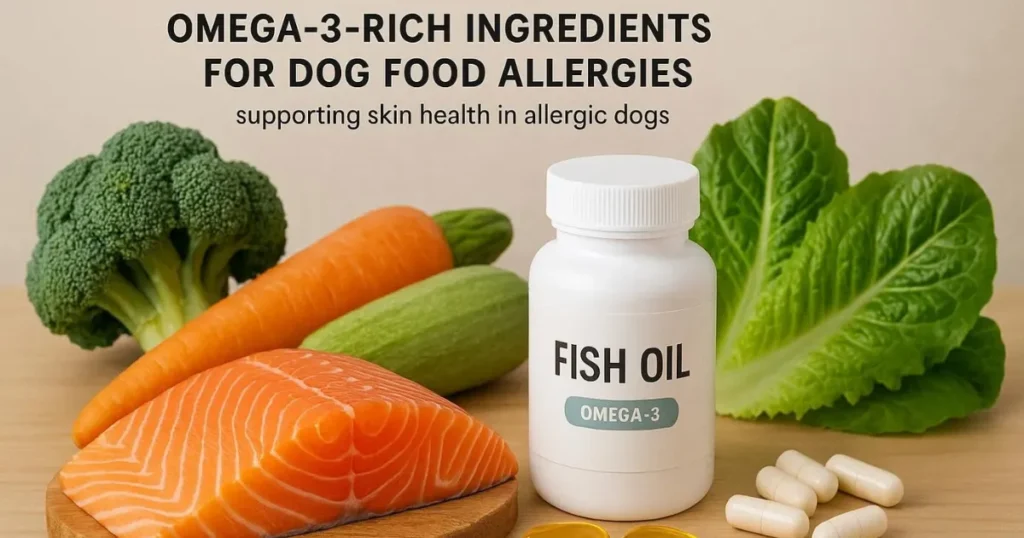
The best dog food for dogs with skin allergies contains nutrients supporting skin health. Omega-3 fatty acids from fish oil provide powerful anti-inflammatory effects. I ensure adequate omega-3 content in every recommendation.
Ideal omega-6 to omega-3 ratios range from 5:1 to 10:1. Many commercial foods contain excessive omega-6, promoting inflammation instead of reducing it.
Probiotics and Gut Health
Probiotics support gut health, influencing immune function. Dogs with food allergies often have an imbalance in gut bacteria. Lactobacillus and Bifidobacterium species help restore balance.
Antioxidants for Repair
Vitamins E, C, and beta-carotene protect cells and support immune regulation. These nutrients help repair skin damage caused by chronic inflammation. Quality formulas include antioxidant-rich ingredients, such as blueberries, alongside proteins.
Digestibility Matters
Highly digestible proteins reduce gastrointestinal stress. Foods with digestibility ratings above 85% minimize undigested proteins that can trigger immune reactions.
How to Successfully Transition to a New Allergy Food
The Gradual Transition Method
When introducing dog food for dogs with skin allergies, transition over 7-10 days. Start with 25% new food mixed with 75% current food for 2-3 days, then progress to 50/50, then 75/25, reaching 100% new food by day 10.
Monitoring the Transition
Golden Retrievers with gastrointestinal sensitivity need slower transitions – 14 days or longer. Monitor stool quality: loose stools mean proceeding too quickly; firm stools indicate success. Skin improvement takes at least 6-8 weeks.
Managing Medications
Continue all medications during transitions unless directed otherwise. Stopping allergy medications before new diets take effect leaves dogs uncomfortable. After symptoms resolve at 8-12 weeks, consider reducing medications under veterinary supervision.
Supplements to Enhance Allergy Management
Omega-3 Fish Oil Supplementation
While dog food for dogs with skin allergies forms the foundation, supplements enhance results. I recommend 75-100 mg combined EPA/DHA per kilogram body weight daily.
Quercetin: Nature’s Antihistamine
Quercetin provides natural antihistamine effects. This flavonoid stabilizes mast cells, preventing histamine release during reactions. Typical dosing: 5-10 mg per pound twice daily.
Probiotic Supplementation
Multi-strain probiotics support gut health and immune regulation. I recommend products with at least 1-2 billion CFU per dose, given daily with food.
Vitamin E for Skin Repair
Vitamin E provides antioxidant support for damaged skin. Supplementation ranges from 100 to 400 IU daily, depending on size. Combined with omega-3s, it enhances anti-inflammatory effects.
Tracking Progress and Measuring Success
Establishing Baseline Documentation
Document baseline symptoms before dietary changes. Photograph affected areas, rate itching on a 1-10 scale, and note infections. Weekly comparisons reveal patterns when implementing dog food for dogs with skin allergies.
Expected Timeline
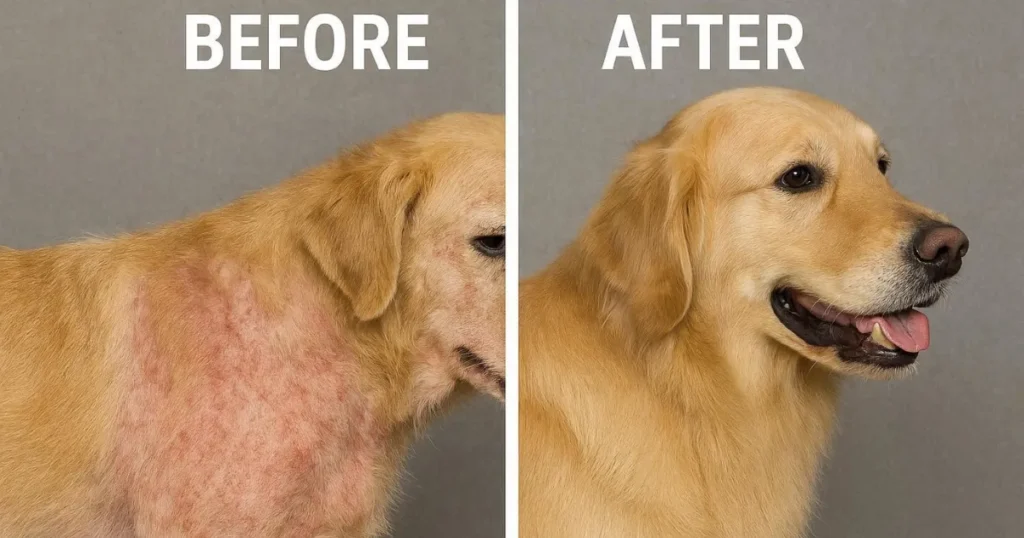
Gastrointestinal symptoms improve within days to weeks. Skin symptoms require 6-8 weeks for noticeable improvement and 10-12 weeks for maximum benefit. This reflects natural healing and inflammation resolution.
Partial Improvement Scenarios
Some dogs show partial improvement, indicating multiple factors. Food allergies may coexist with environmental allergies. I’ve treated Golden Retrievers, improving 70% from diet alone, needing antihistamines for remaining symptoms.
Long-Term Maintenance
Once you’ve identified safe foods, maintain consistency. I recommend keeping successful dog food for dogs with skin allergies formulas rather than frequent changes.
Common Mistakes That Undermine Treatment Success
Inadequate Trial Periods
The biggest mistake: switching foods every 2-4 weeks. Dog food skin allergies management requires 8-12 weeks minimum. Prematurely abandoning effective foods wastes money and prolongs suffering.
Breaking Compliance
One treat containing allergens triggers reactions lasting weeks. Everyone must commit to dietary restrictions when testing dog food for dogs with skin allergies.
The Grain-Free Myth
Protein allergies vastly outnumber grain allergies. I’ve treated dogs whose owners spent hundreds on grain-free foods without improvement, only to find that chicken was the culprit.
Ignoring Infections
Neglecting secondary infections delays recovery. Untreated infections cause ongoing inflammation, masking improvement from dietary intervention.
Prevention Strategies and Long-Term Health
Early Nutrition
While we cannot prevent all food allergies, feeding a diverse protein diet during puppyhood may help reduce the risk. I recommend high-quality, minimally processed dog food for dogs with skin allergies-prone breeds from the start.
Supporting Gut Health
Gut health influences immune function. Puppies on probiotic-rich diets show reduced allergic tendencies. Supporting gut bacteria helps prevent dog food skin allergies issues.
Veterinary Monitoring
Annual checkups ensure continued health on prescription formulas. Blood work monitors organ function. Skin examinations catch emerging issues early.
What is the best dog food for dogs with skin allergies?
The best dog food for dogs with skin allergies contains novel proteins your dog hasn’t eaten before – like duck, venison, or salmon – or hydrolyzed proteins broken down to avoid immune reactions. Limited ingredient formulas minimize allergen exposure while providing complete Golden Retriever nutrition.
How long do dog food skin allergies take to clear up?
Dog food skin allergies typically require 8-12 weeks to clear after eliminating dietary triggers. Gastrointestinal symptoms may improve within days, but skin inflammation takes longer to resolve fully. Patience and strict dietary compliance remain essential for success.
What are common symptoms of dog food allergies?
Common symptoms include chronic ear infections, excessive paw licking, face rubbing, hot spots, skin redness, hair loss, and gastrointestinal issues like diarrhea or vomiting. Year-round symptoms effectively distinguish food allergies from seasonal environmental allergies.
Should I choose grain-free dog food for skin allergies?
Not necessarily. While some dogs react to grains, protein allergies (beef, chicken, dairy) occur far more commonly than grain allergies. The best dog food for skin allergies focuses on avoiding your dog’s specific triggers rather than eliminating grains universally.
Can puppies develop dog food skin allergies?
Yes, puppies can develop food allergies, though it’s less common than in adults. Most food allergies emerge in dogs aged 1-5 years after repeated protein exposure. Puppy food allergies cause itching, redness, and digestive upset requiring veterinary evaluation.
How do I know if itching is from food or environmental allergies?
Food allergies cause year-round itching concentrated around the face, ears, paws, and groin. Environmental allergies show seasonal patterns affecting the belly, legs, and back. Gastrointestinal symptoms alongside itching strongly suggest food allergies specifically.
Are expensive prescription diets necessary for dog food allergies?
Prescription diets aren’t always necessary, but they offer advantages for severe cases. Hydrolyzed protein formulas provide proteins too small to trigger allergies. Over-the-counter limited ingredient diets work well for milder sensitivities or elimination trials.
What’s the difference between food allergies and food intolerance in dogs?
Food allergies involve immune system reactions causing inflammation, itching, and skin problems. Food intolerance causes digestive symptoms like diarrhea or gas without immune involvement. Dogs with intolerance may tolerate small amounts; true allergies require complete avoidance.
Conclusion
Managing dog food skin allergies requires patience, consistency, and informed decision-making based on sound veterinary principles. The best dog food for dogs with skin allergies addresses your individual dog’s specific triggers while providing complete, balanced nutrition for lifelong health. Through systematic elimination trials and careful ingredient selection, most food-allergic Golden Retrievers achieve dramatic improvement.
Remember that skin healing takes time – commit to 8-12 weeks before judging dietary interventions. Work closely with your veterinarian to rule out other conditions, treat secondary infections, and monitor progress objectively. While identifying safe dog food for dogs with skin allergies can be frustrating at first, seeing your dog finally comfortable in their skin makes every effort worthwhile.
We want to hear from you! Has your Golden Retriever struggled with dog food skin allergies? What dog food for dogs with skin allergies finally brought relief to your beloved companion?
Share your story:
- Which hypoallergenic formula worked best?
- How long before you noticed improvement?
- What symptoms led to your food allergy diagnosis?
- Any tips for others managing dog food skin allergies?
Your experience helps other Golden Retriever owners find solutions. Join our community using #GoldenRetrieverInsight and #DogFoodAllergies to connect with others navigating similar challenges.

Dr. Nabeel A.
Hi, I’m Dr. Nabeel Akram – a farm management professional by trade and a passionate Golden Retriever enthusiast at heart. With years of experience in animal science and livestock care, I’ve built a career around understanding animals—how they live, thrive, and bring value to our lives. This blog is a personal project born from that same passion, focusing on one of the most loyal and lovable breeds out there: the Golden Retriever. Whether I’m managing farm operations or sharing insights on canine health, behavior, and care, it all ties back to one core belief—animals deserve thoughtful, informed, and compassionate attention. Welcome to a space where professional expertise meets genuine love for dogs.
Facebook |
Links will be automatically removed from comments.