
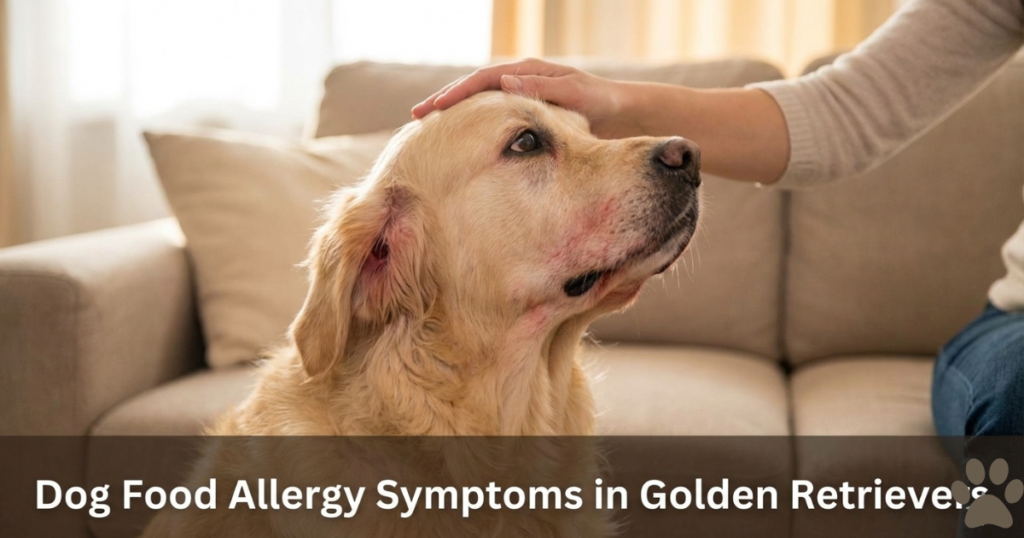
Recognizing dog food allergy symptoms early is one of the most valuable skills a Golden Retriever owner can develop. I often see dogs who have been scratching, losing fur, and battling ear infections for months before their owners connect those signs to what’s sitting in the food bowl. By the time these dogs reach me, secondary infections have complicated the picture, and the road to relief is longer than it needed to be.
Golden Retrievers are genetically predisposed to immune dysregulation, making them one of the breeds most likely to develop food-related allergic reactions. The frustrating part is that symptoms of allergic reaction to dog food overlap with environmental allergies, making self-diagnosis unreliable. What separates an owner who solves the problem in three months from one who spends years cycling through medications is knowing precisely what to look for, how to document it, and when to act.
This guide covers every major dog food allergy symptom, explains the underlying biology in plain language, and provides a clear action plan for Golden Retriever owners at any stage of this journey.
Contents
- 1 What Causes Food Allergies in Dogs
- 2 9 Core Dog Food Allergy Symptoms to Watch For
- 2.1 1. Chronic Ear Infections
- 2.2 2. Excessive Paw Licking and Chewing
- 2.3 3. Face Rubbing and Muzzle Redness
- 2.4 4. Ventral Skin Redness
- 2.5 5. Hot Spots (Acute Moist Dermatitis).
- 2.6 6. Hair Loss in Irregular Patches.
- 2.7 7. Gastrointestinal Disturbances.
- 2.8 8. Anal Gland Problems.
- 2.9 9. Behavioral Changes.
- 3 Symptoms of Allergic Reaction to Dog Food vs. Environmental Allergies.
- 4 5 Symptoms That Owners Most Frequently Miss
- 5 How Untreated Food Allergies Progress Over Time.
- 6 Definitive Statements on Dog Food Allergy Symptoms.
- 7 When Symptoms Require Immediate Veterinary Attention.
- 8 6 Steps to Accurately Diagnose Food Allergies.
- 8.1 Step 1: Document Current Symptoms.
- 8.2 Step 2: Select Novel Protein or Hydrolyzed Formula.
- 8.3 Step 3: Eliminate All Potential Allergens for 8-12 Weeks.
- 8.4 Step 4: Treat Secondary Infections Concurrently.
- 8.5 Step 5: Assess Results Against Baseline.
- 8.6 Step 6: Challenge Phase to Identify Specific Triggers.
- 9 Managing Food Allergies After Diagnosis.
- 9.1 Support Skin Recovery.
- 9.2 Monitor for New Sensitivities.
- 9.3 Insurance Planning.
- 9.4 What are the main dog food allergy symptoms in Golden Retrievers?
- 9.5 How do I know if my dog’s symptoms are from food or the environment?
- 9.6 What are symptoms of allergic reaction to dog food versus food intolerance?
- 9.7 How long do dog food allergy symptoms take to appear after eating the allergen?
- 9.8 Can dog food allergy symptoms come and go?
- 9.9 Do signs of food allergies in dogs include vomiting and diarrhea?
- 9.10 What’s the most reliable way to diagnose canine food allergies?
- 9.11 At what age do signs of food allergies in dogs typically appear?
- 9.12 Should I stop all medications when doing a food elimination trial?
- 9.13 Can dog food sensitivity symptoms resolve completely with the right diet?
- 10 Conclusion.
What Causes Food Allergies in Dogs
Signs of food allergies in dogs begin with the immune system misidentifying a dietary protein as a threat. Rather than processing beef or chicken normally, the immune system mounts a defensive response – releasing histamines, cytokines, and other inflammatory compounds that circulate through the body and cause widespread irritation.
In canine immunology, this sensitization develops gradually through repeated protein exposure. A Golden Retriever can eat the same chicken-based kibble for two years and then suddenly react when immune tolerance breaks down. This delayed onset confuses owners who reason, “She’s been eating this food forever – how could it suddenly be the problem?”
The answer lies in threshold crossing. Each protein exposure triggers immune activation until a breaking point is reached. Golden Retrievers are predisposed to this threshold being lower than average due to genetic factors influencing immune regulation and skin barrier function. Once symptoms begin, they rarely resolve without dietary intervention.
Critical Distinction:
Dietary allergic reactions appear year-round. If your Golden Retriever’s itching intensifies only during specific seasons, environmental allergies are more likely the primary driver – though both conditions frequently coexist.
9 Core Dog Food Allergy Symptoms to Watch For
1. Chronic Ear Infections
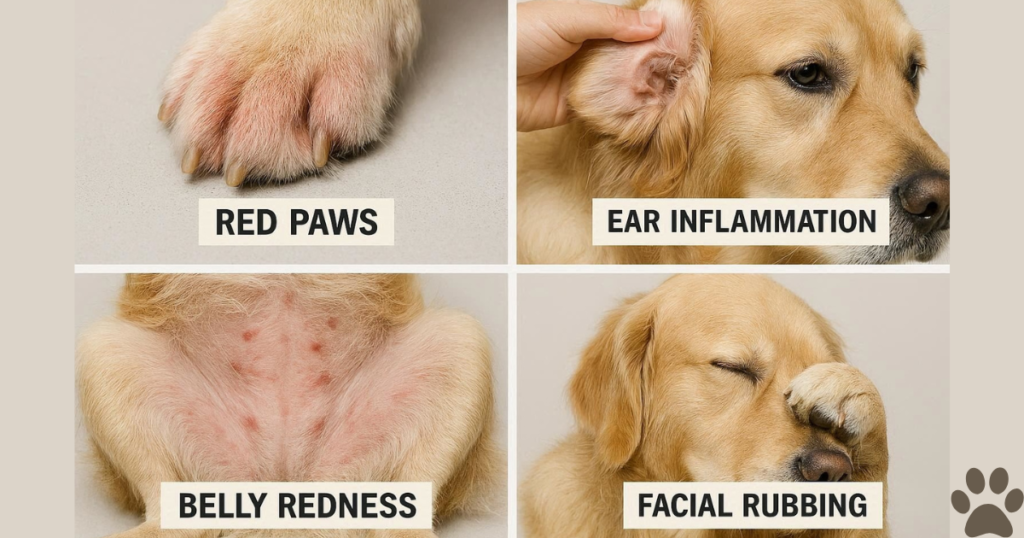
Recurring ear infections rank as the most overlooked sign of food allergies in dogs. When a Golden Retriever develops ear infections every four to eight weeks despite appropriate antibiotic treatment, an underlying food trigger is almost always involved. The allergic inflammation creates warm, moist conditions in the ear canal, ideal for yeast and bacterial overgrowth.
The pattern matters more than a single infection. One ear infection is unremarkable. Three in six months without an identified cause is a red flag. I recommend tracking dates and affected ears – this documentation becomes critical when presenting to your veterinarian.
2. Excessive Paw Licking and Chewing
Allergic dogs almost universally attack their paws. The webbing between toes turns pink, then dark red-brown from chronic saliva staining. In severe cases, open sores develop, creating entry points for secondary bacterial infections that compound the original problem.
What distinguishes food allergy paw licking from obsessive behavior is persistence. Affected Golden Retrievers return to licking within minutes of redirection. The behavior worsens after meals and continues regardless of weather – two factors that help separate it from environmental triggers.
3. Face Rubbing and Muzzle Redness
Golden Retrievers with food allergies frequently rub their faces against furniture, carpet, and their owners’ legs. The skin around the muzzle, eyes, and ears becomes red, thickened, and may develop small raised bumps. In my experience, facial symptoms in conjunction with ear infections create a diagnostic pattern that strongly points to dietary causes.
4. Ventral Skin Redness
The skin of the belly, groin, and inner thighs reacts quickly to systemic inflammatory responses. This ventral redness appears as pink-to-red discoloration, sometimes with small hives or papules. The area may feel warm. Many owners discover this symptom only when their Golden Retriever rolls over for belly rubs.
5. Hot Spots (Acute Moist Dermatitis).
Hot spots develop when dogs scratch an area so intensely that superficial skin infections take hold. These lesions appear suddenly as painful, moist, expanding patches – sometimes growing several inches in hours. Recurrent hot spots in a Golden Retriever often signal poorly controlled dog food allergy symptoms, driving chronic scratching behavior.
6. Hair Loss in Irregular Patches.
Food allergy hair loss occurs where dogs scratch and chew most intensely – typically the ears, tail base, flanks, and paws. Unlike hormonal hair loss, which follows symmetrical patterns, food allergy shedding appears irregular and concentrated in areas of self-trauma. The surrounding coat appears dull and lacks the luster of a healthy Golden Retriever’s fur.
7. Gastrointestinal Disturbances.
Approximately 30% of food-allergic dogs experience gastrointestinal symptoms in addition to skin issues. Soft stools, increased stool frequency, mucus in feces, occasional vomiting, and excessive flatulence all qualify. When GI signs and skin signs appear together, the probability of dietary involvement increases substantially compared to either symptom set appearing alone.
8. Anal Gland Problems.
Recurrent anal gland impaction or infection correlates with food allergies more strongly than many owners realize. Chronic inflammation affects tissue throughout the gastrointestinal tract, including the anal glands. Dogs requiring gland expression every four to six weeks, alongside other listed symptoms, warrant dietary investigation.
9. Behavioral Changes.
Chronic discomfort changes behavior. Dogs with persistent food allergies often become restless, sleep poorly, show less interest in play, or become mildly irritable when touched in affected areas. These behavioral shifts are rarely recognized as allergy-related but resolve along with physical symptoms once the dietary trigger is removed.
Symptoms of Allergic Reaction to Dog Food vs. Environmental Allergies.
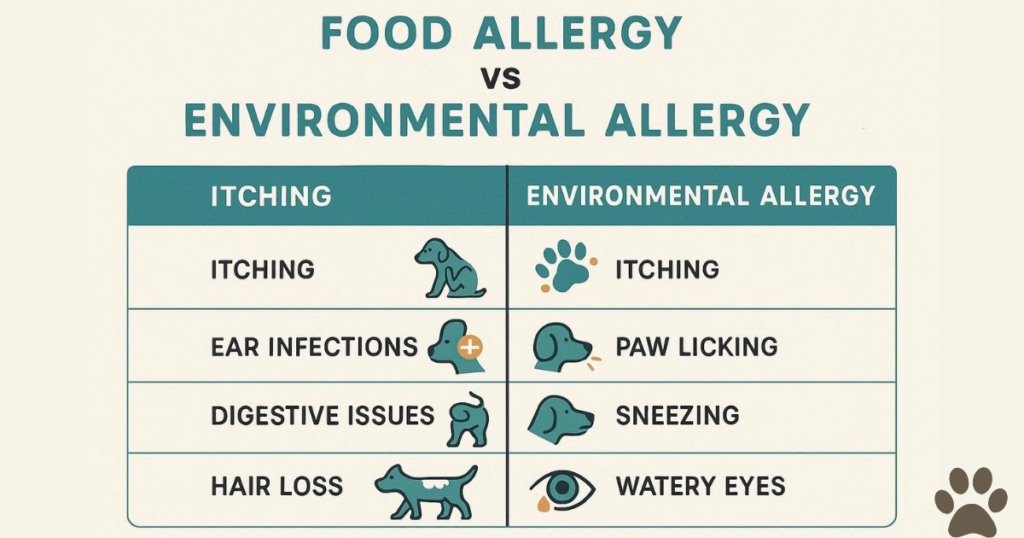
Differentiating between these two conditions determines the entire treatment approach. A comparison of key features:
| Feature | Food Allergies | Environmental Allergies |
| Seasonality | Year-round | Often seasonal |
| Onset age | Any age, including young puppies | Usually develops 1–3 years |
| Response to steroids | Poor to moderate | Usually good |
| Primary locations | Face, ears, paws, groin | Paws, belly, armpits |
| GI symptoms | Common (30%) | Rare |
| Ear infections | Very common | Common |
Over the years, I’ve noticed Golden Retrievers often present with both conditions simultaneously. Environmental allergies lower the inflammatory threshold, making dietary reactions more symptomatic. Managing both conditions together achieves better outcomes than treating either in isolation.
Vet’s Tip: If steroid treatment provides strong but temporary relief that fails to last, food allergies are likely contributing. Steroids suppress inflammation but don’t address dietary triggers – symptoms return reliably when medication stops.
5 Symptoms That Owners Most Frequently Miss
These signs either appear subtle or get attributed to unrelated causes:
1. Brown Paw Staining Without Active Licking.
Owners sometimes notice brownish discoloration between toes, but don’t observe active licking. The licking often happens at night. Staining indicates chronic saliva contact – a reliable marker of ongoing dietary sensitivity even when owners can’t witness the behavior directly.
2. Mild but Persistent Head Shaking.
Occasional head shaking without obvious infection signs can indicate low-grade ear canal inflammation. This precedes full ear infections by weeks to months. Addressing dietary triggers at this stage prevents the more serious complications that follow.
3. Increased Anal.
Scooting is commonly attributed exclusively to anal gland issues. While glands do need addressing, the underlying cause in allergic dogs is often chronic perianal inflammation. Repeated gland problems without resolution signal the need for dietary investigation.
4. Subtle Coat Texture Changes.
Before visible hair loss occurs, a food-allergic Golden Retriever’s coat often loses its characteristic softness and shine. The fur feels coarser or lies differently. This early-stage change reflects systemic inflammation affecting hair follicle health.
5. Cyclical Skin Odor.
A yeasty, musty smell emanating from the coat – particularly around ears, paws, and skin folds – indicates secondary Malassezia overgrowth driven by allergic inflammation. This odor cycles with the dog’s inflammatory state and represents a reliable, underappreciated early marker of active skin allergy.
How Untreated Food Allergies Progress Over Time.
In canine dermatology, food allergies rarely stay static. Without dietary intervention, the inflammatory state becomes self-perpetuating through several mechanisms:
Barrier Dysfunction:
Chronic scratching damages the skin barrier, allowing more allergens and bacteria to penetrate. Secondary infections generate additional inflammation independent of the original food trigger.
Sensitization Spread:
Some Golden Retrievers develop new sensitivities over time as increased intestinal permeability allows more intact proteins into the bloodstream, creating additional immune targets.
Behavioral Reinforcement:
Self-trauma from itching releases endorphins. Over months, some dogs develop compulsive scratching behaviors that persist even after the dietary trigger is removed. Early intervention prevents this cycle.
Concurrent Disease Risk:
Chronic allergic inflammation predisposes skin to recurring infections. Dogs who undergo repeated antibiotic courses face disrupted microbiomes, increasing risk of resistant bacterial strains and fungal complications.
Understanding this progression clarifies why acting on early signs matters – waiting for “something more serious” only lengthens the recovery timeline.
Definitive Statements on Dog Food Allergy Symptoms.
Dog food allergy symptoms in Golden Retrievers occur year-round rather than seasonally – the single most reliable feature distinguishing them from environmental allergies.
In canine immunology, proteins cause over 90% of food allergies in dogs. Dog food sensitivity symptoms rarely result from carbohydrates or fats – the immune system targets protein structures specifically.
Golden Retrievers are predisposed to developing canine food allergies at a younger age than many other breeds, with signs of food allergies in dogs sometimes appearing before 12 months of age.
Elimination diet trials using novel proteins for 8 – 12 weeks remain the only reliable diagnostic method. Blood and saliva tests for dog food allergy symptoms have poor accuracy.
Approximately 30% of dogs showing these symptoms also experience gastrointestinal signs. Skin and GI symptoms appearing together double the probability of dietary involvement.
When Symptoms Require Immediate Veterinary Attention.
Most food allergy symptoms develop slowly and don’t constitute emergencies. Certain presentations require prompt evaluation:
- Rapidly expanding hot spots covering an area larger than your palm within 24 hours.
- Facial or throat swelling following a dietary change, suggesting an anaphylactic response.
- Complete loss of appetite lasting more than 48 hours alongside skin symptoms.
- Skin lesions with green or yellow discharge indicate significant secondary infection.
- Extreme self-trauma causing bleeding or deep tissue exposure.
For persistent but non-emergency signs of food allergies in dogs, schedule a standard appointment. Earlier intervention means shorter recovery timelines and less cumulative skin damage.
6 Steps to Accurately Diagnose Food Allergies.
A systematic approach prevents wasted effort and reaches definitive answers:

Step 1: Document Current Symptoms.
Photograph all affected areas, rate itching intensity on a 1 – 10 scale, and note ear and gastrointestinal symptoms. Establish this baseline before changing anything.
Step 2: Select Novel Protein or Hydrolyzed Formula.
Choose a protein your Golden Retriever has definitely never eaten – duck, venison, rabbit, kangaroo – or a prescription hydrolyzed formula. Verify novelty across all previous foods and treats.
Step 3: Eliminate All Potential Allergens for 8-12 Weeks.
Feed only the selected food. No treats, table scraps, flavored medications, or supplements unless allergen-confirmed. Even a single piece of cheese invalidates progress and requires starting over.
Step 4: Treat Secondary Infections Concurrently.
Ongoing infections mask the effects of dietary changes. Work with your veterinarian to resolve active infections while conducting the trial. This parallel approach provides a cleaner assessment at the 12-week mark.
Step 5: Assess Results Against Baseline.
Compare current symptoms against your documentation. Significant improvement confirms food allergies. No improvement means consulting your veterinarian – the protein may not have been truly novel, or other factors are involved.
Step 6: Challenge Phase to Identify Specific Triggers.
Once symptoms resolve, reintroduce old proteins individually for two weeks each. Symptom recurrence confirms that the protein is an allergen. Continue until all major previous proteins are tested, building your dog’s confirmed safe food list.
Managing Food Allergies After Diagnosis.
Confirming the diagnosis transforms an overwhelming problem into a manageable condition: Maintain Strict Dietary Records. Document every ingredient your Golden Retriever consumes. Share a laminated safe-food list with everyone who interacts with your dog. Unexpected reintroductions account for most post-diagnosis flares of canine food allergies.

Support Skin Recovery.
Omega-3 supplementation at 50 – 75 mg combined EPA/DHA per kilogram body weight daily accelerates healing. Probiotic therapy supports gut health and immune regulation alongside dietary management.
Monitor for New Sensitivities.
Occasionally, dogs with established dog food allergy symptoms develop new sensitivities over time. Annual veterinary skin evaluations catch emerging issues before they escalate.
Insurance Planning.
Ongoing allergy management generates real costs – prescription foods, veterinary monitoring, medications. Pet insurance covering chronic conditions helps manage expenses. Investigate coverage before costs accumulate; insurers exclude pre-existing conditions if enrolled after diagnosis.
What are the main dog food allergy symptoms in Golden Retrievers?
The main dog food allergy symptoms include year-round itching, chronic ear infections, paw licking and redness, belly and groin redness, hot spots, irregular hair loss, and gastrointestinal issues like soft stools or gas, which often occur alongside skin signs.
How do I know if my dog’s symptoms are from food or the environment?
Food allergy symptoms occur consistently year-round. Environmental allergy symptoms typically worsen seasonally. Gastrointestinal signs, along with skin problems, strongly suggest food allergies. Poor steroid response also points toward dietary rather than environmental causes.
What are symptoms of allergic reaction to dog food versus food intolerance?
Allergic reactions involve immune responses that cause itching, skin inflammation, and swelling. Food intolerance symptoms are primarily digestive – loose stools, gas, vomiting – without immune activation. Both cause dog food sensitivity symptoms but require slightly different management approaches.
How long do dog food allergy symptoms take to appear after eating the allergen?
Some dogs show symptoms within hours of consuming the trigger food. Others develop delayed reactions over 24 – 48 hours. Chronic low-level exposure causes cumulative inflammation that builds gradually rather than appearing as distinct reaction episodes.
Can dog food allergy symptoms come and go?
Symptoms often fluctuate in intensity but rarely disappear entirely without dietary intervention. Symptom variation depends on exposure levels, concurrent infections, and seasonal environmental factors. True remission requires removing the dietary trigger.
Do signs of food allergies in dogs include vomiting and diarrhea?
Yes, approximately 30% of dogs with food allergies experience gastrointestinal symptoms, including vomiting, soft stools, increased stool frequency, and gas. When GI symptoms appear alongside skin symptoms, food allergies become significantly more probable as the diagnosis.
What’s the most reliable way to diagnose canine food allergies?
Elimination diet trials using novel proteins or hydrolyzed formulas for 8 – 12 weeks remain the gold standard. Blood tests and saliva tests have poor diagnostic reliability and should not guide treatment decisions. Systematic dietary trials provide definitive answers.
At what age do signs of food allergies in dogs typically appear?
Food allergy symptoms can appear at any age, including puppyhood. Golden Retrievers often show first signs between 6 months and 3 years. Unlike environmental allergies, which typically develop between 1 and 3 years, food allergies have no consistent age of onset.
Should I stop all medications when doing a food elimination trial?
Do not stop medications without veterinary guidance. Continuing appropriate medications during trials controls secondary infections and inflammation that otherwise mask dietary effects. Once food allergies are confirmed and symptoms resolve, work with your veterinarian to gradually reduce medications.
Can dog food sensitivity symptoms resolve completely with the right diet?
Yes, most Golden Retrievers with food allergies achieve complete or near-complete symptom resolution on properly managed elimination diets. Ongoing skin health requires strict dietary compliance, appropriate nutrition, and, at times, continued low-dose supplemental support for skin barrier maintenance.
Conclusion.
Dog food allergy symptoms in Golden Retrievers are treatable, manageable, and far less mysterious once you understand what you’re looking for. Reactions to dietary proteins – from chronic ear infections and paw licking to gastrointestinal upset and behavioral changes – follow predictable patterns that, once recognized, lead directly to effective intervention.
The most important decision is choosing a systematic investigation over guessing. Elimination diet trials require commitment, but they provide answers that medication cycles and food rotations never will. Once you’ve identified your Golden Retriever’s specific dietary triggers, you hold the key to keeping food-related allergic reactions consistently controlled for the rest of their life.
Has Your Golden Retriever Shown These Dog Food Allergy Symptoms?
We’d love to hear your story. Whether you caught the signs early or spent months searching for answers, your experience helps other Golden Retriever owners recognize canine food allergies sooner.
Tell us:
- Which dog food allergy symptoms first made you suspect a dietary trigger?
- How long before you received a confirmed diagnosis?
- Which protein turned out to be the culprit for your dog?
- What changed most noticeably once the right food was introduced?
Drop your story in the comments or share on social media using #GoldenRetrieverInsight and #DogFoodAllergy. Every experience adds to a resource that helps owners take faster, more confident action for their dogs.

Dr. Nabeel A.
Hi, I’m Dr. Nabeel Akram – a farm management professional by trade and a passionate Golden Retriever enthusiast at heart. With years of experience in animal science and livestock care, I’ve built a career around understanding animals—how they live, thrive, and bring value to our lives. This blog is a personal project born from that same passion, focusing on one of the most loyal and lovable breeds out there: the Golden Retriever. Whether I’m managing farm operations or sharing insights on canine health, behavior, and care, it all ties back to one core belief—animals deserve thoughtful, informed, and compassionate attention. Welcome to a space where professional expertise meets genuine love for dogs.
Facebook |
Links will be automatically removed from comments.