

Throughout my years of experience treating Golden Retriever puppies, I’ve learned that selecting the best puppy dog food represents one of the most critical decisions owners make during this foundational growth phase. The first 12-15 months establish skeletal structure, muscle development, immune system maturation, and overall health patterns influencing your Golden’s entire life. Choosing appropriate, good food for puppies during this window dramatically impacts long-term health outcomes, preventing developmental problems I diagnose regularly in improperly fed young dogs.
In my clinic, I’ve observed remarkable differences between Golden puppies eating quality best puppy dog food formulated specifically for large breeds versus those consuming inappropriate nutrition – whether generic puppy formulas, adult maintenance diets, or best food for small dogs lacking large-breed-specific requirements.
Today, I’ll share comprehensive veterinary guidance on puppy nutrition for Golden Retrievers, including top recommendations, feeding protocols, life-stage requirements, and breed-specific considerations based on nutritional science and clinical experience with hundreds of Golden puppies transitioning from weaning through adolescence into healthy adulthood.
Contents
- 1 Understanding Large-Breed Puppy Nutritional Requirements
- 2 Top Veterinary Recommendations: Best Puppy Dog Food
- 3 Feeding Guidelines and Portion Control.
- 4 Common Feeding Mistakes to Avoid.
- 5 Special Considerations for Golden Retriever Puppies.
- 6 Transitioning from Puppy to Adult Food.
- 7 Mixed Feeding: Combining Dry and Wet Puppy Food.
- 8 Cost Considerations and Budget Management.
- 8.1 Monthly Cost Estimates.
- 8.2 Balancing Quality and Affordability.
- 8.3 What is the best puppy dog food for Golden Retrievers?
- 8.4 What makes good food for puppies different from adult dog food?
- 8.5 Can I feed the best food for small dogs to my Golden Retriever puppy?
- 8.6 How much puppy food should I feed my Golden Retriever daily?
- 8.7 When should I switch my Golden from puppy to adult food?
- 8.8 Can I mix different brands of puppy food together?
- 8.9 Should I add supplements to my Golden puppy’s food?
- 8.10 Is grain-free puppy food better for Golden Retriever puppies?
- 9 Conclusion.
Understanding Large-Breed Puppy Nutritional Requirements
Before selecting the best puppy dog food, you must understand that Golden Retrievers are large-breed dogs with dramatically different nutritional needs than small or medium breeds, and why generic puppy food often fails these requirements.
Why Large-Breed Puppies Need Specialized Nutrition
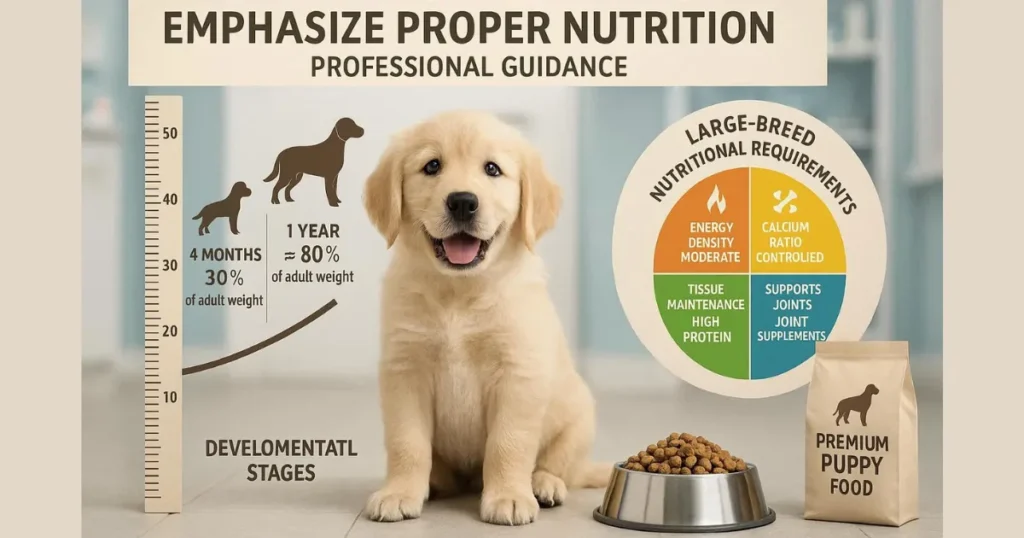
Golden Retriever puppies grow from approximately 10-15 pounds at 8 weeks to 55-75 pounds by 12 months – extraordinary development requiring precise nutrition, preventing orthopedic problems I diagnose frequently.
Controlled calcium levels (1.2-1.8% dry matter basis) prevent excessive skeletal growth, causing developmental orthopedic diseases including hip dysplasia, elbow dysplasia, and osteochondrosis. Many standard puppy foods contain 2.0-2.5% calcium – dangerously high for large breeds, promoting rapid bone growth without proportional soft tissue development.
Appropriate calcium-to-phosphorus ratios (1:1 to 1.8:1, ideally 1.2:1 to 1.4:1) ensure proper bone mineralization. Imbalanced ratios cause skeletal abnormalities I’ve treated in puppies eating foods formulated without large-breed considerations.
Moderate caloric density supports steady controlled growth rather than rapid weight gain, increasing joint disease risk. The best puppy dog food for Golden Retrievers provides appropriate calories without promoting excessively fast development.
Enhanced protein (minimum 22.5% AAFCO standard, though I recommend 25-30%) provides amino acids for tissue building, organ development, and immune system maturation without excess, causing metabolic strain.
Vet’s Tip: Never feed small-breed puppy food, “all life stages” formulas, or adult maintenance diets to Golden Retriever puppies. These lack appropriate large-breed nutrition and cause serious developmental problems, including irreversible skeletal deformities, that I’ve treated throughout my career.
Critical Growth Phases
Understanding growth phases helps owners recognize why the good food for puppies requirements change throughout development:
8-16 weeks:
Most rapid growth period requiring the highest nutritional density while maintaining controlled calcium. Puppies double or triple their birth weight during this phase.
4-6 months:
Continued rapid growth with teething challenges. Palatability and texture become important as baby teeth fall out and adult dentition develops.
6-9 months:
Growth rate slows, but nutritional demands remain high. Joint development becomes a critical focus as puppies reach 70-80% adult size.
9-15 months:
Final maturation phase transitioning toward adult proportions. Metabolic needs begin decreasing as growth plates close and skeletal development completes.
The best puppy dog food supports all these phases through complete balanced nutrition appropriate for large-breed development from weaning through skeletal maturity.
Top Veterinary Recommendations: Best Puppy Dog Food
Based on nutritional analysis, AAFCO compliance for large-breed growth, clinical outcomes, and practical considerations, here are my evidence-based recommendations for best puppy dog food for Golden Retrievers.
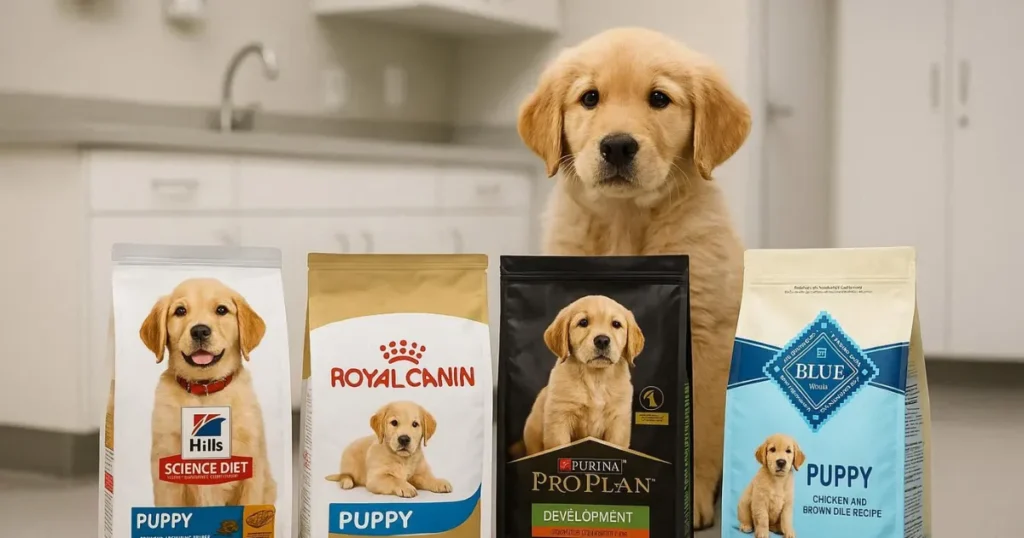
Vet’s Pick # 1: Hill’s Science Diet Large Breed Puppy
This formula consistently delivers exceptional results in my Golden Retriever puppy patients through research-backed nutrition and large-breed-specific formulation.
Why I recommend it:
- Precisely controlled calcium (1.35% dry matter basis) prevents excessive skeletal growth
- Balanced calcium-to-phosphorus ratio (1.3:1) supports proper bone development
- Real chicken as primary protein provides complete amino acids (26% protein, 14% fat, and dry matter basis).
- DHA from fish oil supports brain and eye development during critical windows.
- Glucosamine and chondroitin support developing joints.
- AAFCO feeding trials verify nutritional adequacy specifically for large-breed growth.
- Excellent digestibility reduces stool volume and supports nutrient absorption.
I’ve followed numerous Golden puppies on Hill’s from 8 weeks through 15 months, observing steady controlled growth, excellent body condition, healthy skeletal development verified through orthopedic examinations, and outstanding coat quality throughout the growth phase.
Vet’s Pick # 2: Royal Canin Golden Retriever Puppy.
As breed-specific nutrition, this represents the best puppy dog food when targeting Golden Retriever vulnerabilities specifically through tailored formulation.
Why I recommend it:
- Breed-specific kibble shape and size designed for the Golden Retriever jaw structure.
- Adapted calcium and phosphorus levels for large-breed skeletal development.
- Enhanced EPA and DHA support skin, coat, and cognitive development.
- Antioxidant complex (vitamins E and C, taurine, lutein) supports the developing immune system.
- Highly digestible proteins and prebiotics support intestinal health.
- 28% protein, 14% fat (dry matter basis) provides balanced growth support.
Many clients report their Golden puppies show improved coat quality, excellent digestion, and enthusiastic eating on this formula. The breed-specific approach addresses known Golden Retriever health vulnerabilities from puppyhood.
Vet’s Pick # 3: Purina Pro Plan Large Breed Puppy.
For owners seeking quality, good food for puppies at accessible price points, Purina Pro Plan provides research-backed nutrition without premium pricing.
Why I recommend it:
- Real chicken as the first ingredient delivering 29% protein, 13% fat (dry matter basis).
- DHA from omega-rich fish oil supports brain and vision development.
- Calcium and phosphorus levels are appropriate for large-breed skeletal growth.
- Antioxidants support the developing immune system.
- Guaranteed live probiotics support digestive and immune health.
- Widespread availability and consistent formulation provide reliability.
The value proposition makes this practical best puppy dog food for families managing household budgets while prioritizing appropriate large-breed puppy nutrition throughout the extended growth phase.
Vet’s Pick # 4: Blue Buffalo Life Protection Puppy Large Breed.
For owners prioritizing natural ingredients, Blue Buffalo provides quality best puppy dog food with a whole-food emphasis and transparent sourcing.
Why I recommend it:
- Deboned chicken as the first ingredient ensures a quality protein source.
- Wholesome whole grains (brown rice, barley, oats) provide digestible carbohydrates.
- LifeSource Bits contain concentrated antioxidants, vitamins, and minerals preserved through cold-forming.
- DHA and ARA support brain and eye development.
- Glucosamine and chondroitin support joint health.
- No chicken by-product meals, corn, wheat, soy, or artificial preservatives.
- 27% protein, 15% fat (dry matter basis).
I’ve observed good health outcomes in Golden puppies maintained on this formula, with particularly impressive coat quality and solid body condition throughout the growth phase.
Budget-Friendly Option: Diamond Naturals Large Breed Puppy.
Understanding budget constraints many families face, Diamond Naturals represents responsible value as good food for puppies, meeting essential requirements at accessible pricing.
Why it makes the list:
- Real chicken protein as the first ingredient.
- Cage-free chicken and wild-caught fish provide quality protein sources.
- DHA supports brain development.
- Probiotics support digestive health.
- Appropriate calcium and phosphorus for large breeds.
- No corn, wheat, or artificial preservatives.
- 27% protein, 15% fat (dry matter basis).
While lacking some premium features of higher-priced options, Diamond Naturals meets AAFCO large-breed puppy standards and provides complete balanced nutrition supporting healthy Golden Retriever development adequately, based on my clinical observations.
Feeding Guidelines and Portion Control.
Selecting the best puppy dog food is only half the equation – proper feeding management ensures optimal growth without developmental problems I diagnose in overfed or incorrectly managed puppies.

Determining Appropriate Daily Amounts.
Puppy food packages provide feeding guidelines, but these represent starting points only. Individual puppies vary dramatically in metabolism, activity level, and growth rate.
Calculation approach:
- Determine projected adult weight (60-75 lbs females, 65-80 lbs males).
- Use growth calculators or veterinary guidance to establish daily caloric needs.
- Check the food label for kcal per cup.
- Calculate cups needed to meet caloric requirements.
- Adjust based on body condition and growth rate monitoring.
Example: 12-week-old Golden puppy (25 lbs, projected 70 lb adult).
- Daily caloric needs: | 1,400 calories.
- Best puppy dog food providing 375 kcal/cup.
- Daily amount: 3.7 cups divided into 3-4 meals.
Feeding Frequency by Age.
| Puppy Age | Meals Per Day | Reasoning |
| 8-12 weeks | 4 meals | Small stomach capacity, high energy needs, blood sugar stability |
| 3-6 months | 3 meals | Increased capacity, sustained energy through growth spurts |
| 6-12 months | 2-3 meals | Approaching adult pattern, personal preference determines 2 vs 3 |
| 12+ months | 2 meals | Adult feeding schedule established |
Never free-feed Golden Retriever puppies. Their food-motivated nature means they’ll overconsume available food, causing rapid growth, increasing orthopedic disease risk. Scheduled meals with controlled portions prevent this problem while allowing monitoring of appetite – an important health indicator I assess during wellness exams.
Monitoring Growth and Adjusting Portions.
Weekly weighing during puppyhood helps track growth rate, identify problems early, and adjust good food for puppies portions maintaining appropriate development.
Healthy growth indicators:
- Weight gain: 2-4 pounds weekly after 12 weeks (varies individually).
- Body condition: Ribs easily palpable without pressing hard, visible waist from above, abdominal tuck from the side.
- Energy levels: Playful and active but not hyperactive or lethargic.
- Coat quality: Soft, shiny puppy coat transitioning smoothly to adult texture.
- Digestion: Formed stools 2-3 times daily, no persistent diarrhea or constipation.
If weight gain consistently exceeds 4 pounds weekly, reduce portions by 10-15% and reassess after one week. If the gain is insufficient or the puppy appears thin, increase by 10-15%. Consult your veterinarian if concerns arise or growth seems abnormal.
Body condition scoring matters more than scale weight. A lean, well-proportioned Golden puppy growing steadily shows better skeletal development than a chubby puppy growing rapidly – even if both follow “normal” weight curves.
Common Feeding Mistakes to Avoid.
Throughout my career, I’ve identified recurring errors owners make when feeding the best puppy dog food to Golden Retriever puppies.

Mistake # 1: Feeding Small-Breed Puppy Formulas.
The best food for small dogs contains dramatically different calcium levels and caloric density than large-breed puppies require. Small-breed formulas typically provide 1.5-2.5% calcium – excessive for Golden Retrievers, promoting too-rapid skeletal growth.
I’ve treated young Goldens with severe hip dysplasia exacerbated by feeding small-breed puppy food during critical growth windows. Always verify labels state “for large breed puppies” or similar AAFCO statement confirming large-breed appropriateness.
Mistake # 2: Overfeeding Based on Package Guidelines.
Package feeding guides provide starting points that frequently overestimate individual needs. I regularly examine overweight Golden puppies whose well-meaning owners followed package recommendations without adjusting for metabolism.
Use body condition scoring and weekly weighing, adjusting portions based on actual growth and body condition rather than blindly following guidelines that don’t account for individual variation.
Mistake # 3: Supplementing Complete Puppy Food.
Some owners add calcium supplements, vitamins, or other additives to the best puppy dog food already providing complete nutrition. This creates dangerous imbalances – particularly calcium excess promoting orthopedic disease.
Unless your veterinarian recommends specific supplementation for a diagnosed deficiency, never add supplements to complete balanced puppy food. You’ll create problems rather than improving nutrition.
Mistake # 4: Frequent Food Changes.
Constantly switching good food for puppies brands searching for “perfect” food causes digestive upset and prevents evaluating how well any single food supports your puppy’s growth.
Once you’ve selected quality large-breed puppy food showing good results, maintain consistency throughout the growth phase unless medical reasons require changes.
Mistake # 5: Continuing Puppy Food Too Long.
Transition to adult food at 12-15 months when growth plates close and skeletal maturity is reached. Continuing puppy food beyond this point provides excessive calories and calcium, contributing to obesity and potential skeletal issues.
Special Considerations for Golden Retriever Puppies.
Selecting the best puppy dog food for this specific breed requires addressing Golden-specific vulnerabilities and health considerations.
Hip and Elbow Dysplasia Prevention.
Golden Retrievers face a high genetic predisposition to developmental orthopedic diseases. While genetics play the primary role, nutrition significantly influences disease expression and severity.
Critical nutritional factors:
- Controlled growth rate (never rapid weight gain).
- Appropriate calcium levels (1.2-1.8% dry matter maximum).
- Ideal body condition throughout growth (lean, never chubby).
- Adequate but not excessive protein supporting tissue development.
- Joint-supporting nutrients (glucosamine, chondroitin, omega-3s).
The best puppy dog food combined with portion control and appropriate exercise (avoiding excessive jumping, long runs, and repetitive high-impact activity) minimizes orthopedic disease risk. However, genetic factors remain beyond complete control.
Food Allergies and Sensitivities.
Some Golden puppies develop food sensitivities, manifesting as skin issues, ear infections, or digestive problems during the growth phase.
Common allergens: Beef, dairy, wheat, chicken, soy.
If sensitivity signs appear, work with your veterinarian implementing an elimination diet using limited ingredient good food for puppies (single protein source, limited carbohydrate) while maintaining growth-appropriate nutrition.
I’ve successfully managed puppy food sensitivities using formulas featuring novel proteins (venison, duck, salmon) combined with limited ingredients, though this requires close monitoring, ensuring developmental nutritional needs remain met.
Teething and Palatability.
Between 3-6 months, puppies lose baby teeth and develop adult dentition – a process that causes mouth discomfort, potentially decreasing food interest.
If your Golden puppy shows decreased appetite during teething, consider:
- Softening kibble with warm water (10-15 minutes soaking).
- Mixing small amounts of canned puppy food with kibble.
- Offering smaller, more frequent meals.
- Providing appropriate teething toys separate from mealtimes.
Never change to inappropriate food due to temporary teething-related pickiness. The discomfort passes within weeks, and maintaining proper large-breed best puppy dog food remains critical throughout this phase.

Transitioning from Puppy to Adult Food.
Around 12-15 months, Golden Retrievers reach skeletal maturity, requiring a transition from puppy to adult formulations.
When to Transition.
Physical indicators:
- Growth rate slows dramatically.
- Adult proportions achieved.
- Muscle fills out the adult frame.
- Growth plates closed (veterinarian can verify radiographically if uncertain).
Age guidelines:
- Females: 12-14 months typically.
- Males: 13-15 months typically (mature slightly later due to larger size).
Consult your veterinarian determining optimal transition timing based on individual development, especially if your Golden is significantly larger or smaller than the breed average.
Transition Protocol.
- Days 1-3: 75% puppy food, 25% adult food
- Days 4-6: 50% puppy food, 50% adult food
- Days 7-9: 25% puppy food, 75% adult food
- Day 10+: 100% adult food.
Monitor digestion throughout transition. Slight stool softening is normal initially; severe diarrhea requires slowing the transition pace or reconsidering the adult food selection.
Selecting Adult Food.
Continue the quality level established with the best puppy dog food by selecting premium adult large-breed formulas from the same manufacturer or comparable brands meeting your Golden’s ongoing nutritional needs.
Adult Golden Retrievers thrive on formulas providing 22-26% protein, 12-16% fat, joint support through glucosamine and chondroitin, and controlled calories preventing the obesity epidemic I observe in approximately 55-60% of adult Goldens I examine.
Mixed Feeding: Combining Dry and Wet Puppy Food.
Many owners successfully combine dry kibble with canned good food for puppies, balancing benefits of both formats.
Effective Mixed Feeding Strategies.
50/50 approach: Feed half daily calories from kibble, half from canned food Kibble with topper: Use primarily kibble with 2-4 tablespoons canned food as topper, enhancing palatability Alternating meals: Feed kibble for some meals, canned for others.
Ensure both components meet large-breed puppy requirements. Combining appropriate formulas provides complete nutrition; mixing incompatible foods creates imbalances.
Benefits of Mixed Feeding.
- Enhanced palatability encouraging consistent eating in picky puppies.
- Increased moisture content supporting hydration.
- Texture variety prevents food boredom.
- Cost management (canned as a supplement rather than an exclusive diet).
- Easier eating during teething phases.
I’ve successfully used mixed feeding addressing temporary appetite issues, teething discomfort, or puppies requiring palatability enhancement while maintaining appropriate large-breed nutrition throughout growth.
Cost Considerations and Budget Management.
Quality best puppy dog food for golden retrievers represents a significant investment during the 12-15 month growth phase, and I help families balance nutrition quality with practical budget realities.
Monthly Cost Estimates.
For a growing Golden Retriever puppy (averaged across growth phase):
- Premium kibble: $80-120 monthly
- Mid-tier quality kibble: $60-90 monthly
- Budget-friendly options: $50-70 monthly
- Mixed feeding (kibble + canned): $100-150 monthly
- Exclusive canned feeding: $200-350 monthly.
These estimates vary by brand, puppy age (younger puppies eat less), and growth rate (faster-growing puppies require more food).
Balancing Quality and Affordability.
Never compromise essential large-breed puppy nutrition for cost savings. Developmental problems from inappropriate feeding cost far more in veterinary bills than quality food investment.
Cost management strategies:
- Select mid-tier quality brands meeting large-breed requirements.
- Buy in bulk (20-30 lb bags), reducing per-pound costs.
- Use auto-ship programs offering 5-10% recurring delivery discounts.
- Avoid premium pricing for marketing rather than nutritional superiority.
- Prioritize large-breed-specific formulation over trendy ingredients.
If the budget is severely constrained, consult your veterinarian to identify the best affordable option meeting essential requirements rather than selecting inappropriate food based on the lowest price.
What is the best puppy dog food for Golden Retrievers?
Best puppy dog food must meet AAFCO large-breed growth standards with controlled calcium (1.2-1.8% dry matter basis), appropriate protein (25-30%), and DHA for development. Top veterinary recommendations include Hill’s Science Diet Large Breed Puppy, Royal Canin Golden Retriever Puppy, Purina Pro Plan Large Breed Puppy, and Blue Buffalo Life Protection Puppy Large Breed, meeting these requirements.
What makes good food for puppies different from adult dog food?
Good food for puppies provides higher protein (minimum 22.5% vs 18% for adults), increased caloric density supporting rapid growth, enhanced DHA for brain/eye development, and precise calcium/phosphorus ratios for skeletal development. Large-breed puppy formulas specifically control calcium (1.2-1.8%), preventing too-rapid growth, causing orthopedic disease. Adult food lacks these growth-specific nutrients and causes developmental problems in puppies.
Can I feed the best food for small dogs to my Golden Retriever puppy?
No. Best food for small dogs contains excessive calcium (2.0-2.5%) and higher caloric density inappropriate for large-breed puppies. These formulas promote rapid growth, increasing hip dysplasia, elbow dysplasia, and osteochondrosis risk. Golden Retrievers require large-breed-specific puppy food with controlled calcium (1.2-1.8%) supporting steady controlled growth, preventing developmental orthopedic diseases I treat frequently in improperly fed puppies.
How much puppy food should I feed my Golden Retriever daily?
Amount varies by age and individual metabolism. For a 12-week-old 25-pound Golden puppy, feed approximately 3.5-4 cups daily of standard puppy kibble (375 kcal/cup) divided into 3-4 meals. Use body condition scoring and weekly weighing to adjust portions – puppies should gain 2-4 pounds weekly after 12 weeks while maintaining lean body condition with easily palpable ribs and a visible waist.
When should I switch my Golden from puppy to adult food?
Transition at 12-15 months when growth plates close and skeletal maturity is reached. Females typically transition at 12-14 months, males at 13-15 months. Physical indicators include a dramatically slowed growth rate, adult proportions achieved, and muscle filling out the adult frame. Consult your veterinarian determining optimal timing based on individual development, especially if your Golden is unusually large or small.
Can I mix different brands of puppy food together?
While possible, it’s unnecessary and potentially problematic. Quality single-brand large-breed puppy formulas provide complete, balanced nutrition. Mixing brands may create nutrient imbalances and complicate identifying causes if digestive issues develop. If switching foods, use proper transition protocol (7-10 days gradual change) rather than ongoing mixed-brand feeding. Exception: combining dry kibble with canned food from the same brand works well.
Should I add supplements to my Golden puppy’s food?
No, unless your veterinarian recommends specific supplementation for a diagnosed deficiency. Best puppy dog food already provides complete, balanced nutrition meeting AAFCO standards. Adding calcium supplements, vitamins, or other additives creates dangerous imbalances – particularly calcium excess, promoting orthopedic disease. Trust that quality large-breed puppy formulas provide everything needed without additional supplementation.
Is grain-free puppy food better for Golden Retriever puppies?
Not necessarily, and potentially concerning. FDA investigations suggest links between grain-free diets and dilated cardiomyopathy in dogs. Unless your puppy has been diagnosed grain allergy (rare), grain-inclusive large-breed formulas with whole grains provide nutritional benefits and better cardiac safety. True grain allergies are uncommon – most dietary sensitivities involve proteins (beef, chicken) rather than grains. Choose grain-inclusive good food for puppies unless medical necessity dictates otherwise.
Conclusion.
Selecting the best puppy dog food for your Golden Retriever requires understanding large-breed-specific nutritional requirements, appropriate feeding management, and breed vulnerabilities during the critical growth phase. Throughout my years treating Golden puppies, I’ve witnessed how proper nutrition establishes the foundation for lifelong health, prevents developmental orthopedic diseases, and supports optimal development from weaning through skeletal maturity.
The best puppy dog food provides controlled calcium levels (1.2-1.8% dry matter basis), appropriate protein (25-30%), enhanced DHA for brain and eye development, and complete nutrition verified through AAFCO large-breed puppy feeding trials. Whether choosing Hill’s Science Diet, Royal Canin, Purina Pro Plan, Blue Buffalo, or Diamond Naturals, prioritize large-breed-specific formulations over generic puppy foods or the best food for small dogs lacking appropriate nutrition for Golden Retrievers.
Remember that even optimal good food for puppies requires proper feeding management – portion control based on body condition rather than package guidelines, frequent meals matching puppy age, weekly growth monitoring with portion adjustments, and transition to adult food at appropriate skeletal maturity. Combined with regular veterinary wellness visits, appropriate exercise avoiding joint stress, and positive socialization, quality nutrition ensures your Golden Retriever puppy develops into a healthy, well-proportioned adult enjoying the active, joyful life these remarkable dogs deserve throughout all their years.
Share Your Puppy Food Experience! What’s the best puppy dog food that worked for your Golden Retriever? I’m eager to hear about your experiences selecting good food for puppies – which brands you chose, how your puppy responded during the growth phase, and health outcomes you observed!

Dr. Nabeel A.
Hi, I’m Dr. Nabeel Akram – a farm management professional by trade and a passionate Golden Retriever enthusiast at heart. With years of experience in animal science and livestock care, I’ve built a career around understanding animals—how they live, thrive, and bring value to our lives. This blog is a personal project born from that same passion, focusing on one of the most loyal and lovable breeds out there: the Golden Retriever. Whether I’m managing farm operations or sharing insights on canine health, behavior, and care, it all ties back to one core belief—animals deserve thoughtful, informed, and compassionate attention. Welcome to a space where professional expertise meets genuine love for dogs.
Facebook |
Links will be automatically removed from comments.