
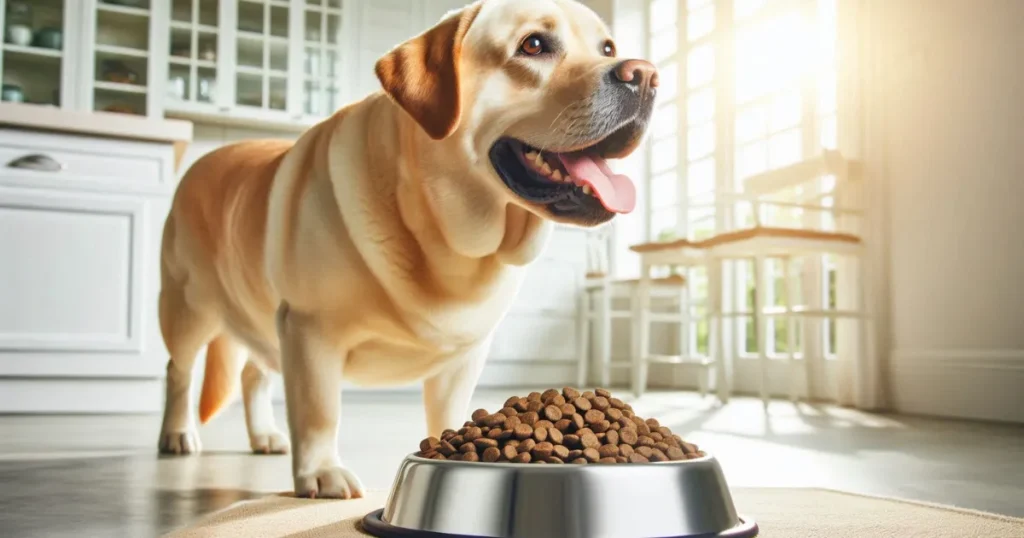
Throughout my years of experience treating Labrador Retrievers in clinical practice, I’ve learned that selecting the best dog food for Labrador Retrievers requires understanding this breed’s unique nutritional needs, insatiable appetite, and predisposition to obesity. Labs share many similarities with Golden Retrievers – both are large sporting breeds with comparable health concerns – but Labs present distinct challenges that demand specific dietary considerations.
In my clinic, I’ve treated countless Labrador Retrievers struggling with weight management, joint problems, and food-motivated behavior that makes portion control challenging. The best dog food for Labrador Retrievers addresses these breed-specific vulnerabilities while providing complete nutrition supporting their athletic build, high energy levels, and tendency toward certain health conditions. Today, I’ll share comprehensive guidance on Lab nutrition, drawing from both veterinary science and real-world patient outcomes I’ve observed over years of treating these remarkable dogs.
Contents
- 1 Understanding Labrador Retriever Nutritional Requirements
- 2 Critical Nutritional Components in the Best Dog Food for Labrador Retrievers
- 3 Top Veterinary Recommendations: Best Dog Food for Labrador Retrievers
- 3.1 Vet’s Pick # 1: Hill’s Science Diet Adult Large Breed
- 3.2 Vet’s Pick # 2: Royal Canin Labrador Retriever Adult
- 3.3 Vet’s Pick # 3: Purina Pro Plan Large Breed Adult
- 3.4 Owner’s Choice: Blue Buffalo Life Protection Formula Large Breed
- 3.5 Budget-Friendly Option: Diamond Naturals Large Breed Adult
- 3.6 Weight Management Option: Hill’s Science Diet Perfect Weight Large Breed
- 4 Life Stage Considerations for Labrador Retrievers
- 5 Managing Common Labrador Health Issues Through Nutrition.
- 6 Feeding Guidelines and Best Practices.
- 6.1 Portion Control Strategies.
- 6.2 Meal Frequency and Timing.
- 6.3 Slow Feeding Solutions.
- 6.4 How much of the best dog food for Labrador Retrievers should I feed daily?
- 6.5 When should I switch my Lab from puppy to adult food?
- 6.6 Why is my Lab always hungry despite eating enough food?
- 6.7 Should I choose grain-free food for my Labrador Retriever?
- 6.8 What’s the best dog food for Labrador Retrievers with joint problems?
- 6.9 Can the best dog food for Labrador Retrievers help with weight loss?
- 6.10 How do I know if my Lab has a food allergy?
- 6.11 Should I feed my working Lab differently from a pet Lab?
- 7 Conclusion.
Understanding Labrador Retriever Nutritional Requirements
Before recommending the best dog food for Labrador Retrievers, I always explain what makes this breed’s nutritional needs distinct from other large breeds, including their close cousins, Golden Retrievers.

The Lab Appetite Challenge
Labradors possess a genetic mutation in the POMC gene affecting approximately 25% of the breed, causing insatiable appetite and reduced satiety signals. In my practice, I see the consequences daily – overweight Labs who genuinely feel hungry despite adequate caloric intake.
This genetic predisposition means the best dog food for Labrador Retrievers must provide satiety through strategic fiber content, appropriate caloric density, and portion control guidance that acknowledges their biological drive to overeat. Unlike many breeds where obesity stems primarily from overfeeding, Labs face a neurological component, making weight management uniquely challenging.
Vet’s Tip: If your Lab acts constantly hungry despite proper portions, they’re not being dramatic – their brain genuinely doesn’t receive normal satiety signals. Structure and consistency become critical management tools.
Energy Requirements and Activity Levels
Labs were bred as working retrievers, requiring substantial energy for swimming, running, and field work. Even pet Labs retain high energy drives compared to less active breeds. The best dog food for Labrador Retrievers balances sufficient calories supporting their activity level without excess that converts to fat storage.
For adult Labs, I typically calculate energy needs at 30 calories per pound of ideal body weight (not current weight if overweight) daily, adjusted for activity level. A moderately active 70-pound Lab needs approximately 2,100 calories daily, while highly active working dogs may require 2,800-3,200 calories.
Joint Health Priorities
Large breed dogs face increased joint stress, and Labs’ tendency toward obesity exacerbates this vulnerability. I diagnose hip dysplasia, elbow dysplasia, and osteoarthritis in countless Labs throughout their lives, often by age 6-7.
The best dog food for Labrador Retrievers includes therapeutic levels of glucosamine (400-500 mg per kg body weight), chondroitin (250-400 mg per kg), and omega-3 fatty acids (EPA and DHA), providing anti-inflammatory effects. These nutrients won’t cure joint disease, but significantly slow progression and reduce discomfort in affected dogs.
Skin and Coat Health
Labs develop skin issues more frequently than Golden Retrievers in my experience. Hot spots, allergies, and ear infections plague many Labs I treat, often triggered or worsened by dietary factors.
The best dog food for Labrador Retrievers provides balanced omega-6 to omega-3 ratios (ideally 5:1 to 10:1), adequate zinc for skin barrier function, and avoids common allergens in sensitive individuals. Quality protein sources and appropriate fatty acid profiles dramatically improve skin condition within 8-12 weeks of dietary optimization.
Critical Nutritional Components in the Best Dog Food for Labrador Retrievers
When evaluating food options for Labs, I analyze specific nutritional elements based on breed vulnerabilities and life stage requirements that distinguish them from other large breeds.
Protein Quality and Quantity
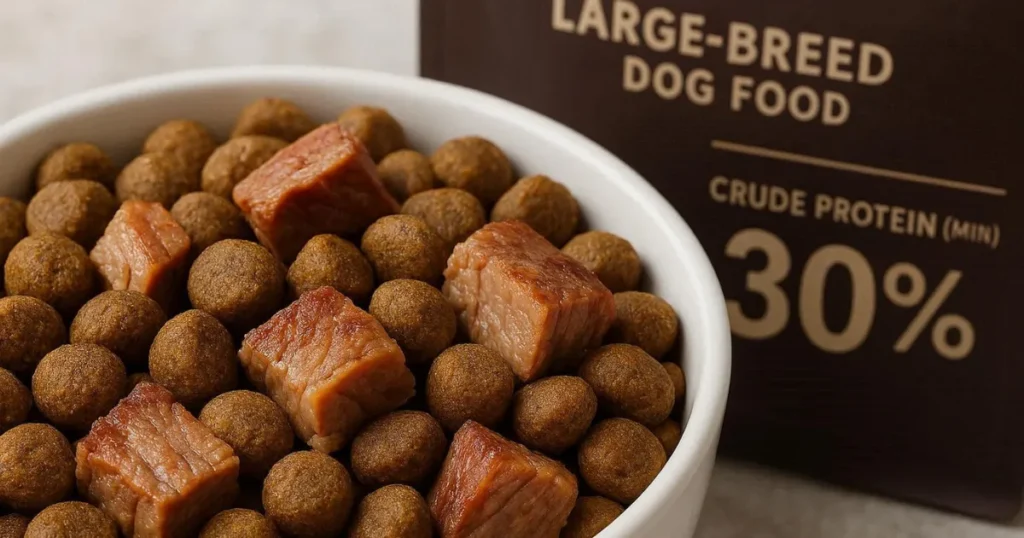
Labs need substantial protein maintaining their muscular build and supporting their active lifestyle. The best dog food for Labrador Retrievers provides 22-28% protein (dry matter basis) for adults, with higher levels (26-32%) for working or highly active dogs.
Named animal proteins – chicken, beef, salmon, turkey, or lamb – should dominate the ingredient list. I avoid foods where plant proteins (pea protein, potato protein) provide primary protein sources, particularly given ongoing research into grain-free diet concerns and potential cardiac implications.
Quality matters tremendously. In my practice, Labs eating high-quality animal protein diets maintain better muscle condition, healthier coats, and more stable energy levels compared to those consuming lower-quality formulas, regardless of protein percentage on the label.
Controlled Fat Content
Fat provides concentrated energy, but excess fat causes obesity in food-motivated Labs who’d happily eat unlimited quantities. The best dog food for Labrador Retrievers contains 12-16% fat (dry matter basis) for adults – enough for essential fatty acids and energy without promoting weight gain.
Puppies and working dogs need higher fat (15-20%), supporting growth and intense activity. Senior Labs or those with weight issues benefit from lower fat (10-14%) while maintaining nutritional completeness through quality ingredients.
The type of fat matters as much as quantity. I prioritize foods containing omega-3 fatty acids from fish oil (EPA and DHA) rather than plant-based omega-3s (ALA) that dogs convert inefficiently. These anti-inflammatory fats support joints, skin, brain, and cardiac health.
Fiber for Satiety
Given Labs’ appetite challenges, strategic fiber content becomes crucial. The best dog food for Labrador Retrievers includes 3-6% fiber, with higher levels (5-8%) appropriate for weight management formulas.
Soluble fiber from sources like beet pulp, chicory root, or pumpkin slows digestion, promotes fullness, and supports gut health. Insoluble fiber from cellulose or grain brans adds bulk without calories, helping food-motivated Labs feel satisfied on restricted portions.
I’ve successfully managed weight in numerous overweight Labs using higher-fiber diets combined with portion control, achieving gradual loss while keeping dogs comfortable rather than constantly hungry.
Caloric Density Considerations
Caloric density – calories per cup – significantly impacts portion sizes and satiety. The best dog food for Labrador Retrievers provides 320-380 kcal per cup for maintenance, with lower density (280-320 kcal per cup) appropriate for weight management.
Lower caloric density means larger portions for equivalent calories, providing psychological satisfaction for both Labs and their owners. A Lab eating 4 cups of lower-calorie food feels more satisfied than one eating 2.5 cups of calorie-dense food, even at identical total calories.
Top Veterinary Recommendations: Best Dog Food for Labrador Retrievers
Based on nutritional analysis, clinical outcomes in my Labrador patients, and practical feeding management, here are my evidence-based recommendations for the best dog food for Labrador Retrievers.
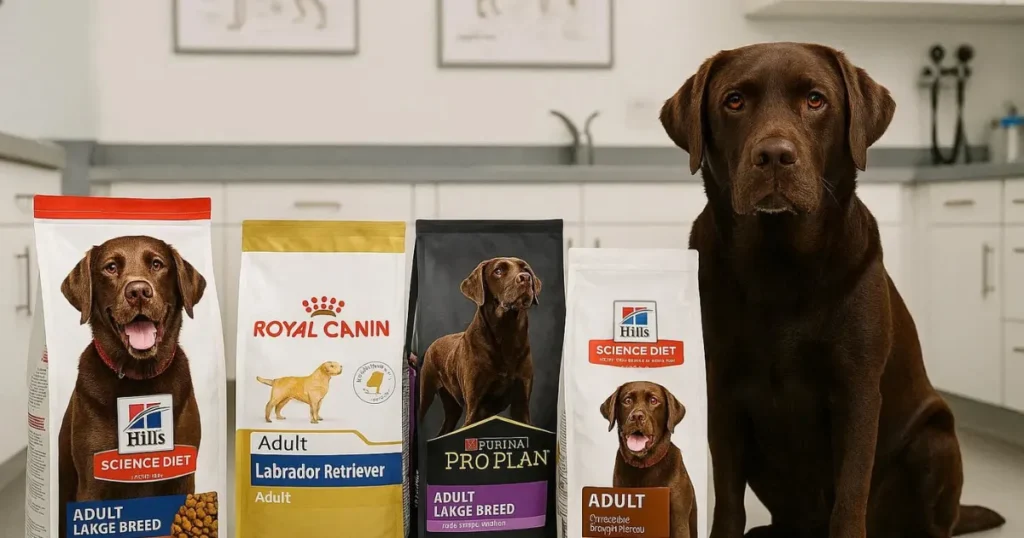
Vet’s Pick # 1: Hill’s Science Diet Adult Large Breed
This formula consistently delivers excellent results in my Lab patients, backed by extensive feeding trials and decades of nutritional research. Real chicken provides primary protein at 24% dry matter basis, with balanced fat at 14% preventing obesity while meeting energy needs.
Glucosamine and chondroitin support joint health, critical for Labs’ large frame and active lifestyle. Natural ingredients with vitamins, minerals, and amino acids provide complete nutrition without artificial colors or flavors. The precise nutrient balance supports immune function, healthy skin, and lean muscle maintenance.
I’ve followed numerous Labs on this diet long-term, observing maintained healthy weight, good coat condition, and solid energy levels throughout adulthood. The kibble size suits Labs’ eating style, and palatability ratings are consistently high, even with picky eaters.
Vet’s Pick # 2: Royal Canin Labrador Retriever Adult
As a breed-specific formula, this addresses Labs’ unique requirements through targeted nutrition. The specialized kibble shape is designed specifically for the Labrador jaw structure, encouraging chewing and slowing rapid eating common in this breed.
EPA and DHA from fish oil support skin, coat, and joint health. The precise protein content (26% dry matter) maintains muscle mass, while controlled fat (13% dry matter) prevents weight gain in food-motivated dogs. The formula includes L-carnitine, supporting healthy metabolism and fat burning.
This represents the best dog food for Labrador Retrievers when breed-specific formulation and specialized kibble design are priorities. Many of my clients report their Labs eat more slowly and seem more satisfied on this formula compared to standard large-breed foods.
Vet’s Pick # 3: Purina Pro Plan Large Breed Adult
Purina’s research-backed formulation provides excellent value, combining quality ingredients with affordability. Real chicken is the first ingredient, delivering 26% protein supporting strong muscles. Glucosamine supports joint health, while omega-6 fatty acids and vitamin A promote healthy skin and coat.
The formula includes natural prebiotic fiber from wheat bran, nourishing beneficial gut bacteria, and supporting digestive health. Fortified with guaranteed live probiotics, it maintains intestinal balance crucial for Labs prone to digestive sensitivities.
I recommend this as the best dog food for Labrador Retrievers for owners seeking quality nutrition at mid-range pricing without compromising essential nutritional components. The widespread availability and consistent formulation provide reliability important for long-term feeding.
Owner’s Choice: Blue Buffalo Life Protection Formula Large Breed
Many clients prefer Blue Buffalo’s natural ingredient focus and whole-food approach. Deboned chicken provides primary protein, while wholesome whole grains (brown rice, barley) offer digestible carbohydrates without the grain-free concerns I counsel about regarding potential cardiac risks.
Glucosamine and chondroitin support joints, and omega-3 and omega-6 fatty acids maintain coat health. LifeSource Bits – cold-formed to preserve nutrients – provide concentrated vitamins, minerals, and antioxidants. No chicken by-product meals aligns with many owners’ ingredient preferences.
While slightly higher priced, this represents the best dog food for Labrador Retrievers for owners prioritizing natural ingredients and transparent sourcing. Most Labs find it highly palatable, and I’ve observed good health outcomes in patients maintained on this formula long-term.
Budget-Friendly Option: Diamond Naturals Large Breed Adult
Not every owner can afford premium pricing, and I work with clients finding quality nutrition within budget constraints. Diamond Naturals provides solid nutritional value at accessible price points without compromising basic requirements.
Real chicken protein serves as the first ingredient, delivering 23% protein supporting muscle health. The formula includes glucosamine and chondroitin for joints, omega fatty acids for skin and coat, and probiotics for digestive support. No corn, wheat, or artificial additives appeals to owners seeking cleaner ingredient lists.
This represents responsible value as the best dog food for Labrador Retrievers for budget-conscious households. While lacking premium ingredients found in higher-priced options, it meets AAFCO nutritional standards and provides complete balanced nutrition supporting adult Labs adequately.
Weight Management Option: Hill’s Science Diet Perfect Weight Large Breed
For the numerous overweight Labs I treat, specialized weight management formulas become necessary. This formula provides reduced calories (310 kcal per cup) while maintaining nutritional completeness through quality ingredients and precise nutrient balance.
High-quality protein at 28% dry matter basis preserves lean muscle during weight loss. Enhanced fiber promotes satiety, helping Labs feel satisfied on restricted portions. Clinical nutrition backed by studies demonstrates an average of 13% weight loss in 60 days when fed as directed.
I’ve successfully used this as the best dog food for Labrador Retrievers struggling with obesity, achieving gradual, sustainable weight loss (1-2% body weight weekly) while keeping dogs comfortable and maintaining their muscle mass throughout the process.
Life Stage Considerations for Labrador Retrievers
The best dog food for Labrador Retrievers varies significantly across life stages, and I adjust recommendations based on age-specific nutritional requirements and health priorities.

Puppy Nutrition (Birth to 12-15 Months).
Lab puppies need specialized large-breed puppy formulas controlling growth rate and calcium levels, preventing developmental orthopedic diseases I frequently diagnose in rapidly growing dogs. The best dog food for Labrador Retrievers during puppyhood provides 22-26% protein, 10-15% fat, and carefully balanced calcium and phosphorus.
Avoid “all life stages” foods and small-breed puppy formulas that contain excessive calories and calcium, promoting too-rapid growth. I’ve treated countless young Labs with hip dysplasia and elbow issues exacerbated by inappropriate puppy nutrition, making proper food selection critical during this vulnerable period.
Feed puppies 3-4 times daily until 6 months, then transition to twice-daily feeding. Follow feeding guidelines by ideal adult weight projections, not current puppy weight. Monitor body condition closely – puppies should maintain lean body condition throughout growth, never appearing chubby despite the owner’s temptation to “build them up.”.
Adult Maintenance (1-7 Years).
Adult Labs in their prime require the best dog food for Labrador Retrievers supporting active lifestyles, maintaining ideal weight, and preventing obesity that creeps in during these years. The formulas I recommended earlier suit most adult Labs, adjusted for individual activity levels and metabolic rates.
Monitor body condition monthly using hands-on assessment – you should easily feel ribs without pressing hard, see a visible waist when viewing from above, and notice abdominal tuck from the side. If your Lab gains weight despite following feeding guidelines, reduce portions by 10-15% and reassess after 4 weeks.
Working or highly active Labs (hunting, field trials, agility) need increased calories from higher-fat performance formulas or simply larger portions of maintenance food. I calculate caloric needs based on activity level and adjust accordingly, monitoring weight and condition closely.
Senior Nutrition (7+ Years).
Labs enter senior years around age 7, when metabolic changes, reduced activity, and age-related health issues require dietary adjustments. The best dog food for Labrador Retrievers in their golden years provides moderate protein (24-28%), maintaining muscle mass, controlled calories preventing obesity, enhanced joint support, and antioxidants supporting cognitive function.
I typically transition Labs to senior formulas around age 7-8, though very active, healthy dogs may maintain adult food longer under veterinary guidance. Senior Labs need fewer calories – reduce by approximately 20% from adult portions unless maintaining an ideal weight proves challenging.
Enhanced glucosamine and chondroitin become critical as arthritis develops in aging joints. Omega-3 fatty acids provide anti-inflammatory benefits for joints, skin, and the brain. Antioxidants, including vitamins E and C, support cellular health and may slow cognitive decline, which I screen for during geriatric wellness exams.
Managing Common Labrador Health Issues Through Nutrition.
Throughout my years treating Labs, certain health conditions appear repeatedly, and the best dog food for Labrador Retrievers can significantly impact disease management and prevention strategies.

Obesity Prevention and Management.
Approximately 60% of Labs I examine are overweight or obese – the breed’s most common health problem I address. Excess weight devastates joints, increases diabetes risk, contributes to cardiac problems, and reduces lifespan by an estimated 2 years.
The best dog food for Labrador Retrievers for weight management combines reduced caloric density (280-320 kcal per cup), increased fiber (6-8%), elevated protein (28-32%), preserving muscle during loss, and L-carnitine supporting fat metabolism.
Implement strict portion control using measuring cups rather than visual estimates. Feed twice daily at scheduled times, eliminating free-feeding entirely. Limit treats to under 10% of daily calories, using vegetables (carrots, green beans) as low-calorie alternatives. Increase exercise gradually as weight decreases and joint stress reduces.
I guide countless Lab owners through weight loss programs, achieving success through a combination of appropriate best dog food for Labrador Retrievers formulas, portion control, and increased activity tailored to individual dogs’ capabilities and limitations.
Joint Disease Management.
Hip dysplasia, elbow dysplasia, and osteoarthritis affect most Labs by middle age. While nutrition can’t cure these conditions, the best dog food for Labrador Retrievers with enhanced joint support slows progression and reduces discomfort significantly.
Look for therapeutic levels of glucosamine (400-500 mg/kg body weight daily), chondroitin (250-400 mg/kg daily), and omega-3 fatty acids (EPA 100-150 mg/kg, DHA 50-100 mg/kg daily). Green-lipped mussel provides additional joint-supporting compounds unique to this ingredient.
I often recommend prescription joint support diets for Labs with advanced arthritis, providing higher nutrient levels than over-the-counter foods. Combined with appropriate pain management, weight control, and modified exercise, nutritional intervention improves mobility and quality of life in affected dogs.
Food Allergies and Sensitivities.
Labs develop food sensitivities more frequently than many breeds. I diagnose these through elimination diets after ruling out environmental allergies through testing and trial treatments.
Common allergens include beef, dairy, wheat, chicken, and soy. If your Lab shows chronic ear infections, itchy skin, gastrointestinal upset, or anal gland problems, the best dog food for Labrador Retrievers may be a limited ingredient diet or novel protein formula.
Effective options include single-protein sources your Lab hasn’t eaten (venison, duck, salmon, kangaroo), limited ingredients reducing allergen exposure, and hydrolyzed protein diets where proteins are broken into molecules too small to trigger immune responses.
Food trials require 8-12 weeks of strict adherence – no treats, table scraps, or flavored medications potentially containing allergenic proteins. Success requires patience and commitment, but I’ve resolved countless chronic conditions through appropriate dietary management in sensitive Labs.
Feeding Guidelines and Best Practices.
Beyond selecting the best dog food for Labrador Retrievers, proper feeding management optimizes nutrition and prevents behavioral problems associated with Labs’ food motivation.
Portion Control Strategies.
Feeding guidelines on bags provide starting points only. I calculate portions based on ideal body weight (not current weight if overweight), activity level, and individual metabolism.
For a 70-pound adult Lab with moderate activity, typical daily amounts of standard adult food (360 kcal per cup) equal approximately 3-3.25 cups daily, divided into two meals. Adjust based on body condition rather than strictly following guidelines – some Labs need 20% less than recommendations while others need slightly more.
Use actual measuring cups, not random scoops. Studies show owners typically overfeed by 30-40% when visually estimating portions. This seemingly small difference accumulates to significant excess calories, causing gradual weight gain over months and years.
Vet’s Tip: If your Lab maintains ideal weight on recommended portions, continue that amount. If they gain weight, reduce by 10-15%. If they lose weight, increase by 10%. Let body condition – not feeding guidelines – determine appropriate amounts.
Meal Frequency and Timing.
Feed adult Labs twice daily (morning and evening) rather than once daily. Splitting daily portions into two meals reduces bloat risk in deep-chested breeds, maintains steadier energy levels, and provides routine Labs thrive on.
Space meals approximately 10-12 hours apart. Remove uneaten food after 20-30 minutes, teaching your Lab that meal time is limited – this prevents grazing and reinforces eating when food is offered.
Never free-feed Labs. Their appetite dysregulation means they’ll overconsume available food regardless of satiety. Scheduled feeding with controlled portions is essential for weight management in this breed.
Slow Feeding Solutions.
Many Labs eat dangerously fast, increasing choking risk and bloat susceptibility. Slow-feeder bowls with obstacles forcing dogs to eat around barriers work well for rapid eaters.
Puzzle feeders providing mental stimulation while slowing consumption benefit food-motivated Labs. Scatter feeding – spreading kibble across a large area requiring dogs to search – engages natural foraging instincts while dramatically reducing eating speed.
I recommend these strategies for virtually all Labs, particularly those inhaling food within seconds. Slowing consumption improves digestion, reduces gulping air (bloat risk), and provides enrichment for intelligent dogs needing mental stimulation.
How much of the best dog food for Labrador Retrievers should I feed daily?
For a 70-pound adult Lab with moderate activity, feed approximately 3-3.25 cups of standard adult formula (360 kcal/cup) daily, divided into two meals. Adjust based on body condition – reduce portions if gaining weight, increase if losing. Calculate using ideal weight, not current weight, if overweight. Individual metabolism varies significantly.
When should I switch my Lab from puppy to adult food?
Transition Labs to adult food at 12-15 months when growth plates close and adult size is reached. Use large-breed puppy formula until then to control growth rate and prevent developmental orthopedic problems. Switch gradually over 10-14 days, mixing increasing amounts of adult food with decreasing puppy food to prevent digestive upset.
Why is my Lab always hungry despite eating enough food?
Approximately 25% of Labs carry a genetic mutation affecting satiety signals, causing constant hunger despite adequate nutrition. This isn’t behavioral – their brains genuinely don’t receive normal fullness signals. Choose the best dog food for Labrador Retrievers with higher fiber for satiety, implement strict portion control, and use vegetables as low-calorie treats.
Should I choose grain-free food for my Labrador Retriever?
I generally recommend grain-inclusive formulas unless your Lab has diagnosed a grain allergy, which is rare. Following FDA investigations into potential links between grain-free diets and dilated cardiomyopathy, grain-inclusive options with whole grains represent safer choices. If choosing grain-free, ensure adequate taurine supplementation and consider cardiac monitoring.
What’s the best dog food for Labrador Retrievers with joint problems?
Choose formulas with therapeutic levels of glucosamine (400-500 mg/kg body weight), chondroitin (250-400 mg/kg), and omega-3 fatty acids (EPA/DHA from fish oil). Hill’s Science Diet, Royal Canin Labrador, and Purina Pro Plan all include joint support. For advanced arthritis, discuss prescription joint diets with your veterinarian.
Can the best dog food for Labrador Retrievers help with weight loss?
Yes, weight management formulas with reduced calories (280-320 kcal/cup), increased fiber (6-8%), and elevated protein preserve muscle during loss. Hill’s Perfect Weight, Royal Canin Weight Care, and similar formulas work well. Combine with portion control and increased exercise for a gradual loss of 1-2% body weight weekly under veterinary supervision.
How do I know if my Lab has a food allergy?
Common signs include chronic ear infections, itchy skin, gastrointestinal upset, and anal gland problems. After ruling out environmental allergies, conduct an 8-12 week elimination diet using limited ingredient or novel protein formulas. The best dog food for Labrador Retrievers with allergies features single protein sources like venison, duck, or salmon.
Should I feed my working Lab differently from a pet Lab?
Yes, working Labs (hunting, field trials, agility) need 30-50% more calories than pet Labs. Choose performance formulas with higher fat (18-22%) or increase portions of maintenance food. Calculate needs based on work intensity – light work requires 1.5 x maintenance calories, heavy work needs 2-3x. Monitor body condition and adjust accordingly.
Conclusion.
Selecting the best dog food for Labrador Retrievers requires understanding this breed’s unique challenges – insatiable appetite driven by genetic factors, predisposition to obesity, joint health vulnerabilities, and tendency toward certain health conditions. Throughout my years treating Labs, I’ve learned that nutritional management forms the foundation of preventive care and significantly impacts long-term health outcomes.
The best dog food for Labrador Retrievers provides quality animal proteins supporting their muscular build, controlled calories preventing obesity, therapeutic joint support, and balanced nutrients addressing breed-specific health concerns. Whether choosing from my veterinary recommendations or another quality option, prioritize named proteins, appropriate caloric density, and formulas specifically designed for large breeds.
Remember that even the best dog food for Labrador Retrievers requires proper feeding management – portion control, twice-daily meals, slow-feeding strategies, and vigilant body condition monitoring. Combined with regular veterinary care, appropriate exercise, and consistent routines, optimal nutrition ensures your Labrador enjoys the healthy, active, joyful life these wonderful dogs deserve throughout all life stages.
Share Your Lab’s Nutrition Success Story! Has the best dog food for Labrador Retrievers transformed your dog’s health and weight management? I’m eager to hear about your experiences! Your real-world insights help other Lab owners navigate nutritional decisions for this food-motivated breed.

Dr. Nabeel A.
Hi, I’m Dr. Nabeel Akram – a farm management professional by trade and a passionate Golden Retriever enthusiast at heart. With years of experience in animal science and livestock care, I’ve built a career around understanding animals—how they live, thrive, and bring value to our lives. This blog is a personal project born from that same passion, focusing on one of the most loyal and lovable breeds out there: the Golden Retriever. Whether I’m managing farm operations or sharing insights on canine health, behavior, and care, it all ties back to one core belief—animals deserve thoughtful, informed, and compassionate attention. Welcome to a space where professional expertise meets genuine love for dogs.
Facebook |
Links will be automatically removed from comments.