

Finding the best dog food for golden retrievers shouldn’t feel like decoding a chemistry textbook – but for most owners, that’s exactly what it becomes. The options are endless, the label claims are mostly unregulated, and the stakes are higher for this breed than many people realize.
Golden Retrievers are nutritionally unique. They carry a well-documented predisposition to joint disease, cardiac conditions, hypothyroidism, and food-triggered skin problems – all of which are directly influenced by what they eat. I often see owners who have been feeding a well-intentioned diet for years, unaware that a single ingredient pattern has been quietly contributing to chronic inflammation, weight gain, or recurring ear infections.
What this guide covers: the specific nutritional needs of Golden Retrievers, which products genuinely meet those needs, what the ingredient list on any bag should and shouldn’t include, how requirements shift from puppyhood through the senior years, and the feeding mistakes that are easy to make and hard to notice. By the end, you’ll be able to evaluate any formula confidently – and feed your Golden accordingly.
Contents
- 1 The Nutritional Needs of Golden Retrievers
- 2 Best Dog Food for Golden Retrievers Recommendations
- 2.1 Best Overall: Royal Canin Golden Retriever Adult
- 2.2 Best for Sensitive Skin: Hill’s Science Diet Adult Sensitive Stomach & Skin.
- 2.3 Best Puppy Formula: Purina Pro Plan Large Breed Puppy (Chicken & Rice).
- 2.4 Best Senior Formula: Hill’s Science Diet Adult 7+ Large Breed.
- 2.5 Best Budget Pick: Purina ONE Large Breed Adult (Chicken & Rice).
- 3 Golden Retriever Feeding Guide by Life Stage.
- 4 Ingredients to Look for – and Ingredients to Avoid.
- 5 6 Common Feeding Mistakes Golden Retriever Owners Make.
- 5.1 1. Free-feeding instead of structured meals.
- 5.2 2. Measuring by cup rather than weight.
- 5.3 3. Defaulting to grain-free without a medical reason.
- 5.4 4. Underestimating treat calories.
- 5.5 5. Transitioning foods too quickly
- 5.6 6. Feeding a puppy on adult formula to save money.
- 5.7 What is the best dog food for Golden Retrievers in 2026?
- 5.8 Should Golden Retrievers eat grain-free food?
- 5.9 What nutrients do Golden Retrievers need most?
- 5.10 How much should I feed my Golden Retriever daily?
- 5.11 What protein is best for Golden Retrievers?
- 5.12 When should I switch my Golden Retriever puppy to adult food?
- 5.13 Is wet food or dry food better for Golden Retrievers?
- 5.14 Do Golden Retrievers need joint supplements?
- 5.15 What foods are bad for Golden Retrievers?
- 5.16 Can Golden Retrievers eat raw food?
- 5.17 What causes Golden Retrievers to itch after eating?
- 5.18 How do I know if my Golden’s food is truly AAFCO-compliant?
- 5.19 Is salmon-based dog food good for Golden Retrievers?
- 6 Conclusion.
The Nutritional Needs of Golden Retrievers
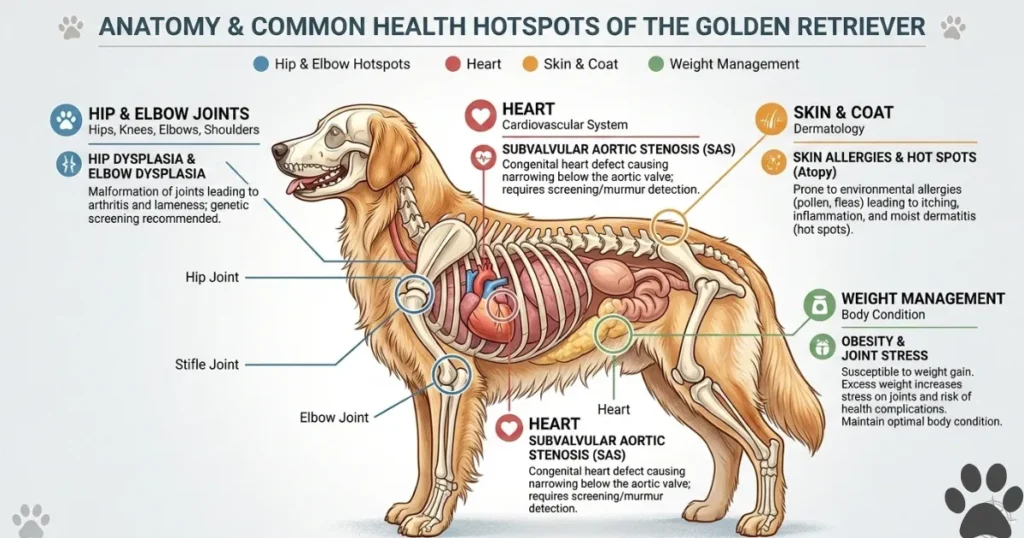
Golden Retrievers are not interchangeable with other large breeds when it comes to nutrition. Their specific disease risks create dietary priorities that a generic large-breed formula may not always address.
Golden Retrievers are predisposed to dilated cardiomyopathy (DCM), hip and elbow dysplasia, hypothyroidism, and food-triggered atopic dermatitis – each of which has a measurable dietary component.
Joint Health
Hip and elbow dysplasia affect a significant percentage of the Golden Retriever population. Canine orthopedic research links excess caloric density and rapid skeletal growth to worsened joint development – meaning an overweight Golden puppy or one growing too fast on a calorie-dense formula faces compounded orthopedic risk. Diets supporting joint health should include glucosamine, chondroitin, and a controlled caloric density, particularly during the first 14 months of life.
Cardiac Risk and the DCM Connection
Since 2018, the FDA has been investigating a link between grain-free, legume-heavy diets and DCM, with Golden Retrievers representing a disproportionate share of reported cases. The proposed mechanism involves impaired taurine synthesis in dogs eating diets low in animal protein and high in peas, lentils, and chickpeas. In veterinary medicine, the current consensus favours grain-inclusive formulas for this breed until research produces clearer conclusions.
Skin and Coat Sensitivity
In canine dermatology, Goldens rank among the most commonly affected breeds for food-triggered allergic skin disease. The most implicated proteins are beef, chicken, dairy, and wheat – in roughly that order. A diet rich in marine omega-3 fatty acids (EPA and DHA) directly supports skin barrier function and reduces the inflammatory cascade that drives chronic itching and hot spots.
Weight Management
Obesity in Golden Retrievers accelerates joint degeneration, strains the cardiovascular system, and has been associated with shorter lifespans. This breed is highly food-motivated and will overeat if given the opportunity. Caloric density management – not just portion size – is the right lever to address this.
Best Dog Food for Golden Retrievers Recommendations
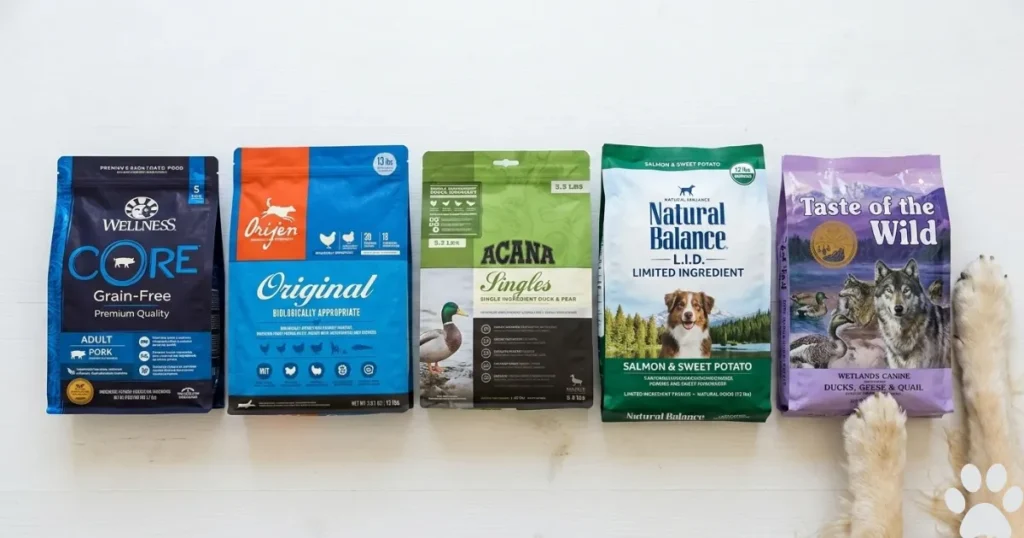
These dog food recommendations are based on ingredient quality, nutritional completeness, AAFCO compliance, and alignment with the breed-specific health priorities outlined above. All are grain-inclusive, with named protein sources and verified omega-3 content.
Best Overall: Royal Canin Golden Retriever Adult
Why it earns the top spot:
Formulated specifically for Golden Retrievers – not just large breeds generically. Includes EPA and DHA from fish oil, glucosamine and chondroitin for joint support, and an antioxidant blend supporting immune health. The kibble shape is also designed for the breed’s scissor bite.
- Life stage: Adult (1 – 8 years).
- Key nutrients: EPA/DHA, glucosamine 182mg/kg, chondroitin, antioxidants.
- Protein source: Chicken, chicken by-product meal, wheat, corn.
- AAFCO: Feeding trials verified.
Vet’s note: The only widely available breed-specific formula for Goldens. That specificity matters – it’s not a marketing claim, it reflects meaningful formulation differences.
Best for Sensitive Skin: Hill’s Science Diet Adult Sensitive Stomach & Skin.
Why it works for Goldens:
Salmon-based formula delivering naturally occurring omega-3s, with prebiotic fibre supporting gut-skin axis health. Ideal for Goldens with recurring coat dullness, mild digestive irregularity, or seasonal skin flare-ups that may have a dietary component.
- Life stage: Adult.
- Key nutrients: Omega-6 and omega-3 fatty acids, Vitamin E, prebiotic fibre.
- Protein source: Salmon, salmon meal, brown rice.
- AAFCO: Feeding trials verified.
Owner’s choice note:
Goldens prone to itching between seasonal allergies peaks often respond well to a consistent omega-3-rich formula like this before more intensive dietary elimination becomes necessary.
Best Puppy Formula: Purina Pro Plan Large Breed Puppy (Chicken & Rice).
Why it’s the right call for Golden pups:
AAFCO-verified for growth in large breeds, with controlled calcium-to-phosphorus ratio, DHA from fish oil for neurological development, and protein levels calibrated for steady growth rather than rapid weight gain.
- Life stage: Puppy (up to 15 months).
- Key nutrients: DHA, calcium 1.3% (controlled), 30% protein.
- Protein source: Chicken, rice, whole grain corn.
- AAFCO: Feeding trials verified.
Important:
Do not use an “all life stages” formula as a substitute. Calcium levels in those formulas are rarely calibrated correctly for large-breed puppy skeletal development.
Best Senior Formula: Hill’s Science Diet Adult 7+ Large Breed.
Why it works:
Elevated protein to counter muscle wasting, reduced phosphorus to support aging kidney function, with added glucosamine and omega-3s. Avoids the common senior formula error of reducing protein alongside phosphorus – in healthy seniors, protein preservation is the priority.
- Life stage: Senior (7+ years).
- Key nutrients: Glucosamine, EPA/DHA, controlled phosphorus, L-carnitine.
- Protein source: Chicken meal, brown rice, barley.
- AAFCO: Feeding trials verified.
Best Budget Pick: Purina ONE Large Breed Adult (Chicken & Rice).
Why it belongs on this list:
Grain-inclusive, real chicken as the first ingredient, added glucosamine, and no artificial colours or preservatives. Not as nutrient-dense as the breed-specific options, but a nutritionally solid choice for owners managing costs without compromising on fundamentals.
- Life stage: Adult.
- Key nutrients: Glucosamine, omega-6 fatty acids, natural sources of glucosamine.
- Protein source: Chicken, rice, corn gluten meal.
- AAFCO: Formulated to meet standards.
Note to publisher:
Insert affiliate links, CTA buttons, or comparison table widget at this section.
Golden Retriever Feeding Guide by Life Stage.
A Golden Retriever’s nutritional requirements change significantly across three life stages – and the cost of feeding the wrong formula at the wrong stage is rarely visible immediately, but compounds over time.

Puppy (8 Weeks – 12 – 15 Months).
The puppy window is the most nutritionally consequential phase for this breed. Goldens grow rapidly and reach near-adult size within 12 – 14 months.
The critical parameters:
- Protein: 25 – 30% on a dry matter basis, supporting muscle development without excess.
- Calcium: 1.2 – 1.4% (controlled ratio to phosphorus at approximately 1.2:1 to 1.4:1).
- Calories: Moderate density; avoid high-fat formulas that accelerate skeletal growth beyond cartilage development speed.
- Formula label: Must say Large Breed Puppy with AAFCO growth verification.
Transition to adult food between 12 and 15 months, once the dog has reached approximately 90% of expected adult weight. Staying on a large-breed puppy formula for a slightly longer period is preferable to switching too early.
Feeding frequency:
Three meals daily until 12 weeks; two meals daily from 12 weeks onward.
Adult (1 – 7 Years).
Adult Golden Retrievers need a formula that maintains lean muscle mass, supports joint health, and prevents the weight gain this breed is genetically inclined toward.
- Protein: 22 – 26% dry matter.
- Fat: 12 – 16% dry matter.
- Calories: 1,400 – 1,800 kcal/day depending on weight, activity level, and neuter status.
- Joint support: Glucosamine and chondroitin either in the formula or supplemented separately.
- Omega-3s: Named marine source (fish oil, salmon oil) preferred over plant-derived ALA alone.
Decision checkpoint:
If your adult Golden is gaining weight despite appropriate portions, check the caloric density of the food (kcal/cup). Many premium formulas exceed 400 kcal/cup, making meaningful portion control difficult. Switching to a formula in the 340 – 370 kcal/cup range at the same protein percentage is often more effective than simply reducing serving size.
Feeding frequency:
Two structured meals daily. Free-feeding is not appropriate for this breed.
Senior (7+ Years).
Senior Goldens have three distinct nutritional priorities that differ from those of adult maintenance:
- Elevated protein: Counteracts sarcopenia (age-related muscle wasting). Minimum 25% dry matter for healthy seniors without diagnosed kidney disease.
- Reduced phosphorus: The kidney-protective lever – not reduced protein, which is an outdated approach for dogs without confirmed renal compromise.
- Increased joint support: Higher glucosamine and chondroitin, plus omega-3s for continued anti-inflammatory support.
- Digestibility: Highly digestible protein sources (chicken meal, fish meal) ease the digestive burden in aging GI systems.
Over the years, I’ve seen senior Goldens lose significant muscle mass on low-protein “senior” formulas that were chosen with good intentions. For a healthy seven-year-old Golden with normal bloodwork, elevated protein is protective, not harmful. Consult your veterinarian before restricting protein if kidney disease has not been diagnosed.
Feeding frequency:
Two meals daily. Smaller, more frequent meals can be introduced if digestive sensitivity increases.
Ingredients to Look for – and Ingredients to Avoid.
Ingredients to Look For.
Named whole protein as the first ingredient:
Chicken, turkey, salmon, lamb, or beef – listed by name. “Chicken meal” or “salmon meal” are acceptable as secondary protein sources (they’re concentrated) but should not be the only protein listed.
Marine omega-3 source:
Fish oil, salmon oil, or herring oil listed in the ingredient panel. Plant-based omega-3 sources (flaxseed, canola oil) provide ALA, which dogs convert to EPA and DHA inefficiently. For a breed with Golden Retrievers’ skin and joint needs, marine sources are materially superior.
Glucosamine and Chondroitin:
Either naturally occurring through cartilage-rich ingredients (chicken meal, fish meal) or added directly. For adult and senior Goldens, look for at least 400mg/kg glucosamine on the guaranteed analysis.
Quality carbohydrates:
Brown rice, oats, barley, and sweet potato. These are digestible, nutrient-complete, and – critically for Goldens – grain-inclusive options that do not carry the DCM association of legume-heavy grain-free formulas.
Natural preservatives:
Mixed tocopherols (Vitamin E) and ascorbic acid (Vitamin C). These are the safe long-term preservation methods.
Ingredients to Avoid.
Peas, lentils, or chickpeas are among the top five ingredients. When these appear as primary carbohydrate sources – not minor additions – they are associated with taurine pathway disruption and the DCM risk that is disproportionate in Golden Retrievers.
Unnamed protein sources:
“Meat,” “animal protein,” or “poultry by-product” without species identification. Quality and consistency cannot be verified from unnamed sources.
BHA, BHT, and Ethoxyquin
Synthetic preservatives with ongoing safety concerns and no nutritional benefit. Ethoxyquin in particular has been restricted or banned in human food in several markets.
Excess fillers as primary ingredients
Corn syrup, artificial colours, and cellulose used as a primary fibre source indicate a formula prioritising cost over nutritional value.
| Look For | Avoid |
| Named whole meat (first ingredient) | “Meat,” “animal protein” (unnamed) |
| Fish oil / salmon oil | No omega-3 source listed |
| Brown rice, oats, barley | Peas/lentils as top-5 carb source |
| Glucosamine + chondroitin | No joint support in adult formula |
| Mixed tocopherols (preservative) | BHA, BHT, Ethoxyquin |
| AAFCO feeding trial verified | “Formulated to meet” only |

6 Common Feeding Mistakes Golden Retriever Owners Make.
1. Free-feeding instead of structured meals.
Goldens are highly food-motivated and will eat well past satiety. Leaving food out all day removes your ability to monitor intake, detect early appetite changes (a key early health signal), and control caloric intake. Two structured meals daily are the standard recommendation.
2. Measuring by cup rather than weight.
Two cups of one kibble can represent 30- 40% more or fewer calories than two cups of another, depending on kibble density and shape. A kitchen scale eliminates this variable. Weigh the daily portion, then divide it across meals.
3. Defaulting to grain-free without a medical reason.
Grain-free diets have been adopted by many Golden owners based on human nutrition trends rather than canine health evidence. For this breed specifically, grain-free legume-heavy formulas introduce a real DCM risk. Unless a confirmed grain sensitivity has been diagnosed through an elimination diet, grain-inclusive is the safer default.
4. Underestimating treat calories.
Ten to fifteen training treats per day adds 150 – 250 calories for most Goldens – up to 20% of their daily budget. This is never accounted for in feeding charts. Use low-calorie options (carrot pieces, blueberries, small bits of plain cooked chicken) for high-volume training, and count treats in the daily total.
5. Transitioning foods too quickly
Switching formulas abruptly – even to a better food – disrupts the gut microbiome and causes GI upset that can be misread as a food sensitivity. A proper transition takes 10-14 days: start at 25% new/75% old, moving to 50/50 at day four, 75/25 at day eight, and 100% new at day eleven.
6. Feeding a puppy on adult formula to save money.
Adult formulas carry higher calcium concentrations and maintenance-calibrated macros. The cost difference between a quality large-breed puppy formula and an adult formula is marginal over a 12-month period. The developmental consequences of calcium imbalance during skeletal growth are not.
Vet’s Tip: One thing I rarely see covered elsewhere – always store kibble in an airtight container separate from the original bag. The bag itself isn’t airtight once opened, and oxidised fats are a common, overlooked cause of both palatability problems and subtle omega-3 degradation. If your Golden suddenly goes off a food they previously ate well, check how long the bag has been open and how it’s been stored before assuming a sensitivity.
What is the best dog food for Golden Retrievers in 2026?
Royal Canin Golden Retriever Adult is the most breed-specific option available, with formulation tailored to the breed’s joint, cardiac, and coat needs. Purina Pro Plan and Hill’s Science Diet are strong alternatives with AAFCO feeding trial verification.
Should Golden Retrievers eat grain-free food?
For most Goldens, no. Grain-free, legume-heavy diets have been specifically associated with diet-related DCM in this breed. Grain-inclusive formulas are the current veterinary recommendation unless a confirmed grain sensitivity has been diagnosed.
What nutrients do Golden Retrievers need most?
EPA and DHA omega-3s, glucosamine and chondroitin, taurine-supportive animal protein, antioxidants (Vitamin E, beta-carotene), and a controlled calcium-to-phosphorus ratio in puppies. These address the breed’s primary health vulnerabilities directly.
How much should I feed my Golden Retriever daily?
Most adult Goldens need 1,400 – 1,800 kcal/day. Use the food’s kcal/cup figure to calculate portions, then adjust every 4-6 weeks based on body condition score – not the manufacturer’s feeding guide, which is a starting estimate only.
What protein is best for Golden Retrievers?
Salmon, turkey, and lamb are well-tolerated and less commonly implicated in food sensitivities. Chicken is safe for most Goldens, but it is the most common allergen. For dogs with recurring skin issues, a novel protein elimination trial – venison, duck, or hydrolyzed chicken – is the diagnostic standard.
When should I switch my Golden Retriever puppy to adult food?
Between 12 and 15 months, once the dog has reached approximately 90% of the expected adult weight. Transitioning before 12 months risks disrupting skeletal development; there’s no benefit to rushing the switch.
Is wet food or dry food better for Golden Retrievers?
Dry kibble is more practical, easier to portion accurately, and supports dental health through mild abrasion. Wet food adds meaningful hydration and palatability – useful for seniors or dogs with low water intake. Combining both is a common and effective approach.
Do Golden Retrievers need joint supplements?
Given the breed’s orthopedic risk, joint support is strongly recommended from adulthood onward. If the chosen formula doesn’t provide therapeutic glucosamine levels (400mg/kg or above), a separate joint supplement covering glucosamine, chondroitin, and omega-3s is warranted.
What foods are bad for Golden Retrievers?
Beyond standard dog toxins (chocolate, grapes, xylitol, onions), Goldens specifically should avoid formulas with peas or lentils as the primary carbohydrate, BHA/BHT-preserved foods, and any formula without a named omega-3 source.
Can Golden Retrievers eat raw food?
Raw diets carry real pathogen risks – Salmonella, E. coli, Listeria. Commercial frozen-raw formulas that are pathogen-tested are substantially safer than home-prepared raw. The AVMA advises caution, particularly in households with young children or immunocompromised individuals.
What causes Golden Retrievers to itch after eating?
Post-meal itching is typically food-triggered atopic dermatitis, usually linked to a protein hypersensitivity. Beef, chicken, and dairy are the most common triggers. Diagnosis requires an 8-12 week elimination diet on a single novel protein, not a blood allergy test, which has poor diagnostic accuracy for food sensitivities in dogs.
How do I know if my Golden’s food is truly AAFCO-compliant?
Look for: “animal feeding tests using AAFCO procedures substantiate that it provides complete and balanced nutrition.” This wording-“feeding trials”-reflects actual, real-world validation. “Formulated to meet AAFCO standards” is a lower bar that does not require evidence from feeding trials.
Is salmon-based dog food good for Golden Retrievers?
Excellent. Salmon provides complete protein alongside naturally occurring EPA and DHA omega-3s – addressing both the protein requirement and the omega-3 gap present in many chicken-based formulas. It also serves as an effective novel protein for Goldens with suspected chicken sensitivities.
Conclusion.
The best dog food for Golden Retrievers is not the most expensive option or the one with the most compelling packaging – it’s the one that directly addresses this breed’s documented vulnerabilities. Grain-inclusive. Named animal protein first. Marine omega-3s. Joint support from glucosamine and chondroitin. AAFCO feeding trial verified.
Get those fundamentals right, calibrate portions by weight rather than cup measure, adjust for life stage as your Golden ages, and reassess every six to twelve months. The dogs I’ve seen with the best long-term health outcomes weren’t always eating the premium brand – they were being fed consistently and correctly by owners who understood what they were feeding and why. That knowledge is the real differentiator.
Share Your Golden’s Story.
Every Golden is different, and real-world owner experience fills gaps that no study fully captures. What golden retriever dog food has worked best for your dog?
Did you navigate a sensitivity, a weight challenge, or a life stage transition that others might learn from?
Share your experience in the comments below – your experience could save another Golden owner months of trial and error.

Dr. Nabeel A.
Hi, I’m Dr. Nabeel Akram – a farm management professional by trade and a passionate Golden Retriever enthusiast at heart. With years of experience in animal science and livestock care, I’ve built a career around understanding animals—how they live, thrive, and bring value to our lives. This blog is a personal project born from that same passion, focusing on one of the most loyal and lovable breeds out there: the Golden Retriever. Whether I’m managing farm operations or sharing insights on canine health, behavior, and care, it all ties back to one core belief—animals deserve thoughtful, informed, and compassionate attention. Welcome to a space where professional expertise meets genuine love for dogs.
Facebook |
Links will be automatically removed from comments.