

Throughout my years of experience as a veterinarian treating Golden Retrievers, I’ve learned that selecting appropriate dog food represents one of the most impactful decisions owners make for their dog’s health and longevity. Golden Retrievers have specific nutritional needs based on their size, activity level, and breed-specific health vulnerabilities that demand careful consideration when choosing best dog food options.
In my clinic, I regularly counsel Golden Retriever owners navigating the overwhelming dog food marketplace filled with countless brands, formulations, and marketing claims. The right healthy dog food can prevent obesity, support joint health, maintain coat quality, and reduce disease risk, while poor nutritional choices contribute to many health problems I treat daily. Today, I’ll share comprehensive guidance on dog food selection for Golden Retrievers, drawing from both veterinary science and real-world patient outcomes I’ve observed throughout my career.
Contents
- 1 Understanding Golden Retriever Nutritional Needs
- 2 Veterinary Recommendations: Best Dog Food for Golden Retrievers
- 3 The Grain-Free Debate: What Golden Retriever Owners Must Know
- 4 Common Golden Retriever Health Issues and Nutritional Management
- 5 Feeding Guidelines and Best Practices
- 5.1 Portion Control Strategies
- 5.2 Meal Frequency and Timing
- 5.3 Transitioning Between Foods
- 5.4 How much dog food should I feed my adult Golden Retriever daily?
- 5.5 When should I switch my Golden from puppy to adult dog food?
- 5.6 Is grain-free dog food better for Golden Retrievers?
- 5.7 What’s the best dog food for Golden Retrievers with joint problems?
- 5.8 Can healthy dog food help my Golden lose weight?
- 5.9 How do I know if my Golden has a food allergy?
- 5.10 Should I feed my Golden wet or dry dog food?
- 5.11 What dog food ingredients should I avoid for Golden Retrievers?
- 6 Conclusion
Understanding Golden Retriever Nutritional Needs
Before recommending specific dog food options, I always explain what makes Golden Retriever nutrition unique and why generic feeding advice often fails this breed’s specific requirements.

Breed-Specific Metabolic Considerations
Golden Retrievers are large sporting dogs originally bred for active retrieving work, requiring substantial energy and nutrients to support their muscular build. However, modern pet Goldens often live more sedentary lifestyles than their working ancestors, creating a mismatch between caloric needs and traditional dog food formulations designed for active sporting breeds.
In my practice, approximately 55-60% of adult Golden Retrievers I examine are overweight or obese. This epidemic stems partly from food-motivated personalities combined with well-meaning owners overfeeding based on package recommendations that don’t account for individual activity levels. The best dog food for your Golden must match their actual energy expenditure, not breed stereotypes.
Vet’s Tip: Calculate your Golden’s ideal body weight first, then determine food portions based on that target weight rather than their current weight if they’re overweight. This prevents perpetuating obesity through overfeeding.
Life Stage Nutritional Requirements
Golden Retriever nutritional needs change dramatically across life stages, and selecting best dog food requires matching formulation to current age and physiological demands.
Puppies (8 weeks to 12-15 months) need large-breed-specific puppy dog food that controls growth rate through balanced calcium and phosphorus levels. Rapid growth from excessive calories or calcium increases hip dysplasia and elbow dysplasia risk – conditions I diagnose frequently in improperly fed young Goldens. Quality large-breed puppy formulas provide 22-26% protein and 10-15% fat with precise mineral ratios preventing developmental orthopedic disease.
Adults (1-7 years) require maintenance healthy dog food supporting active lifestyles while preventing obesity. Adult formulations typically contain 20-26% protein and 12-16% fat, adjusted based on individual activity levels. Working or highly active Goldens need higher calories, while less active pets benefit from reduced-calorie formulas, preventing weight gain.
Seniors (7+ years) benefit from age-appropriate dog food with enhanced joint support, controlled calories addressing reduced activity, moderate protein maintaining muscle mass, and antioxidants supporting cognitive function. I typically transition Goldens to senior formulas around age 7-8, though very active, healthy dogs may continue adult food longer under veterinary guidance.
Critical Nutritional Components
When evaluating best healthy dog food options for Golden Retrievers, I analyze specific components addressing breed vulnerabilities and supporting optimal health throughout life.
Protein quality and quantity form the foundation. Named animal proteins – chicken, beef, salmon, turkey, or lamb – should dominate ingredient lists. I recommend 22-28% protein (dry matter basis) for adult Goldens, supporting their muscular build and active metabolism. Avoid foods where plant proteins (pea protein, corn gluten meal) provide primary protein, as these lack the complete amino acid profiles dogs require.
Controlled fat content prevents obesity while providing essential fatty acids. The best dog food for Golden Retrievers contains 12-16% fat for adults, with higher levels (15-20%) appropriate for puppies and working dogs. Fat type matters tremendously – omega-3 fatty acids from fish oil (EPA and DHA) provide anti-inflammatory benefits supporting joints, skin, brain, and cardiac health far superior to plant-based omega-3s (ALA) that dogs convert inefficiently.
Joint-supporting ingredients become non-negotiable given Golden Retrievers’ predisposition to hip dysplasia, elbow dysplasia, and osteoarthritis. The best healthy dog food includes glucosamine (300-500 mg per kg body weight), chondroitin (200-400 mg per kg), and omega-3 fatty acids, providing anti-inflammatory effects. These nutrients won’t cure joint disease, but significantly slow progression and reduce discomfort in my affected patients.
Digestible carbohydrates provide energy without triggering sensitivities common in Goldens. Quality sources include sweet potatoes, brown rice, oatmeal, and barley. I generally recommend avoiding corn, wheat, and soy in sensitive dogs, though not all Goldens require grain-free diets – more on this controversy shortly.
Veterinary Recommendations: Best Dog Food for Golden Retrievers
Based on nutritional analysis, clinical outcomes in my Golden Retriever patients, and consideration of various price points, here are my evidence-based recommendations for best dog food options.
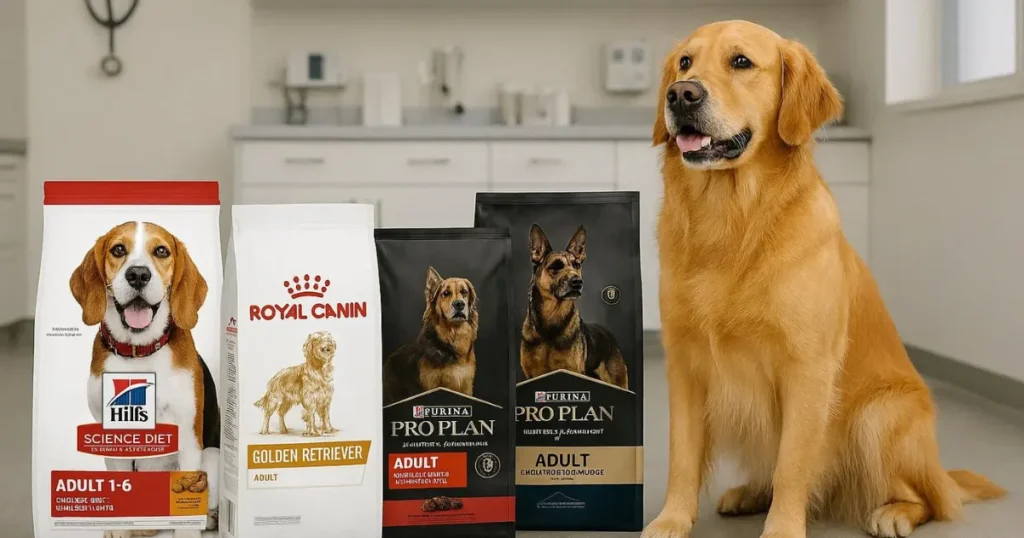
Vet’s Pick # 1: Hill’s Science Diet Adult Large Breed
This formula consistently delivers excellent results in my Golden Retriever patients, backed by extensive feeding trials and decades of nutritional research. Real chicken provides primary protein at 24% dry matter basis, while balanced fat at 14% supports energy needs without promoting obesity.
Glucosamine and chondroitin address joint health, critical for large breeds predisposed to orthopedic issues. Natural ingredients with vitamins, minerals, and amino acids provide complete nutrition without artificial colors or flavors. The precise nutrient balance supports immune function, healthy skin, and lean muscle maintenance throughout adulthood.
I’ve followed numerous Goldens on this healthy dog food long-term, observing maintained ideal weight, excellent coat condition, and solid energy levels. The kibble size suits Golden Retrievers’ eating patterns, and palatability ratings consistently satisfy even picky eaters in my practice.
Vet’s Pick # 2: Royal Canin Golden Retriever Adult
As a breed-specific formula, this represents the best dog food when targeted nutrition addressing Golden Retriever vulnerabilities is the priority. The specialized kibble shape encourages chewing and slows eating in food-motivated dogs prone to gulping meals.
EPA and DHA from fish oil support skin and coat health – crucial for Goldens prone to hot spots and allergies I treat regularly. The precise protein content (23% dry matter) maintains muscle mass, while controlled fat (12% dry matter) prevents weight gain in less active pets. Enhanced with glucosamine and chondroitin, this formula supports joint health throughout the adult years.
Many clients report their Goldens’ coat quality dramatically improves within 8-12 weeks of switching to this dog food, with reduced shedding and healthier skin. The breed-specific formulation reflects Royal Canin’s research into Golden Retriever nutritional requirements and common health challenges.
Vet’s Pick # 3: Purina Pro Plan Large Breed Adult
Purina’s research-backed formulation provides excellent value, combining quality ingredients with affordability. Real chicken serves as the first ingredient, delivering 26% protein, supporting strong muscles essential for active Golden Retrievers.
Glucosamine supports joint health, while omega-6 fatty acids and vitamin A promote healthy skin and coat. The formula includes natural prebiotic fiber from wheat bran, nourishing beneficial gut bacteria, and supporting digestive health. Fortified with guaranteed live probiotics, it maintains intestinal balance, crucial for Goldens occasionally prone to sensitive stomachs.
I recommend this as best dog food for owners seeking quality nutrition at mid-range pricing without compromising essential components. The widespread availability and consistent formulation provide reliability important for long-term feeding, and most Goldens find it highly palatable based on patient feedback.
Owner’s Choice: Blue Buffalo Life Protection Formula Large Breed
Many clients prefer Blue Buffalo’s natural ingredient focus and transparency. Deboned chicken provides primary protein, while wholesome whole grains (brown rice, barley) offer digestible carbohydrates without grain-free concerns I counsel about regarding potential cardiac risks.
Glucosamine and chondroitin support joints, omega-3 and omega-6 fatty acids maintain skin and coat health, and LifeSource Bits – cold-formed to preserve nutrients – provide concentrated vitamins, minerals, and antioxidants. No chicken by-product meals aligns with owner preferences for cleaner ingredient lists.
While slightly higher priced, this represents best healthy dog food for owners prioritizing natural ingredients and transparent sourcing. I’ve observed good health outcomes in Golden Retrievers maintained on this formula, with particular improvements in coat quality and digestive health.
Budget-Friendly Option: Diamond Naturals Large Breed Adult
Not every owner can afford premium pricing, and I work with clients finding quality dog food within budget constraints without compromising basic nutritional requirements.
Real chicken protein serves as the first ingredient, delivering 23% protein supporting muscle health. The formula includes glucosamine and chondroitin for joints, omega fatty acids for skin and coat, and probiotics for digestive support. No corn, wheat, or artificial additives appeals to owners seeking cleaner ingredients at accessible prices.
This represents responsible value as best dog food for budget-conscious households. While lacking premium ingredients found in higher-priced options, it meets AAFCO nutritional standards and provides complete balanced nutrition supporting adult Golden Retrievers adequately, based on my clinical observations.
The Grain-Free Debate: What Golden Retriever Owners Must Know
Perhaps no topic generates more confusion about dog food than the grain-free controversy and its potential connection to dilated cardiomyopathy (DCM) in dogs.
Understanding the FDA Investigation
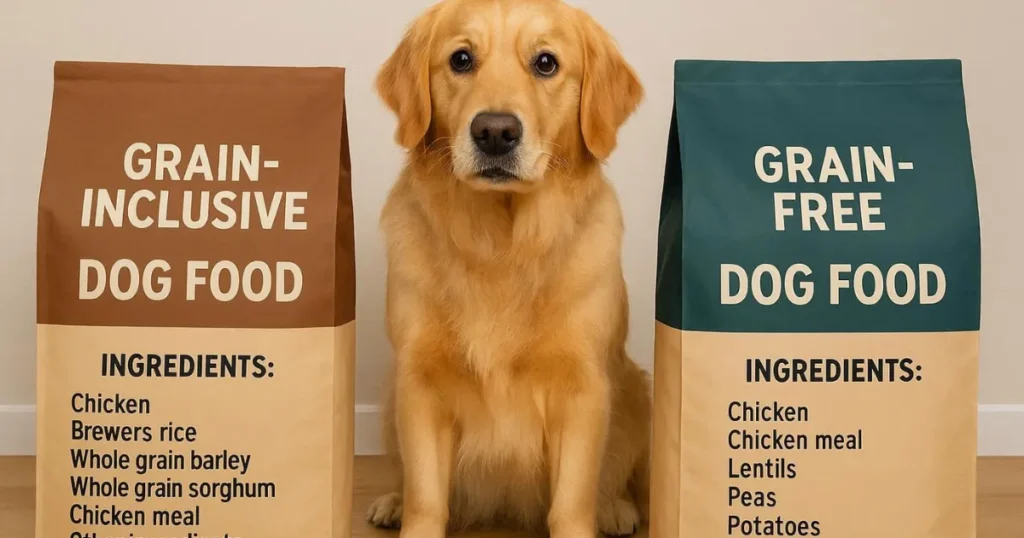
In 2018, the FDA began investigating potential links between grain-free diets and DCM, a serious heart condition. Reports showed dogs eating grain-free dog food – particularly formulas with legumes (peas, lentils, chickpeas) as primary ingredients – developed DCM at higher rates than expected.
Golden Retrievers face breed-specific DCM risk independent of diet, making this investigation particularly relevant. While research continues and definitive conclusions remain elusive, I counsel caution with grain-free formulas unless medical necessity (diagnosed grain allergy) exists.
My Clinical Recommendations
I generally recommend grain-inclusive healthy dog food containing traditional grains like brown rice, barley, or oatmeal unless your Golden has a confirmed grain allergy – which is actually rare despite common misconceptions. Grains provide valuable nutrients, fiber, and energy without the potential cardiac risks associated with legume-heavy grain-free formulas.
If you choose grain-free best dog food, ensure it includes adequate taurine supplementation (an essential amino acid critical for heart function) and consider annual echocardiogram screening for early DCM detection. I’ve diagnosed DCM in several Goldens eating grain-free diets long-term, though establishing causation versus correlation remains challenging.
Vet’s Tip: True grain allergies are uncommon. If your Golden has skin issues or digestive problems, work with your veterinarian to properly diagnose the cause before assuming grains are problematic and switching to potentially risky grain-free formulas.
Common Golden Retriever Health Issues and Nutritional Management
Throughout my career treating Golden Retrievers, certain health conditions appear repeatedly, and selecting appropriate dog food significantly impacts disease prevention and management.

Obesity Prevention and Management
Obesity represents the most common health problem I address in Golden Retrievers, affecting 55-60% of adults I examine. Excess weight devastates joints already vulnerable to dysplasia and arthritis, increases diabetes and cancer risk, strains the cardiovascular system, and reduces lifespan by an estimated 2 years, according to research.
The best dog food for weight management combines reduced caloric density (280-320 kcal per cup), increased fiber (5-8%) promoting satiety, elevated protein (26-30%) preserving muscle during loss, and L-carnitine supporting fat metabolism.
Implement strict portion control using actual measuring cups rather than visual estimates that typically result in 30-40% overfeeding. Feed twice daily at scheduled times, eliminating free-feeding entirely. Limit treats to under 10% of daily calories, using vegetables (carrots, green beans) as low-calorie alternatives.
I guide countless Golden Retriever owners through weight loss programs, achieving success through appropriate healthy dog food selection, portion control, and gradually increased exercise tailored to individual capabilities and joint health status.
Joint Disease Support
Hip dysplasia, elbow dysplasia, and osteoarthritis affect most Golden Retrievers by middle age. While nutrition can’t cure these conditions, the best healthy dog food with enhanced joint support slows progression and reduces discomfort significantly in my clinical experience.
Look for therapeutic levels of glucosamine (400-500 mg/kg body weight daily), chondroitin (250-400 mg/kg daily), and omega-3 fatty acids (EPA 100-150 mg/kg, DHA 50-100 mg/kg daily). Green-lipped mussel provides additional joint-supporting compounds unique to this ingredient.
For Goldens with advanced arthritis, I often recommend prescription joint support diets providing higher nutrient levels than over-the-counter dog food. Combined with appropriate pain management, weight control, and modified exercise, nutritional intervention improves mobility and quality of life substantially.
Skin and Coat Health
Golden Retrievers frequently develop skin issues – hot spots, allergies, dry flaky skin, and excessive shedding that brings many owners to my clinic seeking solutions. While environmental factors often contribute, nutrition plays a crucial role in skin and coat health.
The best dog food for skin health provides balanced omega-6 to omega-3 fatty acid ratios (ideally 5:1 to 10:1), adequate zinc supporting skin barrier function, quality protein providing building blocks for healthy hair growth, and avoids common allergens in sensitive individuals.
I’ve observed dramatic coat improvements within 8-12 weeks of transitioning Goldens to quality, healthy dog food with optimized fatty acid profiles. Shinier coats, reduced shedding beyond seasonal patterns, fewer hot spots, and healthier skin consistently follow appropriate nutritional optimization.
Food Allergies and Sensitivities
When Golden Retrievers develop true food allergies or sensitivities, selecting appropriate best dog food becomes essential for symptom resolution and long-term health.
Common allergens include beef, dairy, wheat, chicken, and soy. If your Golden shows chronic ear infections, itchy skin, gastrointestinal upset, or anal gland problems, elimination diets help identify problematic ingredients.
Effective options include limited ingredient diets with single-protein sources (venison, duck, salmon, kangaroo), novel proteins your Golden hasn’t eaten previously, and hydrolyzed protein diets where proteins are broken into molecules too small to trigger immune responses (prescription only).
Food trials require 8-12 weeks of strict adherence – no treats, table scraps, or flavored medications potentially containing allergenic proteins. Success demands patience and commitment, but I’ve resolved countless chronic conditions through appropriate dog food management in sensitive Golden Retrievers.
Feeding Guidelines and Best Practices
Beyond selecting quality best dog food, proper feeding management optimizes nutrition and prevents common problems I encounter in Golden Retriever patients.

Portion Control Strategies
Feeding guidelines on dog food bags provide starting points only. I calculate portions based on ideal body weight (not current weight if overweight), activity level, and individual metabolism, which varies significantly between dogs.
For a 70-pound adult Golden Retriever with moderate activity, typical daily amounts of standard adult food (360 kcal per cup) equal approximately 3-3.25 cups daily, divided into two meals. However, some Goldens maintain ideal weight on 20% less while others need slightly more – let body condition, not feeding guidelines, determine appropriate amounts.
Use body condition scoring monthly: you should easily feel ribs without pressing hard, see a visible waist when viewing from above, and notice abdominal tuck from the side. Adjust portions by 10-15% if body condition drifts from ideal, reassessing after 4 weeks.
Meal Frequency and Timing
Feed adult Golden Retrievers twice daily (morning and evening) rather than once daily. Splitting daily portions reduces bloat risk in deep-chested large breeds, maintains steadier energy levels throughout the day, and provides a routine that dogs thrive on psychologically.
Space meals approximately 10-12 hours apart. Remove uneaten dog food after 20-30 minutes, teaching your Golden that meal time is limited and preventing grazing behavior that makes portion control difficult.
Never free-feed Golden Retrievers. Their food motivation means they’ll overconsume available food regardless of satiety, quickly leading to obesity. Scheduled feeding with controlled portions is essential for weight management in this breed.
Transitioning Between Foods
When switching dog food brands or formulations, gradual transitions prevent digestive upset – diarrhea, vomiting, or appetite loss that commonly follows abrupt changes.
- Days 1-3: Mix 25% new food with 75% current food
- Days 4-6: Increase to 50% new food, 50% current food
- Days 7-9: Progress to 75% new food, 25% current food
- Day 10: Complete transition to 100% new formula
Golden Retrievers often have sensitive stomachs despite their reputation for eating anything. Slower transitions (12-14 days) benefit particularly sensitive individuals. If digestive upset occurs, slow the pace and consider adding probiotics supporting gut health during the change.
How much dog food should I feed my adult Golden Retriever daily?
For a 70-pound adult Golden with moderate activity, feed approximately 3-3.25 cups of standard adult formula (360 kcal/cup) daily, divided into two meals. Adjust based on body condition – reduce if gaining weight, increase if losing. Calculate using ideal weight, not current weight, if overweight. Individual metabolism varies significantly between dogs.
When should I switch my Golden from puppy to adult dog food?
Transition Golden Retrievers to adult food at 12-15 months when growth plates close and adult size is reached. Use large-breed puppy formula until then to control growth rate and prevent developmental orthopedic problems. Switch gradually over 10-14 days, mixing increasing amounts of adult food with decreasing puppy food.
Is grain-free dog food better for Golden Retrievers?
Not necessarily. I recommend grain-inclusive formulas unless your Golden has been diagnosed grain allergy, which is rare. Following FDA investigations into potential links between grain-free diets and dilated cardiomyopathy, grain-inclusive options with whole grains represent safer choices for Golden Retrievers who already face breed-specific cardiac risks independent of diet.
What’s the best dog food for Golden Retrievers with joint problems?
Choose formulas with therapeutic levels of glucosamine (400-500 mg/kg body weight), chondroitin (250-400 mg/kg), and omega-3 fatty acids (EPA/DHA from fish oil). Hill’s Science Diet, Royal Canin Golden Retriever, and Purina Pro Plan all include beneficial joint support. For advanced arthritis, discuss prescription joint diets with your veterinarian.
Can healthy dog food help my Golden lose weight?
Yes, weight management formulas with reduced calories (280-320 kcal/cup), increased fiber (6-8%), and elevated protein preserve muscle during loss. Hill’s Perfect Weight, Royal Canin Weight Care, and similar formulas work well. Combine with strict portion control and increased exercise for a gradual loss of 1-2% body weight weekly under veterinary supervision.
How do I know if my Golden has a food allergy?
Common signs include chronic ear infections, itchy skin, gastrointestinal upset, and anal gland problems. After ruling out environmental allergies, conduct an 8-12 week elimination diet using limited ingredient or novel protein formulas. Best dog food for allergies features single protein sources like venison, duck, or salmon that your Golden hasn’t eaten previously.
Should I feed my Golden wet or dry dog food?
Both have advantages. Dry kibble is cost-effective, convenient, and provides dental benefits through chewing. Wet food offers higher moisture content and palatability but costs more. Many owners successfully use mixed feeding – primarily kibble with wet food topper – balancing the benefits of both formats. Choose based on your Golden’s health needs and household budget.
What dog food ingredients should I avoid for Golden Retrievers?
Avoid foods where by-products or plant proteins dominate ingredient lists, contain artificial colors or preservatives (BHA, BHT, ethoxyquin), include excessive fillers (corn gluten meal, wheat middlings), or list vague ingredients like “meat meal” without specifying the animal source. The best dog food contains named animal proteins and quality ingredients.
Conclusion
Selecting appropriate dog food for your Golden Retriever represents one of the most important health decisions you’ll make throughout their life. The best dog food provides quality animal proteins supporting their muscular build, controlled calories preventing obesity, joint-supporting nutrients addressing breed vulnerabilities, and balanced nutrition meeting life stage requirements.
Throughout my years treating Golden Retrievers, I’ve witnessed firsthand how optimal nutrition prevents disease, maintains ideal body condition, supports longevity, and enhances quality of life. Whether choosing from my veterinary recommendations or another quality option, prioritize named proteins, appropriate caloric density, joint support, and formulas specifically designed for large breeds.
Remember that even the best healthy dog food requires proper feeding management – portion control, twice-daily meals, body condition monitoring, and adjustments based on individual needs rather than generic guidelines. Combined with regular veterinary care, appropriate exercise, and preventive health measures, optimal nutrition ensures your Golden Retriever enjoys the healthy, active, joyful life these wonderful dogs deserve throughout all life stages from puppyhood through their senior years.
Share Your Golden’s Dog Food Success Story Has the best dog food transformed your Golden Retriever’s health and vitality? I’m eager to hear about your experiences with different formulas and how nutrition has impacted your dog’s wellbeing! Your real-world insights help other Golden Retriever owners navigate the complex dog food marketplace.

Dr. Nabeel A.
Hi, I’m Dr. Nabeel Akram – a farm management professional by trade and a passionate Golden Retriever enthusiast at heart. With years of experience in animal science and livestock care, I’ve built a career around understanding animals—how they live, thrive, and bring value to our lives. This blog is a personal project born from that same passion, focusing on one of the most loyal and lovable breeds out there: the Golden Retriever. Whether I’m managing farm operations or sharing insights on canine health, behavior, and care, it all ties back to one core belief—animals deserve thoughtful, informed, and compassionate attention. Welcome to a space where professional expertise meets genuine love for dogs.
Facebook |
Links will be automatically removed from comments.