

Throughout my years of experience treating Golden Retrievers, I’ve worked with families facing genuine financial hardship seeking the best cheap dog food that won’t compromise their dog’s health. The reality is that “cheap” doesn’t automatically mean inadequate – it means finding the absolute lowest-cost options that still meet basic nutritional requirements, keeping your Golden healthy. Understanding what constitutes cheap healthy dog food requires knowing which compromises are acceptable and which create problems, ultimately costing more in veterinary bills than the food savings justify.
In my clinic, I’ve seen Golden Retrievers maintain reasonable health on budget-tier best cheapest dog food brands when owners make informed selections and supplement strategically with whole foods. I’ve also treated dogs suffering severe nutritional deficiencies from truly inferior products lacking complete nutrition, proving that extreme penny-pinching creates expensive health problems. Today, I’ll share honest veterinary guidance on selecting the best cheap dog food for Golden Retrievers when budgets are genuinely tight, including lowest-cost recommendations meeting minimum nutritional standards, strategic supplementation, and cost-cutting approaches that don’t sacrifice your Golden’s wellbeing.
Contents
- 1 Understanding Cheap Dog Food: Minimum Standards vs. Optimal Nutrition
- 2 Top Veterinary Recommendations: Best Cheap Dog Food.
- 3 Supplementing Cheap Dog Food Strategically.
- 4 Life Stage Considerations for Cheap Feeding.
- 5 Extreme Budget Feeding Strategies.
- 6 What Cheap Dog Food Cannot Provide.
- 7 Honest Discussion: When Cheap Food Isn’t Enough.
- 8 Making Cheap Food Work Long-Term.
- 8.1 Preventive Care Priority.
- 8.2 Community Resources.
- 8.3 Long-Term Budget Planning.
- 8.4 What is the best cheap dog food for Golden Retrievers?
- 8.5 Can cheap healthy dog food actually keep my Golden Retriever healthy?
- 8.6 What is the best cheapest dog food that won’t harm my Golden Retriever?
- 8.7 How can I supplement cheap dog food to improve nutrition?
- 8.8 Is it better to feed cheap dog food or make homemade food to save money?
- 8.9 What’s the absolute minimum I should budget for Golden Retriever food?
- 8.10 Can I feed my Golden Retriever cheap dog food long-term?
- 8.11 Where can I find food assistance if I can’t afford even cheap dog food?
- 9 Conclusion.
Understanding Cheap Dog Food: Minimum Standards vs. Optimal Nutrition
Before identifying the best cheap dog food, I must be transparent about what “cheap” really means and the nutritional compromises inherent in the lowest-priced products.
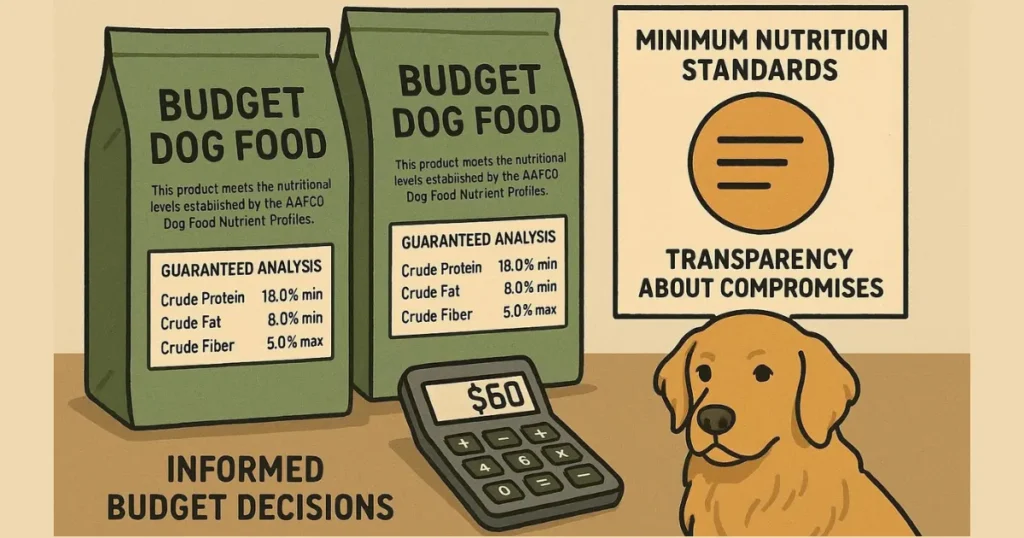
Defining “Cheap” Dog Food
Cheap dog food:
It typically costs $0.80-1.50 per pound compared to mid-tier at $2-3/ lb and premium at $4-6+/ lb. For a 70-pound Golden Retriever eating approximately 4-5 cups daily (cheap food is less calorie-dense, requiring larger portions), this translates to:
- Cheapest tier: $35-50 monthly
- Budget tier: $50-70 monthly
- Mid-tier: $80-120 monthly
The best cheap dog food occupies the $0.90-1.50/ lb range – meeting AAFCO minimum standards through basic ingredients at absolute lowest sustainable pricing.
Where Cheap Brands Cut Costs
Understanding how cheap healthy dog food achieves rock-bottom pricing helps evaluate whether savings compromise nutrition dangerously:
Lower-quality protein sources:
More plant proteins (corn gluten meal, soy), meat and bone meal, rather than named meats
Basic ingredient sourcing:
Cheapest available grains, minimal variety, no “superfoods” or novel proteins
Minimal supplementation:
Basic vitamins/minerals meeting AAFCO minimums without enhanced levels
Generic formulation:
One-size-fits-all rather than breed-specific or specialized nutrition
Bare-bones packaging:
Simple bags, minimal marketing, basic labeling
Mass-market distribution:
09Sold at grocery stores, dollar stores, and feed stores with the lowest markup
Minimal research:
No proprietary formulations or feeding trials beyond basic AAFCO compliance
These compromises reduce nutritional quality compared to premium brands but don’t necessarily create deficiencies if basic AAFCO standards are met.
Non-Negotiable Minimum Requirements
While seeking the best, cheapest dog food, certain standards remain mandatory regardless of budget desperation:
- AAFCO nutritional adequacy statement: Food MUST meet minimum standards for life stage
- Named protein source presence: At least some identifiable protein (even if supplemented with plant proteins).
- No toxic ingredients: No recalled brands, expired products, or foods with harmful contaminants.
- Appropriate life stage: Puppy vs adult vs senior formulation matters even in cheap food.
- Basic caloric adequacy: Sufficient calories meeting daily energy needs.
The cheap healthy dog food I’ll recommend meets these absolute minimums while acknowledging nutritional compromises compared to mid-tier or premium options.
Vet’s Tip: If you’re considering food under $1/lb, calculate the true daily cost, including larger portions required. Sometimes mid-tier food’s higher caloric density makes it more economical despite higher per-pound pricing. Always prioritize AAFCO compliance over the lowest absolute price.
Top Veterinary Recommendations: Best Cheap Dog Food.
Based on AAFCO compliance, ingredient analysis, safety records, and pricing, here are my recommendations for the best cheap dog food when budgets are severely constrained.
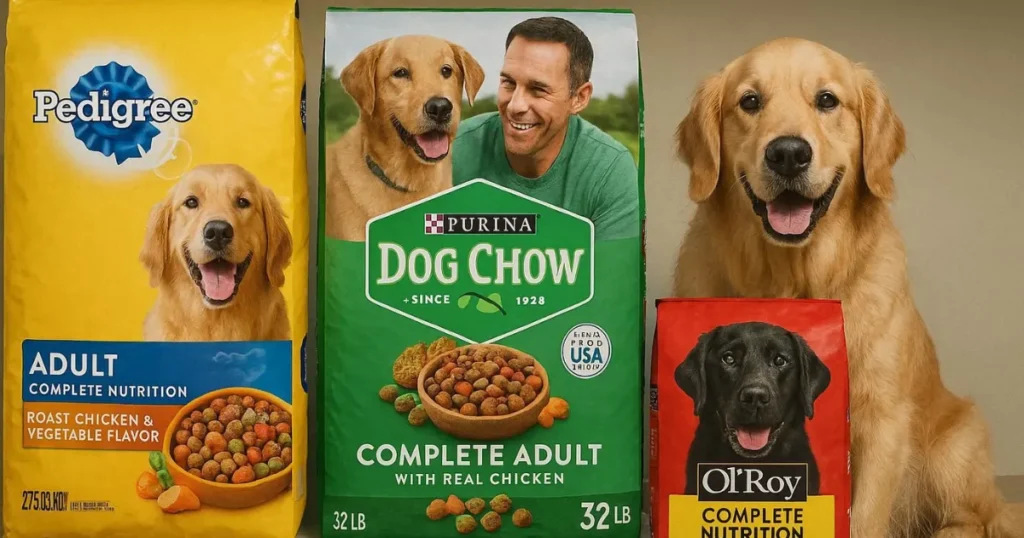
Vet’s Pick # 1: Pedigree Adult Complete Nutrition.
Among truly cheap healthy dog food options, Pedigree represents the safest choice, meeting basic nutritional requirements at the lowest sustainable price point.
Why I recommend it (with reservations):
- Meets AAFCO adult maintenance standards.
- 21% protein, 10% fat (dry matter basis – lower than ideal but adequate).
- Whole grains provide digestible carbohydrates.
- Omega-6 fatty acids and vitamin E support basic coat health.
- Approximately $0.90-1.20 per pound.
- Widely available at all retailers, including dollar stores.
- Consistent formulation from a major manufacturer (Mars Petcare).
- Decades-long safety record.
Honest assessment:
This is minimum acceptable nutrition, not optimal. Protein is lower than I’d prefer, ingredients are of basic quality, and supplementation is minimal. However, it provides complete balanced nutrition meeting AAFCO standards – far better than table scraps, truly inferior brands, or inadequate homemade diets.
Vet’s Pick # 2: Purina Dog Chow Complete Adult.
Purina’s entry-level line provides slightly better nutrition than Pedigree as the best cheap dog food while maintaining rock-bottom pricing.
Why I recommend it:
- 23% protein, 11% fat (dry matter basis – marginally better than Pedigree).
- 23 essential vitamins and minerals.
- Real meat and poultry included (though not exclusively).
- Supports strong muscles, healthy skin and coat.
- Approximately $0.95-1.30 per pound.
- Available at grocery stores, mass retailers.
- Purina’s research backing and quality control.
Honest assessment:
Still basic nutrition, but protein levels closer to adequate. Purina’s manufacturing standards provide confidence in safety and consistency. This represents cheap healthy dog food that meets basic requirements without excellence.
Vet’s Pick # 3: Dad’s Premium Select.
For families shopping at dollar stores or deep-discount retailers, Dad’s represents the best cheapest dog food from this distribution channel.
Why it makes the list:
- AAFCO compliant for adult maintenance.
- 21% protein, 9% fat (dry matter basis).
- Manufactured by Sunshine Mills (supplies multiple discount brands).
- Approximately $0.80-1.10 per pound.
- Available at Dollar General, Family Dollar, and similar stores.
- Meets minimum safety and nutrition standards.
Honest assessment:
This is the absolute minimum I’d recommend. Quality is basic, protein/fat are low end of acceptable, and ingredients are entry-level. However, it meets AAFCO standards – better than feeding inadequate alternatives when budgets are desperately tight.
Budget-Conscious Alternative: Ol’ Roy (Walmart).
Walmart’s house brand represents cheap healthy dog food at aggressive pricing through the retail giant’s supply chain efficiency.
Why it’s on the list:
- AAFCO adult maintenance compliance.
- 21% protein, 10% fat (dry matter basis).
- Manufactured by Doane Pet Care (makes multiple brands).
- Approximately $0.85-1.15 per pound.
- Walmart’s distribution efficiency creates low pricing.
- Basic but complete nutrition.
Honest assessment:
Similar quality tier to Pedigree but slightly cheaper through Walmart’s supply chain. Acceptable minimum nutrition when the budget allows nothing better.
Supplementing Cheap Dog Food Strategically.
When feeding the best cheap dog food, strategic supplementation with whole foods improves nutrition economically without exceeding tight budgets.
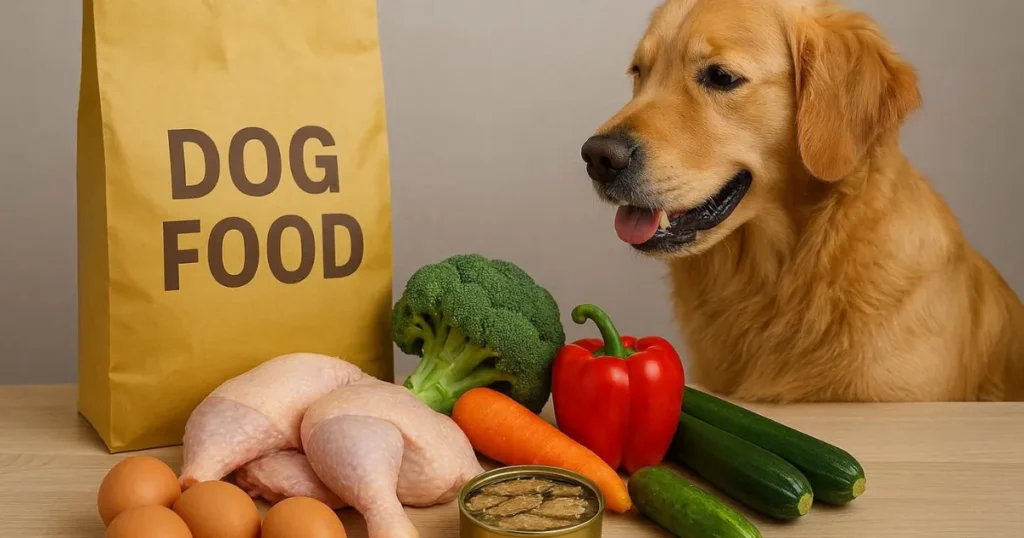
Affordable Protein Additions.
- Eggs ($ 0.20-0.30 each): Complete protein, easy to digest, add 1-2 weekly.
- Chicken leg quarters ($ 0.60-0.90/ lb on sale): Cook plain, shred, add to meals.
- Canned mackerel/sardines ($ 1-2/ can): Omega-3s, protein, use 1-2x weekly.
- Chicken liver ($ 1.50-2/ lb): Nutrient-dense organ meat, feed small amounts weekly.
Limit protein additions to 10-15% of daily calories, maintaining cheap healthy dog food as a base, providing a complete mineral/vitamin balance.
Budget-Friendly Vegetable Additions.
- Carrots ($ 0.10-0.15 per serving): Beta-carotene, fiber, dental benefits.
- Sweet potato ($ 0.15-0.25 per serving): Digestible carbs, vitamins.
- Green beans (canned $0.75/ can, frozen $1.50/ bag): Low-calorie bulk, fiber.
- Pumpkin (canned $1.50/ can): Digestive support, fiber.
These additions improve nutritional variety and density economically, though the best cheapest dog food remains the foundation providing complete, balanced nutrition.
Critical Supplementation Warning.
Never attempt “homemade” feeding to save money without a veterinary nutritionist consultation. Unbalanced homemade diets create severe nutritional deficiencies costing thousands in veterinary treatment – far exceeding cheap healthy dog food costs. Always use AAFCO-compliant commercial food as a base, adding whole foods as supplements only.
Life Stage Considerations for Cheap Feeding.
The best cheap dog food varies across Golden Retriever life stages, and knowing where you absolutely can not compromise helps optimize limited budgets.

Puppies: Where You CAN NOT Cut Corners.
Best cheap dog food for Golden Retriever puppies (8 weeks to 12-15 months) requires large-breed-specific formulation – this is the ONE place where extreme budget restrictions create unacceptable risks.
Why cheap puppy food fails Golden Retrievers:
Generic puppy formulas contain excessive calcium (2.0-2.5%), causing rapid growth and developmental orthopedic diseases – hip dysplasia, elbow dysplasia, osteochondrosis – costing $3,000-10,000 in surgical corrections.
What to do with extremely limited budgets:
Contact local rescues or breed clubs about puppy food assistance programs. Many organizations provide large-breed puppy food to families in need specifically because proper puppy nutrition prevents expensive problems. This is NOT the place to feed cheap adult food or generic puppy formulas – the health consequences are too severe and costly.
If absolutely forced to economize during puppyhood, Purina Pro Plan Focus Puppy Large Breed represents the minimum acceptable option at |$ 2/lb – still expensive but preventing developmental disasters.
Adults: Where Budget Feeding Works.
Healthy adult Golden Retrievers (1-7 years) with no special health needs can maintain reasonable health on cheap healthy dog food without catastrophic consequences.
Adult budget feeding approach:
Use Pedigree, Purina Dog Chow, or Ol’ Roy as a base (meeting AAFCO adult maintenance standards), supplement 10-15% with affordable whole foods (eggs, chicken quarters, vegetables), maintain twice-daily feeding, preventing waste, monitor body condition monthly, adjusting portions, and watch for any health changes suggesting inadequacy.
This life stage allows the most budget flexibility. While optimal nutrition provides better coat, energy, and long-term health, adults maintain basic function on minimum-standard food more successfully than puppies or seniors.
Seniors: Where Compromise Hurts.
Senior Golden Retrievers (7+ years) on the best cheapest dog food face challenges as age-related health issues emerge.
Senior budget feeding challenges:
Cheap food lacks therapeutic joint support (glucosamine/chondroitin), provides minimal antioxidants for cognitive health, offers basic digestibility despite declining digestive function, and includes no enhanced nutrition addressing age-related changes.
Budget senior feeding strategy:
If possible, upgrade to mid-tier senior food ($ 2-3/ lb) with joint support – the mobility and comfort benefits justify cost. If absolutely impossible, supplement Pedigree or Dog Chow with a glucosamine supplement ($ 15-25/ month), add omega-3 fatty acids from fish oil ($ 10-15/ month), and provide a softer texture through slight kibble moistening.
These supplements total $25-40 monthly but significantly improve the senior quality of life compared to bare-minimum, cheap healthy dog food alone.
Extreme Budget Feeding Strategies.
For families facing genuine poverty while trying to keep their Golden Retriever, these strategies stretch minimal food budgets without creating starvation or severe deficiency.
Food Bank and Assistance Programs.
Pet food banks:
Many communities offer free or low-cost pet food through food banks, churches, or animal welfare organizations.
Breed rescue assistance:
Golden Retriever rescues often provide food assistance to families, preventing surrender.
Veterinary clinic programs:
Some clinics maintain pet food pantries for clients in need.
Manufacturer assistance:
Contact Purina, Mars, and Hills directly – they sometimes provide assistance or coupons.
Strategic Bulk Buying.
Buy the largest bags possible:
50 lb bags reduce per-pound costs 20-30% versus small bags.
Split purchases with others:
Share bulk purchases with friends/family, reducing individual cost.
Watch for clearance:
Dented cans, torn bags (intact food inside), and near-expiration products are heavily discounted.
Use every available discount:
Coupons, store loyalty programs, manufacturer rebates, and generic brand alternatives.
Extending Food Supply.
Precise portion control:
Measure exactly, never estimate (prevents waste through overfeeding).
Add rice/oats to meals:
Bulk feeding with $0.50/ lb cooked rice or oatmeal (limit to 20% of meal).
Two meals daily only:
No free-feeding, no between-meal snacks, no food waste.
Store properly:
Airtight containers prevent spoilage, pest contamination, and nutrient loss.

What Cheap Dog Food Cannot Provide.
Being transparent about best cheap dog food limitations helps owners understand health compromises and watch for problems requiring intervention.
Nutritional Shortcomings.
- Minimal joint support: No therapeutic levels of glucosamine/chondroitin.
- Basic protein quality: More plant proteins, lower-quality meat meals versus named fresh meats.
- Limited digestibility: More filler ingredients, less easily absorbed nutrients.
- Minimal antioxidants: Basic vitamin/mineral levels without enhanced immune support.
- Lower fat levels: Often 10-12% versus 14-18% in quality foods, affecting coat and energy.
When Cheap Food Isn’t Working.
Watch for signs that cheap healthy dog food isn’t meeting your Golden’s needs:
Progressive weight loss despite adequate portions Dull, dry, brittle coat with excessive shedding chronic loose stools or digestive issues Low energy, lethargy beyond normal personality Itchy skin, hot spots suggesting inadequate fatty acids.
If these develop, the food isn’t adequate for your individual dog. Contact a veterinarian about food assistance programs or prescription diets that may work better despite budget constraints.
Honest Discussion: When Cheap Food Isn’t Enough.
Throughout my career, I’ve had difficult conversations with families about whether their budget can sustain dog ownership responsibly. This section contains hard truths.
The Real Cost of Dog Ownership.
- Best cheap dog food: $35-50 monthly minimum.
- Basic veterinary care: $300-500 yearly minimum (wellness exams, vaccines, preventives) .
- Emergency fund: $500-1,000 for unexpected illness/injury.
- Total annual minimum: $900-1,500.
If this amount genuinely exceeds household capacity, dog ownership may not be sustainable. This isn’t judgment – its mathematical reality.
Alternatives When Budgets Don’t Allow Pet Ownership.
- Temporary foster: Some rescues provide food/medical care while families provide temporary homes.
- Rehoming through rescue: Responsible placement versus keeping a dog in inadequate conditions.
- Financial assistance programs: Explore all available resources before surrender decisions.
- Income opportunities: Consider side work, specifically funding dog expenses.
I’ve helped families find solutions when budgets truly couldn’t support pet ownership. Sometimes, temporary rehoming while financial situations improve represents the most loving choice – better than keeping a dog in inadequate circumstances.
Making Cheap Food Work Long-Term.
For families committed to keeping their Golden despite tight budgets, these approaches maximize health outcomes on the best cheapest dog food.
Preventive Care Priority.
- Maintain ideal body weight: Preventing obesity saves thousands in related disease treatment.
- Basic dental care: Daily tooth brushing with $3 toothpaste prevents $800-1,500 dental procedures.
- Exercise regularly: Free activity maintaining joint and cardiovascular health.
- Monitor closely: Catch problems early when treatment costs less.
These free or low-cost practices dramatically reduce veterinary expenses, justifying food budget stretching.
Community Resources.
- Low-cost veterinary clinics: Significantly reduced examination and vaccination costs.
- Spay/neuter assistance: Preventing accidental litters you cannot afford.
- Pet insurance: For some families, $30-40 monthly premium prevents $3,000-5,000 emergency costs.
- Online veterinary advice: Some services offer affordable telephone consultations.
Long-Term Budget Planning.
Even families feeding cheap healthy dog food can work toward better nutrition:
Save $10-20 monthly toward the food upgrade fund. Use tax refunds to stock up on better food during sales. Accept food donations gratefully when offered. Upgrade gradually as financial situations improve.
What is the best cheap dog food for Golden Retrievers?
Best cheap dog food meeting minimum AAFCO standards at the lowest prices includes Pedigree Adult Complete Nutrition ($ 0.90-1.20/ lb), Purina Dog Chow Complete Adult ($ 0.95-1.30/ lb), Ol’ Roy at Walmart ($ 0.85-1.15/ lb), and Dad’s Premium Select at dollar stores ($ 0.80-1.10/ lb). These provide basic, complete nutrition for adult Golden Retrievers at $35-50 monthly, though they lack enhanced nutrition, joint support, and premium ingredients found in mid-tier or premium brands.
Can cheap healthy dog food actually keep my Golden Retriever healthy?
Cheap healthy dog food meeting AAFCO standards provides minimum adequate nutrition, preventing deficiency diseases, but lacks optimal nutrition for peak health. Adult Golden Retrievers can maintain basic health on Pedigree or Dog Chow, though expect less lustrous coat, lower energy, and missing joint support compared to better food. Watch for signs of inadequacy – dull coat, digestive issues, and weight loss – indicating the individual dog needs better nutrition despite budget constraints.
What is the best cheapest dog food that won’t harm my Golden Retriever?
Best cheapest dog food are AAFCO-compliant options under $1.20/ lb: Dad’s Premium Select ($ 0.80-1.10/ lb), Ol’ Roy ($ 0.85-1.15/ lb), Pedigree ($ 0.90-1.20/ lb). These meet minimum nutritional standards, preventing deficiencies. However, never feed generic puppy food to Golden Retriever puppies – developmental problems from improper calcium cost thousands in surgery. For puppies, a large-breed-specific formulation is non-negotiable, even if it requires seeking food assistance programs.
How can I supplement cheap dog food to improve nutrition?
Supplement up to 10-15% of daily calories with affordable whole foods: eggs ($ 0.20-0.30 each), chicken leg quarters on sale ($ 0.60-0.90/ lb cooked and shredded), canned mackerel/sardines ($ 1-2/ can for omega-3s), plain vegetables like carrots and sweet potato ($ 0.10-0.25 per serving). Never replace AAFCO-compliant cheap food entirely – it provides a complete vitamin/mineral balance. Supplements improve but don’t replace base nutrition.
Is it better to feed cheap dog food or make homemade food to save money?
Feed cheap dog food meeting AAFCO standards, not homemade. Homemade diets without veterinary nutritionist formulation create severe deficiencies costing thousands in treatment – far exceeding cheap food costs. Unbalanced homemade feeding causes calcium deficiencies, vitamin deficiencies, and other serious problems. Even cheap commercial food ($ 35-50 monthly) provides safer, complete nutrition than inadequate homemade diets attempting to save money.
What’s the absolute minimum I should budget for Golden Retriever food?
Minimum $35-50 monthly for the cheapest AAFCO-compliant food (Pedigree, Dog Chow, Ol’ Roy). This provides basic, adequate nutrition without optimal quality. However, total dog ownership costs $900-1,500 yearly minimum, including food, basic veterinary care, and preventives. If this exceeds household capacity, dog ownership may not be financially sustainable. Explore assistance programs before inadequate care compromises dog health.
Can I feed my Golden Retriever cheap dog food long-term?
Adult Golden Retrievers can survive on AAFCO-compliant cheap food long-term, though health isn’t optimal. Watch for coat quality decline, digestive issues, or energy changes suggesting inadequacy. Seniors particularly struggle with cheap food lacking joint support – consider upgrading to mid-tier senior food ($ 2-3/ lb) or adding glucosamine supplements ($ 15-25/ monthly) if possible. Work toward better nutrition as financial situations improve, even while feeding on cheap food currently.
Where can I find food assistance if I can’t afford even cheap dog food?
Contact local pet food banks through community food banks or animal welfare organizations, reach out to Golden Retriever breed rescues about assistance programs preventing surrender, ask veterinary clinics about pet food pantries for clients in need, call food manufacturers (Purina, Mars, Hills) directly for potential assistance or coupons, and check for spay/neuter assistance programs often providing temporary food support. Many communities have resources helping families keep pets during financial hardship.
Conclusion.
The best cheap dog food for Golden Retrievers – including Pedigree, Purina Dog Chow, Ol’ Roy, and Dad’s Premium Select – provides minimum acceptable nutrition meeting AAFCO standards at $35-50 monthly when budgets genuinely cannot support mid-tier or premium options. Throughout my years treating Goldens, I’ve learned that while cheap healthy dog food creates nutritional compromises compared to quality brands, it allows families facing poverty to maintain pet ownership rather than surrendering dogs to already-overwhelmed rescue systems.
Understanding what constitutes the best cheapest dog food requires balancing AAFCO compliance, basic ingredient quality, and rock-bottom pricing while acknowledging honest limitations. Strategic supplementation with affordable whole foods – eggs, chicken quarters, vegetables – improves nutrition economically without exceeding desperate budgets. However, cheap feeding during puppyhood creates unacceptable developmental risks, and senior dogs benefit significantly from upgrading to mid-tier food with enhanced joint support when financially possible.
Remember that the cheap healthy dog food represents minimum adequate nutrition, not optimal. Watch your Golden closely for signs the food isn’t meeting individual needs, seek assistance programs before health deteriorates, and work toward better nutrition as financial situations improve. Combined with preventive care, exercise, monitoring, and utilizing community resources, families can maintain Golden Retriever health on extremely limited budgets – though upgrading food quality remains an important goal as circumstances allow.
Whether feeding Pedigree, Dog Chow, or another best cheap dog food option, your Golden Retriever can survive on budget nutrition when combined with love, attention, basic veterinary care, and commitment to their wellbeing within your household’s genuine financial constraints.
Share Your Budget Feeding Experience! Are you feeding your Golden Retriever the best cheap dog food due to financial constraints? I’m eager to hear about your experiences with budget feeding – which cheap healthy dog food brands work, how you supplement economically, strategies for maximizing nutrition on minimal budgets, and how your Golden’s health compares to dogs eating premium food.

Dr. Nabeel A.
Hi, I’m Dr. Nabeel Akram – a farm management professional by trade and a passionate Golden Retriever enthusiast at heart. With years of experience in animal science and livestock care, I’ve built a career around understanding animals—how they live, thrive, and bring value to our lives. This blog is a personal project born from that same passion, focusing on one of the most loyal and lovable breeds out there: the Golden Retriever. Whether I’m managing farm operations or sharing insights on canine health, behavior, and care, it all ties back to one core belief—animals deserve thoughtful, informed, and compassionate attention. Welcome to a space where professional expertise meets genuine love for dogs.
Facebook |
Links will be automatically removed from comments.