
Hypothyroidism in dogs is an endocrine disorder in which the thyroid gland fails to produce enough thyroxine (T4), slowing metabolism, body temperature regulation, heart rate, and skin cell turnover. Golden Retrievers are among the most affected breeds, and hypothyroidism in dogs is both treatable and manageable with daily oral levothyroxine sodium once confirmed by bloodwork.
In my practice, I see hypothyroidism in dogs, specifically in Goldens, more consistently than in any other retriever. The breed’s immune system predisposes it to autoimmune thyroiditis, the dominant mechanism behind low thyroid in dogs. What concerns me isn’t the diagnosis itself. It’s the 12 to 18 months that most Goldens go undiagnosed because owners and vets are waiting for the wrong signs.
According to the Golden Retriever Lifetime Study, conducted by the Morris Animal Foundation in a cohort of over 3,000 Goldens, endocrine diseases rank among the tracked health priorities for the breed, supporting thyroid screening starting at age 4, not 7.
Why Golden Retrievers Face a Higher Risk of Hypothyroidism Than Most Breeds
Hypothyroidism in dogs occurs across all breeds, but Golden Retrievers aren’t just commonly affected; they’re one of the breeds most genetically predisposed to it. The Orthopedic Foundation for Animals (OFA) thyroid registry identifies Golden Retrievers as a high-risk breed alongside Doberman Pinschers, Boxers, and Cocker Spaniels. In my practice, Goldens present with confirmed hypothyroidism at roughly double the rate of Labrador Retrievers of similar age and weight.
The Autoimmune Thyroiditis Mechanism in Golden Retrievers
The dominant cause of thyroid problems in dogs isn’t random gland failure; it’s autoimmune thyroiditis, where the immune system attacks and destroys thyroid tissue over months or years. Golden Retrievers carry a heightened susceptibility to immune-mediated diseases broadly, and the thyroid is a frequent target. The gland can lose up to 75% of its functional capacity before clinical signs appear. That’s why a Golden can appear normal to an owner for many months while the underlying destruction continues.
This mechanism is distinct from what drives hypothyroidism in Labrador Retrievers, who more commonly develop idiopathic thyroid atrophy, a different pathway with a different progression. For a Golden specifically, the autoimmune route means thyroid disease can co-occur with other immune-mediated conditions, including inflammatory bowel disease or skin allergy. When I confirm a thyroid diagnosis in a Golden, I’m evaluating the whole immune picture, not just the T4 value.
What the Golden Retriever Lifetime Study Data Shows
The Golden Retriever Lifetime Study, managed by Morris Animal Foundation since 2012, has tracked endocrine conditions as a named health category throughout the cohort. This data supports the AKC’s classification of Golden Retrievers as a thyroid-risk breed. In my practice, I begin recommending baseline T4 testing for Goldens at age 4 to screen for hypothyroidism in dogs, not the standard “middle-aged dog” recommendation of 7 to 8, because a baseline value is the only way to evaluate later changes against that individual dog’s normal range.

Hypothyroidism in Golden Retrievers by Age: What to Watch at Every Stage
Most guides on thyroid problems in dogs use one symptom list for all ages. Clinically, that’s a mistake. The signs, severity, and reference thresholds differ enough across life stages that a stage-specific approach is the only accurate one.
Golden Retriever Puppies (Under 18 Months): Rare but Serious
Congenital hypothyroidism is uncommon in Golden Retrievers but presents severely when it occurs: stunted growth, disproportionately large head, delayed dental eruption, and profound developmental delay. This form isn’t autoimmune; it reflects a structural thyroid defect. A golden puppy appearing smaller than littermates at the 8 to 12 week visit warrants a T4 check before attributing the lag to normal variation.
In March 2024, a 4-month-old female Golden, 8.5 kg, presented because her owner felt she was behind her littermates in energy and coordination. T4 came back at 0.4 µg/dL, well below the puppy reference range of 1.5 to 3.5 µg/dL. We started levothyroxine at 22 µg/kg/day. At her 6-week recheck, T4 was 2.1 µg/dL, and her activity had normalized significantly. The owner had assumed it was temperament. It was thyroid function.
Adult Golden Retrievers (2-7 Years): The Primary Risk Window
The vast majority of hypothyroidism in dogs of this breed occurs here, with onset typically between 4 and 6 years. The signs are metabolic first: unexplained weight gain on an unchanged diet, cold intolerance, mental dullness, and reduced exercise tolerance. Bilateral symmetrical alopecia and skin thickening usually appear 6 to 18 months after metabolic signs begin. The T4 reference range for adult Goldens is 1.0 to 4.0 µg/dL; values below 0.8 µg/dL with compatible clinical signs support a strong diagnostic case.
Most guides list coat changes as the first sign. In Goldens specifically, I see metabolic signs first, every time. The breed’s naturally dense double coat masks early hair thinning. Owners notice a dog that seems “off,” gaining weight despite no diet change or being less enthusiastic, long before they notice any fur changes.
Senior Golden Retrievers (8 Years and Older): Distinguishing Disease from Aging
The overlap between thyroid disease and normal aging is the most common diagnostic pitfall I encounter in senior Goldens. Weight gain, reduced activity, and cognitive slowing appear in both, compounded by Goldens’ predisposition to osteoarthritis and cancer, which also causes lethargy. What tells the two apart is bloodwork? In a genuinely aging Golden, T4 values trend slightly lower but typically hold above 0.8 µg/dL. Values below 0.5 µg/dL in a senior almost always reflect disease, not aging. Don’t let age become the reason you miss a treatable condition.
What Most Canine Hypothyroidism Guides Get Wrong About Golden Retrievers
Most online resources on thyroid issues in dogs list bilateral symmetrical alopecia, symmetrical hair loss on the flanks or tail, as the hallmark early sign. For short-coated breeds like Dachshunds or Boxers, that’s accurate. For Golden Retrievers, it’s the sign that appears last, often a year or more after the condition began.
What Goldens Show First
The signs that consistently appear earliest in my Golden cases:
- Weight gain of 10-15% of baseline body weight on an unchanged diet
- Reduced enthusiasm for walks or play that owners attribute to “getting older.”
- Cold intolerance, a Golden who previously loved outdoor time, starts seeking warm floor spots
- Mild bradycardia: resting heart rate below 60 bpm in a non-athletic adult Golden
If you’re waiting to see hair loss before testing a golden, you’re diagnosing 12 months late.
The Cholesterol Finding Most Guides Omit
Hypercholesterolemia, elevated blood cholesterol, is present in the majority of hypothyroid dogs and is one of the most consistent findings on routine chemistry panels. Most guides don’t mention it. Golden Retrievers are already predisposed to hyperlipidemia, making an unexplained cholesterol rise on a wellness panel a direct prompt for thyroid evaluation, even with no visible symptoms. The AVMA recognizes hypercholesterolemia as a secondary finding in hypothyroid dogs. I’ve confirmed the diagnosis in Goldens with zero clinical signs because an incidental panel flagged elevated cholesterol.
The Cushing’s disease Confusion
The competitor gap I encounter most in referral cases is a golden previously assessed for Cushing’s disease (hyperadrenocorticism) when the actual diagnosis was hypothyroidism. Both cause weight gain, lethargy, and skin changes.
The key distinction
Cushing’s drives a markedly increased appetite; hypothyroidism produces weight gain without increased hunger. A golden retriever gaining weight while eating the same amount or less is a thyroid profile, not a Cushing’s profile. Giving a hypothyroid dog Cushing’s treatment is actively harmful. The distinction matters enormously.

The GRI Thyroid Check Protocol: How to Decide When to Test Your Golden
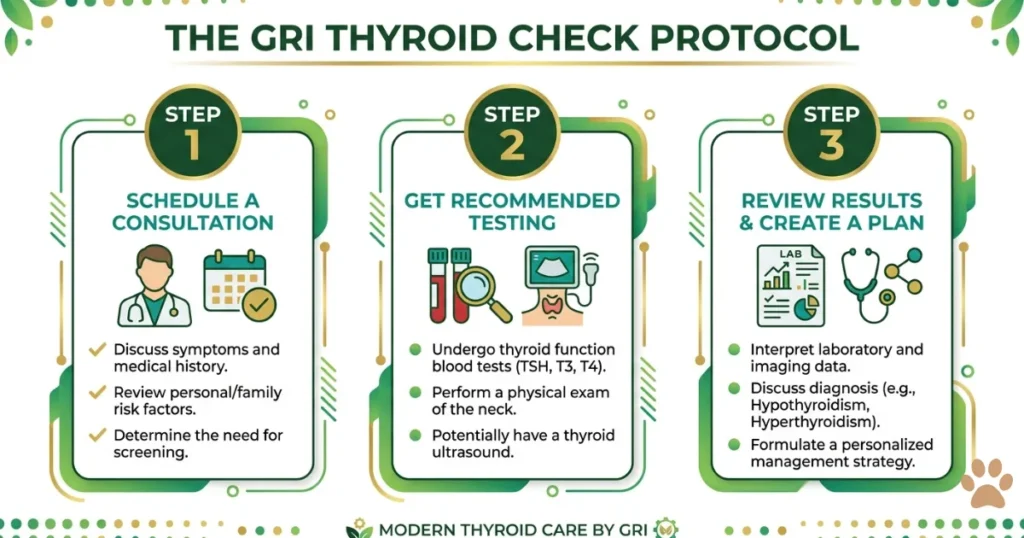
The GRI Thyroid Check Protocol is a three-step decision framework I use to help Golden Retriever owners decide when bloodwork is warranted. It’s not diagnostic; only a T4 and TSH panel confirms the condition, but it structures the observation.
Step 1-Metabolic check:
Has your Golden gained more than 8% of baseline body weight without a diet change or shown reduced enthusiasm for activity they previously enjoyed? → Mark Positive.
Step 2-Temperature check:
Does your Golden actively seek warm indoor spots, avoid cold floors, or resist going outside in weather they previously tolerated? → Mark Positive.
Step 3-Age and history check:
Is your Golden 4 years or older, with no T4 panel in the past 18 months? → Mark Positive.
2 or more Positive:
Schedule a vet appointment and request a full thyroid panel, including total T4 and TSH. Don’t substitute a general wellness exam.
1 Positive:
Monitor for 4-6 weeks. If a second step becomes positive, see the vet.
0 Positive:
Continue annual exams. The baseline T4 at age 4 still applies regardless of signs.
Call your vet immediately if your golden shows sudden profound lethargy, a rectal temperature below 37.5°C (99.5°F), facial or limb swelling, or a severely slowed heart rate. These can signal myxedema coma, a rare but life-threatening complication of severe, untreated hypothyroidism in dogs.
🔴 URGENT vs. MONITOR — Act on This First
| Symptom | Action |
| Weight gain >8% on unchanged diet + lethargy | Schedule vet appointment; request T4 + TSH panel |
| Mild cold intolerance, reduced exercise tolerance | Monitor 4–6 weeks; reapply GRI Protocol |
| Bilateral flank hair loss, thickened facial skin | Vet appointment—this is a late-stage sign in Goldens |
| Elevated cholesterol on routine panel, no symptoms | Request a thyroid panel at the same visit |
| Temp < 37.5°C, profound lethargy, facial swelling | Call the vet immediately—possible myxedema coma |
| Personality change, anxiety, or new aggression | Vet appointment: thyroid issues in dogs can alter behavior. |
Expert Insight
“The cases that concern me most aren’t the obvious ones, a T4 of 0.3 µg/dL with visible alopecia. They’re the Goldens whose owners spent 18 months adjusting the diet or attributing everything to age, while the TSH climbed and thyroid tissue was quietly destroyed. I’ve seen a 5 years old Golden with a T4 of 0.2 µg/dL whose owner thought he was ‘just a calm dog.’ He was on levothyroxine within the week, and three months later, his family was asking if we’d somehow replaced their dog.”

What is hypothyroidism in dogs?
Hypothyroidism in dogs is an endocrine disorder where the thyroid gland produces insufficient thyroxine, slowing metabolism. It’s the most common hormonal disease in dogs, affecting an estimated 1 in 200 across all breeds, per AVMA data.
Can hypothyroidism in dogs be cured?
Hypothyroidism in dogs isn’t cured; it’s managed with daily levothyroxine sodium. Most dogs respond well within 4-8 weeks of starting treatment and require lifelong medication with T4 monitoring every 6-12 months.
What causes low thyroid in dogs?
In Golden Retrievers, the dominant cause of low thyroid in dogs is autoimmune thyroiditis; the immune system destroys thyroid tissue over time. Idiopathic atrophy accounts for most remaining cases. Dietary or environmental causes are rare and largely unsupported by current evidence.
Are thyroid problems in dogs dangerous?
Thyroid problems in dogs are not immediately life-threatening when managed. Left untreated for years, they cause progressive cardiac, metabolic, and neurological damage. Severe untreated cases can progress to myxedema coma, a genuine emergency.
How is canine hypothyroidism diagnosed?
A veterinarian diagnoses canine hypothyroidism through bloodwork, with a total T4 below 1.0 µg/dL, combined with elevated TSH and compatible clinical signs. A baseline T4 panel at age 4 is the standard for Golden Retriever-focused practices.
What are the early thyroid issues in dog owners usually missed?
The earliest thyroid issues in dogs are metabolic: unexplained weight gain, mild cold intolerance, and reduced exercise tolerance. In Golden Retrievers, these precede coat changes by 6-18 months. Most owners attribute them to diet or aging.
How much does thyroid medication cost for dogs?
Levothyroxine for a 65-lb Golden Retriever typically costs $20–$50 per month. Generic formulations are available and clinically effective. Twice-yearly monitoring blood panels add $80–$150 per visit at most practices.
How long does a dog live with hypothyroidism?
A well-managed hypothyroid dog has a normal life expectancy. Golden Retrievers on appropriate levothyroxine therapy with regular T4 monitoring show no reduction in lifespan attributable to the thyroid condition itself.
Can dogs with hypothyroidism lose weight?
Yes. Once levothyroxine normalizes T4 levels, most dogs return to baseline weight within 3-6 months, provided the diet is also managed. Weight loss won’t occur on medication alone if caloric intake isn’t adjusted.
What happens if hypothyroidism in dogs goes untreated?
Untreated hypothyroidism in dogs causes progressive weight gain, worsening skin disease, bradycardia, peripheral neuropathy, and cognitive decline. In severe cases, myxedema coma, a life-threatening emergency, can develop.
Do Golden Retrievers have a higher rate of hypothyroidism than other breeds?
Yes. The OFA thyroid registry lists Golden Retrievers as a high-risk breed. In clinical practice, Goldens develop confirmed autoimmune thyroiditis at roughly double the rate of Labrador Retrievers, a difference attributed to the breed’s elevated immune-mediated disease susceptibility.
What does the Golden Retriever Lifetime Study say about thyroid disease?
The Golden Retriever Lifetime Study (Morris Animal Foundation) tracks endocrine diseases as a named health category across its 3,000+ dog cohort. This data supports earlier thyroid screening in Goldens than general dog guidelines recommend.
At what age do Golden Retrievers typically develop hypothyroidism?
Golden Retrievers most commonly develop hypothyroidism between 4 and 6 years, earlier than the general “middle-aged dog” guideline. Baseline T4 testing at age 4 is standard in Golden Retriever-focused veterinary practices.
How does hypothyroidism affect a Golden Retriever’s coat differently from a Labrador’s?
The dense double coat masks early thinning in Goldens, so alopecia becomes owner-visible far later than in Labs. Goldens more often present first with coat dullness and texture change; the fur loses luster and becomes brittle well before patchy hair loss appears.
My Golden Retriever is gaining weight and seems cold all the time. Should I call my vet?
Yes, schedule an appointment and ask specifically for a T4 and TSH thyroid panel. Unexplained weight gain combined with cold intolerance in a Golden is a classic low-thyroid presentation. Not an emergency, but don’t wait until the next annual exam.
Conclusion: What Thyroid Testing Tells You and What Comes Next
Hypothyroidism in dogs is one of the most rewarding conditions to diagnose and treat. The bloodwork is clear, the medication is affordable, and the response is often dramatic; owners genuinely describe a different dog within months. The challenge is catching it early enough that months of metabolic suppression don’t compound into cardiac strain, joint damage, or permanent skin changes.
For Golden Retriever owners: don’t wait for the textbook signs. Weight gain on an unchanged diet, cold intolerance, and reduced enthusiasm, in a breed whose thyroid risk begins at four years, warrant a T4 panel before signs become unmistakable. Your vet can confirm and treat with a single blood draw. Has your Golden ever been diagnosed with hypothyroidism, and looking back, what was the first sign you noticed? Was it the coat, the weight, or something else entirely? Your timeline could help another owner recognize it sooner.