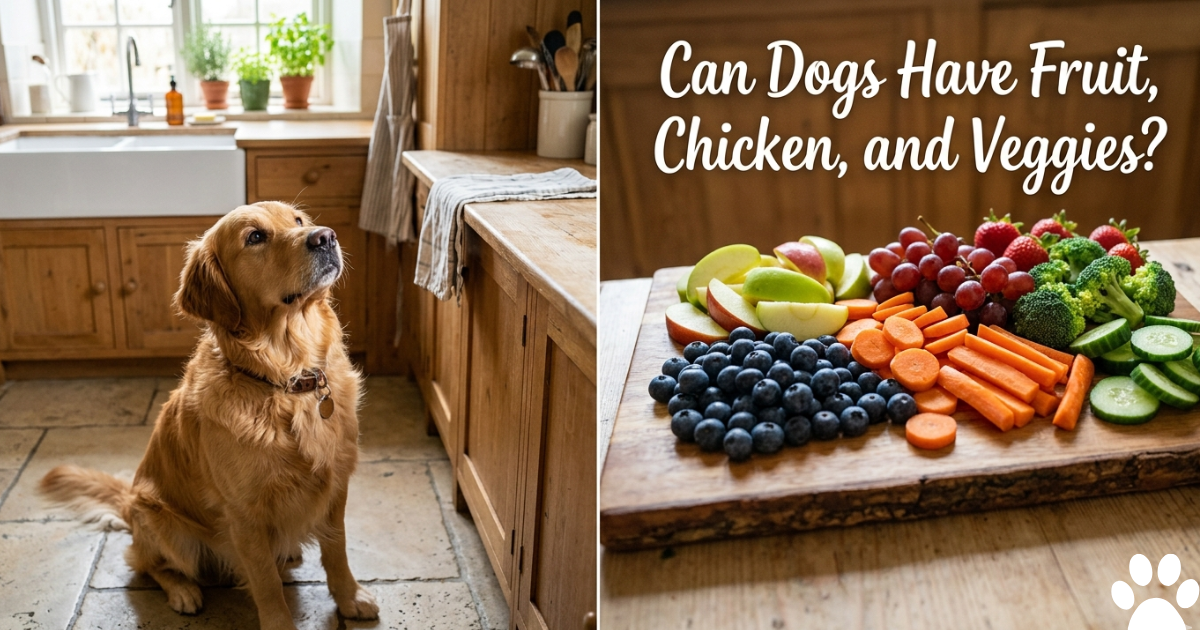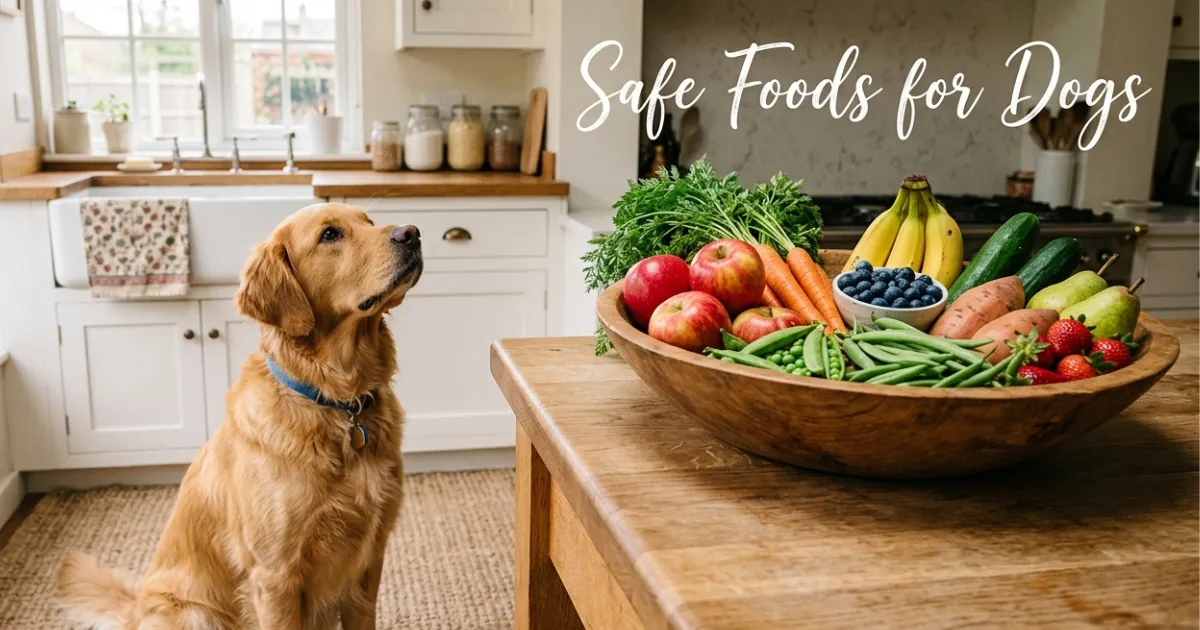
Dogs can safely eat a range of fruits and vegetables, but not all produce is equal – some are genuinely nutritious for Golden Retrievers, several require careful portioning, and a small number are acutely toxic and must never be given.
I get some version of this question every week from Golden Retriever owners: “I gave my dog a piece of watermelon – was that okay?” or “Can I swap treats for carrots?” The short answer is almost always yes. But the context behind that, yes, matters more for Golden Retrievers than most generic guides acknowledge.
This breed is food-motivated, prone to weight gain, and has a documented predisposition to pancreatitis. Those three facts change how you should think about which fruits ok for dogs, actually make sense for your specific dog, and how much to feed. Most of what you’ll find online treats all dogs identically and ignores that completely.
What follows is the complete picture: the best fruits and vegetables for dogs by nutritional value, the safe and unsafe list your Golden Retriever’s diet depends on, breed-specific serving sizes, and exactly when fruit becomes a problem rather than a benefit.
The 10 Best Fruits and Vegetables for Dogs
These are the options I recommend most consistently – ranked by the ratio of nutritional value to caloric load, safety profile, and practical usability as daily treats or meal additions.
1. Blueberries
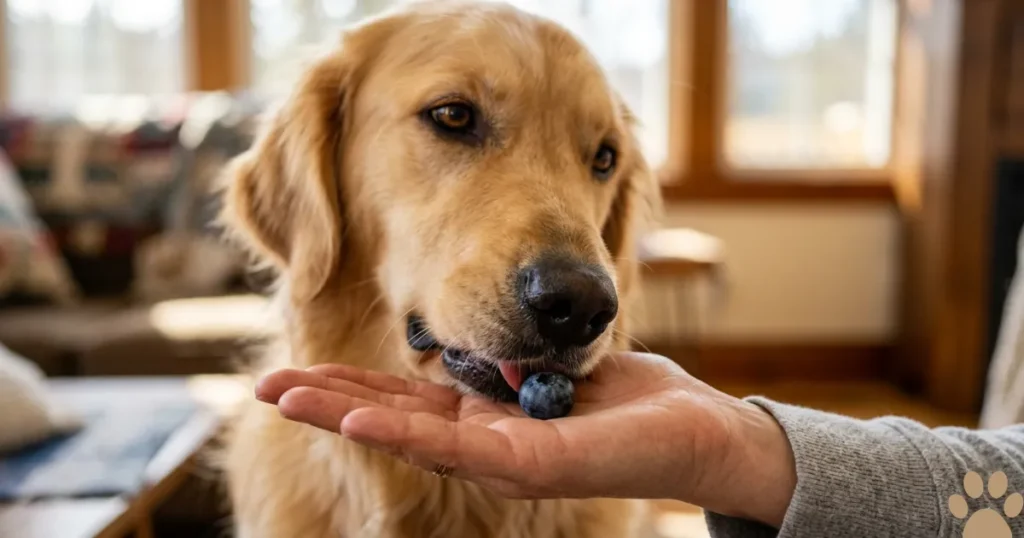
The highest-value fruit option for Golden Retrievers. Low in sugar, high in antioxidants including quercetin and anthocyanins – the antioxidant profile is directly relevant given this breed’s elevated cancer risk. Small enough to use as individual training treats. Serve 8 – 12 berries for an adult Golden Retriever, 4 – 6 for a puppy.
2. Carrots
The vegetable I recommend most often is a daily treat replacement. Low in calories, high in beta-carotene and fiber, and the crunch provides genuine mechanical dental cleaning. Frozen carrots work particularly well for teething puppies. A medium carrot (50 – 60g) per day is appropriate for an adult Golden Retriever.
3. Watermelon (seedless, no rind)
Watermelon is 92% water, making it the most practical hydration treat for warm weather or post-exercise. It contains lycopene and is low in calories. Remove all seeds – obstruction risk – and always remove the rind, which is difficult to digest. Two to three 1-inch cubes per serving for an adult.
4. Apples (cored, seeds removed)
Apples provide vitamin C, dietary fiber, and quercetin. The one non-negotiable preparation step: remove the core and all seeds. Apple seeds contain amygdalin, a compound that releases hydrogen cyanide when metabolized. A single seed is unlikely to cause harm, but consistent exposure accumulates. Two to three slices is a sensible serving.
5. Cucumber
The lowest-calorie item on this list is roughly 16 calories per cup. For overweight Golden Retrievers, a cucumber is the closest thing to a genuinely guilt-free treat. Mild hydration benefit, palatable to most dogs, no preparation concerns beyond washing. Five to six slices per serving.
6. Bananas
Nutritionally dense – potassium, magnesium, vitamin B6, vitamin C – but also high in natural sugar. Half a banana, two to three times per week, is appropriate for a healthy adult Golden Retriever at a normal weight. For dogs with weight issues, bananas should be used sparingly.
7. Sweet potato (cooked, plain)
One of the most nutrient-dense vegetables on this list – high in beta-carotene, dietary fiber, vitamin B6, and potassium. Must always be served cooked and plain. Raw sweet potato is hard for dogs to digest and carries a real GI upset risk. Two tablespoons of mashed or cubed cooked sweet potato as a meal topper is appropriate for an adult Golden Retriever.
8. Green beans (plain)
A legitimate low-calorie treat replacement. Provides fiber, vitamin C, and manganese. Always serve plain – no salt, no canning liquid, no seasoning. Frozen plain green beans work well as a crunchy treat. A small handful per serving.
9. Peas (fresh or frozen, plain)
Fresh food, like garden peas, sugar snap peas, and snow peas are all safe. They provide plant-based protein, fiber, and vitamins A, K, and B. Canned peas with added sodium should be avoided. One tablespoon mixed into a meal is a practical daily serving. One important caveat: avoid feeding peas to dogs with kidney disease, as peas contain purines that increase uric acid load.
10. Pumpkin (plain, cooked)
The most clinically useful vegetable on this list. Plain canned pumpkin – not pumpkin pie filling – is a reliable dietary tool for both diarrhea and constipation. Soluble fiber absorbs water in loose stools and adds bulk in constipation. One to two tablespoons for a Golden Retriever-sized dog. Every Golden Retriever owner should keep this in their pantry.
Safe Fruits for Dogs: The Quick-Reference Table
The safest fruits for dogs as dog food share one characteristic: a favorable fiber-to-sugar ratio. Blueberries, watermelon, cucumber, and apple give Golden Retrievers real nutritional value without the sugar load that contributes to weight gain or digestive upset.
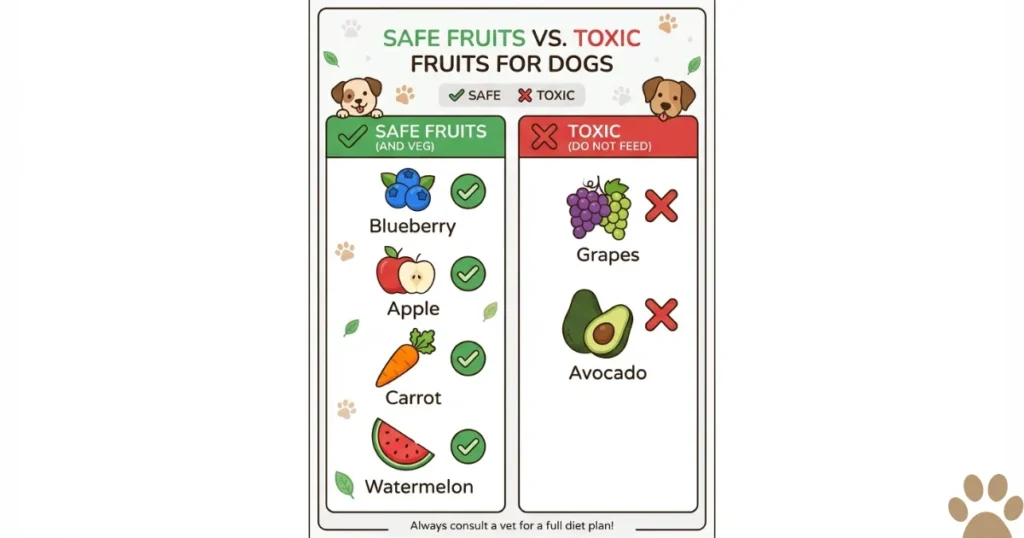
| Fruit | Safe? | Adult GR Serving | Key Benefit | Key Risk |
| Blueberries | Yes | 8–12 berries | Antioxidants, quercetin | None at this portion |
| Watermelon | Yes (no seeds/rind) | 2–3 cubes (1 inch) | Hydration, lycopene | Always remove seeds and rind |
| Apple | Yes (no core/seeds) | 2–3 slices | Vitamin C, fiber | Remove seeds — cyanide risk |
| Banana | Yes (limited) | Half banana, 2–3x/week | Potassium, B6 | High sugar — portion matters |
| Cucumber | Yes | 5–6 slices | Hydration, low calorie | None |
| Sweet potato | Yes (cooked only) | 2 tbsp | Beta-carotene, fiber | Never raw |
| Strawberry | Yes | 2–3 berries | Vitamin C | High natural sugar |
| Mango | Yes (no pit/skin) | 2–3 small cubes | Vitamins A, C, E | Remove pit — cyanide risk |
| Grapes | No — toxic | None | — | Acute kidney failure |
| Raisins | No — toxic | None | — | Acute kidney failure |
| Avocado | No — avoid | None | — | Persin toxicity; pancreatitis risk in GRs |
| Cherries | No — avoid | None | — | The pit contains cyanide |
Based on ASPCA Animal Poison Control guidance.
What Makes Golden Retrievers Different – The Breed-Specific Reality
Most articles about fruits ok for dogs treat all breeds the same. That works for the basic safe/unsafe list, but it misses the two factors that matter most when you own a Golden Retriever.

Pancreatitis predisposition changes the equation.
Golden Retrievers carry a genetic susceptibility to pancreatitis – inflammation of the pancreas that is often triggered by high dietary fat intake. Avocado is the obvious offender, but the risk is broader. Any feeding pattern that involves irregular, large amounts of high-calorie food – including fruit – can be a trigger in a predisposed dog. Consistent small portions are not just a serving guideline; for this breed, they are a health management strategy.
Weight gain is a persistent reality.
Golden Retrievers tend toward obesity when diet is not actively managed. Bananas, mangoes, and pineapple are safe in the portions listed above – but those portions assume treats, not daily staples. If a Golden Retriever is already above ideal weight, the only fruits I recommend are the low-sugar options: blueberries, cucumber, carrot, and green beans. I have seen owners genuinely confused about unexplained weight gain while feeding their dog “healthy food (fruit & Vegetables)” – two bananas a day and a regular mango serving is not a health intervention, regardless of the vitamin content.
Vet Insight
The sugar-to-fiber ratio is more useful than a simple safe/unsafe label for Golden Retriever owners managing weight. Blueberries have roughly 10g of sugar per 100g with 2.4 g of fiber – a favorable ratio. Bananas have 12g of sugar per 100g with only 2.6 g of fiber. For a 30kg Golden Retriever prone to weight gain, the cumulative difference of daily treat choices over weeks and months is meaningful.
Fruits and Vegetables Dogs Cannot Have – and Why
Grapes and raisins are acutely toxic to dogs at any dose – the nephrotoxin responsible for kidney failure has not been identified, which means there is no established safe amount, and sensitivity varies unpredictably between individual dogs.
Grapes and raisins – emergency level.
The fact that the nephrotoxin in grapes hasn’t been identified is what makes this so dangerous: there is no safe dose, and individual sensitivity varies unpredictably. One dog may eat several grapes with apparent impunity; another develops acute renal failure from two. The only safe protocol is zero tolerance. If your Golden Retriever eats any amount of grapes or raisins, contact your vet or ASPCA Poison Control (888-426-4435) immediately – before symptoms appear.
Avocado – avoid specifically for Golden Retrievers.
The flesh contains persin, which causes vomiting and diarrhea. The pit is both a choking hazard and a GI obstruction risk. And for Golden Retrievers with pancreatitis susceptibility, the very high fat content is a breed-specific concern beyond general toxicity.
Onions and garlic – cumulative toxicity.
Allium species contain thiosulfates that damage red blood cells, causing hemolytic anemia. The damage is cumulative – consistent small exposures are more dangerous than a single larger one. All forms are toxic: raw, cooked, and powdered. Garlic powder in a homemade treat recipe counts.
Cherries
The flesh is not toxic, but the pit, stem, and leaves contain cyanogenic glycosides. The preparation burden is high, and the nutritional value of the flesh is low. Not worth including.
How Much Fruit Can a Golden Retriever Eat? Decision by Life Stage
If your Golden Retriever is a healthy adult at an ideal weight:
Fruit and vegetables can make up approximately 10% of daily caloric intake. For a 30kg adult on 1,400 kcal/day, that is 140 kcal from produce – roughly equivalent to 12 blueberries plus a medium carrot plus two slices of apple.
If your Golden Retriever is a puppy under 6 months:
Use the same safe list but halve adult serving sizes. Introduce one new fruit or vegetable at a time and wait 48 hours between introductions. Puppy digestive systems are more reactive, and identifying the trigger of any GI upset is much easier when introductions are spaced out.
If your Golden Retriever is overweight:
Restrict fruit entirely to the low-sugar options – blueberries, cucumber, carrot, green beans. Treat even these as supplements rather than daily givens until weight is managed.
If your Golden Retriever is a senior (8+ years):
Maintain the same safe list, but watch the dental condition. Hard raw carrots and apple slices may need to be softened or grated for dogs with dental disease or significant tooth loss.
If your Golden Retriever has a diagnosed health condition:
Do not introduce new foods without veterinary guidance. Diabetes, pancreatitis, and kidney disease each change which items from the safe list are genuinely appropriate.

When to Call the Vet
| Situation | Action | Urgency |
| Any amount of grapes or raisins eaten | Call vet or ASPCA Poison Control (888-426-4435) | Urgent — do not wait for symptoms |
| Avocado flesh eaten (more than 2 tbsp) | Call vet; monitor for vomiting and diarrhea | Same day |
| Onion or garlic eaten (any form) | Call vet; watch for lethargy, pale gums, labored breathing | Same day |
| Fruit pit swallowed (mango, peach, cherry) | Call vet — obstruction and cyanide risk | Same day |
| Vomiting after a safe fruit (single episode) | Remove fruit; monitor for 24 hours | Monitor |
| Diarrhea after eating a new vegetable | Bland diet 24–48 hours; call vet if bloody or persistent | Monitor unless blood |
| Lethargy and reduced urination after grape exposure | Emergency vet — acute kidney failure signs | Emergency |

What I Actually Recommend for Daily Use
After years of working with Golden Retrievers, these are the four fruits and vegetable items I keep in consistent rotation as treat alternatives and meal additions:
Daily:
Baby carrots – 2 to 3 per day for an average adult Golden Retriever. They satisfy the chewing instinct, support dental health mechanically, and have virtually no meaningful caloric impact on a 30kg dog.
Three to four times per week:
Blueberries – 10 to 12 berries. The antioxidant profile is relevant for a breed with one of the highest cancer rates of any dog, and portions are small enough to use as individual training reward treats.
Weekly:
Plain cooked pumpkin or sweet potato – 1 to 2 tablespoons as a meal topper. Reliable digestive support, particularly useful after any dietary disruption.
Situational (warm weather, post-exercise):
Seedless watermelon cubes. Not a daily item – a functional hydration tool when conditions call for it.
What are the best fruits and vegetables for dogs?
Blueberries, carrots, watermelon (seedless), apples (no seeds), cucumber, and cooked sweet potato or pumpkin are consistently the highest-value options. They are low in sugar relative to fiber, safe in regular portions, and nutritionally meaningful for Golden Retrievers specifically.
Can dogs have fruit every day?
Yes, provided it comes from the safe list and total daily fruit stays within roughly 10% of caloric intake. For a 30kg Golden Retriever on 1,400 kcal per day, that ceiling is around 140 kcal from fruit – about 12 blueberries and a medium carrot. Exceeding this consistently with high-sugar options contributes to weight gain.
Fruits That Dogs Can Eat?
Blueberries, carrots, watermelon, apples, cucumber, bananas (limited), sweet potato, green beans, peas, and pumpkin.
Safe Fruits for Dogs
Safe fruits for dogs include apples (no seeds/core), bananas, blueberries, cantaloupe, mango (no pit), oranges (flesh only), pear (no seeds/core), pineapple, strawberries, and watermelon (no rind/seeds). These offer vitamins, fiber, and hydration. Always feed in appropriate amounts to avoid gastrointestinal upset from the high sugar content of fruits.
Are fruits good for dogs with health conditions?
It depends on the condition. For healthy dogs, fruits provide supplemental antioxidants, fiber, and hydration. For dogs with diabetes, kidney disease, or pancreatitis, the safe list changes significantly. A Golden Retriever with pancreatitis should have no high-fat or high-sugar fruit. Always work from a vet-reviewed plan for dogs with diagnosed conditions.
What fruits are bad for dogs and why?
Grapes and raisins cause acute kidney failure through an unidentified nephrotoxin – no safe dose exists. Avocado contains persin and carries high fat content, which is a specific pancreatitis trigger for Golden Retrievers. Cherries, unripe tomatoes, and rhubarb are also on the avoid list. For a full breakdown, see our guide on what fruits are bad for dogs.
Are fruits good for dogs as daily treats?
Low-sugar fruits – blueberries, cucumber, and watermelon – work well as daily treats within portion guidelines. High-sugar fruits like bananas and mangoes are better used as occasional treats, two to three times a week, rather than daily staples. The distinction matters for Golden Retrievers specifically, given the breed’s weight management challenges.
Is it safe for puppies to eat the same fruits as adult dogs?
Yes – from the same safe list – but at half the adult serving and introduced one at a time with 48 hours between new foods. Puppies have more reactive digestive systems, and establishing which food caused a reaction is much easier when introductions are spaced.
Can dogs eat fruit snacks made for humans?
No. Processed fruit snacks intended for human consumption often contain concentrated sugar, artificial flavors, and sometimes xylitol, which is severely toxic to dogs. Fresh or frozen whole fruit is the correct form. Our full guide on whether dogs can eat fruit snacks covers exactly what to look for on ingredient labels.
Which vegetables are safe for dogs to eat daily?
Carrots, cucumber, and plain green beans are the three I recommend for daily use. All are low in calories, safe in consistent portions, and provide real nutritional value without complexity. Peas and cooked sweet potato or pumpkin work well as weekly meal additions rather than daily treats.
How do I know if a fruit is ok for dogs?
The clearest indicator is a favorable fiber-to-sugar ratio combined with no known toxicity. Blueberries, cucumber, and apple score well on both. If a fruit has known toxicity concerns – grapes, raisins, cherries – no nutritional argument overrides that. When in doubt, the ASPCA Animal Poison Control database is the definitive reference.
What happens if a Golden Retriever eats grapes?
Grapes can cause acute kidney failure in dogs. The nephrotoxin has not been identified, which means there is no safe amount, and individual sensitivity varies – some dogs are far more vulnerable than others. If your Golden Retriever eats any grapes or raisins, contact your vet or ASPCA Poison Control (888-426-4435) immediately, without waiting for symptoms to develop.
Can dogs eat 10 different fruits and vegetables at once?
Introducing multiple new foods simultaneously is a mistake, regardless of whether each is individually safe. If your dog develops diarrhea or vomiting, you will have no way to identify which food caused it. Introduce one new fruit or vegetable at a time, wait 48 hours, observe, then add the next.
How much watermelon can a Golden Retriever have?
Two to three 1-inch seedless cubes per serving is appropriate for an adult Golden Retriever. Always remove seeds – they are a GI obstruction risk – and always remove the rind, which is difficult to digest and commonly causes stomach upset. Watermelon is best used as a hydration treat in warm weather rather than a daily staple.
What are the 10 best fruits and vegetables for dogs to eat regularly?
In order of nutritional value to caloric load: blueberries, carrots, watermelon, apples, cucumber, bananas (limited), sweet potato, green beans, peas, and pumpkin. Each appears in detail in the guide above with breed-specific portions for Golden Retrievers.
10 best fruits and vegetables for dogs?
In order of nutritional value to caloric load: blueberries, carrots, watermelon, apples, cucumber, bananas (limited), sweet potato, green beans, peas, and pumpkin.
Conclusion
The best fruits and vegetables for dogs are the ones that match your dog’s actual health status, stay within sensible daily portions, and are introduced one at a time rather than all at once.
For Golden Retrievers: blueberries, carrots, watermelon, apples, cucumber, and cooked pumpkin or sweet potato form a reliable foundation. High-sugar fruits like bananas and mangoes are occasional treats, not daily staples. Grapes, raisins, avocado, and alliums are non-negotiable avoids at any amount.
The framework that resolves most questions: low sugar relative to fiber, consistent small portions, and one new food introduced at a time. Which fruits are ok for dogs covers a broad range – what narrows that range into something practical is knowing your specific dog’s weight, life stage, and health status.
Every Golden Retriever owner ends up with a different short list of what actually works in practice – and the pattern rarely matches what any general guide predicts. Some Golden Retrievers go absolutely wild for frozen blueberries as training treats; others refuse anything that isn’t meat. A few develop loose stools from foods that should be fine.
- What does your Golden Retriever’s fruit and vegetable routine actually look like?
- Have you found a low-sugar option that replaces commercial treats without resistance?
- Or hit a surprise reaction to something on the safe list that took a while to trace back?
Share what’s worked – and what hasn’t – for your dog below.