
I often see Golden Retriever owners who have done everything right – elimination diet, limited ingredient food, veterinary allergy testing – and their dog is still scratching. When I ask about treats, the answer is almost always the same: they haven’t changed them.
Treats are the most overlooked variable in canine allergy management. An owner can feed a flawless hypoallergenic diet and completely undermine it with three chicken-based training treats per day – because the allergen exposure that drives a reaction doesn’t require a full meal. Even small, repeated amounts of a trigger protein maintain the inflammatory response that produces itching, ear infections, and hot spots.
Golden Retrievers are predisposed to environmental and food-based allergic disease at higher rates than most breeds. Their immune systems are primed to overreact, and their skin barrier is less robust than average – meaning allergen exposure translates to visible symptoms faster and more severely than in other dogs.
Choosing the right dog allergy treats is not secondary to choosing the right food. For an allergic Golden Retriever, treats are part of the therapeutic diet – and they need to be evaluated with the same rigor.
Why Treats Derail Allergy Management in Golden Retrievers
Dog allergy treats fail allergy management when they contain the same protein the dog is reacting to – most commonly chicken, beef, or dairy – regardless of how carefully the main diet has been controlled.
In canine dermatology, food allergy is a type I and type IV hypersensitivity reaction to specific dietary proteins. The immune system doesn’t differentiate between protein consumed in a meal and protein consumed in a treat. A dog reacting to chicken protein will respond to chicken in a biscuit, a training treat, a dental chew, or a flavored supplement – not just to chicken in their food bowl.
The threshold effect matters here. Some allergic dogs tolerate trace allergen exposure without visible symptoms. Others react to very small repeated amounts. Golden Retrievers – with their documented skin barrier vulnerability – tend toward the lower-threshold end of this spectrum. Treats for dogs with allergies must therefore be evaluated not just for their primary ingredient but for every ingredient, including natural flavors, broths, and binding agents that may contain hidden allergen sources.
In Golden Retrievers, food allergy management fails most often not because the primary diet is wrong, but because treats for dogs with allergies contain the same trigger proteins being eliminated from the main diet.
The 5 Most Common Allergens Hidden in Dog Treats
These are the ingredients I see causing continued reactions in dogs whose owners believe they’ve successfully eliminated allergens from their dog’s diet.
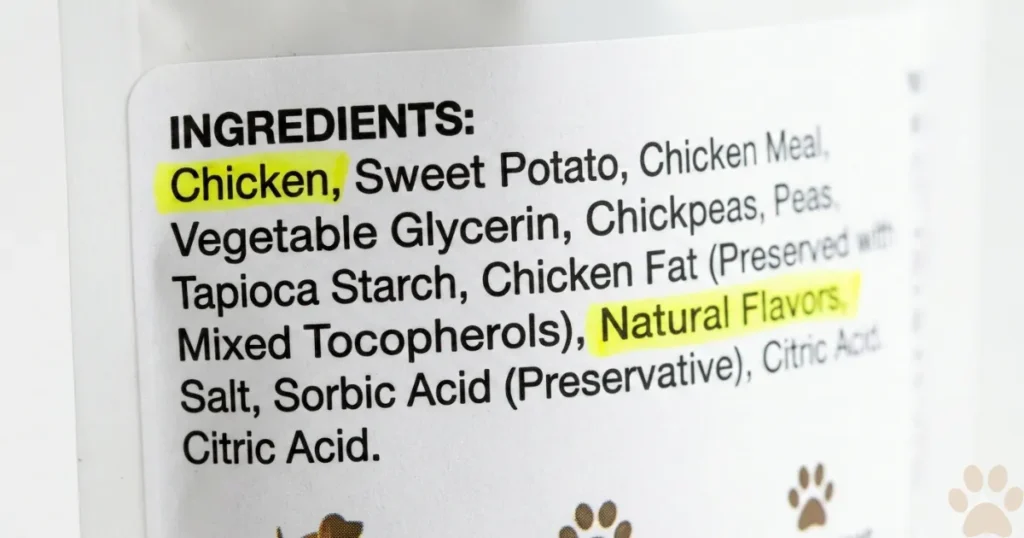
1. Chicken or Poultry
The most prevalent allergen in Golden Retrievers. Appears not just as chicken but as “poultry,” “poultry meal,” “chicken flavor,” “natural chicken flavor,” and in broths listed as secondary ingredients. Any of these maintains allergen exposure in a sensitized dog.
2. Beef
The second most common food allergen in dogs. Found in beef-flavored dental chews, rawhide products, training treats marketed as “meat” flavored, and many collagen-based chews where the source protein is beef.
3. Dairy
Often present in soft training treats as a binding or palatability agent – listed as whey, milk powder, cheese powder, or casein. Dairy is a top-five canine food allergen and is commonly overlooked because owners associate it with human food rather than dog treats.
4. Wheat and Corn
Less common allergens than proteins, but relevant for dogs with confirmed grain sensitivities. Appear as fillers in biscuit-style treats, dental chews, and flavored supplements. Wheat gluten is a particular concern – it is a concentrated protein fraction with higher sensitization potential than whole wheat.
5. Natural Flavors
The catch-all ingredient declaration that can legally cover any number of animal-derived flavor compounds. For a dog allergic to chicken, a treat listing “natural flavors” with no source specified is an unknown allergen risk. Treats for dogs with allergies should never contain unspecified natural flavors.
What Makes a Treat Genuinely Hypoallergenic
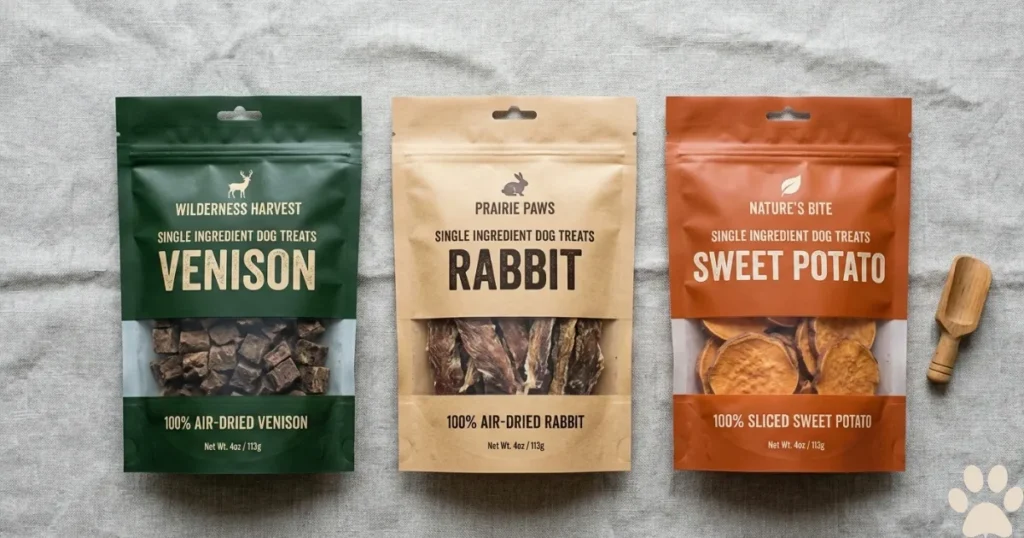
A genuinely hypoallergenic dog treat uses a single novel protein source the dog has not previously been exposed to, contains no natural flavors without identified sources, and carries no cross-contamination risk from shared manufacturing with common allergen proteins.
Three criteria define a clinically appropriate dog allergy treat:
Novel protein:
A protein that the dog’s immune system has not been previously exposed to and therefore has not developed a reaction against. Common novel proteins in hypoallergenic dog treats include venison, duck, kangaroo, rabbit, alligator, and insect protein. The novelty is individual – a dog fed duck-based food for two years may now react to duck.
Single or limited ingredient list:
The fewer the ingredients, the lower the allergen exposure risk and the easier it is to identify a reaction trigger if one develops. Single-ingredient treats – dehydrated sweet potato, single-protein jerky, freeze-dried novel protein – are the gold standard for treats for dogs with allergies.
Manufacturing integrity:
Cross-contamination during production is a documented problem in the pet food industry. A treat containing duck protein manufactured on shared equipment with chicken products may carry enough chicken protein to trigger a reaction in a highly sensitized dog. Look for treats produced in dedicated allergen-free facilities or with explicit cross-contamination protocols stated by the manufacturer.
A hypoallergenic dog treat is defined not only by what it contains but by what it excludes – including undisclosed natural flavors, shared-facility cross-contaminants, and secondary ingredients that carry trigger proteins under alternative ingredient names.
Best Dog Allergy Treats for Golden Retrievers: Vet-Reviewed Comparison Table
| Treat Name | Primary Protein | Key Feature | Best For |
| Ziwi Peak Air-Dried Venison Treats | Venison | Single-origin novel protein; no fillers | Confirmed chicken or beef allergy |
| Natural Balance Limited Ingredient Duck Treats | Duck | Limited ingredient; grain-free | Multi-protein sensitivity; training use |
| Stella & Chewy’s Freeze-Dried Rabbit | Rabbit | Single protein; minimal processing | Highly sensitive Goldens; high-value reward |
| Merrick Power Bites Salmon | Salmon | Novel protein for chicken-allergic dogs; omega-3 benefit | Skin allergy management alongside coat support |
| Vital Essentials Freeze-Dried Minnows | Whole minnow | Single ingredient; no additives | Ultra-sensitive dogs; elimination diet phase |
| Riley’s Organic Treats Sweet Potato | Sweet potato | Protein-free; plant-based | Dogs reacting to all tested proteins |
| Sojos Treats Venison | Venison | Air-dried; no grain; no natural flavors | Training treats during elimination diet |
| Instinct Raw Boost Mixers Rabbit | Rabbit | Limited ingredient; raw-coated | Novel protein introduction; daily feeding |
| Cloud Star Tricky Trainers Salmon | Salmon | Small size; high palatability; limited ingredients | High-frequency training without allergen load |
| Primal Freeze-Dried Duck Nibs | Duck | Single protein; no fillers or natural flavors | Post-elimination maintenance treats |
Vet’s Tip: During an active elimination diet trial, remove all current treats entirely for the first four weeks before introducing hypoallergenic dog treats – even treats labeled allergen-free can contain trace proteins that confound elimination results. Reintroduce a single novel-protein treat only after baseline symptoms have stabilized, to confirm tolerance before adding it to rotation.
6 Treat Ingredients That Are Safe for Allergic Golden Retrievers
When evaluating treats for dogs with allergies, these ingredients carry low allergen risk and strong nutritional value for this breed specifically.

1. Sweet Potato
Highly digestible, naturally anti-inflammatory, zero protein allergen risk. Single-ingredient dehydrated sweet potato treats are ideal during elimination diets and safe for long-term use in confirmed protein-allergic dogs.
2. Venison
A true novel protein for most dogs with standard commercial diet histories. Venison-based hypoallergenic dog treats are among the most reliably tolerated options for Golden Retrievers with multi-protein sensitivities.
3. Rabbit
Low allergenic potential; rarely used in commercial dog food, making it genuinely novel for most dogs. Freeze-dried rabbit treats deliver complete protein without common allergen exposure.
4. Salmon
An excellent option for dogs allergic to land-animal proteins. Salmon-based dog allergy treats simultaneously deliver EPA and DHA – directly beneficial for the skin barrier inflammation that drives Golden Retriever allergy symptoms.
5. Insect Protein (Black Soldier Fly)
An emerging novel protein with clinical evidence supporting low allergenic potential and high digestibility. For dogs that have exhausted traditional novel proteins, insect-based treats for dogs with allergies represent a genuinely new option with no prior sensitization history.
6. Pumpkin
Like sweet potato, pumpkin is protein-free and adds digestive fiber benefits. Plain dehydrated pumpkin treats support gut health alongside allergy management – relevant because gut microbiome integrity influences immune sensitization thresholds in dogs.
Over the years, I’ve noticed that Golden Retrievers in active allergy management who continue receiving chicken-based dental chews – often because the owner doesn’t categorize dental products as “treats” – show persistently elevated skin inflammation scores that resolve only when dental products are changed alongside treats. Every item that goes in the mouth counts. Dental chews, pill pockets, flavored supplements, and training rewards all require the same allergen scrutiny as the primary diet.
7 Mistakes Owners Make When Choosing Dog Allergy Treats
1. Not checking treat ingredients with the same rigor as food.
Owners who read food labels carefully often accept treat ingredient lists at face value. Treats for dogs with allergies require the same line-by-line scrutiny – including secondary ingredients, natural flavors, and binding agents.
2. Assuming “grain-free” means hypoallergenic.
Grain-free treats frequently contain chicken, beef, or multiple animal proteins. Grain-free refers to a carbohydrate source only – it has no bearing on protein allergen content. Most Golden Retriever food allergies involve proteins, not grains.
3. Using the same protein in treats as in the elimination diet food.
If a dog is on a salmon elimination diet and receives salmon-flavored training treats, the elimination diet is intact. The problem arises when the treat protein differs from the food protein, but is something the dog has already been sensitized to.
4. Forgetting flavored supplements and medications
Omega-3 chews, probiotic supplements, joint chews, and flavored pill pockets are treats in biological terms. Many contain chicken liver, beef broth, or dairy-based palatability agents. Audit every flavored supplement in the dog’s daily routine during allergy management.
5. Switching treat proteins without a transition period.
Introducing a new novel protein treat too quickly during an unstable allergy period makes it impossible to determine whether a new reaction is from the treat protein, a residual reaction from the previous allergen, or an environmental trigger. Introduce one new treat protein at a time, with two weeks between introductions.
6. Buying from manufacturers with shared-facility cross-contamination risk.
A treat ingredient list can be perfect while the product itself carries allergen contamination from shared production lines. For highly sensitized Goldens, contact the manufacturer directly about allergen segregation protocols before purchasing.
7. Reverting to previous treats after symptom resolution.
When symptoms resolve, owners frequently return to familiar treats – reintroducing the original trigger protein. Allergy desensitization does not occur through elimination alone. Once a protein is identified as a trigger, it remains a trigger unless a formal veterinary desensitization protocol is undertaken.

8 Signs Your Golden Retriever’s Treats Are Triggering an Allergic Reaction
- Increased scratching within 24 – 48 hours of treat introduction – timing correlation is the clearest diagnostic signal in treat-related reactions.
- Recurring ear infections despite controlled main diet – persistent otitis externa in a dog on a strict elimination diet almost always indicates an allergen entering via treats or supplements.
- Facial rubbing or paw licking after treat consumption – immediate localized reactions reflecting oral allergen exposure in the mucosal tissue.
- Soft stools or loose stool appearing on treat days – gastrointestinal manifestations of food allergy are common alongside dermatological symptoms in Golden Retrievers.
- Hot spots appearing in cycles – cyclical hot spot development that doesn’t correspond to seasonal patterns often reflects intermittent allergen exposure through treats given on variable schedules.
- Persistent perianal itching – a less-recognized but consistent food allergy symptom in dogs; often intensifies after treat consumption in sensitized individuals.
- Coat quality declining despite omega-3 supplementation – ongoing allergen exposure maintains the systemic inflammation that degrades coat quality regardless of fatty acid intake.
- Symptom improvement during periods of treat restriction – the most reliable diagnostic signal; if symptoms consistently improve when treats are withheld and return when reintroduced, treats are the exposure source.
If your Golden Retriever shows three or more of these signs in correlation with treat use, removing all current treats and replacing them with single-ingredient hypoallergenic dog treats for four weeks is the appropriate first intervention.
9 Vet-Backed Tips for Using Dog Allergy Treats in Golden Retrievers
- Audit every item entering the dog’s mouth during allergy management – treats, dental chews, flavored supplements, pill coatings, and training rewards all count as allergen exposure events.
- During an elimination diet trial, use only treats made from the same protein as the elimination diet food – or use the elimination diet kibble itself as the training reward.
- Choose single-ingredient treats over multi-ingredient formulas wherever possible – they simplify reaction identification and eliminate hidden allergen risk.
- For high-frequency training, use small-sized hypoallergenic dog treats that deliver allergen-safe rewards without significant caloric load – treats should not exceed 10% of daily caloric intake.
- Introduce novel protein treats one at a time, with a minimum two-week observation period before adding another protein to the treat rotation.
- Contact manufacturers directly about shared-facility cross-contamination protocols before purchasing treats for a highly sensitized Golden Retriever – this information is rarely on the label.
- Use dehydrated or freeze-dried single-ingredient treats rather than baked biscuit-style treats during active allergy management – biscuits routinely contain multiple binding agents and natural flavors that introduce unknown allergen risk.
- Keep a written treat log during allergy management – record the treat name, protein source, and any symptom changes in the 24- 48 hours following introduction. This data is clinically useful at veterinary reviews.
- Reassess the treat rotation every time the primary diet changes – a protein that was safely novel may become a sensitization risk after prolonged exposure, requiring treat rotation alongside dietary rotation.
For Golden Retrievers undergoing food allergy elimination trials, treats for dogs with allergies must be restricted to single-ingredient novel protein sources or plant-based options – any treat containing unspecified natural flavors or shared-facility cross-contamination risk invalidates the diagnostic value of the elimination protocol.
What are dog allergy treats?
Dog allergy treats are treats formulated without common allergen proteins – typically chicken, beef, dairy, and wheat. They use novel or limited ingredients to avoid triggering immune reactions in dogs with confirmed or suspected food allergies.
What makes a dog treat hypoallergenic?
A hypoallergenic dog treat uses a novel protein the dog hasn’t been previously exposed to, contains no unspecified natural flavors, and is produced without cross-contamination from common allergen proteins. Single-ingredient treats are the most reliably hypoallergenic option.
What is the most common food allergen in Golden Retrievers?
Chicken is the most common food allergen in Golden Retrievers, followed by beef and dairy. Most commercial dog treats contain at least one of these – making careful label reading essential when choosing treats for dogs with allergies.
Can I use regular treats during an elimination diet?
No. Regular treats almost always contain the proteins being eliminated and will invalidate the diagnostic trial. Use only treats made from the same protein as the elimination diet food, or use the elimination diet kibble itself as a training reward.
What are the best novel proteins for hypoallergenic dog treats?
Venison, rabbit, duck, kangaroo, alligator, and insect protein are the most reliably novel options for Golden Retrievers with standard commercial diet histories. The novelty is individual – choose a protein the dog has genuinely never eaten.
Are grain-free treats safe for allergic Golden Retrievers?
Grain-free refers only to carbohydrate source – not protein allergen content. Most grain-free treats contain chicken or beef. Grain-free does not equal hypoallergenic. Evaluate the full ingredient list regardless of grain-free labeling.
How many treats can an allergic Golden Retriever have per day?
Treats should not exceed 10% of total daily caloric intake. For a 30kg Golden requiring approximately 1,500 kcal daily, this allows 150 kcal from treats – roughly 6- 10 small treats depending on caloric density.
Can dental chews cause allergic reactions in Golden Retrievers?
Yes. Most dental chews contain chicken, beef, or porcine proteins as primary ingredients. For allergic dogs, replace standard dental chews with allergen-safe alternatives – look for dental chews made from venison, vegetable-based compounds, or specifically formulated hypoallergenic dental products.
What are single-ingredient dog allergy treats?
Single-ingredient treats contain exactly one food item – dehydrated sweet potato, freeze-dried rabbit, air-dried venison, or whole minnows. They eliminate all hidden allergen risk and are the safest treat category for dogs undergoing allergy management.
How long does it take to see improvement after switching to hypoallergenic dog treats?
Skin symptom improvement from allergen elimination typically appears within 4 – 6 weeks. Full resolution of chronic skin inflammation can take 8- 12 weeks of consistent allergen avoidance across both food and treats.
Are flavored supplements a problem for allergic Golden Retrievers?
Yes. Omega-3 chews, probiotic supplements, joint supplements, and flavored pill pockets commonly contain chicken liver, beef broth, or dairy – all potential allergens. Audit every flavored supplement as carefully as treats during allergy management.
Can I make homemade hypoallergenic dog treats?
Yes – and homemade treats offer the highest ingredient transparency. Single-ingredient options like baked sweet potato, dehydrated venison, or plain cooked rabbit require no additives and eliminate manufacturing cross-contamination risk.
What should I do if my Golden Retriever reacts to a new hypoallergenic treat?
Remove the treat immediately and return to previously tolerated treats or protein-free plant options. Allow four weeks of symptom stabilization before attempting another novel protein introduction. Document the reaction for your veterinary allergy review.
Is salmon a good protein for dog allergy treats?
Yes, for dogs not previously sensitized to fish. Salmon-based treats for dogs with allergies simultaneously deliver EPA and DHA – reducing the skin barrier inflammation that amplifies allergic symptoms in Golden Retrievers. Confirm no prior fish exposure before using as a novel protein.
How do I know if my Golden Retriever’s treats are the allergy trigger?
Remove all treats for four weeks while maintaining the existing diet. If symptoms improve significantly, reintroduce one treat at a time with two-week observation windows. Symptom return upon reintroduction confirms that treat as the allergen source.
Conclusion
Dog allergy treats are not a minor detail in Golden Retriever allergy management – they are a critical variable that determines whether dietary intervention succeeds or fails. An elimination diet that controls every meal while leaving treats unchanged is not an elimination diet. Every item that enters an allergic dog’s mouth is a potential allergen exposure event.
The solution is straightforward: choose single-ingredient hypoallergenic dog treats built on genuinely novel proteins, audit every flavored supplement and dental product in the dog’s daily routine, and apply the same ingredient scrutiny to treats that you apply to food.
Golden Retrievers with managed allergies – genuinely managed, with treats for dogs with allergies that match the therapeutic diet – show consistently better skin outcomes, fewer ear infections, and lower long-term medication requirements than dogs whose treat selection is treated as an afterthought. The effort required to choose the right treat is minimal. The difference it makes is not.
Managing a Golden Retriever’s allergies through treat selection is one of the most practical changes owners can make – and the results vary widely from dog to dog.
- Have you found a hypoallergenic dog treat that your allergic Golden actually loves?
- Did switching treats make a visible difference in skin or ear health?
Share your experience in the comments below – your firsthand insight helps other owners find safer options faster.