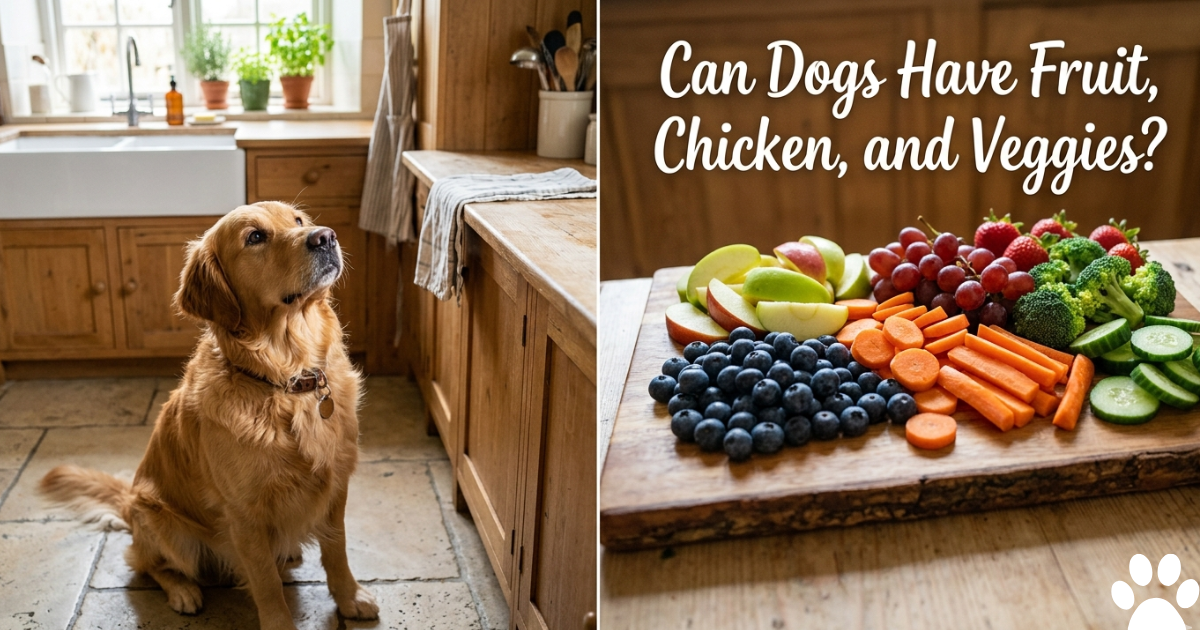
How often should you feed a dog? It sounds like a question with a straightforward answer. In practice, I’ve found it to be one of the most consequential decisions a Golden Retriever owner makes – and one of the most frequently based on habit rather than evidence.
I often see owners feeding once a day because that’s what a previous dog tolerated, or three times a day because a breeder mentioned it years ago, and the routine stuck. Neither approach accounts for how this breed specifically processes food across its lifespan.
How many times a dog should eat depends on far more than convenience. For Golden Retrievers – a breed with a deep chest cavity, a strong food drive, and a genuine predisposition to weight-related health problems – meal frequency directly influences bloat risk, digestive quality, blood glucose regulation, and even long-term joint health.
How many times you should feed a dog also varies with age, health status, and whether the dog has been spayed or neutered. A feeding frequency that served a 4-month puppy is actively wrong for a 6-year-old adult.
This guide answers all three questions with Golden Retriever-specific precision – not generic dog advice that ignores the breed realities that matter most.
How Often Should You Feed a Dog? The Foundation Answer
How often you should feed a dog is not a single, universal number – it is a range that narrows based on life stage, and that range has a physiological rationale, not just a practical one.
General feeding frequency by life stage:
| Life Stage | Age Range | Recommended Meals Per Day |
| Young puppy | 8–12 weeks | 4 |
| Growing puppy | 3–6 months | 3 |
| Adolescent | 6–12 months | 2–3 |
| Adult | 1–7 years | 2 |
| Senior | 7+ years | 2–3 |
The foundation question – how often should you feed a dog – has a breed-specific answer for Golden Retrievers, twice daily for adults, with a higher frequency at younger ages and flexible adaptation in seniors.
Once-daily feeding is not recommended for this breed. A single daily meal creates a long fasting window, encourages rapid eating (a documented bloat risk factor), increases gastric acid accumulation, and makes appetite monitoring – one of the earliest indicators of illness – significantly harder.
How Many Times Should a Dog Eat? The Physiological Case for Twice Daily.
How many times a dog should eat is determined in large part by how canine digestion actually works. Understanding the mechanism clarifies why frequency matters beyond convenience.
A dog’s stomach empties approximately 8-10 hours after a meal. This means a dog fed once every 24 hours spends 14-16 hours in a fasted state, with gastric acid pooling and no food buffer to neutralise it. Over time, this contributes to:
- Intermittent nausea and grass-eating behaviour.
- Gastric hypermotility (audible stomach gurgling, known as borborygmi).
- Increased urgency and speed of eating at the one daily meal.
- Greater volume ingested in a single sitting, elevating bloat risk.
In veterinary medicine, twice-daily feeding is recommended for most adult dogs because it aligns meal timing with the stomach’s natural emptying cycle – the second meal arrives as the first has fully cleared, maintaining gastric pH balance without prolonged acid accumulation.
For Golden Retrievers specifically, how many times a dog should eat is also influenced by the breed’s moderate bloat risk classification. Deep-chested breeds that consume a large single meal rapidly are at a meaningfully higher risk of Gastric Dilatation-Volvulus (GDV) than those eating two measured meals. Splitting daily dog food into two portions directly reduces this risk by reducing per-meal volume.
How Many Times Should You Feed a Dog at Each Life Stage?
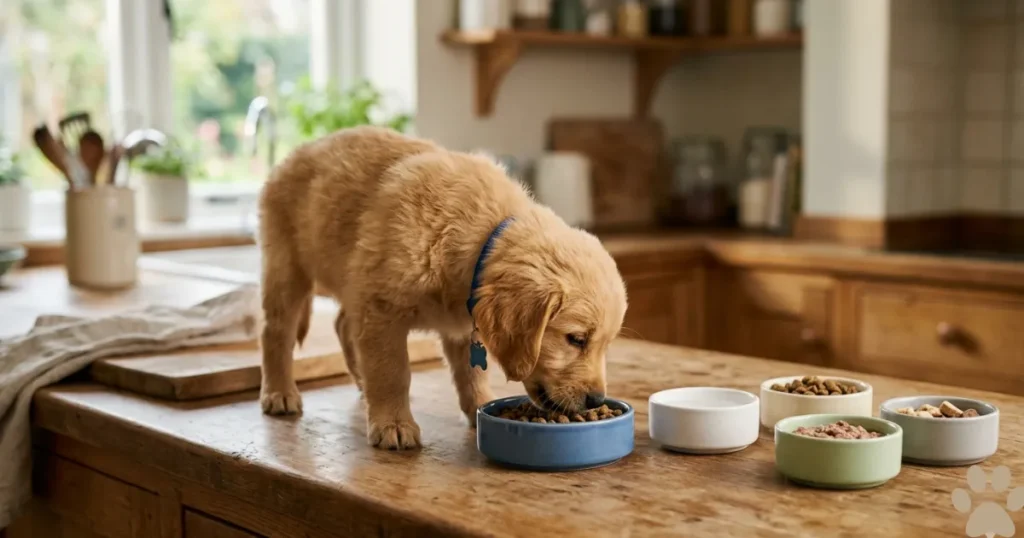
Puppies: 8 Weeks to 3 Months – Feed 4 Times Daily.
At 8 weeks, a Golden Retriever puppy has a stomach roughly the size of a walnut. How often you should feed a dog at this stage is determined by stomach capacity, not convenience. Four small meals per day prevent both hypoglycaemia (low blood sugar between feeds) and gastric overload from large single servings.
What 4-meal feeding achieves at this stage:
- Sustains blood glucose in a puppy, burning energy rapidly.
- Prevents the GI cramping associated with large, infrequent meals.
- Establishes early positive associations with structured mealtimes.
Suggested spacing:
Morning, midday, late afternoon, and early evening – approximately every 4-5 hours. Avoid feeding within 45 minutes of bedtime to support housetraining.
Puppies: 3 to 6 Months – Feed 3 Times Daily.
How many times a dog should eat at 3 – 6 months shifts to three meals as stomach capacity grows. The caloric need per meal increases with the puppy’s body weight, but the frequency reduction is driven by GI maturation rather than convenience.
Transition timing:
Move from four meals to three gradually – reduce the fourth meal over 5-7 days by progressively adding its portion to the remaining three meals rather than dropping it abruptly.
Over the years, I’ve noticed that Golden Retriever owners often move to two meals too early – sometimes at 4 months – because three meals feel demanding on a work schedule. The consequence is usually a puppy that eats too fast, shows signs of mid-afternoon hunger and restlessness, and occasionally vomits bile in the early morning from extended overnight fasting.
Adolescents: 6 to 12 Months – Feed 2 to 3 Times Daily.
How often you should feed a dog in the adolescent window is the most individually variable of any life stage. Most Golden Retrievers between 6 and 12 months are ready to shift to twice-daily feeding, but the exact timing depends on each dog’s GI tolerance for longer gaps.
Signs a Golden Retriever is ready to move from 3 meals to 2:
- Consistently eating all three meals without rushing.
- No signs of mid-gap nausea or grass-eating.
- Stable energy levels between meals.
- Age of at least 6 months.
Signs to hold at 3 meals longer:
- Bile vomiting before the morning meal (empty stomach).
- Visible hunger and restlessness 3 – 4 hours before the next scheduled meal.
- Rapid eating at every meal.
If your adolescent Golden Retriever vomits bile before morning meals, this is a clear indicator that the overnight gap is too long. Either maintain the 3-meal schedule or add a small late-evening snack until the dog is developmentally ready for the longer fast.
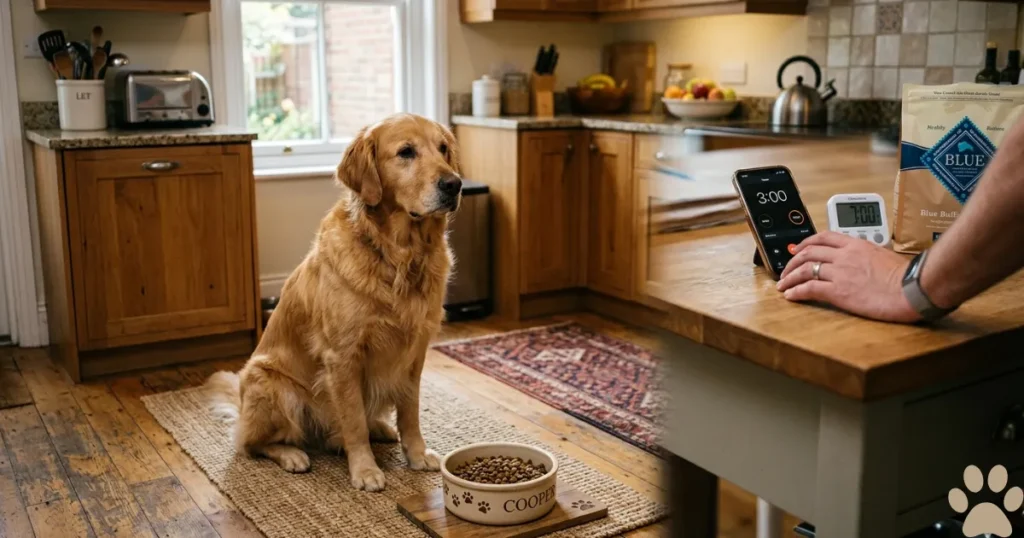
Adult Golden Retrievers: 1 to 7 Years – Feed Twice Daily.
How many times you should feed a dog in adulthood is the most clearly evidenced of any life stage question. For healthy adult Golden Retrievers, twice daily is the answer – morning and evening, spaced 10-12 hours apart.
Why twice daily, not once:
- Reduces per-meal stomach load and associated bloat risk.
- Maintains more consistent energy across the day.
- Allows reliable appetite monitoring – changes in mealtime behaviour are easier to detect when meals are consistent.
- Supports stable blood glucose without the peaks and crashes associated with single large meals.
Why twice daily, not three times:
Three meals per day for a healthy adult Golden Retriever is not necessary and can inadvertently reinforce food-soliciting behaviour throughout the day. A dog fed three times daily has more scheduled feeding events to anticipate – increasing food-focused anxiety in a breed already strongly motivated by meals.
Vet’s Tip: How many times you should feed a dog matters, but meal spacing matters equally. The 10-12 hour gap between adult meals is physiologically deliberate – it allows full gastric emptying before the next meal. Meals spaced only 6 -8 hours apart can cause the second meal to land on a stomach still in its digestive phase, increasing the risk of nausea and reducing absorption efficiency.
Senior Golden Retrievers: 7+ Years – Feed 2 to 3 Times Daily.
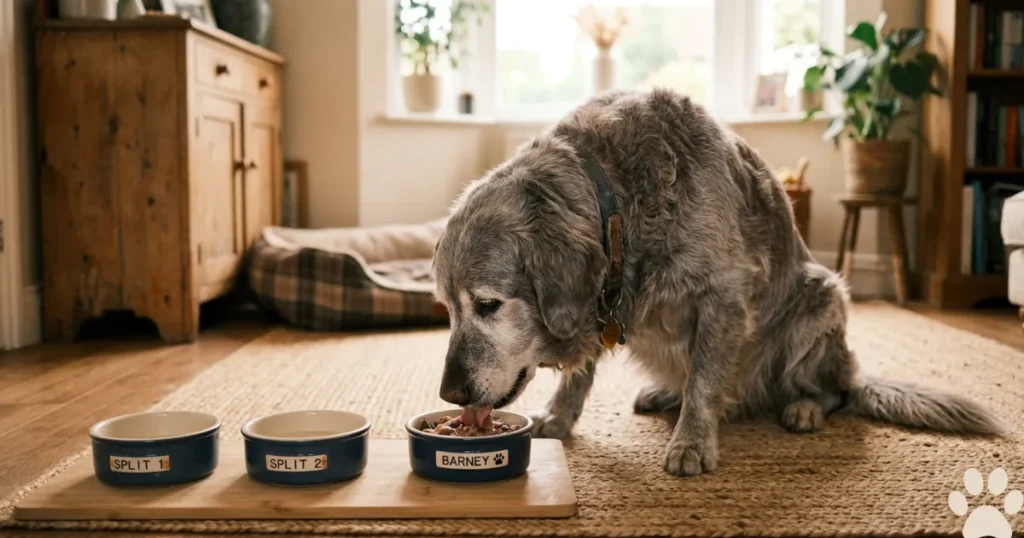
How often you should feed a dog in the senior years is the one stage where the adult standard sometimes needs an upward revision – more meals, not fewer.
Senior Golden Retrievers frequently experience reduced GI motility, decreased appetite reliability, and altered nutrient absorption. How many times a senior dog should eat is less about total calories and more about making those calories accessible.
When to shift a senior Golden from twice to three times daily:
- Consistent meal refusal or partial eating on a two-meal schedule.
- Weight loss without explanation.
- Bile vomiting or nausea before morning meals on the current schedule.
- Medication requirements that benefit from a third food-based administration window.
- Recovery from illness or surgery.
What does NOT change:
Total daily caloric intake. Adding a third meal to a senior dog means redistributing the existing daily food into three smaller portions – not adding a third full meal on top of two.
How Many Times Should You Feed a Dog? Frequency vs. Free-Feeding.
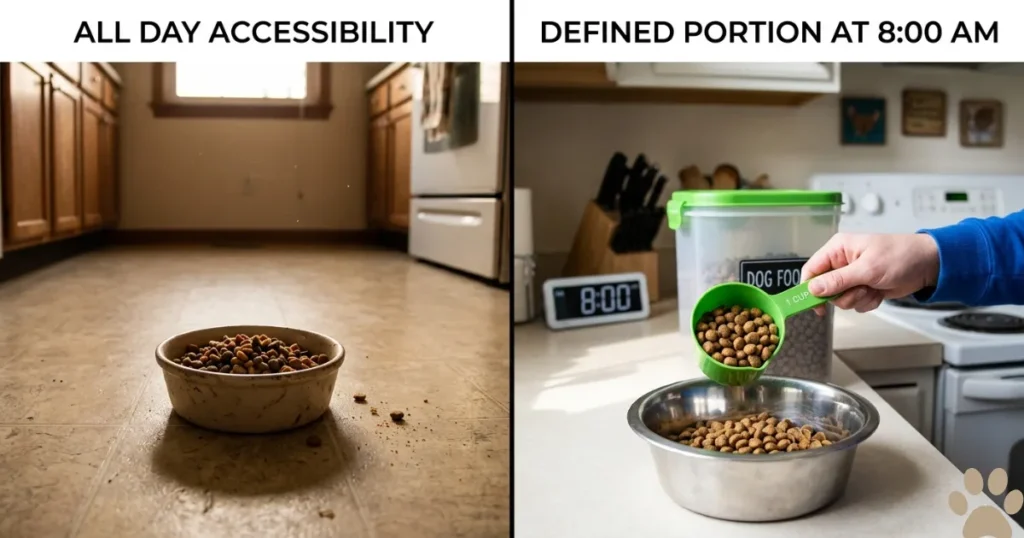
A critical clarification: how many times you should feed a dog refers to structured meals – not continuous food availability.
Free-feeding (leaving kibble out all day) is not an alternative feeding frequency. It is the elimination of structured feeding – and, for Golden Retrievers, it is specifically contraindicated.
Why free-feeding fails Golden Retrievers:
- This breed is constitutionally food-motivated and will overeat when food is continuously available.
- Weight gain from free-feeding develops slowly and is rarely noticed until it has compounded significantly.
- Appetite monitoring – a critical early illness indicator – becomes impossible when intake is not structured.
- Free-feeding disrupts the digestive enzyme priming that structured meal times create.
How many times you should feed a dog is a meaningful question precisely because it assumes meals are defined, portioned, and time-bounded. Free-feeding answers none of those requirements.
6 Factors That Change How Often You Should Feed a Dog.
How often you should feed a dog is not static – it shifts with changes in the dog’s life circumstances. These are the six most common factors that warrant a feeding frequency reassessment:
1. Spaying or neutering.
Hormonal changes post-surgery reduce metabolic rate by 20 – 30%. The number of meals can stay the same, but portion sizes within each meal should be reduced within 4-6 weeks of the procedure to prevent weight gain.
2. Illness or recovery.
How many times a dog should eat during recovery often increases – smaller, more frequent meals reduce GI stress, support medication administration, and maintain caloric intake when appetite is suppressed.
3. Pregnancy and nursing.
Pregnant Goldens in the third trimester and nursing mothers need 3 – 4 meals daily to meet dramatically elevated caloric demands. The question of how often you should feed a dog changes completely during this window.
4. Significant weight changes.
Both weight gain and unexplained weight loss are reasons to reassess not just portion size, but meal frequency. A dog gaining weight on two meals may benefit from the same total daily calories split into three portions to slow the eating pace and reduce post-meal insulin spikes.
5. New multi-dog household dynamics.
How many times you should feed a dog changes when a competitive feeding environment is introduced. Dogs that eat faster to guard their food from housemates often benefit from an additional meal to reduce hunger-driven competition at each sitting.
6. Seasonal activity shifts.
Golden Retrievers in the highly active summer months may need meal frequency adjustments around exercise schedules – particularly to ensure the timing gap between meals and vigorous activity is maintained as daily routines change.
7 Signs Your Current Feeding Frequency Needs Adjustment.
1. Early morning bile vomiting
Yellow foam or liquid before the first meal indicates the overnight fast is too long; add a late-evening small meal or shift to 3 meals.
2. Ravenous eating pace at every meal
Consistent gulping and rushing suggests the gap between meals is producing genuine hunger rather than appetite; consider adding a meal or adjusting timing.
3. Food-soliciting behaviour between every scheduled meal
Mild anticipation is normal; persistent, anxious food-seeking between meals that wasn’t present before suggests a frequency or portion mismatch.
4. Post-meal lethargy or bloated appearance
Especially after a large once-daily meal; splitting into two meals of the same daily total typically resolves this within 1 – 2 weeks.
5. Missed or partial meals in a dog with no illness signs
On a twice-daily schedule, consistently leaving food may indicate the gap is too short for genuine appetite recovery; widen the spacing or shift to once daily only after ruling out health causes.
6. Weight gain despite correct total daily calories
Eating speed and frequency influence insulin response; splitting the same calories across more meals reduces glycaemic spikes and may support healthier weight maintenance.
7. Senior dog eating only part of each meal
Small stomach volume, reduced appetite, and dental discomfort all make smaller, more frequent meals easier to manage; shift to three portions before assuming the dog needs a different food.
Vet Statements.
For healthy adult Golden Retrievers, twice-daily feeding is the veterinary-recommended answer to how often you should feed a dog – once-daily feeding increases bloat risk, extends gastric acid exposure, and makes appetite monitoring less reliable.
How many times a dog should eat changes predictably with age: four meals at 8 weeks, three meals at 3 months, two to three meals between 6 and 12 months, and two meals from adulthood through most of the senior years.
In canine gastric physiology, a dog’s stomach empties in approximately 8- 10 hours; twice-daily feeding aligns the second meal with full gastric clearance of the first, supporting digestive efficiency and reducing acid accumulation.
Golden Retrievers are predisposed to Gastric Dilatation-Volvulus (GDV) as a deep-chested breed; how many times you should feed a dog directly influences bloat risk – two measured meals reduce per-meal stomach load compared to a single daily feeding.
Free-feeding is not an alternative to structured meal frequency – it eliminates the portioning, timing, and appetite monitoring that make structured feeding medically and behaviourally valuable for Golden Retrievers.
How often should you feed a dog?
Most healthy adult dogs should eat twice per day, spaced 10- 12 hours apart. Puppies need 3 -4 meals daily; seniors may benefit from 2 -3. For Golden Retrievers specifically, the standard adult recommendation is twice daily.
How many times should a dog eat per day?
Adult Golden Retrievers: Twice daily.
Puppies under 3 months: Four times daily.
Puppies 3 – 6 months: Three times daily.
Adolescents 6 – 12 months: Two to three times daily.
Senior Goldens: Two to three times, depending on appetite.
How many times should you feed a dog if it has a sensitive stomach?
Dogs with sensitive digestion often do better on three smaller meals daily rather than two larger ones. Smaller portions reduce per-meal gastric load and give the digestive system more manageable volumes to process at each sitting.
Is it okay to feed a Golden Retriever once a day?
Once-daily feeding is not recommended for Golden Retrievers. It creates an extended fasting window, encourages fast eating, increases the risk of bloating, and makes it harder to detect early appetite changes that signal illness.
How often should you feed a dog after spaying or neutering?
Meal frequency can remain the same, but portion size within each meal should decrease by 15 -20% within 4 -6 weeks of surgery. Hormonal changes significantly reduce metabolic rate – maintaining the same portions leads to gradual weight gain.
How many times a day should a Golden Retriever puppy eat?
At 8- 12 weeks: four times daily. At 3 – 6 months: three times daily. At 6- 12 months: transition to two to three times daily based on the puppy’s GI tolerance of longer gaps between meals.
Can I feed my dog three times a day instead of twice?
For healthy adult Golden Retrievers, three meals per day is not necessary and can increase food-motivated behaviour throughout the day. Three meals are appropriate for puppies, seniors with reduced appetite, and dogs recovering from illness.
Why does my dog vomit bile in the morning?
Early-morning bile vomiting in dogs typically indicates that the overnight fast is too long. The stomach produces acid without food to buffer it. Adding a small late-evening meal or shifting to a three-meal schedule usually resolves this.
How often should you feed a senior dog?
Twice daily remains appropriate for many senior Golden Retrievers. However, those with reduced appetite, slower digestion, or weight loss often benefit from three smaller meals daily – same total calories, distributed across more eating occasions.
Does feeding frequency affect bloat risk in Golden Retrievers?
Yes. How many times you feed a dog directly affects the risk of bloat. Twice-daily feeding reduces per-meal stomach volume compared to once-daily feeding. Additionally, avoiding exercise within 1 – 2 hours of any meal further lowers GDV risk in this breed.
How many times should a dog eat if it’s overweight?
The same daily caloric total should be maintained, but split into smaller, more frequent meals – sometimes three times daily instead of two. Smaller meals slow eating pace, reduce post-meal insulin spikes, and help manage weight more effectively than two larger portions.
What happens if I feed my dog at irregular times?
Irregular feeding disrupts the priming of digestive enzymes, which the body prepares based on anticipated meal timing. Inconsistent schedules can cause GI discomfort, acid accumulation, and anxious food-seeking behaviour in meal-pattern-sensitive breeds like Golden Retrievers.
Should I free-feed my Golden Retriever instead of scheduled meals?
No. Free-feeding is not recommended for Golden Retrievers. This breed is food-motivated and prone to overconsumption when food is continuously available. Structured meals allow for portion control and enable monitoring of appetite changes.
How often should you feed a working or highly active dog?
Working or sport dogs may need three meals daily to meet elevated caloric demands without overloading the GI system per sitting. Meal timing should avoid the 1 – 2 hour pre- and post-exercise window to reduce digestive stress during peak activity.
How do I know if I’m feeding my dog too often?
If your dog consistently leaves food at meals, is gaining weight despite correct total portions, or shows reduced interest in meals, the feeding frequency may be too high relative to the time required for appetite recovery. Widen the gap between meals before reducing total daily calories.
Conclusion.
How often should you feed a dog – and how many times a dog should eat each day – are questions with real health consequences, not just logistical preferences. For Golden Retrievers, where bloat risk, food motivation, and weight predisposition all converge, feeding frequency is a health decision.
Twice daily remains the clearest, best-supported answer for healthy adult Goldens. Puppies need more frequent meals as their stomachs and metabolic systems develop. Seniors need flexibility – sometimes more meals, never free-feeding. And how many times you should feed a dog across any life stage should be revisited whenever health status, weight, or household circumstances change significantly.
The dogs I’ve seen do best over the long term are fed consistently, at defined intervals, with meal frequency adjusted thoughtfully at each life stage transition. Not fed more. Not fed less. Fed right – for their age, their physiology, and the specific demands this breed places on a well-structured routine.
If you’re unsure whether your current feeding frequency is still appropriate, your next routine wellness visit is the right moment to reassess with someone who can evaluate your dog directly.
How many times a day do you feed your Golden Retriever – and how did you land on that routine? Whether you moved from three meals to two, tried once-daily feeding and reversed course, or found a three-meal senior schedule that worked better than expected – your real-world experience helps other owners make better decisions. Share your feeding frequency story in the comments.