The word “bloat” is one of the most misused terms in dog care conversations. I often see owners searching for a dog bloated stomach home remedy when what their dog actually has is GDV – gastric dilatation-volvulus – a surgical emergency that kills within hours and has no home treatment. The confusion between garden-variety gas bloating and true GDV is one of the most consequential mistakes a Golden Retriever owner can make.
This guide is built to eliminate that confusion completely. There are two very different conditions that both get called “bloat” – one that responds well to supportive home care, and one that requires an emergency vet within the hour. Knowing which one you’re looking at is not optional information. It’s the difference between a dog that recovers at home and one that doesn’t make it through the night.
Golden Retrievers are predisposed to both forms. Their deep chest anatomy, high food motivation, and tendency toward aerophagia (swallowing air during eating) make them one of the breeds most frequently affected by both simple gas distension and true GDV. What you’ll find here are the tools to tell them apart – and to respond correctly to each.
The Critical First Step: Which Type of Bloat Are You Dealing With?
Before reaching for any dog bloated stomach home remedy, you must identify what you’re treating. These are two distinct conditions with completely opposite appropriate responses.
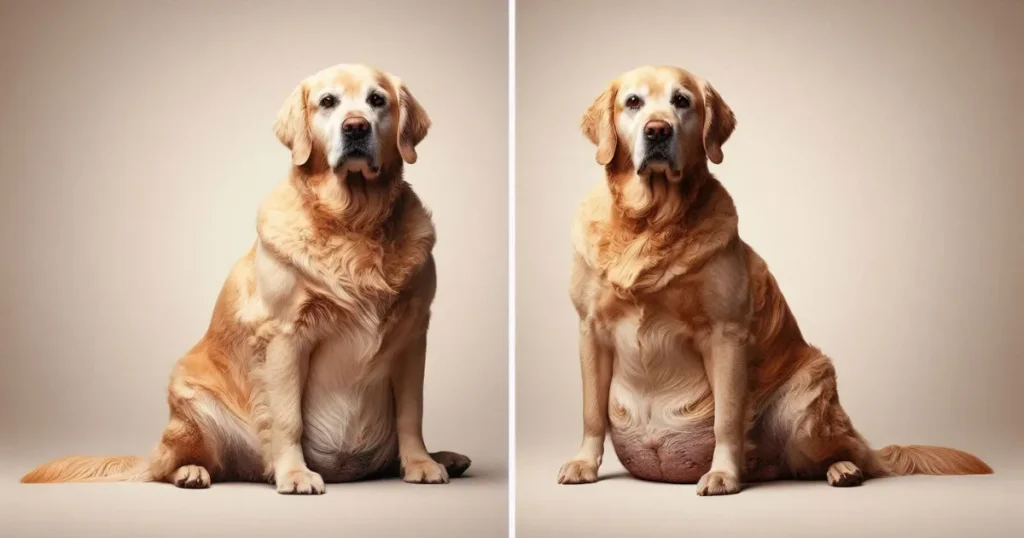
Type 1: Simple Gas Bloating (Manageable at Home).
This is gastric distension caused by gas buildup – most commonly from rapid eating, dietary changes, fermentation of carbohydrates in the gut, or swallowing air. The stomach fills with gas and expands, causing visible or palpable abdominal fullness.
Signs of simple gas bloating:
- Abdomen appears mildly rounded or feels slightly firm, but not hard or drum-tight.
- The dog is passing gas or burping.
- Dog remains alert, engaged, and willing to interact.
- Discomfort is visible, but the dog can settle into a comfortable position.
- No retching – the dog is not attempting to vomit without producing anything.
- Symptoms improve within 30 – 60 minutes.
Type 2: GDV – Gastric Dilatation-Volvulus (Veterinary Emergency).
GDV occurs when the gas-filled stomach rotates on its axis, cutting off blood supply to the stomach wall, spleen, and surrounding tissue. It is not survivable without emergency surgery. There is no dog bloated stomach home remedy for GDV – none. Every minute without intervention reduces the dog’s survival odds.
Signs of GDV – act immediately:
- Abdomen is visibly distended and feels drum-tight or rigid when tapped.
- Unproductive retching – the dog heaves repeatedly, but nothing comes up.
- Excessive drooling combined with obvious distress.
- Rapid, shallow breathing.
- The dog cannot find a comfortable position and paces constantly.
- Weakness, collapse, or gums that are pale, white, or grayish-blue.
- Symptoms are progressing, not improving.
If you see unproductive retching plus a hard, distended abdomen in your Golden Retriever, close this page and drive to an emergency vet. Do not attempt home treatment. Do not wait to see if it improves.
Vet’s Tip: The fastest way to distinguish simple gas bloating from GDV is the retching test. If your dog’s abdomen is swollen but they are passing gas, burping, and not retching – it is likely simple bloating. If the abdomen is swollen and they are retching with nothing coming up, that is GDV until proven otherwise. Do not wait for additional symptoms to develop.
Dog Bloated Stomach Home Remedy: What Works for Simple Gas Bloating.
Once you’ve confirmed that your Golden Retriever has simple gas distension – not GDV – the following approaches are vet-supported and appropriate.
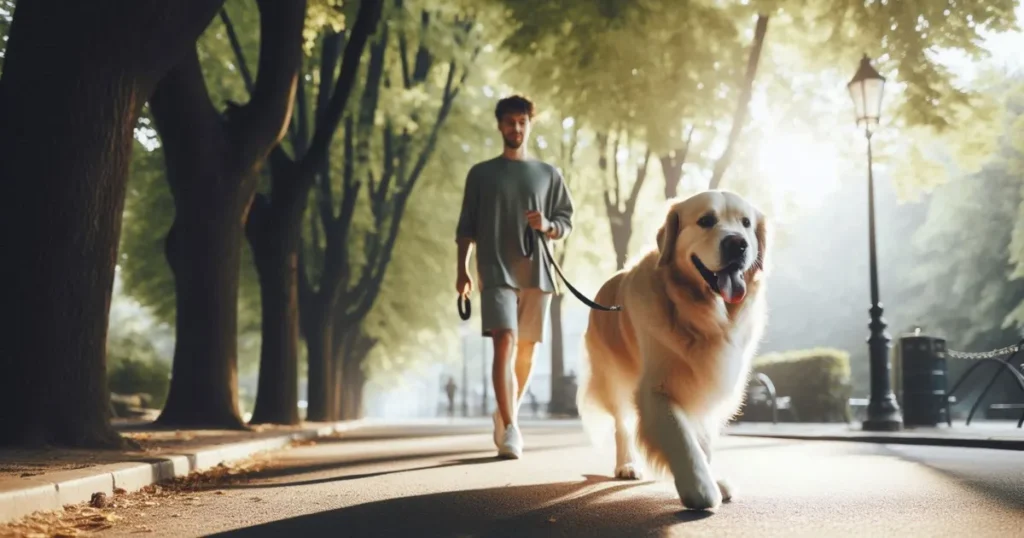
Controlled Movement.
Gentle walking – not running, not playing – stimulates gut motility and helps move trapped gas through the digestive tract. A 10 – 15 minute slow walk at a pace comfortable for your dog is the first recommended step for mild bloating.
Do not allow vigorous exercise. Intense movement with a gas-filled stomach increases GDV risk rather than reducing it.
Temporary Food and Water Withdrawal.
If your dog’s abdomen is visibly distended, withhold dog food for 2 – 4 hours to prevent further gas production. Water can remain available, but limit intake – do not allow gulping. Offer small amounts every 15 – 20 minutes.
This is particularly important if the bloating follows a large meal. The stomach needs time to process what’s already there before more is added.
Simethicone (Gas-X – Plain Formula Only).
Simethicone is the only over-the-counter human medication with a legitimate evidence base as a dog bloated stomach home remedy for simple gas distension. It works by breaking up gas bubbles in the stomach, making them easier to pass.
Dosing guidance for Golden Retrievers (consult your vet to confirm):
- Adult Golden Retriever (55 – 75 lbs): 40 – 80mg simethicone.
- Use only plain simethicone – not antacid combination products.
- Do not use flavored chewable versions intended for children.
- Administer once; if no improvement within 60 minutes, contact your vet.
Simethicone does not treat GDV. It addresses gas – not stomach rotation. If symptoms don’t improve after one dose, you’re likely not dealing with simple gas bloating.
Abdominal Positioning.
Allow your dog to find their own comfortable position. Many dogs with gas bloating find relief lying on their left side, which positions the stomach for easier gas passage. Do not force a position, but observe which orientation your dog gravitates toward.
Probiotic Support during Recovery.
After a gas bloating episode resolves, introducing a canine-formulated probiotic can help rebalance the gut microbiome that may have contributed to excessive fermentation. This is a recovery tool – not an acute remedy – but it reduces the frequency of recurrence when used consistently.
7 Reasons Golden Retrievers Get Bloated Stomachs More Than Other Breeds.
Understanding why Golden Retrievers are disproportionately affected by both types of bloating is essential for prevention – and for understanding why “it just happens” is not an acceptable answer.
1. Deep Chest Anatomy.
The thoracic depth-to-width ratio in Golden Retrievers creates a stomach that has more room to rotate than in barrel-chested or small breeds. This is the primary anatomical GDV risk factor across all deep-chested breeds.
2. Aerophagia from Fast Eating.
Golden Retrievers’ high food drive leads to rapid ingestion, which introduces large volumes of air into the stomach with each bite. This air accumulates, causing distension – the precursor to both simple bloating and GDV.
3. Single Large Meal Feeding.
Owners who feed one large daily meal create a stomach-expansion event once per day. In a deep-chested dog, a maximally distended stomach has greater rotational risk, especially if exercise follows feeding.
4. Stress-Triggered Gut Dysmotility.
In veterinary gastroenterology, stress is documented to alter gut motility in dogs – slowing or disrupting the normal wave-like contractions that move food and gas through the digestive tract. Golden Retrievers, emotionally sensitive by nature, are more vulnerable to stress-related gut slowdown that allows gas to accumulate.
5. Post-Meal Activity.
Running, playing fetch, or rough housing within 60 – 90 minutes of a meal physically destabilizes a food-and-gas-filled stomach. In Golden Retrievers, this is among the most consistent behavioral triggers for acute bloating episodes.
6. Dietary Fermentation.
Diets high in fermentable carbohydrates – certain legumes, some grain-free formulas using peas and lentils as primary ingredients – produce excess gas during digestion. In a breed already prone to gas accumulation, diet composition is a meaningful variable.
7. Drinking Water Too Fast.
Gulping large volumes of water rapidly introduces air and water volume simultaneously into the stomach. Golden Retrievers with high drive and competitive drinking behavior – especially after exercise – create significant gas accumulation within minutes.
What Does NOT Work as a Dog Bloated Stomach Home Remedy.
The internet is full of suggestions. Several are harmless but ineffective. Some Dog Bloated Stomach Home Remedy are genuinely dangerous.

Massaging the abdomen vigorously.
For simple gas bloating, gentle abdominal contact is fine. For GDV – which you may not have yet ruled out – vigorous massage of a rotated stomach causes pain and does not resolve the rotation. If your dog shows distress when you touch its abdomen, stop immediately and call a vet.
Baking soda or carbonated water.
A persistent home remedy myth. Both produce additional gas in the stomach through carbonation or an acid-base reaction. For a dog with an already gas-distended stomach, adding more gas is counterproductive and potentially dangerous.
Pepto-Bismol nor Mylanta.
Neither is formulated or dosed for use in dogs. Bismuth subsalicylate (Pepto) carries toxicity risk in dogs. Antacid formulations don’t address gas distension – they address acid, which is a different problem.
Inducing vomiting.
Never attempt to make a bloated dog vomit. In GDV, the cardia (the upper stomach opening) is often partially or completely obstructed. Forcing vomiting in this state increases esophageal and gastric injury risk without resolving the underlying rotation.
Waiting 24 hours to see if it resolves.
Appropriate for confirmed simple gas bloating that is visibly improving. Catastrophically inappropriate for GDV. The window for survival narrows significantly after 4 – 6 hours without surgical intervention.
6 Prevention Strategies That Reduce Bloating Risk in Golden Retrievers.
“Over the years, I’ve seen the same pattern: owners who implement two or three of these changes simultaneously see dramatic reductions in bloating episodes. The ones who make one change and stop rarely see the same results. Prevention works when it’s applied as a system, not a single fix.”
1. Switch to Two or Three Smaller Meals Daily.
Eliminate the single large meal. Dividing daily food intake into two or three portions reduces the maximum stomach distension volume at any one time – directly reducing both gas buildup and GDV risk.
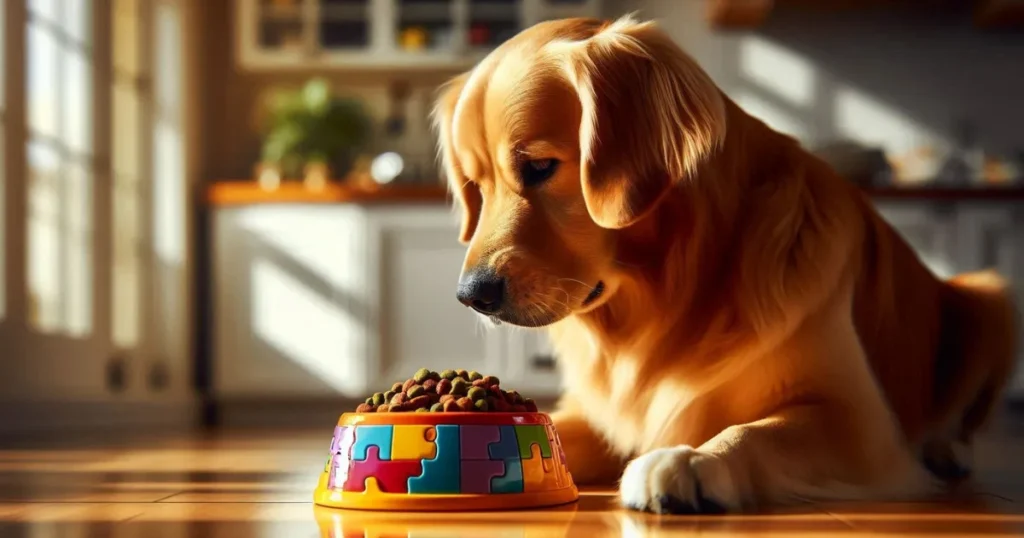
2. Use a Slow-Feeder Bowl at Every Meal.
Slow-feeder bowls reduce ingestion speed by 30 – 50%, significantly decreasing air swallowing. For Golden Retrievers, this is non-negotiable. Standard bowls allow this breed to eat a full meal in under two minutes – far too fast for safe digestion.
3. Enforce a 90-Minute Post-Meal Rest Period.
No runs, no fetch, no rough play for 90 minutes after eating. Gentle walking is acceptable. This single rule eliminates one of the most consistent behavioral triggers for acute bloating in Golden Retrievers.
4. Elevate Water Access, Not Food.
The evidence on elevated food bowls and GDV is mixed – some studies suggest that elevation may increase rather than decrease risk. Elevated water bowls, however, encourage slower drinking by changing the angle of approach. Do not elevate food bowls based on bloat prevention rationale until veterinary guidance specifically recommends it for your dog.
5. Review Dietary Fermentation Load.
If your Golden’s current diet is high in legumes (peas, lentils, chickpeas as primary ingredients), discuss alternatives with your vet. These ingredients ferment readily in the canine gut, producing excess gas in dogs who are already prone to gas accumulation.
6. Discuss Gastropexy with Your Veterinarian
For Golden Retrievers with a documented history of bloating episodes or a family history of GDV, prophylactic gastropexy – a surgical procedure that tacks the stomach to the abdominal wall, preventing rotation – is a serious and increasingly recommended preventive option. It does not prevent gas buildup, but it eliminates the rotation risk that makes GDV lethal. Many veterinarians now offer it as an elective addition to a routine spay or neuter procedure.
Definitive Statements for Dog Bloated Stomach Home Remedy.
There is no dog bloated stomach home remedy for GDV (gastric dilatation-volvulus). GDV requires emergency veterinary surgery and is fatal without intervention – no home treatment addresses stomach rotation.
Simethicone (plain Gas-X) is the only over-the-counter option with a legitimate evidence basis as a dog bloated stomach home remedy for simple gas distension – not for GDV.
In Golden Retrievers, unproductive retching combined with a hard, distended abdomen is a veterinary emergency. This combination distinguishes GDV from simple gas bloating and requires immediate action.
Golden Retrievers are predisposed to bloating due to deep chest anatomy, high food motivation, aerophagia from fast eating, and stress-related gut dysmotility – all of which are manageable with correct prevention strategies.
Prophylactic gastropexy – a surgical procedure preventing stomach rotation – is a vet-recommended preventive option for Golden Retrievers with recurrent bloating or a breed-related GDV risk history.
What is a safe dog bloated stomach home remedy?
For simple gas bloating: a 10 – 15 minute gentle walk, temporary food withdrawal, and a single dose of plain simethicone (Gas-X). These are only appropriate if the dog is alert, passing gas, and not retching.
Can I give my dog Gas-X for a bloated stomach?
Yes, plain simethicone (Gas-X) is vet-supported for simple gas bloating in dogs. For a Golden Retriever, 40 – 80mg is the typical guidance. Do not use flavored or combination antacid formulas.
How do I know if my dog’s bloated stomach is an emergency?
If the abdomen is drum-tight and your dog is retching without producing anything, it is an emergency. Go to a vet immediately. Do not attempt home treatment. GDV is fatal without surgery.
What causes a bloated stomach in Golden Retrievers?
Common causes include eating too fast, swallowing air, large single meals, post-meal exercise, fermentable dietary ingredients, and stress-related gut dysmotility. Deep chest anatomy increases the risk of simple bloating escalating to GDV.
Is walking good for a bloated dog?
Gentle walking helps move gas through the digestive tract for simple gas bloating. Do not allow running or vigorous play. If symptoms don’t improve after 15 minutes of gentle walking, contact your vet.
What is the difference between bloat and GDV in dogs?
Bloat refers to the distension of the stomach by gas. GDV (gastric dilatation-volvulus) occurs when the distended stomach rotates on its axis, trapping contents and cutting off blood supply. GDV is a surgical emergency; simple bloating is not.
Can a dog recover from GDV without surgery?
No. GDV requires surgical intervention to unrotate the stomach and assess tissue viability. Without surgery, it is fatal – typically within hours of onset. There is no dog bloated stomach home remedy for GDV.
Should I massage my dog’s stomach if it’s bloated?
Gentle contact is fine for confirmed simple gas bloating. Do not massage vigorously, and stop immediately if the dog shows signs of pain. Never massage a stomach you suspect may be GDV.
Does baking soda help a bloated dog?
No. Baking soda produces carbon dioxide gas when it contacts stomach acid, which worsens gas distension. It is not a safe dog bloated stomach home remedy and should not be used.
How long does simple bloating last in dogs?
Mild gas bloating in dogs typically resolves within 30 – 60 minutes with gentle movement and food withdrawal. If it persists for 60 – 90 minutes without improvement, contact your vet.
What foods cause bloating in Golden Retrievers?
Foods high in fermentable carbohydrates – diets using peas, lentils, and chickpeas as primary ingredients – are common contributors. Eating too fast with any food also introduces significant air, causing bloating regardless of diet composition.
Can stress cause bloating in dogs?
Yes. Stress alters gut motility in dogs, slowing normal digestive contractions and allowing gas to accumulate. Golden Retrievers are particularly susceptible due to their emotional sensitivity.
What is gastropexy, and does my Golden Retriever need one?
Gastropexy is a surgical procedure that attaches the stomach to the abdominal wall to prevent rotation. It is recommended for Golden Retrievers with recurrent bloating or a family history of GDV. Discuss with your vet – it can be done during routine spay/neuter.
Can I prevent bloating in my Golden Retriever?
Yes. Feed two to three smaller meals daily, use a slow-feeder bowl, enforce a 90-minute post-meal rest, and review dietary fermentation load. These changes significantly reduce bloating frequency in this breed.
When should I call the vet for a bloated dog?
Call immediately if: the abdomen is hard and distended, the dog is retching without producing anything, the gums are pale, or your dog is collapsing or in obvious distress. For mild gas bloating with no retching, monitor for 60 minutes and call if no improvement.
Conclusion.
The most important thing this guide can give you is clarity: a dog bloated stomach home remedy is only appropriate for simple gas distension – and only once GDV has been ruled out. Golden Retrievers are a high-risk breed for both, which means the decision between home care and emergency care must be made quickly and correctly every time.
For simple bloating: gentle movement, temporary food withdrawal, and plain simethicone are the evidence-supported tools.
For GDV: there are no tools – only time, and getting to a vet before that time runs out.
The owners who protect their Golden Retrievers most effectively are those who understand this distinction before an episode occurs. Prevention is equally important – slow feeders, smaller meals, post-meal rest, and a proactive conversation with your vet about gastropexy if your dog has a history of bloating. Build these habits now. They are far easier to maintain than the alternative.
Has your Golden Retriever ever had a bloating episode – and how did you know what you were dealing with?
Whether you caught something early, misjudged the severity, or learned the hard way about the difference between gas bloating and GDV, your story could help another owner make the right call faster. Share what happened in the comments below.