I often tell owners that the most dangerous moment with a sick Golden Retriever is the first (30) thirty minutes – not because of what’s happening medically, but because of what the owner does next. Reaching for the wrong remedy, forcing food, or dismissing symptoms as minor are the three most common mistakes I see, and all three can turn a manageable situation into a veterinary emergency.
Dog upset stomach treatment is not one-size-fits-all. What helps a Chihuahua with mild nausea may be completely inappropriate for a 65-pound Golden Retriever with a deep chest and a tendency toward bloat. The breed matters. The symptom pattern matters. The timing matters.
Golden Retrievers are predisposed to gastrointestinal sensitivity due to their anatomy, food drive, and documented higher rates of conditions like pancreatitis, inflammatory bowel disease, and food intolerances. Knowing how to help a dogs upset stomach – quickly, safely, and correctly for this breed specifically – is one of the most practical skills a Golden Retriever owner can develop. This guide gives you that skill in full.
The First Decision: Is This a Home Treatment or a Vet Situation?
Before reaching for anything, assess. Dog upset stomach treatment begins with triage, not intervention.
Treat at home if your Golden shows:
- A single vomiting episode with normal alertness afterward
- Mild loose stool, eating and drinking normally
- Grass eating followed by settled behavior
- Temporary food refusal with no other symptoms
- Audible gut sounds without visible distress
Contact your vet the same day if you see:
- Vomiting two or more times within four hours
- Food refusal lasting more than 12 hours
- Mucus or dark color in the stool
- Lethargy combined with any digestive symptom
- Visible discomfort when the abdomen is touched
Go to an emergency vet immediately if:
- The abdomen is visibly bloated or feels hard
- Your dog is retching repeatedly with nothing coming up
- Gums are pale, white, or grayish
- Your dog collapses or cannot stand
- There is blood in the vomit or stool
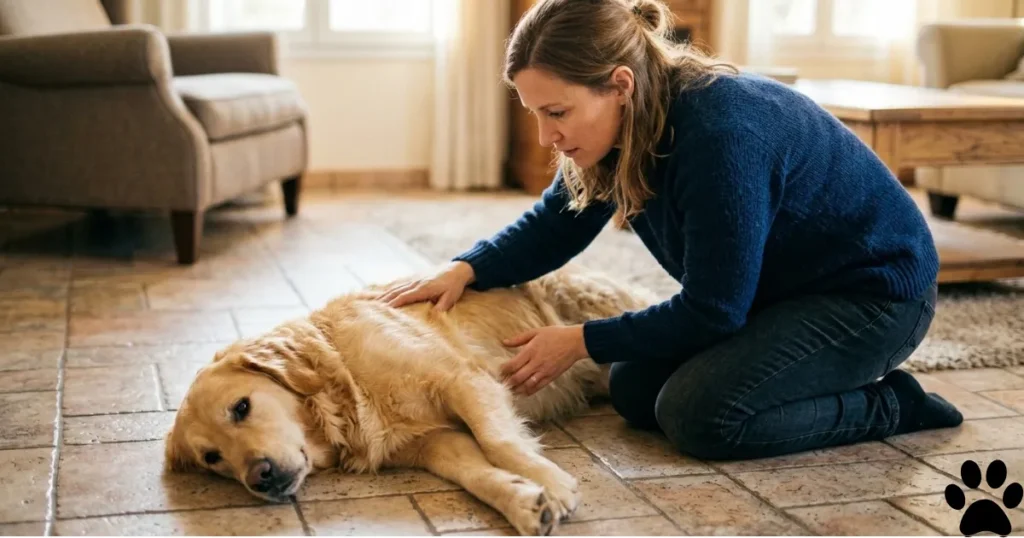
In Golden Retrievers, unproductive retching combined with a distended abdomen is a veterinary emergency – not a home treatment situation. This presentation is the hallmark of GDV (gastric dilatation-volvulus), which is fatal without immediate surgical intervention.
Step-by-Step Dog Upset Stomach Treatment for Mild Cases
Once you’ve confirmed symptoms are mild, this is the protocol that veterinary practice supports.
Step 1: Implement a Food Fast (6- 12 Hours).
The most effective immediate dog upset stomach treatment for adult Golden Retrievers is temporary food withdrawal. Fasting gives the inflamed stomach lining time to recover without the added burden of digesting new material.
- Fast for 6 hours for mild nausea or a single vomiting episode.
- Fast for 12 hours for moderate upset with multiple loose stools.
- Always maintain water access – small amounts every 15- 20 minutes if vomiting is present.
- Do not fast: puppies under 6 months, pregnant dogs, diabetic dogs, or dogs with known hypoglycemia risk.
Step 2: Introduce the Bland Diet.
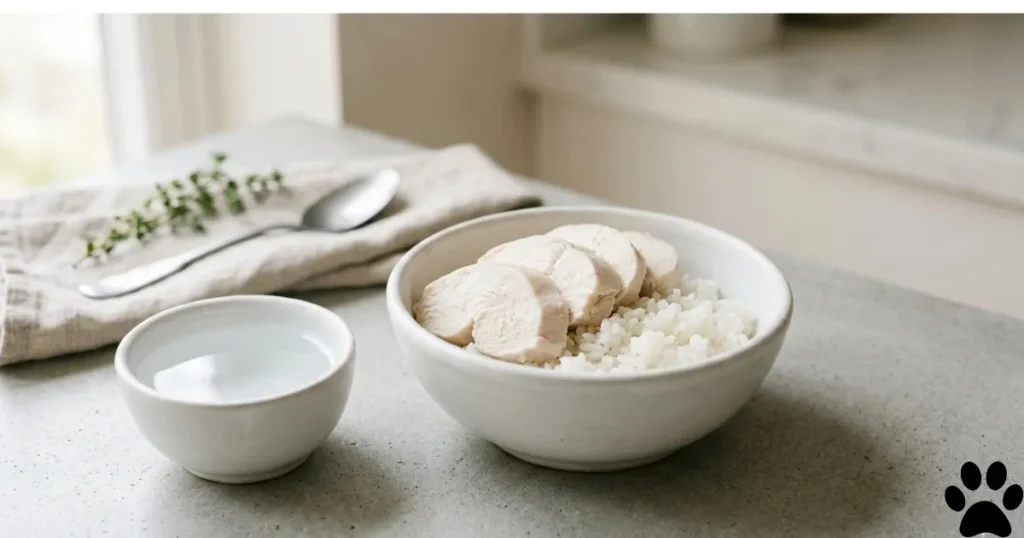
After fasting, a bland diet is the gold standard for how to help a dogs upset stomach at home. It is low in fat, easy to digest, and gentle on an irritated gut lining.
Bland diet formula:
- Boiled chicken breast (skinless, boneless) + plain white rice in a 1:3 ratio.
- Serve at 25 – 30% of your dog’s normal meal volume.
- Feed every 4 – 6 hours rather than the standard meal schedule.
- Continue for 2 – 3 days before transitioning back to regular dog food.
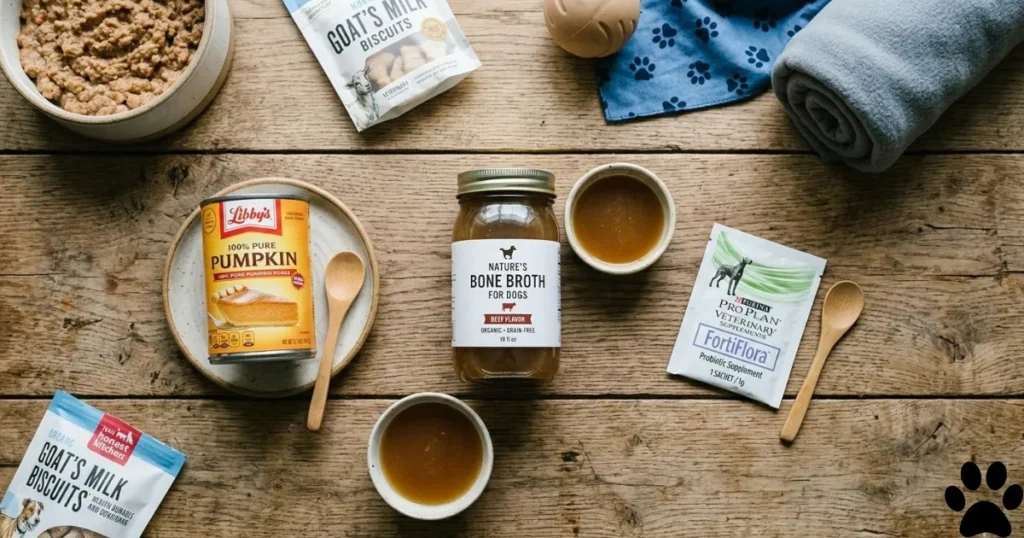
Plain pumpkin puree (not pie filling, not spiced) can be added at 1 – 2 tablespoons per meal. Its soluble fiber content helps normalize both loose stools and constipation – one of the few remedies that works in both directions.
Step 3: Reintroduce Regular Food Gradually.
One of the most common mistakes owners make after treating an upset stomach is returning to normal food too quickly. The gut needs a transition period.
- Day 1-2: 100% bland diet.
- Day 3: 75% bland diet, 25% regular food.
- Day 4: 50/50 blend.
- Day 5: 25% bland diet, 75% regular food.
- Day 6+: Full return to regular food.
If symptoms return during reintroduction, return to the bland diet and schedule a vet consultation.
How to Help a Dogs Upset Stomach: What Actually Works vs. What Doesn’t?
Not everything circulating online as a dog upset stomach treatment is safe – or effective. This distinction matters significantly for Golden Retrievers, whose size and breed-specific metabolism affect how they process substances.
What Works – Vet Supported.
Canine Probiotics:
Dog-specific probiotic supplements containing Lactobacillus acidophilus and Bifidobacterium animalis strains actively restore gut flora balance disrupted by illness, antibiotics, or dietary upset. They are one of the most evidence-backed tools for how to help a dogs upset stomach and recurring patterns. Human probiotics are not equivalent – the bacterial strains are calibrated for human gut pH, not canine gut pH.
Slippery Elm Bark:
It is used in veterinary herbal medicine as a gastrointestinal protectant. Slippery elm forms a mucilaginous coating on the stomach and intestinal linings, reducing irritation. Dose: approximately 1/4 teaspoon of powder per 10 lbs of body weight, mixed into a small amount of warm water and added to food. Use only plain slippery elm bark powder – not capsules marketed for humans.
Bone Broth (Unsalted, Allium-Free):
Plain bone broth with no onion, garlic, or added salt supports gut lining integrity. It encourages hydration in dogs that are reluctant to drink after vomiting. It is not a treatment in isolation, but a useful adjunct to the bland diet protocol.
Electrolyte Support:
If your Golden Retriever has had repeated vomiting or significant diarrhea, plain unflavored Pedialyte (not sports drinks) diluted 50/50 with water can support hydration. Limit to small amounts – no more than a few tablespoons at a time for a dog this size.
What Does Not Work – And What Is Actively Harmful?
Pepto-Bismol.
Bismuth subsalicylate – the active ingredient – is a salicylate compound that carries toxicity risk in dogs, particularly at repeated dosing. It also masks symptoms that may indicate a more serious condition. Avoid entirely.
Ibuprofen or Aspirin.
Human NSAIDs cause gastrointestinal ulceration in dogs even at low doses. They do not treat the cause of dog upset stomach symptoms – they create new ones.
Milk or Dairy Products.
A persistent home remedy myth. Most adult dogs are functionally lactose intolerant. Adding dairy to an already upset gastrointestinal system reliably worsens loose stool and gut irritation.
Ginger Supplements Dosed for Humans.
While ginger has mild anti-nausea properties, human-dosed ginger capsules are not calibrated for canine body weight or metabolism. Underdosing provides no benefit; overdosing causes additional gut irritation.
Vet’s Tip: The single most overlooked aspect of dog upset stomach treatment is what happens after recovery. Most owners stop tracking once the dog seems better – and then can’t explain why the same issue returns three weeks later. Keep a simple food diary for 30 days post-recovery. The pattern it reveals is almost always more useful than any remedy.
8 Common Mistakes Owners Make When Treating a Golden Retriever’s Upset Stomach.
1. Feeding immediately after vomiting.
The stomach needs time to settle. Offering food within an hour of vomiting overloads an irritated gut lining and typically triggers another episode.
2. Using human medications without vet guidance
Pepto-Bismol, ibuprofen, Imodium – these are frequently given because they work for humans. They carry meaningful toxicity and side effect risks in dogs and should never be the first response.
3. Returning to regular food too quickly.
The gut lining takes time to recover. A 24-hour return to a full normal diet after a stomach upset is one of the most reliable ways to produce a relapse.
4. Giving large amounts of water after vomiting.
Water is essential, but gulping large quantities immediately after vomiting distends the stomach and can trigger further vomiting. Small, controlled amounts every 15 – 20 minutes is the correct approach.
5. Adding fats or oils to the bland diet.
Some owners add olive oil or butter to make bland food more palatable. Both are high-fat additions that stress an already-taxed pancreas – particularly problematic in Golden Retrievers, who have elevated pancreatitis risk.
6. Dismissing recurring mild episodes.
If your Golden is experiencing mild stomach upsets twice a month or more, this is a pattern, not a coincidence. Recurring dog upset stomach symptoms in this breed often indicate food sensitivity, IBD, or early EPI (exocrine pancreatic insufficiency).
7. Skipping vet evaluation after blood in stool.
Blood in stool – even a small amount, even just once – is not a wait-and-see symptom. It indicates gastrointestinal bleeding and requires a same-day veterinary assessment.
8. Using the bland diet indefinitely.
The bland diet is a short-term recovery tool, not a long-term nutritional solution. Boiled chicken and rice lack the full nutritional profile a Golden Retriever needs. Two to three days maximum, then transition back to a complete diet.
How to Help a Dogs Upset Stomach When It’s Stress-Related.
Not every dog upset stomach treatment involves food or medication. In Golden Retrievers specifically, stress is a clinically significant and frequently underestimated trigger for acute gastrointestinal symptoms.
The gut-brain axis in dogs is well-established in veterinary gastroenterology. Anxiety from travel, changes in the household, thunderstorms, new environments, or schedule disruption directly activates the sympathetic nervous system – which suppresses normal digestive motility and can trigger acute nausea, loose stool, or vomiting with no dietary cause.

Signs the upset stomach is stress-related:
- Upset Stomach symptoms occur consistently around a specific trigger (car rides, vet visits, storms).
- Normal eating and digestion in a stable home environment.
- Loose stool or vomiting begins within 30 – 60 minutes of the stressor.
- No other household members or pets are affected.
Management approach:
- Identify and minimize the trigger where possible.
- Provide a calm, predictable environment during and after stressor exposure.
- Discuss anxiolytic support options with your vet for known high-stress events (travel, fireworks).
- Probiotic supplementation has shown benefit in stress-related gut disruption by supporting microbiome stability.
“Over the years, I’ve seen Golden Retrievers with textbook stomach upset symptoms that cleared completely once the owner identified and addressed a household stressor – a new baby, a move, a change in the dog’s daily routine. The gut does not operate independently of the mind in this breed.”
Top 5 Foods That Support Dog Upset Stomach Recovery in Golden Retrievers.
1. Boiled Chicken Breast (Plain)
The most effective single protein source for digestive recovery. Low fat, highly digestible, no additives. It forms the protein foundation of the bland diet protocol and is well tolerated even in dogs with confirmed food sensitivities.
2. Plain White Rice
Short-chain, low-fiber carbohydrate that slows intestinal transit and provides easily absorbed energy without taxing digestive enzyme capacity. Not nutritionally complete long-term – appropriate for 2- 3 days only.
3. Plain Pumpkin Puree
Soluble fiber that normalizes both ends of the loose stool/constipation spectrum. Contains pectin, which supports beneficial gut bacteria and helps rebuild gut lining integrity after irritation.
4. Plain Low-Sodium Bone Broth
It supports hydration and contains glycine and gelatin, both of which have documented gut lining protective effects. Useful for dogs reluctant to drink water during recovery.
5. Canine Probiotic Supplement
Not a food, but best delivered with food. Adding a canine-formulated probiotic during and after recovery actively rebuilds the gut microbiome disrupted by the stomach upset episode.
My Experience.
Dog upset stomach treatment in healthy adult Golden Retrievers begins with a 6- 12 hour food fast, followed by a bland diet of plain boiled chicken and white rice in a 1:3 ratio, fed in small portions every 4- 6 hours.
Pepto-Bismol is not a safe dog upset stomach treatment – it contains bismuth subsalicylate, which carries toxicity risk in dogs and should not be administered without explicit veterinary guidance.
In Golden Retrievers, recurring stomach upsets – even mild ones – occurring more than twice monthly should be evaluated for inflammatory bowel disease, food sensitivity, or exocrine pancreatic insufficiency.
Plain pumpkin puree (not spiced pie filling) is one of the few home remedies for how to help a dogs upset stomach that works for both diarrhea and constipation due to its soluble fiber content.
Stress is a clinically documented trigger for dog upset stomach symptoms in Golden Retrievers. The gut-brain axis in this breed makes emotional and environmental factors as relevant as dietary ones.
What is the best dog upset stomach treatment at home?
A 6 – 12 hour food fast followed by small portions of boiled chicken and plain white rice every 4 – 6 hours. Add plain pumpkin puree for fiber support. Transition back to regular food gradually over 3- 5 days.
How do I help my Golden Retriever’s upset stomach fast?
Remove food for 6 hours, offer small sips of water every 15 – 20 minutes, and then introduce a bland diet of boiled chicken and white rice in small, frequent portions.
Can I give my dog Pepto-Bismol for an upset stomach?
No. Pepto-Bismol contains bismuth subsalicylate, which is not safe for dogs at standard dosing and can mask symptoms of more serious conditions. Use vet-approved alternatives only.
How long should I keep my dog on a bland diet?
Two to three days for mild upset. Then transition gradually – 25% regular food per day – back to their normal diet. The bland diet is a short-term recovery tool, not a long-term solution.
Is pumpkin good for a dog’s upset stomach?
Yes. Plain pumpkin puree (not pie filling) contains soluble fiber that helps normalize both diarrhea and constipation. Add 1 – 2 tablespoons to bland diet meals during recovery.
What foods should I avoid when treating a dog’s upset stomach?
Avoid fatty foods, dairy, table scraps, high-fiber vegetables, and any new protein sources. These add digestive load to an already-irritated gut and commonly trigger relapse.
Should I withhold water if my dog is vomiting?
No, but restrict quantity. Offer small amounts – a few tablespoons – every 15- 20 minutes rather than open bowl access. Gulping large quantities after vomiting distends the stomach and can worsen symptoms.
When does dog upset stomach treatment require a vet?
Symptoms lasting more than 48 hours, blood in vomit or stool, lethargy, refusal to drink water, visible bloating, or unproductive retching all require veterinary assessment. Do not wait for these to be out at home.
Are probiotics good for dogs with upset stomachs?
Yes, when formulated for dogs. Canine probiotics containing Lactobacillus acidophilus and Bifidobacterium animalis restore gut flora and support recovery. Human probiotics use different bacterial strains and are not equivalent.
Can stress cause an upset stomach in dogs?
Yes. In Golden Retrievers, anxiety from travel, new environments, household changes, or loud events is a documented trigger for acute gastrointestinal symptoms through the gut-brain axis.
How much bland diet should I feed my Golden Retriever?
Start at 25 – 30% of their normal meal volume, divided into 3 – 4 small feedings per day rather than one or two large meals. Smaller, more frequent portions reduce gastric load during recovery.
What is slippery elm bark and does it help dog upset stomachs?
Slippery elm bark powder creates a mucilaginous coating on the stomach and intestinal linings, reducing irritation. It is used in veterinary herbal medicine at approximately 1/4 teaspoon per 10 lbs body weight.
Why does my Golden Retriever get an upset stomach so often?
Recurring dog upset stomach in Golden Retrievers often indicates food sensitivity, pancreatitis, IBD, or EPI. Track the frequency and triggers, and consult your vet if episodes occur more than twice per month.
Is bone broth good for a dog’s upset stomach?
Yes. Plain, unsalted bone broth with no onion or garlic supports hydration, encourages drinking in reluctant dogs, and contains glycine, which supports gut lining integrity during recovery.
How do I transition my dog back to normal food after an upset stomach?
Blend gradually over 3 – 5 days: start with 75% bland diet and 25% regular food, increasing the regular food proportion daily until fully transitioned. A sudden return to normal food often triggers relapse.
Conclusion.
Dog upset stomach treatment, when done correctly, is methodical, not reactive. It begins with triage – distinguishing what can be managed at home from what requires immediate veterinary care. For mild cases, the protocol is consistent: a brief food fast, a bland diet introduced in small portions, and a measured transition back to normal food over several days.
Knowing how to help a dogs upset stomach also means knowing what not to do – and for Golden Retriever owners that list matters. Human medications, dairy-based remedies, and rapid food reintroductions are among the most common ways a manageable stomach upset becomes a recurring or worsening problem.
The owners who handle these situations best are those who observe before they act, keep a food diary, and recognize early that recurring episodes in this breed are a signal worth investigating rather than managing indefinitely at home. Build those habits now – before your Golden needs them.
What’s worked for your Golden Retriever when stomach upset struck?
Did you discover a remedy that helped faster than expected – or one that made things worse?
You may have caught a stress trigger you hadn’t noticed before. Other Golden owners are reading this right now, and your experience could be exactly what they need. Share it in the comments below.