

Throughout my years of experience treating Golden Retrievers, I’ve encountered countless owners seeking homemade dog food recipes, hoping to provide superior nutrition through home-prepared meals using whole-food ingredients. The desire to cook for your Golden resonates deeply – controlling every ingredient, avoiding commercial additives, and preparing meals resembling what your family eats feels like the ultimate expression of care. However, understanding how to safely prepare dog food recipes requires knowledge extending far beyond simply cooking “healthy” ingredients and serving them to your Golden Retriever.
In my clinic, I’ve observed both remarkable health outcomes and devastating nutritional deficiencies from homemade dog food recipes. When properly formulated with veterinary nutritionist guidance, appropriately supplemented, and executed with food safety protocols, home-prepared diets support Golden Retriever health beautifully. When improperly executed – following random internet recipes, skipping essential supplements, or using inappropriate ingredients – these same dog food recipes create serious problems I’ve treated throughout my career. Today, I’ll share comprehensive veterinary guidance on homemade feeding for Golden Retrievers, including safe recipes, supplementation requirements, and an honest assessment of when commercial food better serves your dog’s nutritional needs.
Contents
- 1 Understanding Homemade Dog Food Recipe Requirements
- 2 Veterinary-Formulated Homemade Dog Food Recipes.
- 3 Homemade Dog Food Recipes for Small Dogs.
- 4 Critical Supplementation for Homemade Dog Food Recipes.
- 5 Food Safety Protocols for Dog Food Recipes.
- 6 Common Mistakes with Homemade Dog Food Recipes.
- 7 Cost Reality of Homemade Dog Food Recipes.
- 8 Life Stage Considerations for Dog Food Recipes.
- 9 When Commercial Food Makes More Sense.
- 9.1 Advantages of Commercial Dog Food.
- 9.2 When Homemade Feeding Makes Sense.
- 9.3 Are homemade dog food recipes safe for Golden Retrievers?
- 9.4 What are the best dog food recipes for Golden Retrievers?
- 9.5 Can I use the same homemade dog food recipes for small dogs as large breeds?
- 9.6 Do homemade dog food recipes require supplements?
- 9.7 How much do homemade dog food recipes cost monthly?
- 9.8 Can I feed homemade dog food recipes to Golden Retriever puppies?
- 9.9 How long do homemade dog food recipes last?
- 9.10 Are homemade dog food recipes better than commercial dog food?
- 10 Conclusion.
Understanding Homemade Dog Food Recipe Requirements
Before diving into specific homemade dog food recipes, I explain what makes canine nutrition unique and why simply cooking “healthy” human food doesn’t automatically create balanced dog nutrition.

Why Dogs Need Different Nutrition than Humans
Dogs require different nutrient ratios, specific amino acids, precise mineral balances, and certain vitamins in amounts dramatically different from human requirements. The dog food recipes that work provide:
Complete amino acid profiles:
Ten essential amino acids dogs cannot synthesize internally:
- Arginine
- Histidine
- Isoleucine
- Leucine
- Lysine
- Methionine
- Phenylalanine
- Threonine
- Tryptophan
- Valine
Proper calcium-to-phosphorus ratios:
1:1 to 1.8:1 (ideally 1.2:1 to 1.4:1 for puppies). Meat contains high phosphorus but minimal calcium, creating dangerously imbalanced ratios without supplementation
Essential fatty acids:
Linoleic acid (omega-6) and alpha-linolenic acid, EPA, DHA (omega-3s) in appropriate ratios supporting skin, coat, joints, brain, and cardiac health
Precise vitamin balance:
Fat-soluble vitamins (A, D, E, K) and water-soluble vitamins (B-complex, C, choline) in amounts meeting AAFCO standards
Trace minerals:
Iron, zinc, copper, manganese, selenium, iodine in precise amounts – deficiencies or excesses both cause serious health problems
The homemade dog food recipes I recommend address all these requirements through whole-food ingredients plus mandatory supplementation.
Common Failures in Homemade Dog Food Recipes
Throughout my career, I’ve identified recurring nutritional failures in well-intentioned dog food recipes:
Calcium-phosphorus imbalances:
Most common deficiency I treat. Meat-heavy recipes without calcium supplementation create ratios of 1:10 or worse, causing skeletal problems, particularly devastating in growing puppies
Vitamin deficiencies:
Thiamine deficiency (neurological problems), vitamin A deficiency (vision issues), vitamin D deficiency (skeletal abnormalities), and vitamin E deficiency (muscle degeneration).
Essential fatty acid deficiencies:
Poor coat quality, skin problems, and immune dysfunction when recipes lack appropriate fat sources.
Trace mineral deficiencies:
Zinc deficiency (skin lesions), copper deficiency (anemia), iodine deficiency (thyroid dysfunction), and selenium deficiency (muscle disease).
Protein inadequacy:
Some homemade dog food recipes skimp on protein, attempting to save money, providing insufficient amino acids for muscle maintenance.
Vet’s Tip: Never follow random internet homemade dog food recipes without veterinary nutritionist verification. I’ve treated countless nutritional deficiencies from recipes that seemed “healthy” but lacked complete balanced nutrition. Professional formulation through services like BalanceIT isn’t optional – it’s mandatory for safe long-term feeding.
Veterinary-Formulated Homemade Dog Food Recipes.
These dog food recipes demonstrate proper formulation meeting AAFCO standards when correctly supplemented. All recipes provide complete nutrition for adult Golden Retrievers at maintenance.

Recipe # 1: Chicken and Rice Formula.
This classic combination represents one of the most popular homemade dog food recipes when properly balanced.
Ingredients (makes approximately 7 pounds):
- 2.5 pounds boneless, skinless chicken thighs.
- 2.5 cups brown rice (uncooked weight).
- 2 cups mixed vegetables (carrots, green beans, and broccoli).
- 3 tablespoons fish oil.
- 2 tablespoons ground flaxseed.
Mandatory Supplements:
- Calcium carbonate: 2,400-2,800 mg (approximately 2.5 teaspoons).
- Multivitamin-mineral supplement (BalanceIT or Hilary’s Blend for chicken recipes).
Preparation:
- Bake chicken at 350 °F for 35-40 minutes (internal temp 165 °F), then dice.
- Cook rice according to package directions.
- Steam vegetables until tender, chop into small pieces.
- Combine all ingredients, add supplements and oil, mix thoroughly.
- Portion into airtight containers, refrigerate (3-4 days) or freeze (2-3 months).
Feeding Amount: For a 70-pound Golden Retriever, approximately 10-11 cups daily, divided into 2 meals.
Recipe # 2: Beef and Sweet Potato Formula.
This recipe provides different protein and carbohydrate sources as dog food recipes alternative.
Ingredients (makes approximately 7 pounds):
- 2.5 pounds lean ground beef (90% lean).
- 3 cups sweet potato (cooked, mashed).
- 2 cups mixed vegetables (spinach, carrots, and peas).
- 3 tablespoons fish oil.
- 2 tablespoons ground flaxseed.
Mandatory Supplements:
- Calcium carbonate: 2,400-2,800 mg.
- Multivitamin-mineral supplement (BalanceIT or Hilary’s Blend for beef recipes).
Preparation:
- Brown ground beef in a large skillet, drain excess fat.
- Bake sweet potatoes at 400 °F for 45-60 minutes, remove skin, and mash.
- Steam vegetables, chop finely.
- Combine all ingredients with supplements and oil.
- Portion and store properly.
Feeding Amount: Approximately 10-11 cups daily for a 70-pound adult Golden.
Recipe # 3: Turkey and Oatmeal Formula.
This easily digestible combination works well as a homemade dog food recipes for sensitive stomachs.
Ingredients (makes approximately 7 pounds):
- 2.5 pounds ground turkey (93% lean).
- 2.5 cups oatmeal (uncooked weight).
- 2 cups mixed vegetables (green beans, carrots, and zucchini).
- 3 tablespoons fish oil.
- 1 cup plain pumpkin (canned or fresh).
Mandatory Supplements:
- Calcium carbonate: 2,400-2,800 mg.
- Multivitamin-mineral supplement (BalanceIT or Hilary’s Blend for poultry recipes).
Preparation:
- Brown ground turkey in a skillet until no pink remains.
- Cook oatmeal according to package directions.
- Steam vegetables until tender.
- Combine all ingredients, including pumpkin, supplements, and oil.
- Mix thoroughly, portion, and store.
Feeding Amount: Approximately 10-11 cups daily for a 70-pound Golden.
Homemade Dog Food Recipes for Small Dogs.
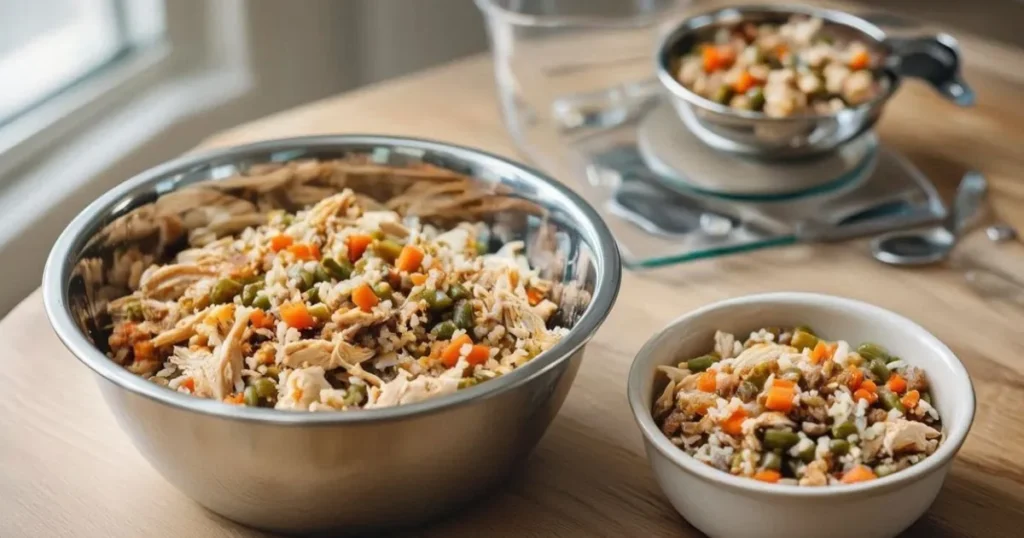
While Golden Retrievers aren’t small dogs, many households include smaller breeds requiring different portion sizes using the same homemade dog food recipes for small dogs.
Adapting Recipes for Smaller Breeds.
The same dog food recipes work across sizes with portion adjustments:.
- Miniature breeds (10-20 lbs): 1.5-3 cups daily.
- Small breeds (20-30 lbs): 3-4.5 cups daily.
- Medium breeds (30-50 lbs): 4.5-7 cups daily.
- Large breeds (50-80 lbs): 7-12 cups daily.
Homemade dog food recipes for small dogs require the same nutritional completeness as large-breed recipes – just smaller portions. Never reduce supplementation proportionally without a veterinary nutritionist guidance, as nutrient requirements don’t scale linearly with body size.
Small-Breed Considerations.
- Higher metabolic rates: Small dogs need more calories per pound than large breeds.
- Dental challenges: Smaller pieces may be necessary for tiny mouths.
- Hypoglycemia risk: Toy breeds need frequent meals to prevent blood sugar drops.
- Calcium requirements: Vary by breed size – large-breed puppies need controlled calcium, while small-breed puppies tolerate higher levels.
Critical Supplementation for Homemade Dog Food Recipes.
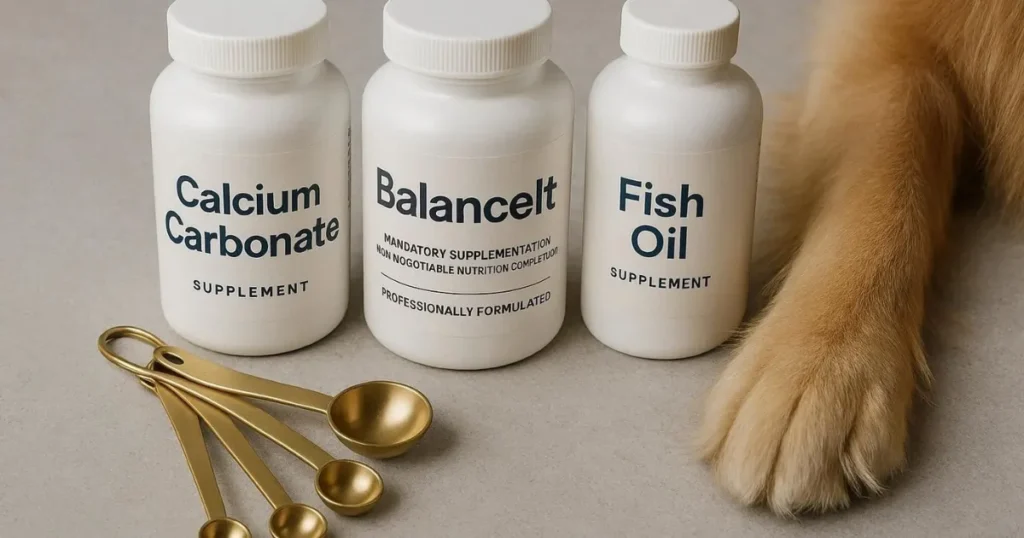
All homemade dog food recipes require supplementation to achieve complete balanced nutrition meeting AAFCO standards.
Calcium Supplementation.
Meat contains minimal calcium but high phosphorus. Without calcium supplementation, dog food recipes create dangerous imbalances, causing skeletal problems.
Calcium carbonate (cheapest, most available):
Provides 40% elemental calcium. For recipes above, add 2,400-2,800 mg calcium carbonate per batch (approximately 2.5 teaspoons).
Dicalcium phosphate:
Provides both calcium and phosphorus in appropriate ratios, offering more precise mineral control.
Bone meal:
Variable quality and inconsistent mineral content – I don’t recommend it due to potential heavy metal contamination.
Calculate carefully – too little causes skeletal problems while excessive calcium (particularly in puppies) causes developmental orthopedic disease.
Multivitamin-Mineral Supplements.
Even carefully formulated homemade dog food recipes lack adequate vitamins and trace minerals without supplementation.
BalanceIT:
Gold standard offering customized supplement blends based on your specific recipe ingredients. Their veterinary nutritionists analyze recipes and formulate appropriate supplementation, ensuring AAFCO compliance.
Hilary’s Blend:
Pre-formulated supplements for common recipe bases (poultry, beef, pork). Less customized but provides reasonable nutritional support for properly constructed base recipes.
Never use human multivitamins:
They contain inappropriate mineral ratios (particularly iron) and may include ingredients toxic to dogs.
Omega-3 Fatty Acid Supplementation.
Fish oil provides EPA and DHA, offering anti-inflammatory benefits supporting joints, skin, brain, and cardiac health critical for Golden Retrievers.
For a 70-pound Golden, provide 2,000-3,000 mg combined EPA/DHA daily. Check labels for EPA+DHA content (not just “fish oil” amount) and calculate appropriate dosing.
Food Safety Protocols for Dog Food Recipes.
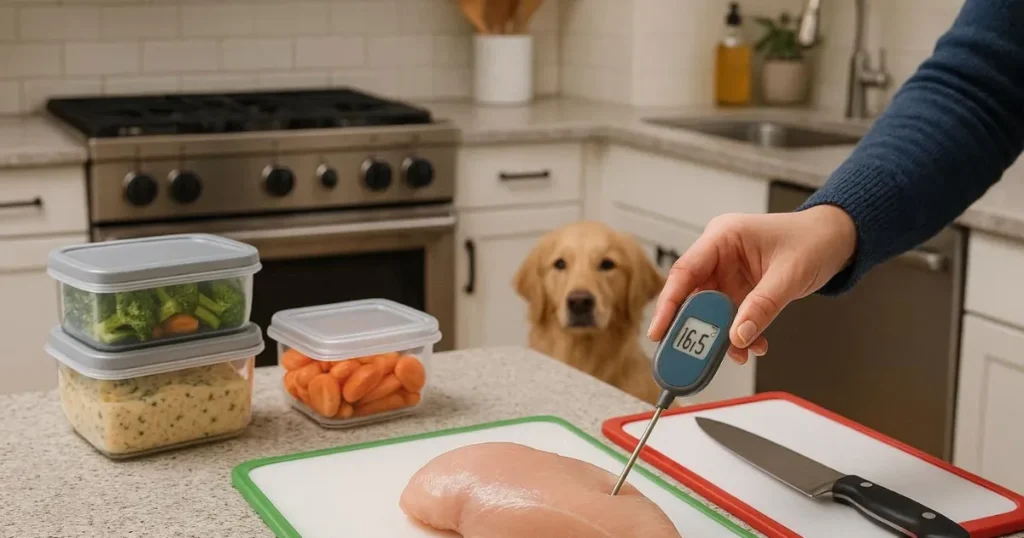
Preparing homemade dog food recipes requires strict food safety, preventing bacterial contamination I’ve treated in dogs fed improperly handled home-prepared meals.
Safe Meat Handling.
Purchase quality meat:
Buy from reputable sources, check expiration dates, and refrigerate immediately.
Proper storage:
Use within 2-3 days or freeze immediately in meal-sized portions.
Thawing safety:
Thaw frozen meat in the refrigerator 24-48 hours before cooking – never at room temperature.
Cooking temperatures:
- Poultry: 165 °F internal temperature.
- Ground meats: 160 °F internal temperature.
- Whole meat cuts: 145 °F minimum.
Equipment sanitation:
Use separate cutting boards for raw meat or sanitize thoroughly between uses.
Storage and Serving Guidelines.
Immediate refrigeration:
Store prepared dog food recipes at 40 °F or below within 2 hours of cooking.
Container requirements:
Use airtight food-safe containers that prevent contamination and odor absorption.
Shelf life:
- Refrigerated: 3-4 days maximum.
- Frozen: 2-3 months for best quality.
- Label all containers with preparation dates.
Serving temperature:
Bring to room temperature or warm slightly before serving – avoid microwaving unevenly.
Discard promptly:
Throw away food left at room temperature over 2 hours or showing any signs of spoilage.
Common Mistakes with Homemade Dog Food Recipes.
Throughout my practice, I’ve identified recurring errors owners make when preparing dog food recipes for Golden Retrievers.
Mistake # 1: No Professional Formulation.
The most dangerous error involves following random internet homemade dog food recipes without veterinary nutritionist verification. Beautiful websites with appealing photos don’t guarantee nutritional adequacy.
All nutritional deficiency cases I’ve treated involved recipes that seemed “healthy” but lacked complete balanced nutrition. Professional formulation prevents these problems.
Mistake # 2: Skipping Supplementation.
Some owners believe whole-food ingredients automatically provide complete nutrition without supplements. They don’t. Calcium and multivitamin-mineral supplementation isn’t optional – it’s mandatory.
Mistake # 3: Inappropriate Ingredients.
Never include:
Onions, garlic, grapes, raisins, chocolate, xylitol, macadamia nuts, avocado, alcohol, caffeine, raw yeast dough.
Use cautiously:
Excessive liver (vitamin A toxicity), high-fat meats (pancreatitis risk), bones (obstruction/perforation), high-sodium foods.
Mistake # 4: Inconsistent Recipes.
Dramatically varying ingredients batch-to-batch prevent consistent nutrition and cause digestive upset. Once you’ve established balanced dog food recipes, maintain consistency unless deliberately modifying under veterinary guidance.
Mistake # 5: Using Homemade Recipes for Puppies.
Golden Retriever puppies need large-breed-specific nutrition with precisely controlled calcium (1.2-1.8% dry matter), preventing developmental orthopedic diseases.
Homemade dog food recipes for puppies require board-certified veterinary nutritionist formulation – mistakes cause irreversible skeletal problems I’ve treated. Most owners should use proven commercial large-breed puppy formulas rather than attempting home cooking during critical growth phases.
Cost Reality of Homemade Dog Food Recipes.
Many owners assume homemade dog food recipes save money compared to commercial options. Reality proves different.
Actual Monthly Costs.
For a 70-pound Golden Retriever using quality ingredients:
- Ingredient costs: $100-180 monthly (meat, vegetables, grains).
- Required supplements: $20-40 monthly (calcium, multivitamin-mineral, fish oil).
- Total monthly cost: $120-220.
Comparison to commercial options:
- Premium kibble: $60-100 monthly.
- Commercial fresh food services: $200-350 monthly.
- Mid-tier kibble: $40-70 monthly.
- Time investment: 2-4 hours weekly (shopping, preparation, portioning, cleaning).
When Homemade Makes Financial Sense.
Homemade dog food recipes rarely save money compared to quality commercial options. The value lies in:
- Complete ingredient control for severely allergic dogs.
- Personal satisfaction from home preparation.
- Using ingredients family already purchases in bulk.
- Avoiding commercial processing for philosophical reasons.
Don’t choose homemade feeding purely for cost savings – it typically costs more than premium kibble when accounting for quality ingredients, supplements, and time value.
Life Stage Considerations for Dog Food Recipes.
Dog food recipes requirements vary dramatically across Golden Retriever life stages.
Puppies: Exercise Extreme Caution.
Golden puppies need large-breed-specific nutrition I cannot overemphasize. Homemade dog food recipes for puppies require:
- Controlled calcium (1.2-1.8% dry matter basis).
- Appropriate calcium-to-phosphorus ratios (1.2:1 to 1.4:1).
- Balanced minerals prevent developmental orthopedic disease.
- Board-certified veterinary nutritionist formulation.
The developmental consequences of nutritional errors prove devastating – I’ve treated irreversible skeletal deformities from well-intentioned but improperly formulated puppy recipes.
Adults: Where Home Cooking Works Best.
Healthy adult Golden Retrievers (1-7 years) tolerate homemade dog food recipes most successfully with fewer critical nutritional windows than puppies and simpler requirements than seniors.
Use professionally formulated recipes with mandatory supplementation, monitor body condition monthly, and maintain regular veterinary care, ensuring adequacy.
Seniors: Enhanced Nutrition Needs.
Senior Golden Retrievers (7+ years) benefit from enhanced joint support, antioxidants, and easily digestible nutrition addressing age-related changes.
Consider whether therapeutic commercial senior diets better address specific health issues (kidney disease, arthritis, cognitive decline) than home cooking can achieve.
When Commercial Food Makes More Sense.
Despite homemade dog food recipes appeal, commercial options often better serve Golden Retriever health for most families.
Advantages of Commercial Dog Food.
- Guaranteed nutritional completeness: AAFCO feeding trials verify complete balanced nutrition.
- Consistency: Every bag/can provides identical nutrition critical for sensitive digestion.
- Convenience: No preparation time, simplified travel/boarding, minimal storage.
- Quality control: Manufacturing standards ensure safety and ingredient consistency.
- Cost-effectiveness: Premium kibble often costs less than quality dog food recipes.
- Professional formulation: Veterinary nutritionists develop recipes using extensive research.
When Homemade Feeding Makes Sense.
- Severe food allergies: Requiring extremely limited ingredients unavailable commercially.
- Owner commitment: Time, resources, and willingness to consult a veterinary nutritionist.
- Individual preference: Families are already preparing similar meals efficiently.
- Specific health conditions: Some diseases benefit from home-prepared therapeutic diets under veterinary supervision.
For most Golden Retrievers, commercial options – whether premium kibble or fresh food services like The Farmer’s Dog – provide complete nutrition without home preparation challenges.
Are homemade dog food recipes safe for Golden Retrievers?
Yes, properly formulated homemade dog food recipes are safe when using veterinary nutritionist-verified recipes with mandatory calcium and multivitamin-mineral supplementation, following strict food safety protocols (proper cooking temperatures, immediate refrigeration, appropriate storage), and monitoring your Golden’s health through regular veterinary care, including periodic bloodwork verifying nutritional adequacy. Never follow random internet recipes without professional verification.
What are the best dog food recipes for Golden Retrievers?
Best dog food recipes include chicken and rice (2.5 lbs chicken thighs, 2.5 cups brown rice, vegetables), beef and sweet potato (2.5 lbs ground beef, 3 cups sweet potato, vegetables), or turkey and oatmeal (2.5 lbs ground turkey, 2.5 cups oatmeal, vegetables). All require mandatory supplementation – calcium carbonate (2,400-2,800 mg), multivitamin-mineral (BalanceIT or Hilary’s Blend), and fish oil. Never feed without proper supplements.
Can I use the same homemade dog food recipes for small dogs as large breeds?
Yes, homemade dog food recipes for small dogs use identical formulations as large-breed recipes with portion adjustments: miniature breeds (10-20 lbs) need 1.5-3 cups daily versus large breeds (50-80 lbs) requiring 7-12 cups daily. Nutritional completeness, including supplementation, remains equally critical regardless of size. Small breeds have higher metabolic rates requiring more calories per pound than large breeds.
Do homemade dog food recipes require supplements?
Yes, supplements are mandatory, not optional. All homemade dog food recipes require calcium supplementation (800-1,000 mg per pound of food), a multivitamin-mineral supplement (BalanceIT, Hilary’s Blend), and fish oil (omega-3 fatty acids). Whole-food ingredients provide some nutrients, but never in complete balanced ratios meeting AAFCO standards. Every nutritional deficiency case I’ve treated involved unsupplemented homemade recipes. Professional supplementation is non-negotiable.
How much do homemade dog food recipes cost monthly?
Homemade dog food recipes cost approximately $120-220 monthly for a 70-pound Golden Retriever, including quality ingredients ($ 100-180) and required supplements ($ 20-40), plus 2-4 hours weekly preparation time. This exceeds premium kibble costs ($ 60-100 monthly) but is less than commercial fresh food services ($ 200-350 monthly). Homemade feeding rarely saves money – value lies in ingredient control and personal satisfaction, not cost savings.
Can I feed homemade dog food recipes to Golden Retriever puppies?
Exercise extreme caution. Golden puppies need large-breed-specific nutrition with precisely controlled calcium (1.2-1.8% dry matter), preventing developmental orthopedic diseases. Dog food recipes for puppies require board-certified veterinary nutritionist formulation – mistakes cause irreversible skeletal problems I’ve treated. Most owners should use proven commercial large-breed puppy formulas rather than attempting homemade cooking during critical growth phases.
How long do homemade dog food recipes last?
Properly prepared homemade dog food recipes last 3-4 days refrigerated at 40 °F or below in airtight containers. Freeze portions you won’t use within this timeframe – frozen recipes maintain quality 2-3 months. Always label containers with preparation dates. Bring to room temperature before serving. Discard any food left at room temperature for over 2 hours or showing spoilage signs before the designated timeframes.
Are homemade dog food recipes better than commercial dog food?
Not necessarily “better” – different with distinct advantages and challenges. Homemade dog food recipes offer complete ingredient control, enhanced palatability, and whole-food nutrition. Commercial food provides guaranteed nutritional completeness, consistency, convenience, and professional formulation. Many healthy Golden Retrievers thrive on quality commercial food. The “best” option depends on individual needs, owner resources, and practical household factors.
Conclusion.
Homemade dog food recipes represent viable feeding options for Golden Retrievers when properly formulated with veterinary nutritionist guidance, appropriately supplemented with calcium and multivitamin-minerals, and executed with strict food safety protocols. Throughout my years treating Goldens, I’ve learned that successful home cooking requires far more than following appealing dog food recipes online – it demands understanding complete canine nutritional requirements, professional recipe formulation, mandatory supplementation, and ongoing monitoring to verify nutritional adequacy.
The homemade dog food recipes I’ve shared – chicken and rice, beef and sweet potato, turkey and oatmeal – demonstrate proper formulation when supplemented correctly. However, even these recipes require a veterinary nutritionist consultation through services like BalanceIT, ensuring AAFCO compliance for your specific ingredients and preparation methods. While homemade dog food recipes for small dogs use the same formulations with adjusted portions, all sizes require identical attention to complete balanced nutrition.
For many Golden Retriever owners, the time investment (2-4 hours weekly), financial costs ($ 120-220 monthly), and nutritional complexity make commercial options more practical. Quality kibble, commercial fresh food services, or canned products provide guaranteed complete nutrition without home preparation challenges. However, for families committed to home cooking with proper resources and veterinary support, dog food recipes prepared correctly can support Golden Retriever health throughout all life stages.
Whether choosing homemade dog food recipes or commercial options, remember that even optimal nutrition requires proper feeding management – portion control based on body condition, twice-daily meals, regular veterinary monitoring including periodic bloodwork, and adjustments as your Golden’s needs change throughout life. Combined with appropriate exercise, preventive care, and love, quality nutrition – whether homemade or commercial – ensures your Golden Retriever enjoys the healthy, active, joyful life these wonderful dogs deserve.
Share Your Homemade Dog Food Recipes Experience! Are you preparing homemade dog food recipes for your Golden Retriever or other dogs? I’m eager to hear about your experiences with dog food recipes – which formulations work well, how you ensure nutritional completeness, whether your Golden’s health has improved, and practical tips for other owners considering homemade feeding!

Dr. Nabeel A.
Hi, I’m Dr. Nabeel Akram – a farm management professional by trade and a passionate Golden Retriever enthusiast at heart. With years of experience in animal science and livestock care, I’ve built a career around understanding animals—how they live, thrive, and bring value to our lives. This blog is a personal project born from that same passion, focusing on one of the most loyal and lovable breeds out there: the Golden Retriever. Whether I’m managing farm operations or sharing insights on canine health, behavior, and care, it all ties back to one core belief—animals deserve thoughtful, informed, and compassionate attention. Welcome to a space where professional expertise meets genuine love for dogs.
Facebook |
Links will be automatically removed from comments.