
Throughout my years of experience treating Golden Retrievers, I’ve encountered increasing numbers of owners interested in feeding cooked dog food as an alternative to commercial kibble or raw diets. The appeal of preparing home-cooked dog meals resonates with owners seeking ingredient control, avoiding preservatives, and providing nutrition resembling what families eat themselves. However, understanding how to properly prepare cooked dog food requires knowledge extending far beyond simply cooking human food and serving it to your Golden Retriever.
In my clinic, I’ve observed both remarkable successes and concerning failures with home cooked dog feeding. When done correctly with veterinary nutritionist guidance, properly supplemented recipes, and appropriate food safety protocols, cooked diets support Golden Retriever health beautifully. When done incorrectly – following random internet recipes, skipping essential supplements, or using inappropriate ingredients – cooked dog food creates serious nutritional deficiencies I’ve treated throughout my career.
Today, I’ll share comprehensive veterinary guidance on cooked feeding for Golden Retrievers, including benefits, risks, safe preparation methods, nutritional requirements, and when commercial options better serve your dog’s health needs.
Understanding Cooked Dog Food: Benefits and Limitations
Before committing to preparing cooked dog food, I explain what this feeding approach entails, its legitimate advantages, and honest limitations owners must understand.

What Constitutes Cooked Dog Food
Cooked dog food means home-prepared meals using whole-food ingredients – meat, vegetables, grains – cooked to safe temperatures, then served fresh or frozen rather than commercially processed kibble or canned products.
This differs from:
- Raw feeding: Uncooked meats and bones with bacterial contamination risks.
- Commercial fresh food: Professionally formulated, portioned, delivered services.
- Kibble or canned: Commercially manufactured, shelf-stable products.
- Random table scraps: Unbalanced human food leftovers lacking complete nutrition
Properly prepared cooked dog meals follow veterinary-formulated recipes providing complete, balanced nutrition through whole-food ingredients prepared in home kitchens.
Legitimate Benefits of Cooked Dog Food
When properly executed, cooked dog food offers several genuine advantages I’ve observed in patients:
Complete ingredient control:
Know exactly what your Golden eats – no mystery ingredients, by-products, or additives
Palatability for picky eaters:
Enhanced aroma and flavor compared to kibble, encouraging eating in reluctant dogs
Digestibility:
Cooked whole foods often digest more easily than heavily processed commercial products
Food safety over raw:
Cooking kills pathogens (Salmonella, E. coli, Listeria) present in raw meat, protecting both dogs and human family members
Customization:
Adjust ingredients for individual sensitivities, allergies, or health conditions under veterinary guidance
Quality assurance:
Use human-grade ingredients from trusted sources rather than relying on commercial quality control
Honest Limitations and Challenges
Being transparent about cooked dog food challenges helps owners make informed decisions:
Time intensive:
Preparation requires 2-4 hours weekly (shopping, cooking, portioning, and cleaning).
Expensive:
Quality ingredients cost $120-250 monthly for a 70-pound Golden versus $60-100 for premium kibble.
Nutritional complexity:
Achieving complete balanced nutrition requires professional formulation and mandatory supplementation.
Storage demands:
Requires substantial refrigerator/freezer space for prepared meals.
Travel challenges:
Difficult maintaining cooked feeding during trips, boarding, or emergencies.
Risk of errors:
Mistakes in recipes, supplementation, or preparation create serious nutritional deficiencies.
Vet’s Tip: Never follow random internet cooked dog food recipes without veterinary nutritionist verification. Well-meaning but improperly formulated recipes cause calcium deficiencies, vitamin imbalances, and other serious problems I’ve treated. Professional formulation isn’t optional – it’s mandatory for safe long-term feeding.
Essential Nutritional Requirements for Cooked Dog Food.
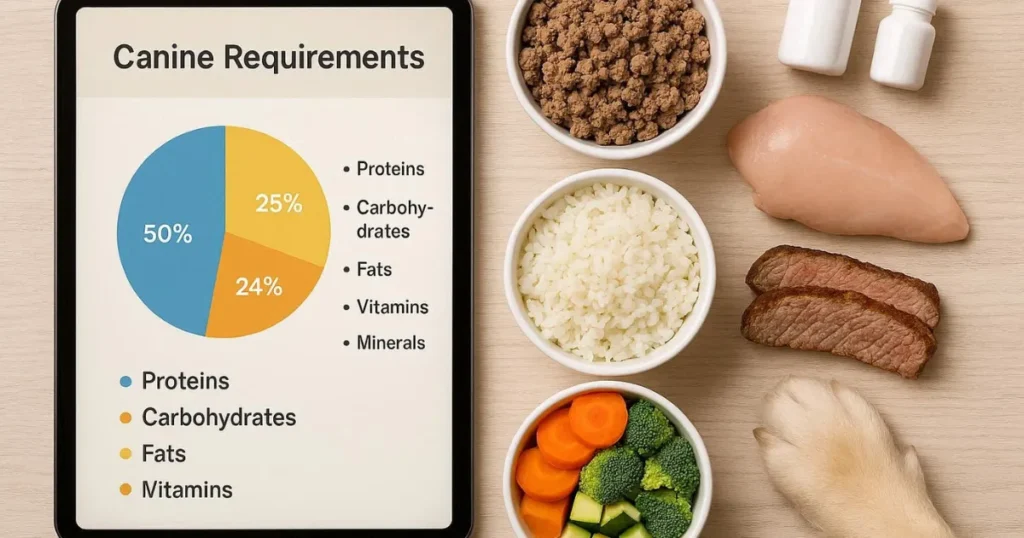
Understanding canine nutritional requirements helps owners grasp why simply cooking “healthy” human food doesn’t automatically create adequate cooked dog nutrition.
Protein Requirements.
Adult Golden Retrievers need a minimum of 18% protein (AAFCO standard), though I recommend 22-28% from quality animal sources. Cooked dog food must provide complete amino acid profiles, including ten essential amino acids that dogs cannot synthesize.
Appropriate protein sources:
- Chicken (breast, thighs, leg quarters).
- Turkey (ground or whole pieces).
- Beef (lean ground beef, chuck roast).
- Fish (salmon, whitefish, cod).
- Eggs (complete amino acid profile).
Calculate protein on a dry matter basis – cooked meat contains 25-30% protein depending on cut and preparation method.
Fat Requirements.
Dogs need a minimum of 5.5% fat (AAFCO adult standard), though 12-16% better supports Golden Retriever health. Fat provides essential fatty acids – omega-6 (linoleic acid) and omega-3 (alpha-linolenic acid, EPA, DHA) – plus fat-soluble vitamins A, D, E, and K.
Quality fat sources in cooked dog food:
- Chicken fat (naturally present in dark meat).
- Fish oil (omega-3 supplementation).
- Olive oil or coconut oil (additional calories if needed).
Carbohydrate Sources.
While not strictly required, practical cooked dog meals include digestible carbohydrates providing energy, fiber, and micronutrients:
Recommended carbohydrates:
- Brown rice (digestible, gluten-free).
- Sweet potatoes (vitamins, fiber).
- Oatmeal (soluble fiber, heart health).
- White potatoes (digestible energy).
- Quinoa (complete plant protein, minerals).
Critical Vitamin and Mineral Balance.
This is where most home cooked dog food fails catastrophically. Dogs need precise amounts of calcium, phosphorus, magnesium, sodium, potassium, iron, zinc, selenium, copper, manganese, iodine, plus vitamins A, D, E, K, B-complex, and choline.
Calcium-phosphorus balance proves most critical. Meat contains high phosphorus but minimal calcium, creating ratios of 1:15 or worse instead of the required 1:1 to 1.8:1. Without calcium supplementation, cooked dog diets cause skeletal problems I’ve diagnosed in numerous patients.
Mandatory supplementation includes:
- Calcium (calcium carbonate or dicalcium phosphate).
- Multivitamin-mineral supplement (BalanceIT, Hilary’s Blend).
- Fish oil (omega-3 fatty acids).
Never assume cooked whole foods provide complete nutrition without supplements – they don’t.
Veterinary-Formulated Cooked Dog Food Recipe.
This recipe demonstrates proper cooked dog food meeting AAFCO standards when correctly supplemented. It provides complete nutrition for adult Golden Retrievers at maintenance.
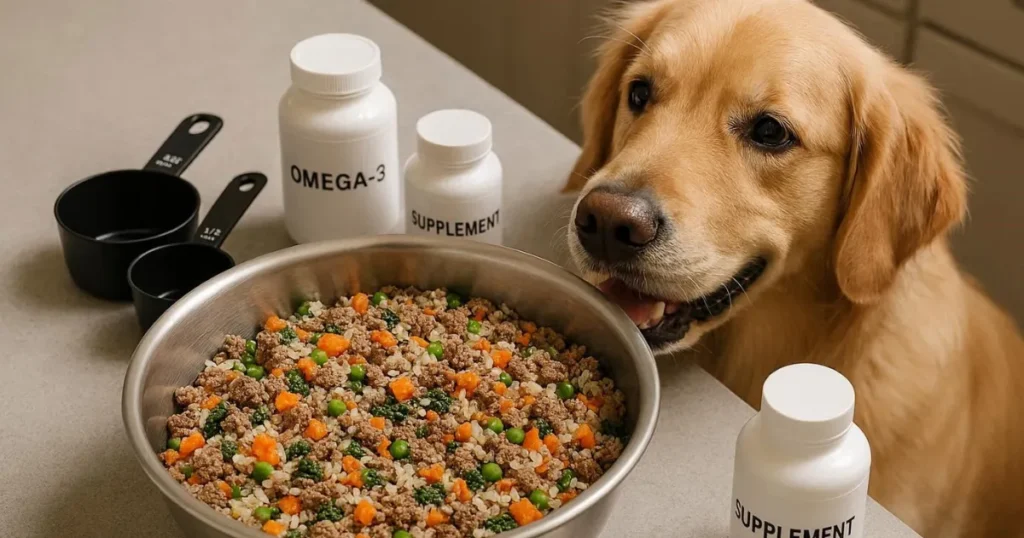
Base Recipe Ingredients (Makes | 6 Pounds).
| Component | Amount | Example Options |
| Protein | 2.5 pounds | Chicken thighs, ground turkey, lean beef |
| Carbohydrate | 2 cups (cooked) | Brown rice, sweet potato, oatmeal |
| Vegetables | 2 cups (cooked) | Carrots, green beans, broccoli, spinach |
| Fat supplement | 2 tablespoons | Fish oil |
| Fiber | 2 tablespoons | Ground flaxseed |
Mandatory Supplementation (Non-Negotiable).
Calcium supplement:
Provide 800-1,000 mg calcium per pound of food (typically 2-3 teaspoons calcium carbonate per recipe).
Multivitamin-mineral:
Use a veterinary-formulated supplement, such as BalanceIT or Hilary’s Blend, designed for home-prepared diets.
Fish oil:
2,000-3,000 mg combined EPA/DHA daily for a 70-pound Golden.
Without these supplements, this recipe is nutritionally incomplete and will cause deficiencies.
Preparation Instructions.
Step 1: Cook Protein.
Bake chicken thighs at 350°F for 35-40 minutes (internal temperature 165°F), or brown ground meats in a skillet until no pink remains. Remove skin if using chicken for lower fat content.
Step 2: Prepare Carbohydrates.
Cook rice according to package directions. Bake sweet potatoes at 400 °F for 45-60 minutes, or boil cubed potatoes until tender.
Step 3: Cook Vegetables.
Steam or boil vegetables until tender (10-15 minutes). Chop into small pieces appropriate for your Golden’s eating style.
Step 4: Combine Ingredients.
Mix all cooked ingredients in a large bowl. Add fish oil, ground flaxseed, and required supplements, distributing evenly throughout the mixture.
Step 5: Portion and Store.
Divide into meal-sized portions using airtight containers. Refrigerate portions for immediate use (3-4 days) and freeze the remainder (2-3 months).
Feeding Amounts.
For a 70-pound adult Golden Retriever with moderate activity:
- Daily calories needed: | 1,400-1,600 calories.
- This recipe provides: | 130-150 calories per cup.
- Daily amount: 9-11 cups divided into 2 meals.
Adjust based on individual metabolism and body condition scoring.
Critical Food Safety Protocols.
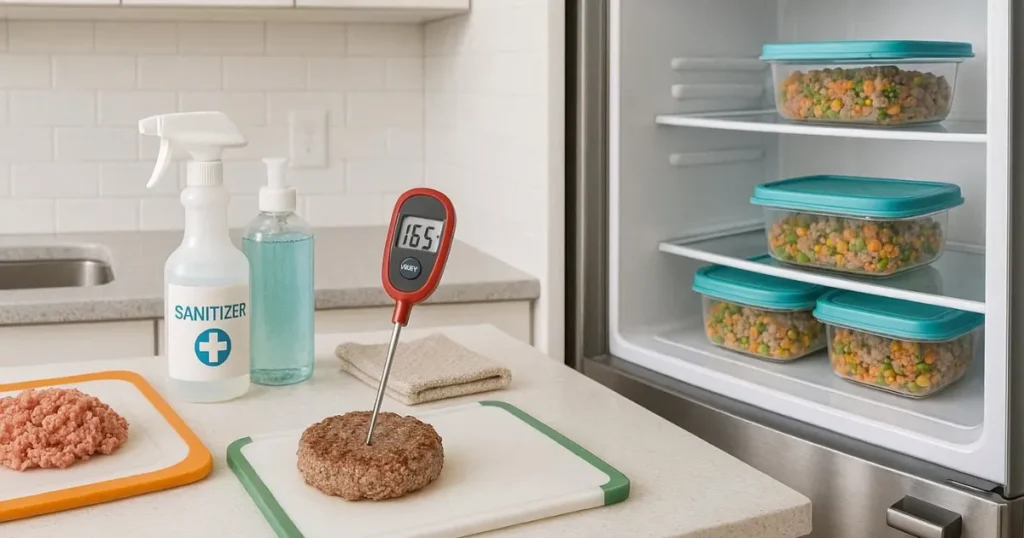
Preparing cooked dog food requires strict food safety, preventing bacterial contamination I’ve treated in dogs fed improperly handled home-prepared meals.
Safe Meat Handling.
Purchase and storage:
Buy fresh meat from reputable sources, refrigerate immediately, use within 2-3 days or freeze.
Thawing:
Thaw frozen meat in the refrigerator 24-48 hours before cooking – never at room temperature.
Separation:
Use dedicated cutting boards and utensils for raw meat, or sanitize thoroughly between uses.
Cooking temperatures:
- Poultry: 165 °F internal temperature.
- Ground meats: 160 °F internal temperature.
- Whole meat cuts: 145 °F minimum.
Use a meat thermometer to verify temperatures throughout – visual assessment alone proves inadequate.
Storage and Serving Safety.
Immediate refrigeration:
Refrigerate cooked dog food within 2 hours of preparation at 40 °F or below. Portion control: Store in individual meal-sized portions, preventing repeated handling of bulk batches.
Shelf life:
Use refrigerated portions within 3-4 days, frozen portions within 2-3 months.
Serving temperature:
Bring to room temperature or warm slightly before serving – never microwave unevenly.
Discard rules:
Throw away any food left at room temperature for over 2 hours or showing signs of spoilage.
Common Mistakes with Cooked Dog Food.
Throughout my career, I’ve identified recurring errors owners make when preparing cooked dog meals for Golden Retrievers.
Mistake # 1: No Nutritional Supplementation.
The most dangerous error involves feeding whole-food ingredients without vitamin-mineral and calcium supplementation. All nutritional deficiency cases I’ve treated involved unsupplemented home cooked dog food.
Whole foods provide some nutrients naturally, but never in ratios or amounts meeting complete nutritional requirements. Mandatory supplementation isn’t optional – it’s essential for health.
Mistake # 2: Following Unverified Recipes.
Random internet cooked dog food recipes rarely meet AAFCO standards. I’ve treated dogs suffering severe calcium deficiencies, vitamin imbalances, and other problems from well-intentioned but improperly formulated recipes.
Always use recipes formulated by board-certified veterinary nutritionists (ACVN Diplomates) or services like BalanceIT providing professional recipe analysis.
Mistake # 3: Inappropriate Ingredients.
Some owners include foods toxic to dogs or ingredients providing minimal nutrition:
Never include:
Onions, garlic, grapes, raisins, chocolate, xylitol, macadamia nuts, and avocado.
Use cautiously:
High-fat meats trigger pancreatitis, bones cause obstruction, and high-sodium foods.
Avoid excessive amounts:
Liver (vitamin A toxicity), fish (mercury concerns), eggs (biotin deficiency if feeding raw).
Mistake # 4: Inconsistent Recipes.
Dramatically varying ingredients batch-to-batch prevent consistent nutrition and cause digestive upset. Once you’ve established a balanced cooked dog recipe, maintain consistency unless deliberately modifying under veterinary guidance.
Mistake # 5: Cost Underestimation.
Many owners assume home cooked dog food saves money compared to commercial options. Reality: quality ingredients plus supplements cost $120-250 monthly for a 70-pound Golden – similar to or exceeding premium commercial food costs.
When Commercial Food Makes More Sense.
Despite cooked dog food appeal, commercial options often better serve Golden Retriever nutritional needs for most families.
Advantages of Commercial Dog Food.
Guaranteed nutritional completeness:
AAFCO feeding trials verify formulas provide complete, balanced nutrition.
Consistency:
Every bag provides identical nutrition – critical for dogs with sensitive digestion or specific health needs.
Convenience:
No preparation time, simplified travel/boarding, minimal storage requirements.
Quality control:
Manufacturing standards ensure ingredient consistency and food safety.
Cost-effectiveness:
Premium kibble ($ 60-100 monthly) often costs less than quality cooked dog meals.
Professional formulation:
Veterinary nutritionists develop recipes using extensive research and testing.
When Cooked Feeding Makes Sense.
Severe food allergies:
Requiring extremely limited ingredients unavailable in commercial products.
Owner commitment:
Time, financial resources, and willingness to consult a veterinary nutritionist.
Individual preference:
Family already preparing similar meals, who can efficiently incorporate dog food preparation.
Specific health conditions:
Some diseases benefit from home-prepared therapeutic diets under veterinary supervision.
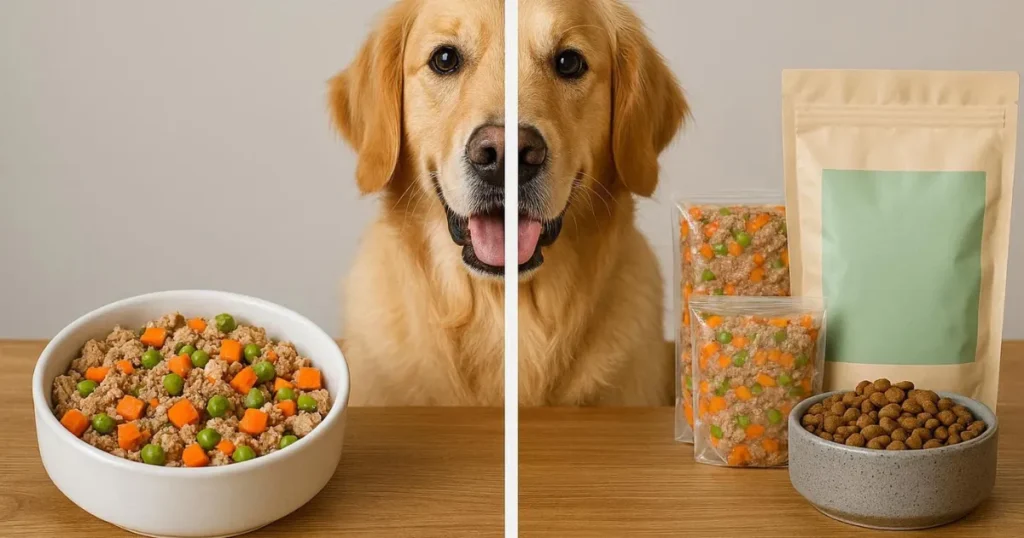
For most Golden Retrievers, quality commercial cooked dog food services (The Farmer’s Dog, Nom Nom) provide professionally formulated fresh-cooked meals without home preparation challenges.
Transitioning to Cooked Dog Food.
When switching Golden Retrievers to cooked dog meals, a gradual transition prevents digestive upset I commonly see with abrupt diet changes.
10-14 Day Transition Protocol.
- Days 1-3: Mix 25% cooked food with 75% current food
- Days 4-6: Increase to 50% cooked food, 50% current food
- Days 7-9: Progress to 75% cooked food, 25% current food
- Days 10-14: Complete transition to 100% cooked dog food.
Monitor stool consistency throughout. Slight softening initially is normal; severe diarrhea requires a slower transition pace.
Monitoring Your Golden’s Response.
Positive indicators (within 8-12 weeks):
- Maintained or improved body condition.
- Shiny, healthy coat.
- Normal energy levels.
- Formed stools, regular bowel movements.
- Enthusiastic eating.
Warning signs requiring veterinary consultation:
- Progressive weight loss despite adequate portions.
- Dull, brittle coat or excessive shedding.
- Chronic digestive upset.
- Decreased energy or lethargy.
- Any new health problems.
Regular veterinary monitoring, including biannual bloodwork, verifies nutritional adequacy, catching deficiencies before clinical signs appear.
Life Stage Considerations.
Cooked dog food requirements vary across Golden Retriever life stages, with puppyhood presenting particular challenges.
Puppies: Extreme Caution Required.
Golden Retriever puppies need large-breed-specific nutrition with precisely controlled calcium (1.2-1.8% dry matter basis), preventing developmental orthopedic diseases.
Home cooked dog food for puppies requires board-certified veterinary nutritionist consultation – the developmental consequences of nutritional errors prove devastating. I’ve treated irreversible skeletal deformities from calcium imbalances in home-fed puppies.
Most owners should not attempt home cooking during puppyhood – the risks exceed the benefits given commercial large-breed puppy formulas’ proven track records.
Adults: Where Home Cooking Works Best.
Healthy adult Golden Retrievers (1-7 years) tolerate cooked dog food best, with fewer critical nutritional windows than puppies and simpler requirements than seniors.
Use properly formulated recipes with mandatory supplementation, monitor body condition monthly, and maintain regular veterinary care, ensuring nutritional adequacy.
Seniors: Enhanced Nutrition Needs.
Senior Golden Retrievers (7+ years) benefit from enhanced joint support, antioxidants, and easily digestible nutrition. Home cooked dog meals can provide these benefits but require recipe adjustments addressing age-related needs.
Consider whether therapeutic commercial senior diets better address specific health issues (kidney disease, arthritis, cognitive decline) than home cooking can achieve.
Is feeding cooked dog meals safe for Golden Retrievers?
Yes, properly prepared cooked dog meals are safe when using veterinary-formulated recipes with mandatory supplementation (calcium, multivitamin-minerals, fish oil), following strict food safety protocols (proper cooking temperatures, immediate refrigeration, appropriate storage), and monitoring your Golden’s health through regular veterinary care, including periodic bloodwork verifying nutritional adequacy. Never follow random internet recipes without professional verification.
What’s the difference between cooked dog food and commercial kibble?
Cooked dog food uses whole-food ingredients (fresh meat, vegetables, grains) prepared in home kitchens or by fresh food services, served fresh/frozen rather than shelf-stable. Commercial kibble undergoes high-heat extrusion, creating a shelf-stable product. Cooked food offers ingredient control and enhanced palatability but requires more preparation, storage, and costs more. Both can provide complete nutrition when properly formulated, meeting AAFCO standards.
How much does it cost to feed cooked dog food to a Golden Retriever?
Cooked dog food costs approximately $120-250 monthly for a 70-pound Golden Retriever, including quality ingredients and required supplements, compared to $60-100 for premium kibble or $200-350 for commercial fresh food services. Home preparation adds 2-4 hours weekly time investment. Calculate the total cost, including ingredients, supplements, storage containers, and time value, when deciding if cooked feeding fits your household practically.
Can I just cook human food for my Golden Retriever?
No. Simply cooking “healthy” human food doesn’t provide complete canine nutrition. Dogs need different nutrient ratios than humans, require calcium supplementation (meat is high in phosphorus, low in calcium), need a specific vitamin-mineral balance, and cannot eat many human foods (onions, garlic, grapes). Always use veterinary-formulated cooked dog food recipes with mandatory supplementation – random cooking creates serious nutritional deficiencies I’ve treated throughout my career.
Do I need supplements when feeding cooked dog food?
Yes, supplements are mandatory, not optional. Cooked dog food requires calcium supplementation (800-1,000 mg per pound of food), a multivitamin-mineral supplement (BalanceIT, Hilary’s Blend), and fish oil (omega-3 fatty acids). Whole-food ingredients provide some nutrients, but never in complete balanced ratios meeting AAFCO standards. All nutritional deficiency cases I’ve treated involved unsupplemented home-cooked diets. Professional supplementation is non-negotiable for safe feeding.
How long does cooked dog food last in the refrigerator?
Properly prepared cooked dog food lasts 3-4 days refrigerated at 40 °F or below in airtight containers. Freeze portions you won’t use within this timeframe – frozen cooked food maintains quality 2-3 months. Always label containers with preparation dates. Bring to room temperature before serving. Discard any food left at room temperature for over 2 hours or showing signs of spoilage before the designated timeframes.
Is cooked dog food better than kibble for Golden Retrievers?
Not necessarily “better” – different with distinct advantages and challenges. Cooked dog food offers ingredient control, enhanced palatability, and easy digestibility. Kibble provides convenience, guaranteed nutrition, cost-effectiveness, and simplified feeding. Many healthy Golden Retrievers thrive on quality kibble. The “best” option depends on individual needs, owner resources, and practical household factors. Both can support excellent health when properly formulated and fed.
Can I feed cooked dog food to my Golden Retriever puppy?
Exercise extreme caution. Golden Retriever puppies need large-breed-specific nutrition with precisely controlled calcium (1.2-1.8% dry matter), preventing developmental orthopedic diseases. Cooked dog food for puppies requires a board-certified veterinary nutritionist formulation – mistakes cause irreversible skeletal problems I’ve treated. Most owners should use proven commercial large-breed puppy formulas rather than attempting home cooking during this critical growth phase.
Conclusion.
Cooked dog food represents a viable feeding option for Golden Retrievers when prepared correctly with veterinary nutritionist guidance, mandatory supplementation, and strict food safety protocols. Throughout my years treating Goldens, I’ve learned that successful home cooked dog feeding requires far more than simply cooking healthy ingredients – it demands understanding complete nutritional requirements, proper supplementation ensuring balance, careful preparation preventing contamination, and ongoing monitoring verifying adequacy.
The appeal of cooked dog meals – complete ingredient control, avoiding commercial processing, providing nutrition resembling human food – resonates with many owners seeking optimal nutrition for their Goldens. However, most families underestimate the time investment (2-4 hours weekly), financial costs ($ 120-250 monthly), and nutritional complexity, making professional formulation non-negotiable for safe long-term feeding.
For many Golden Retriever owners, commercial fresh-cooked food services (The Farmer’s Dog, Nom Nom, Ollie) provide professionally formulated cooked dog food benefits without home preparation challenges. These services employ veterinary nutritionists, conduct AAFCO feeding trials, and deliver pre-portioned meals requiring only refrigeration – combining fresh-cooked advantages with convenience and guaranteed nutritional completeness.
Whether choosing home-prepared cooked dog meals or commercial fresh-cooked services, remember that even optimal nutrition requires proper feeding management – portion control based on body condition, twice-daily meals, regular veterinary monitoring, and adjustments as your Golden’s needs change throughout life stages. Combined with appropriate exercise, preventive care, and love, quality cooked nutrition supports Golden Retriever health, vitality, and longevity throughout all their years.
Share Your Cooked Dog Food Experience! Are you feeding cooked dog food or preparing cooked dog meals for your Golden Retriever? I’m eager to hear about your experiences with home cooking – recipes you use, challenges you’ve faced, how your Golden’s health has responded, and whether the time and cost investment proves worthwhile!