Throughout my years of experience treating Golden Retrievers, the question I hear most frequently from concerned owners is: “What is a good dog food for my Golden?” This seemingly straightforward question actually encompasses complex considerations about ingredient quality, nutritional adequacy, life-stage appropriateness, and individual health needs that make one-size-fits-all answers impossible. Understanding what is the best dog food to feed your dog requires evaluating multiple factors unique to your Golden Retriever’s age, activity level, health status, and specific vulnerabilities.
In my clinic, I’ve observed that dog food good for dogs isn’t determined by price, marketing claims, or brand popularity alone, but rather by how well the food meets complete nutritional requirements while supporting your individual dog’s health throughout their life. The best food to feed your dog provides balanced nutrition, maintains ideal body condition, supports breed-specific health needs, and – critically – is something you can afford consistently while maintaining proper veterinary care. Today, I’ll share comprehensive guidance on evaluating what is a good dog food for Golden Retrievers, providing the framework you need to make informed decisions based on veterinary nutritional science and clinical experience.
Understanding What Makes Dog Food “Good” for Golden Retrievers
Before determining what is a good dog food, I explain the fundamental criteria separating quality nutrition from inferior options, and why these standards matter specifically for Golden Retriever health.
AAFCO Nutritional Adequacy: The Foundation
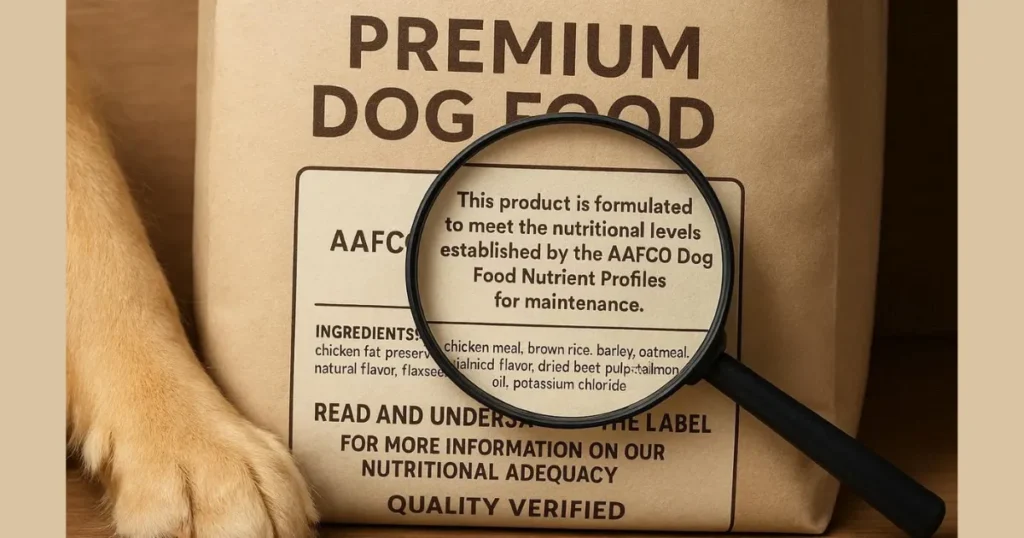
The Association of American Feed Control Officials (AAFCO) establishes nutritional standards ensuring commercial dog foods provide complete, balanced nutrition. What is the best dog food to feed your dog always starts with verifying AAFCO compliance through statements on packaging.
Look for one of these statements:
- “Is formulated to meet the nutritional levels established by the AAFCO Dog Food Nutrient Profiles” – indicates the recipe meets minimum requirements based on nutrient analysis
- “Animal feeding tests using AAFCO procedures substantiate that it provides complete and balanced nutrition” – indicates actual feeding trials verified nutritional adequacy (preferred standard).
Foods lacking AAFCO statements should be avoided for regular feeding. These products may be intended as treats or supplements rather than complete nutrition, and feeding them exclusively causes nutritional deficiencies I’ve treated in Golden Retrievers whose owners didn’t understand this critical distinction.
Life-Stage Appropriateness.
Dog food good for dogs must match their current life stage, as nutritional requirements change dramatically from puppyhood through senior years. Golden Retrievers have specific needs at each stage.
Puppies (8 weeks to 12-15 months)
Puppies require large-breed puppy formulas with controlled calcium (1.2-1.8% dry matter basis) and appropriate calcium-to-phosphorus ratios (1:1 to 1.8:1), preventing developmental orthopedic diseases – hip dysplasia, elbow dysplasia, osteochondrosis – that I diagnose frequently in improperly fed young Goldens.
Adults (1-7 years)
They need maintenance formulas providing 20-26% protein, 12-16% fat, and balanced nutrients supporting active lifestyles while preventing the obesity epidemic affecting 55-60% of adult Golden Retrievers I examine.
Seniors (7+ years)
Seniors benefit from age-appropriate formulas with enhanced joint support, controlled calories addressing reduced activity, moderate protein maintaining muscle mass, and antioxidants supporting cognitive function as neurological changes begin.
The best food to feed your dog always matches their current life stage, preventing both nutritional deficiencies and excesses that compromise health.
Ingredient Quality Standards.
When evaluating what is a good dog food, ingredient quality significantly impacts digestibility, nutrient bioavailability, and overall health outcomes I observe in my Golden Retriever patients.
Named animal proteins should dominate ingredient lists -“chicken,” “beef,” “salmon,” “turkey,” or “lamb” rather than generic “meat” or “poultry.” These specific proteins indicate quality control and traceability lacking in vague designations.
Whole food ingredients like sweet potatoes, brown rice, carrots, and blueberries provide naturally occurring vitamins, minerals, and phytonutrients in bioavailable forms that dogs evolved to utilize, potentially offering advantages over foods relying primarily on synthetic nutrient additions, after processing destroys naturally occurring versions.
Quality fat sources, including chicken fat, fish oil, and flaxseed, provide essential fatty acids (omega-3 and omega-6) supporting skin, coat, joint, brain, and cardiac health. Avoid generic “animal fat” lacking species specificity and quality assurance.
Appropriate carbohydrates from digestible sources (sweet potato, brown rice, oatmeal, barley) provide energy without triggering sensitivities common in some Golden Retrievers. While grain-free has become trendy, quality whole grains offer nutritional benefits, and FDA investigations suggest potential cardiac risks with certain grain-free formulas.
Breed-Specific Considerations.
Understanding what is the best dog food to feed your dog when that dog is a Golden Retriever requires addressing breed-specific vulnerabilities and nutritional needs.
Joint support through glucosamine (300-500 mg/kg body weight), chondroitin (200-400 mg/kg), and omega-3 fatty acids becomes critical given Golden Retrievers’ near-universal joint problems by middle age. The best food to feed your dog of this breed includes therapeutic levels of these nutrients.
Weight management requires dog food good for dogs prone to obesity, providing controlled caloric density (320-380 kcal/cup for maintenance, lower for weight management) while maintaining satiety through appropriate fiber content (3-6%).
Skin and coat health demands balanced omega-6 to omega-3 ratios (5:1 to 10:1), addressing Golden Retrievers’ predisposition to hot spots, allergies, and skin issues I treat regularly.
Cancer considerations influence my recommendations given Golden Retrievers’ tragically high cancer rates (approximately 60% lifetime incidence). While nutrition can not prevent cancer, foods with antioxidants, omega-3 fatty acids, and moderate carbohydrates may support overall health in high-risk breeds.
Key Nutritional Components in Good Dog Food.
When owners ask what is a good dog food, I evaluate specific nutritional components ensuring the food supports Golden Retriever health comprehensively.

Protein: Quality Over Quantity.
Protein requirements for adult Golden Retrievers equal approximately 18% minimum (AAFCO), though I recommend 22-28% for optimal muscle maintenance in this athletic breed. However, protein percentage means nothing without quality.
Complete amino acid profiles, including ten essential amino acids dogs can not synthesize – arginine, histidine, isoleucine, leucine, lysine, methionine, phenylalanine, threonine, tryptophan, and valine – differentiate quality proteins from inferior sources.
Animal proteins (meat, poultry, fish, eggs) provide complete amino acid profiles, while plant proteins (corn gluten meal, soy, pea protein) lack certain essential amino acids or provide them in imbalanced ratios. What is the best dog food to feed your dog emphasizes animal protein sources ensuring nutritional completeness.
In my practice, Golden Retrievers eating quality animal-protein-based diets maintain better muscle condition, healthier coats, and more stable energy levels compared to those consuming plant-protein-dominant formulas, regardless of total protein percentages on labels.
Fat: Essential for Health.
Fat provides concentrated energy (9 calories per gram versus 4 for protein or carbohydrates), essential fatty acids, and fat-soluble vitamins A, D, E, and K. Adult Golden Retrievers need a minimum of 5.5% fat (AAFCO), though I recommend 12-16% for most individuals.
Omega-3 fatty acids (EPA and DHA from fish oil) provide anti-inflammatory benefits supporting joints, skin, brain, and cardiac health. These marine omega-3s prove far more beneficial than plant-based omega-3s (ALA from flaxseed) that dogs convert inefficiently.
Omega-6 fatty acids (linoleic acid from poultry fat, vegetable oils) support skin barrier function and coat health when properly balanced with omega-3s. The best food to feed your dog maintains appropriate omega-6 to omega-3 ratios, preventing inflammatory conditions associated with omega-6 excess.
Carbohydrates: Energy and Fiber.
While dogs don’t require dietary carbohydrates strictly speaking, practical commercial dog foods include carbohydrate sources providing energy, fiber, and manufacturing structure. Dog food good for dogs uses digestible, appropriate carbohydrate sources.
Complex carbohydrates from sweet potatoes, brown rice, oatmeal, and barley digest slowly, providing sustained energy without blood sugar spikes. These whole food sources also contribute vitamins, minerals, and phytonutrients beyond simple caloric value.
Fiber content (3-6% for maintenance, higher for weight management) supports digestive health, promotes satiety, and feeds beneficial gut bacteria. Appropriate fiber from sources like beet pulp, pumpkin, or chicory root improves stool quality and supports intestinal health.
Vitamins, Minerals, and Supplements.
Complete nutrition requires a precise vitamin and mineral balance meeting AAFCO standards. What is a good dog food includes these essential micronutrients either from whole food ingredients or synthetic supplementation added after processing.
Antioxidants, including vitamins E and C, selenium, and beta-carotene, combat oxidative stress and support immune function – particularly important given Golden Retrievers’ cancer predisposition.
Joint-supporting ingredients beyond basic nutrition – glucosamine, chondroitin, MSM, and green-lipped mussel – address breed-specific orthopedic vulnerabilities I diagnose in most aging Goldens.
Probiotics and prebiotics support digestive health and immune function through gut microbiome optimization, beneficial for Golden Retrievers occasionally prone to sensitive stomachs.
Veterinary Recommendations: Good Dog Food Options for Golden Retrievers.
Based on nutritional analysis, ingredient quality, AAFCO compliance, clinical outcomes, and various price points, here are my evidence-based answers to what is the best dog food to feed your dog when that dog is a Golden Retriever.
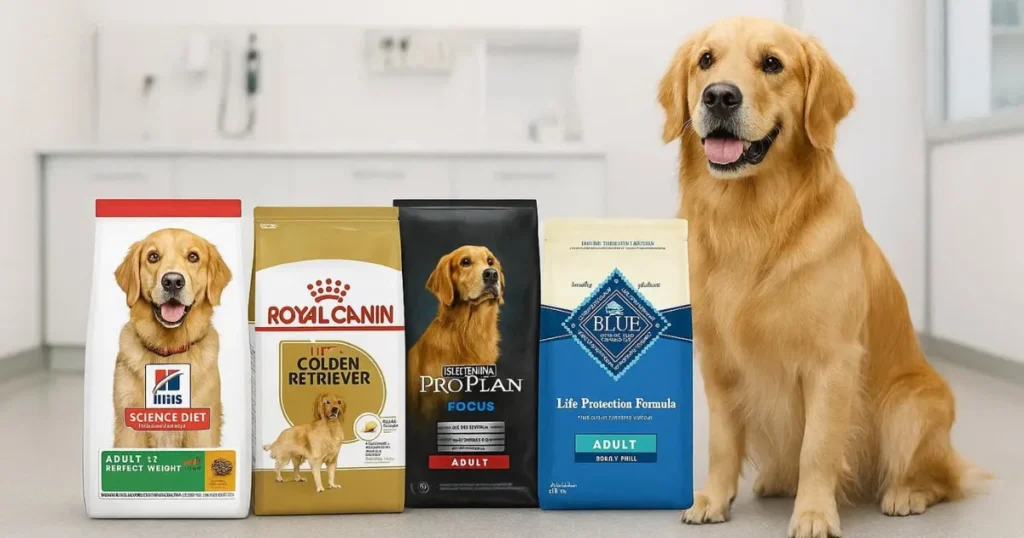
Vet’s Pick # 1: Hill’s Science Diet Large Breed Adult.
This formula consistently demonstrates what I consider dog food good for dogs through extensive research backing, feeding trial verification, and excellent clinical outcomes in my Golden Retriever patients.
Real chicken provides primary protein delivering 24% on a dry matter basis, while balanced fat at 14% supports energy needs without promoting obesity. Glucosamine and chondroitin address joint health, and natural ingredients with vitamins, minerals, and amino acids provide complete nutrition meeting AAFCO standards through actual feeding trials – the gold standard for verification.
I’ve followed numerous Goldens on Hill’s long-term, observing maintained ideal weight, excellent coat condition, solid energy levels, and good digestive health throughout adulthood. The brand’s commitment to nutritional science and quality control makes this reliable best food to feed your dog recommendation.
Vet’s Pick # 2: Royal Canin Golden Retriever Adult.
As breed-specific nutrition, this represents what is a good dog food when targeting Golden Retriever vulnerabilities specifically. The specialized kibble shape encourages chewing and slows eating in food-motivated dogs prone to gulping meals.
EPA and DHA from fish oil support skin and coat health, crucial for this breed prone to dermatological issues. Precise protein content (23% dry matter) maintains muscle mass, while controlled fat (12% dry matter) prevents weight gain in less active pets. Enhanced with glucosamine and chondroitin, this formula supports joint health throughout adult years.
Many clients report their Goldens’ coat quality dramatically improves within 8-12 weeks of switching to this formula, with reduced shedding and healthier skin – observable outcomes making this excellent dog food good for dogs of this specific breed.
Vet’s Pick # 3: Purina Pro Plan Large Breed Adult.
When clients ask what is the best dog food to feed your dog while managing household budgets, Purina Pro Plan provides quality nutrition at mid-range pricing without compromising essential components.
Real chicken as the first ingredient delivers 26% protein, supporting strong muscles. Glucosamine supports joint health, while omega-6 fatty acids and vitamin A promote healthy skin and coat. Natural prebiotic fiber from wheat bran nourishes beneficial gut bacteria, and guaranteed live probiotics maintain intestinal balance.
The widespread availability and consistent formulation provide reliability important for long-term feeding, and most Golden Retrievers find it highly palatable based on patient feedback in my practice.
Vet’s Pick # 4: Blue Buffalo Life Protection Formula Large Breed.
For owners prioritizing natural ingredients, Blue Buffalo answers what is a good dog food through whole-food emphasis without by-product meals, corn, wheat, soy, or artificial preservatives.
Deboned chicken provides primary protein, while wholesome whole grains (brown rice, barley) offer digestible complex carbohydrates. Glucosamine and chondroitin support joints, omega fatty acids maintain coat health, and LifeSource Bits provide concentrated antioxidants, vitamins, and minerals.
I’ve observed good health outcomes in Golden Retrievers maintained on this formula, with particularly impressive coat improvements within 8-12 weeks of transition – making this quality best food to feed your dog for families valuing natural ingredient sourcing.
Budget-Friendly Option: Diamond Naturals Large Breed Adult.
Understanding that not every family can afford premium pricing, Diamond Naturals represents responsible value as dog food good for dogs when budget constraints exist.
Real chicken protein serves as the first ingredient, delivering 23% protein, and the formula includes glucosamine and chondroitin for joints, omega fatty acids for skin and coat, and probiotics for digestive support. No corn, wheat, or artificial additives appeals to owners seeking cleaner ingredients at accessible prices.
While lacking premium ingredients found in higher-priced options, it meets AAFCO standards and provides complete balanced nutrition supporting adult Golden Retrievers adequately, based on my clinical observations.
Evaluating Dog Food Claims and Marketing.
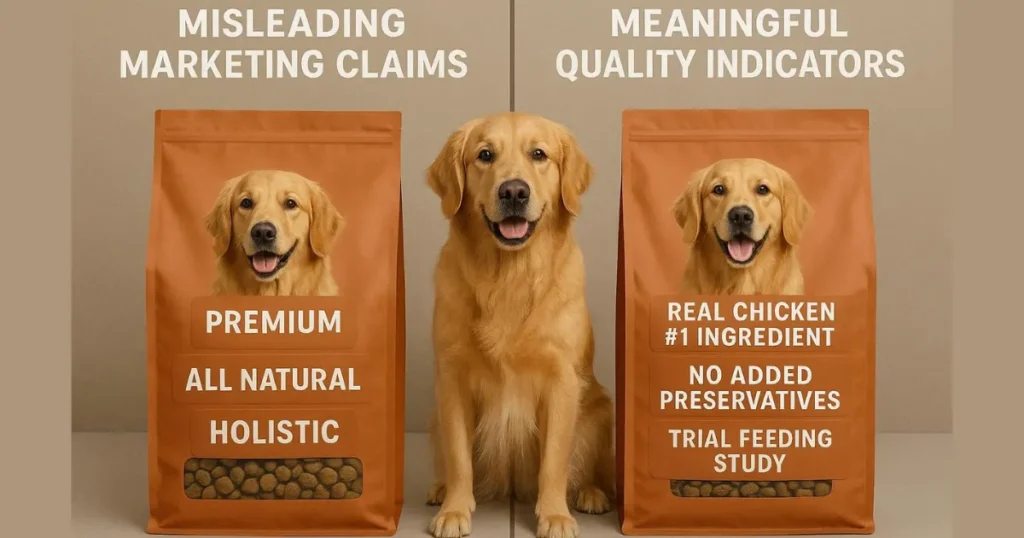
Understanding what is the best dog food to feed your dog requires seeing through marketing hype and evaluating substantive quality indicators versus persuasive advertising.
Red Flags Indicating Poor Quality.
Vague protein sources like “meat meal” or “poultry by-product meal” without species specification indicate lower quality control and ingredient sourcing compared to named proteins.
Artificial preservatives (BHA, BHT, ethoxyquin), colors (Red 40, Yellow 5), and flavors suggest lower ingredient quality requiring chemical enhancement for palatability and preservation.
No AAFCO statement or claims like “intended for intermittent or supplemental feeding only” indicate the product doesn’t provide complete nutrition and shouldn’t serve as a primary diet.
Excessive fillers, including corn gluten meal, wheat middlings, or soy hulls, provide minimal nutritional value while increasing carbohydrate content without offering quality nutrients.
Meaningful Quality Indicators.
Named animal proteins first on ingredient lists indicate quality protein sources providing complete amino acid profiles.
AAFCO feeding trial verification (not just “formulated to meet” statements) proves actual dogs thrived eating the food under controlled conditions – stronger evidence than laboratory nutrient analysis alone.
Transparent ingredient sourcing with specific origins and quality standards demonstrates manufacturer commitment to ingredient quality and food safety.
Veterinary nutrition expertise employed in formulation development indicates evidence-based nutrition rather than marketing-driven decisions about ingredients and nutrient levels.
Common Mistakes When Choosing Dog Food.
Throughout my career, I’ve identified recurring errors owners make in selecting what is a good dog food, causing nutritional problems or unnecessary expense without health benefits.
Mistake # 1: Price Equals Quality.
The most expensive food isn’t automatically the best food to feed your dog. While quality ingredients cost more, excessive pricing often reflects marketing and packaging rather than nutritional superiority. Conversely, bargain-basement foods typically use inferior ingredients, compromising nutrition.
Mid-to-upper tier foods ($ 2-4 per pound) typically provide optimal value, balancing quality ingredients with reasonable pricing for most families.
Mistake # 2: Grain-Free Is Better.
Despite aggressive marketing, grain-free doesn’t automatically answer what is the best dog food to feed your dog. Current FDA investigations suggest potential links between certain grain-free diets and dilated cardiomyopathy in dogs.
True grain allergies are rare – most dietary sensitivities involve protein sources (beef, chicken, dairy) rather than grains. Unless your Golden has been diagnosed grain allergy, grain-inclusive formulas provide nutritional benefits and potentially better cardiac safety.
Mistake # 3: Ignoring Life Stage Requirements.
Feeding adult food to puppies causes developmental problems due to inappropriate calcium and nutrient levels. Feeding puppy food to adults promotes obesity through excessive calories and fat.
What is a good dog food always matches current life stage, preventing nutritional excesses or deficiencies compromising health.
Mistake # 4: Frequent Food Switching.
Constantly changing foods, searching for “perfect” option, causes digestive upset and prevents evaluation of how well any single food supports your Golden’s health. Unless medical reasons require changes, stick with quality food showing good results.
Mistake # 5: Overfeeding “Healthy” Food.
Even dog food good for dogs causes obesity when overfed. Portion control matters more than food quality for weight management. I treat overweight Goldens eating premium food simply because owners provide excessive portions.
Special Considerations for Golden Retrievers.
Determining what is the best dog food to feed your dog when that dog is a Golden Retriever requires addressing breed-specific health considerations influencing nutritional needs.

Weight Management.
Approximately 55-60% of adult Golden Retrievers I examine are overweight or obese. Selecting appropriate dog food good for dogs prone to obesity requires controlled caloric density while maintaining nutritional completeness.
Weight management formulas (280-320 kcal/cup) versus standard maintenance (360-400 kcal/cup) allow larger portions, providing satiety without excess calories. Combined with portion control and exercise, appropriate food selection prevents obesity, devastating joints, and reduces lifespan.
Food Allergies.
When Golden Retrievers develop food allergies or sensitivities, what is a good dog food change to limited ingredient or novel protein formulas, reducing allergen exposure.
Common allergens include beef, dairy, wheat, chicken, and soy. Limited ingredient diets featuring single protein sources (venison, duck, salmon) combined with limited carbohydrates facilitate elimination trials, diagnosing specific triggers.
Joint Disease.
Given near-universal joint problems in aging Golden Retrievers, the best food to feed your dog of this breed includes enhanced joint support beyond basic maintenance nutrition.
Therapeutic levels of glucosamine (400-500 mg/kg body weight daily), chondroitin (250-400 mg/kg daily), and omega-3 fatty acids (EPA 100-150 mg/kg, DHA 50-100 mg/kg daily) slow arthritis progression and reduce discomfort in my clinical experience.
For advanced joint disease, prescription joint support diets provide higher nutrient levels than over-the-counter foods, often justifying their premium cost through improved mobility and quality of life.
What is a good dog food for Golden Retrievers according to veterinarians?
Good dog food meets AAFCO nutritional standards, uses named animal proteins (chicken, beef, salmon), provides life-stage-appropriate nutrition, includes joint support (glucosamine, chondroitin), and maintains balanced omega fatty acids. Quality brands include Hill’s Science Diet, Royal Canin, Purina Pro Plan, and Blue Buffalo. Verify AAFCO compliance and choose formulas matching your Golden’s age and health status.
What makes dog food good for dogs like Golden Retrievers?
Dog food good for dogs provides complete, balanced nutrition verified through AAFCO feeding trials, uses quality ingredients (named proteins, whole foods), matches life stage requirements, addresses breed-specific needs (joint health, weight management), and maintains digestibility supporting nutrient absorption. Good food produces a healthy coat, ideal body condition, normal digestion, and sustained energy levels when properly portioned and fed consistently.
What is the best dog food to feed your dog if it’s a Golden Retriever?
Best dog food depends on individual needs, but quality options include Hill’s Science Diet Large Breed, Royal Canin Golden Retriever, Purina Pro Plan Large Breed, and Blue Buffalo Life Protection. Choose AAFCO-compliant formulas with named proteins, appropriate life-stage nutrition, joint support, and balanced omega fatty acids. The “best” food is one that your Golden thrives on within your budget.
What’s the best food to feed your dog at different life stages?
Best food matches life stage: large-breed puppy formula (controlled calcium 1.2-1.8%) for growth, adult maintenance (22-26% protein, 12-16% fat) for ages 1-7, and senior formula (enhanced joint support, controlled calories) for ages 7+. Never feed adult food to puppies or vice versa. Transition between life stages gradually over 10-14 days to prevent digestive upset.
How do I know if the dog food I’m feeding is good for my Golden?
Evaluate your Golden’s response: healthy shiny coat, ideal body condition (ribs easily palpable, visible waist), normal firm stools, sustained appropriate energy, and absence of skin issues or digestive problems. If your dog thrives with these indicators after 8-12 weeks on a food, it’s working well. Poor coat, weight gain/loss, or digestive issues suggest the food may not suit your individual dog.
Is expensive dog food always better for Golden Retrievers?
Not necessarily. Price reflects ingredient quality, research, and marketing – not always superior nutrition. Mid-tier foods ($ 2-4/ pound) often provide excellent nutrition at reasonable cost. Evaluate AAFCO compliance, ingredient quality, and your Golden’s individual response rather than price alone. The best food is one that provides complete nutrition your dog thrives on within your budget, while affording proper veterinary care.
Should I choose grain-free dog food for my Golden Retriever?
Generally, no, unless your Golden has been diagnosed grain allergy (rare). FDA investigations suggest potential links between certain grain-free diets and dilated cardiomyopathy. Grain-inclusive foods with whole grains (brown rice, oatmeal, barley) provide nutritional benefits and potentially better cardiac safety. True grain allergies are uncommon – most dietary sensitivities involve proteins (beef, chicken) rather than grains.
How often should I change my Golden’s dog food?
Avoid frequent changes unless medical reasons require it. Once you’ve found good dog food your Golden thrives on, maintain consistency. Constant switching causes digestive upset and prevents evaluating long-term health outcomes. Transition between life stages (puppy to adult at 12-15 months, adult to senior at 7-8 years) using gradual 10-14 day transitions, mixing increasing amounts of new food.
Conclusion.
Understanding what a good dog food for Golden Retrievers is requires evaluating multiple factors – AAFCO nutritional adequacy, life-stage appropriateness, ingredient quality, breed-specific considerations, and practical affordability – rather than accepting marketing claims or price as quality indicators. Throughout my years treating Goldens, I’ve learned that what is the best dog food to feed your dog varies individually based on age, health status, activity level, and specific needs.
The dog food good for dogs provides complete balanced nutrition verified through AAFCO feeding trials, uses quality named animal proteins and whole food ingredients, addresses breed-specific health concerns (joint support, weight management, skin health), and fits practically within household budgets, allowing consistent feeding and proper veterinary care.
Whether choosing from my veterinary recommendations – Hill’s Science Diet, Royal Canin Golden Retriever, Purina Pro Plan, or Blue Buffalo – or another quality option, prioritize nutritional completeness over marketing trends. The best food to feed your dog supports their health throughout all life stages, maintains ideal body condition, and contributes to the longevity and quality of life these wonderful dogs deserve.
Remember that even optimal nutrition requires proper feeding management – portion control, twice-daily meals, body condition monitoring, and regular veterinary care, ensuring your Golden Retriever receives comprehensive health support throughout their life.
Share Your Dog Food Selection Experience! What is a good dog food that’s worked well for your Golden Retriever? I’m eager to hear about your experiences selecting the best food to feed your dog – which brands you’ve tried, how you evaluated quality, and what health outcomes you’ve observed!