
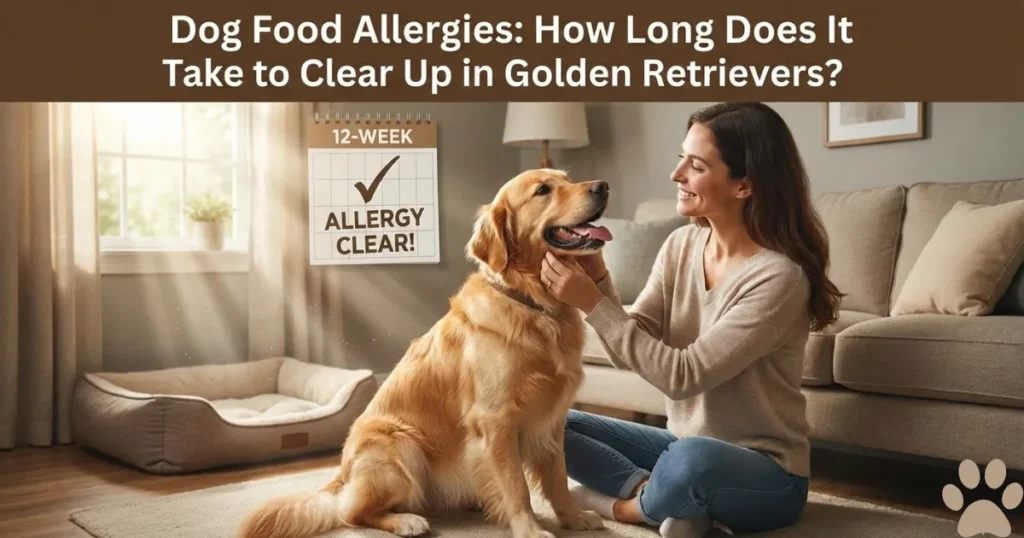
When owners ask me about dog food allergies – how long to clear up – I understand the urgency. Watching your Golden Retriever scratch constantly, develop hot spots, or battle recurring ear infections is exhausting. The truth is that food allergy recovery follows a predictable but slow timeline, and understanding this timeline prevents premature diet abandonment, which I see far too often.
Golden Retrievers face particular challenges with recovery. Their thick coats trap allergens against the skin, their genetic predisposition to atopic conditions compounds inflammation, and their enthusiastic personalities lead to secondary trauma from scratching. These factors extend healing timelines beyond shorter-coated or less predisposed breeds.
The answer isn’t a single number – it’s a timeline with distinct phases. Initial improvement appears within days, but complete resolution requires months of dietary management. This guide breaks down the recovery timeline, explains what influences healing speed, and clarifies when to expect full symptom resolution in your Golden Retriever.
Contents
- 1 The Timeline: Dog Food Allergies How Long to Clear Up
- 2 6 Factors That Determine Dog Food Allergies How Long to Clear Up
- 3 Realistic Expectations: What “Clear Up” Means
- 4 Definitive Statements on Food Allergy Recovery Timelines
- 5 7 Signs Your Golden Retriever’s Food Allergies Are Clearing Up
- 6 How to Accelerate Dog Food Allergy Healing
- 7 When to Worry: Timeline Red Flags
- 7.1 How long do dog food allergies take to clear up completely?
- 7.2 Can dog food allergies clear up in 2 weeks?
- 7.3 Why is my dog still itching after 4 weeks on new food?
- 7.4 How long after starting hypoallergenic food should I see improvement?
- 7.5 Will my Golden Retriever’s bald patches grow back?
- 7.6 What if symptoms return after the food allergy clears up?
- 7.7 Should I wait 12 weeks before trying a protein challenge?
- 7.8 Can stress slow down how long food allergies take to heal?
- 7.9 Do all Golden Retrievers heal at the same speed?
- 7.10 How long will it take before I can tell if the new diet is working?
- 8 Conclusion
The Timeline: Dog Food Allergies How Long to Clear Up
Understanding the healing progression helps owners maintain commitment:
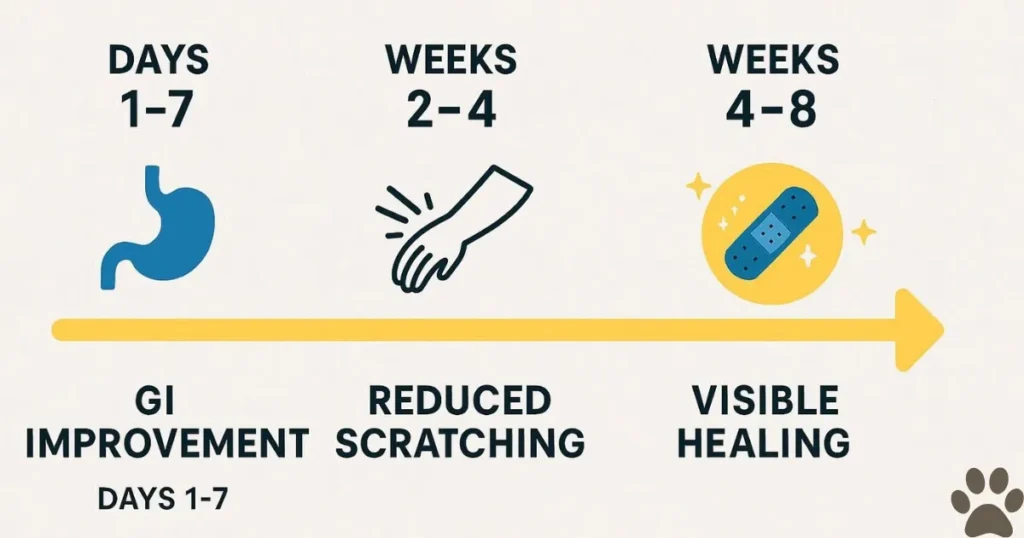
Days 1-7: Gastrointestinal Improvement
If your Golden Retriever experiences GI symptoms alongside skin issues – loose stools, vomiting, gas – these resolve first. Within 3-7 days of removing the allergenic protein, intestinal inflammation begins to subside. Stool quality firms, vomiting stops, and gas normalizes. This rapid improvement provides the first evidence that dietary change is working.
Once the allergenic protein stops entering the digestive system, acute intestinal inflammation resolves quickly. The gut lining isn’t fully healed, but the active assault has stopped. This early success motivates continued compliance during the longer skin healing phase ahead.
Week 2-4: Reduced Scratching Intensity
Most Golden Retrievers show a measurable decrease in itching by week three. Scratching doesn’t stop entirely – secondary infections and behavioral components persist – but frequency and intensity diminish noticeably. Owners often report their dog sleeps better and scratches 40-50% less than baseline.
This itch reduction reflects declining systemic inflammation as allergen exposure ceases. Histamine levels drop, and cytokine-mediated inflammation subsides. However, existing skin damage and established inflammatory pathways keep symptoms partially active. Complete itch resolution requires additional healing time.
Week 4-8: Visible Skin Healing
Between weeks four and eight, visible improvements appear. Red, inflamed skin fades to normal pigmentation. Hot spots crust and heal. Chronic ear infections respond more effectively to treatment. Hair begins regrowing in previously bald patches, though full coat restoration takes longer.
This represents actual tissue repair. Damaged skin barriers strengthen, microbial imbalances correct, and chronic lesions finally access healing capacity. Golden Retrievers with severe, long-standing allergies may need the full eight weeks before visible improvement becomes obvious.
Week 8-12: Complete Resolution
The period from week 8 to 12 often frustrates owners because the pace of improvement slows. Most major symptoms have resolved, but residual issues persist – occasional mild itching, coat dullness, or stubborn ear irritation. This plateau doesn’t mean failure; it represents the final healing phase for dog food allergies how long to clear up completely.
Complete resolution of chronic allergic inflammation requires at least 10-12 weeks. Even with perfect dietary management, the immune system needs this duration to reset inflammatory pathways and restore skin integrity. Owners who switch diets during this plateau often abandon diets that were actually succeeding.
Definitive Timeline Statement: In Golden Retrievers, dog food allergies how long to clear up typically requires 8-12 weeks of strict dietary management, with GI symptoms improving in days, itching decreasing by week 3, and visible skin healing evident by weeks 4-8. The question “dog food allergies how long to clear up” has no single answer – healing timelines vary based on severity, infections, and individual immune responses.
6 Factors That Determine Dog Food Allergies How Long to Clear Up
Recovery speed varies significantly between Golden Retrievers:
1. Severity and Duration of Pre-Treatment Symptoms
Golden Retrievers with mild, recent-onset allergies clear faster than dogs with severe, chronic inflammation. Extensive skin damage, deep infections, and entrenched inflammatory pathways extend healing timelines. A dog with 2 months of mild itching may resolve in 8 weeks, while one with 2 years of severe allergies may need 14-16 weeks.
2. Presence of Secondary Infections
Bacterial pyoderma and Malassezia yeast infections require concurrent antimicrobial treatment. Golden Retrievers with untreated infections show slower improvement.
3. Concurrent Environmental Allergies
Many Golden Retrievers suffer from both food and environmental allergies. Removing dietary allergens alone provides only partial improvement.
4. Dietary Compliance Strictness
Even small amounts of allergenic protein restart inflammation. A single piece of chicken can trigger symptoms lasting 7-14 days. Perfect compliance is essential for dog food allergies how long to clear up accurately.
5. Individual Immune Responsiveness
Some dogs’ immune systems “reset” quickly; others maintain inflammatory momentum longer. This genetic variation explains why timelines vary.
6. Skin Barrier Quality
Golden Retrievers with severely compromised barriers need extra time for reconstruction. Dogs with intact barriers heal faster.
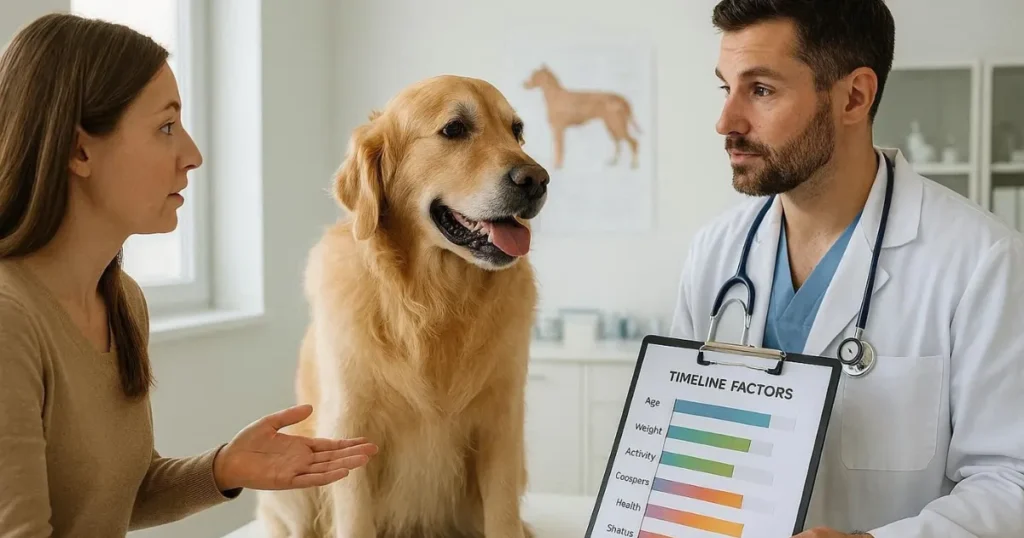
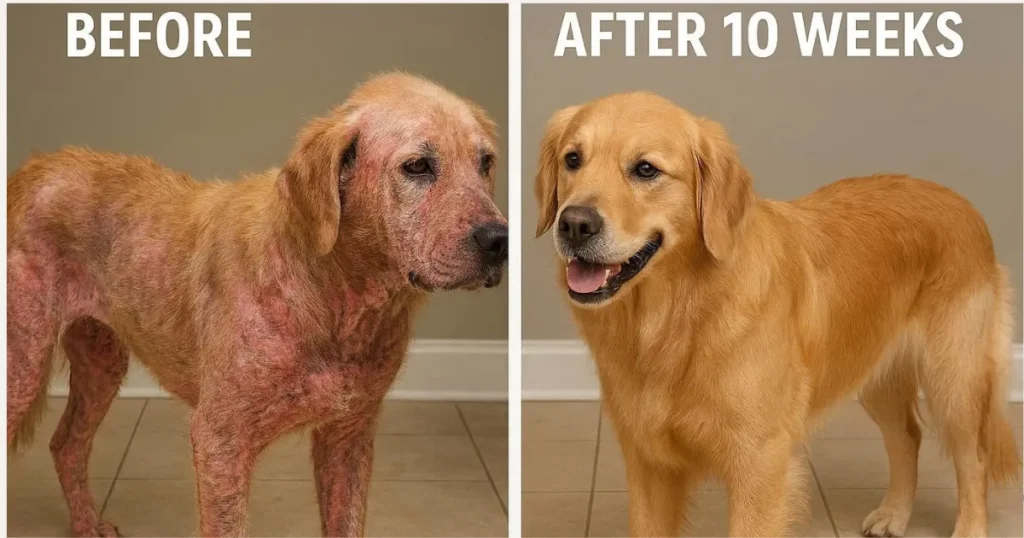
Vet’s Tip: Take photos of all affected areas before starting dietary changes, then photograph the same spots weekly. Improvements that feel invisible day-to-day become obvious when comparing week 1 versus week 8 photos —this visual proof helps maintain commitment during slow-progress periods.
Realistic Expectations: What “Clear Up” Means
Understanding successful resolution for dog food allergies how long to clear up:
Complete Symptom Elimination:
Some achieve zero itching and perfect skin – ideal but not universal.
Manageable Control:
More commonly, symptoms reduce to manageable levels – occasional mild itching instead of constant scratching.
Medication Independence:
Success often means no longer requiring Apoquel, Cytopoint, or antibiotics.
Definitive Statements on Food Allergy Recovery Timelines
In veterinary dermatology, when evaluating dog food allergies how long to clear up, gastrointestinal symptoms resolve within 3-7 days of allergen removal, while skin symptoms require 8-12 weeks for complete resolution in most dogs.
Golden Retrievers predisposed to atopic conditions often require the full 12-week timeline, compared to 8-10 weeks for less allergically predisposed breeds. The answer to dog food allergies how long to clear up depends heavily on breed genetics and concurrent conditions.
Secondary bacterial and yeast infections do not resolve automatically when dietary triggers are removed – concurrent antimicrobial treatment is necessary and significantly impacts overall recovery speed.
Dogs with both food and environmental allergies show incomplete improvement from dietary management alone. Complete resolution requires addressing all allergic triggers simultaneously.
Strict dietary compliance is absolutely critical for dog food allergies — how long to clear up. Even trace amounts of allergenic protein can delay healing by 1-2 weeks per exposure, making perfect adherence essential for accurate timeline assessment and optimal recovery.
7 Signs Your Golden Retriever’s Food Allergies Are Clearing Up
1. Improved Sleep Quality.
Allergic dogs wake frequently to scratch. As inflammation decreases, Golden Retrievers sleep through the night more consistently, indicating a decline in systemic discomfort.
2. Reduced Scratching Frequency.
Count scratching episodes during observation periods. Most dogs show a 30-40% reduction by week 3, 60-70% by week 6, and 80-90% by week 10.
3. Ear Infection Resolution.
Chronic ear infections that recurred every 3-4 weeks suddenly respond to treatment and stay clear.
4. Skin Color Normalization.
Red, inflamed skin progressively fades to normal pink or returns to normal pigmentation. Document with photos – the change is obvious in pictures but easy to miss daily.
5. Hair Regrowth in Previously Bald Areas.
Once inflammation resolves, hair follicles reactivate. Sparse peach-fuzz appears first, progressing to fuller regrowth. Complete restoration takes 8-16 weeks after healing begins.
6. Decreased Odor.
Allergic skin has a yeasty, musty smell from Malassezia overgrowth. As inflammation resolves, this odor disappears – many owners notice their dog “smells better” weeks before other improvements.
7. Increased Energy and Playfulness.
As symptoms resolve, Golden Retrievers show increased enthusiasm for play, longer walks without fatigue, and generally brighter demeanor.
How to Accelerate Dog Food Allergy Healing
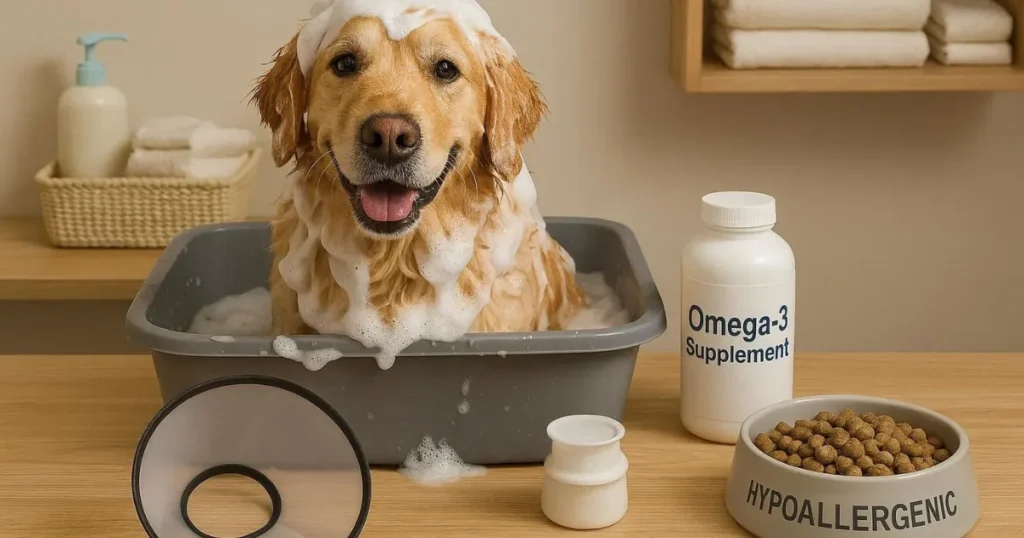
While the 8-12 week timeline cannot be dramatically shortened, these optimize healing:
Aggressive Infection Treatment:
Starting antibiotics and antifungals immediately removes barriers to healing.
Omega-3 Supplementation:
Marine-derived EPA/DHA at 50-75 mg/kg daily accelerates improvement in weeks 4-8.
Medicated Bathing:
Shampoos containing chlorhexidine or antifungals are used 2-3 times weekly to control microbial populations.
E-Collar Use:
Preventing self-trauma during weeks 1-4 allows uninterrupted skin healing.
Environmental Control:
HEPA filters and limiting outdoor exposure during high pollen season reduce the total allergic burden.
When to Worry: Timeline Red Flags
Most Golden Retrievers show improvement by week 4-6. Owners asking “dog food allergies how long to clear up” should see at least some progress by week 6. These warning signs suggest problems requiring veterinary reassessment:
- Zero improvement in any symptom by week 6
- Worsening symptoms after initial improvement
- Development of new symptoms not present at baseline
- Failure of secondary infections to respond to appropriate treatment
- Progressive weight loss or coat quality decline
- Systemic illness signs – lethargy, appetite loss, vomiting, diarrhea returning
These red flags may indicate that the novel protein wasn’t truly novel, that additional medical conditions beyond food allergy were present, or that the diagnosis was incorrect. Veterinary reassessment guides next steps rather than continuing ineffective management indefinitely.
How long do dog food allergies take to clear up completely?
For dog food allergies how long to clear up typically takes 8-12 weeks in Golden Retrievers. Gastrointestinal symptoms improve within 3-7 days, itching decreases noticeably by week 3, and skin healing becomes visible by weeks 4-8.
Can dog food allergies clear up in 2 weeks?
Dog food allergies cannot be fully cleared up in 2 weeks. While gastrointestinal symptoms may improve within days, skin inflammation may take 8-12 weeks to resolve completely. Some itching reduction may appear by week 2, but this represents early improvement, not complete healing.
Why is my dog still itching after 4 weeks on new food?
Itching at week 4 is normal – complete resolution requires 8-12 weeks. However, continued severe itching at week 4 may indicate secondary infections needing treatment, concurrent environmental allergies, or hidden allergen exposure from treats, supplements, or flavored medications.
How long after starting hypoallergenic food should I see improvement?
Understanding dog food allergies how long to clear up: initial improvement appears within 2-3 weeks on proper hypoallergenic food, with noticeable itching reduction. Visible skin healing appears by weeks 4-8. Complete resolution requires 8-12 weeks of strict compliance.
Will my Golden Retriever’s bald patches grow back?
Yes, hair regrows once allergic inflammation resolves and skin heals completely. Initial regrowth appears around weeks 6-10, with full coat restoration taking 12-20 weeks total. Severe, long-standing inflammation may cause permanent follicle damage in some areas, but this is uncommon with proper management.
What if symptoms return after the food allergy clears up?
Symptom return after clearing suggests either continued allergen exposure (hidden sources), concurrent environmental allergies becoming apparent, or introduction of a new allergenic ingredient. Review all food items, treats, supplements, and medications for possible allergen sources before assuming diet failure.
Should I wait 12 weeks before trying a protein challenge?
Yes, wait the full 8-12 weeks for complete symptom resolution before systematically reintroducing old proteins. Starting challenge trials too early produces unreliable results because residual inflammation from the elimination diet phase makes interpretation difficult and conclusions uncertain.
Can stress slow down how long food allergies take to heal?
Stress can modestly slow healing by elevating cortisol and inflammatory mediators. However, true food allergy resolution depends primarily on allergen elimination and the healing timeline. If severe stress is present, addressing it supports overall health but won’t dramatically accelerate the fundamental 8-12 week timeline.
Do all Golden Retrievers heal at the same speed?
No, healing speed varies based on allergy severity, concurrent infections, environmental allergies, skin barrier damage, and individual immune characteristics. Some dogs show dramatic improvement by week 6, while others need the full 12 weeks. Both timelines can represent normal, successful healing.
How long will it take before I can tell if the new diet is working?
Most owners see enough improvement by week 4-6 to confirm the diet is helping with dog food allergies how long to clear up. However, final judgment requires 8-12 weeks. If there is no improvement by week 6-8, consult your veterinarian.
Conclusion
The question of dog food allergies how long to clear up has a straightforward answer: most Golden Retrievers require 8-12 weeks of strict dietary management for complete resolution. The healing progression follows predictable phases – rapid GI improvement within days, noticeable itch reduction by week 3, visible skin healing by weeks 4-8, and final resolution by weeks 10-12.
Understanding this timeline for dog food allergies how long to clear up prevents the premature diet abandonment that sabotages many elimination trials. Week 4 can feel discouraging when dramatic improvement hasn’t yet appeared, but this is exactly when healing begins at the cellular level. The visible improvements in weeks 6-10 are the payoff for maintaining perfect compliance through slow early weeks.
Your Golden Retriever’s recovery timeline is influenced by factors you control – dietary compliance, infection treatment, supportive care – and factors you don’t – immune characteristics, concurrent conditions, baseline damage. Focus on controllable factors with perfect execution while maintaining realistic patience for biological healing that cannot be rushed.
Most importantly, commit to the full timeline before judging success. Ending trials at week 4-6 because progress feels slow prevents discovering whether the diet would have worked. The 8-12 week investment is significant, but it’s the only reliable way to identify dietary triggers and achieve lasting relief for your Golden Retriever’s food allergies.
How Long Did It Take for Your Golden Retriever’s Food Allergies to Clear Up?
Real recovery timelines from actual owners help set realistic expectations. If your Golden Retriever has been through an elimination diet and food allergy resolution, we’d love to hear your timeline.
Share your experience:
- How many weeks before you noticed the first improvement?
- What symptom improved first – itching, skin, ears, or GI issues?
- How long until you saw visible skin healing?
- Did you reach complete resolution, and if so, at what week?
- Any unexpected setbacks or factors that slowed your timeline?
Drop your story in the comments or tag us with #GoldenRetrieverInsight and #FoodAllergyTimeline. Your real-world timeline data helps other owners maintain commitment through the slow weeks when success feels uncertain.

Dr. Nabeel A.
Hi, I’m Dr. Nabeel Akram – a farm management professional by trade and a passionate Golden Retriever enthusiast at heart. With years of experience in animal science and livestock care, I’ve built a career around understanding animals—how they live, thrive, and bring value to our lives. This blog is a personal project born from that same passion, focusing on one of the most loyal and lovable breeds out there: the Golden Retriever. Whether I’m managing farm operations or sharing insights on canine health, behavior, and care, it all ties back to one core belief—animals deserve thoughtful, informed, and compassionate attention. Welcome to a space where professional expertise meets genuine love for dogs.
Facebook |
Links will be automatically removed from comments.